Category
Manufacturer
Model
Becomix
Becomix is a specialist in providing mixing and homogenizing equipment, crucial for pharmaceutical and cosmetic manufacturing. Their machines are engineered for precision and efficiency, ensuring consistent product quality across production runs. Becomix’s user-friendly and innovative technologies help companies optimize production processes while maintaining high standards of product consistency and safety.
FAQ:
What is Becomix and what types of mixing equipment does the company manufacture?
Becomix is an Italian manufacturer that specializes in high-shear vacuum emulsifying mixers and homogenizers. The company built its reputation primarily through its RW series of rotor-stator homogenizing mixers, which are engineered for emulsification, homogenization, and dispersion of products like creams, ointments, gels, and lotions. Beyond the RW series, Becomix produces a range of process vessels and agitated systems, including jacketed vacuum agitated process vessels designed for temperature-controlled, air-free mixing environments.
Becomix equipment is constructed with hygienic principles in mind. Contact parts are typically fabricated from AISI 316L stainless steel, making the machines well-suited for GMP-compliant production environments in the pharmaceutical and cosmetic industries. The design philosophy centers on precision, efficiency, and product consistency across production runs, which is why Becomix equipment is frequently found in facilities where batch-to-batch uniformity is non-negotiable.
What industries commonly use Becomix mixing equipment?
Becomix mixing equipment is used across several process-intensive industries, with the strongest concentration in cosmetics and pharmaceuticals. In cosmetics manufacturing, the equipment handles the production of creams, lotions, serums, and gels where stable emulsions and consistent texture are critical to product quality. In pharmaceutical manufacturing, the hygienic construction and vacuum processing capability make Becomix systems appropriate for ointments, topical preparations, and other semi-solid dosage forms that require controlled, contamination-free processing.
Beyond those two primary sectors, Becomix equipment also sees use in food processing and specialty chemical manufacturing, particularly where high-viscosity materials or shear-sensitive formulations require careful handling. The vacuum mixing capability is especially valued in applications where air incorporation would degrade product stability or shelf life. This cross-industry versatility, combined with the availability of multiple vessel capacities, makes Becomix a practical choice for manufacturers operating at different scales and in different regulatory environments.
What capacity ranges are available for Becomix mixing equipment?
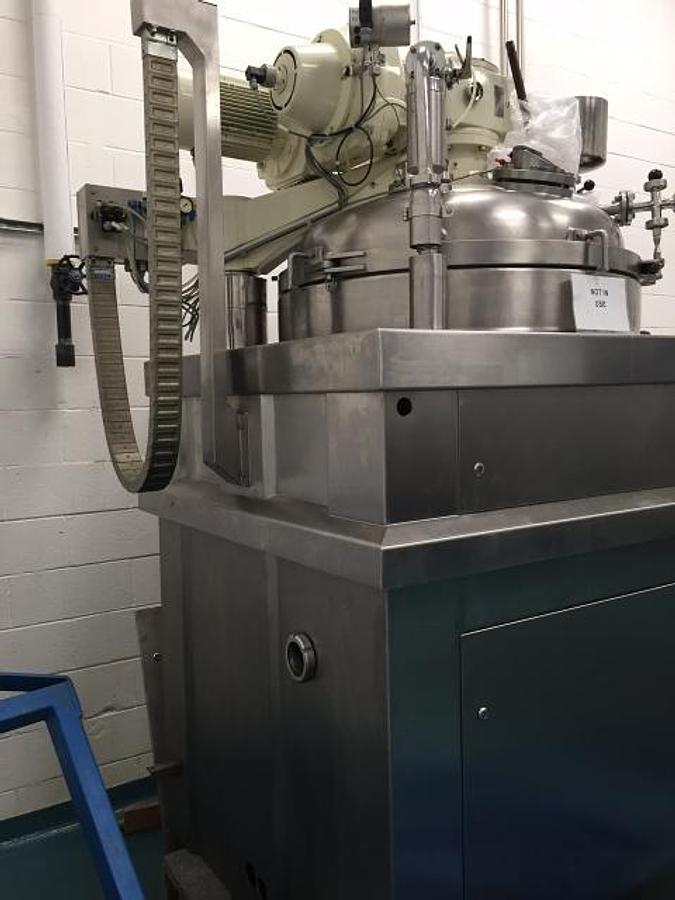
Becomix manufactures mixing systems across a wide spectrum of production volumes. Laboratory-scale units start at just a few liters, giving formulators and R&D teams the ability to develop and test products under the same processing conditions they would encounter at full production scale. Mid-range vessels, such as the 125-liter stainless steel process vessels that appear in the used equipment market, are well-suited for pilot-scale production or smaller commercial runs. Larger industrial systems can exceed 3,000 liters in capacity, accommodating high-volume manufacturing operations.
This range of available capacities is one of the practical advantages of Becomix equipment. A manufacturer can, in theory, use the same fundamental technology and process parameters across different vessel sizes, which simplifies scale-up and reduces the risk of formulation changes when moving from development to full production. When shopping for used Becomix equipment, buyers will encounter specific models like the 125-liter and 500-liter jacketed vacuum agitated process vessels, which represent the mid-range of the product line and are commonly used in cosmetic and pharmaceutical contract manufacturing settings.
What does vacuum processing capability mean in Becomix mixing equipment, and why does it matter?
Vacuum processing refers to the ability to mix, homogenize, or emulsify materials inside a sealed vessel from which air has been evacuated. In a Becomix vacuum mixer, the vessel is brought to a negative pressure state before and during mixing, which prevents air from being incorporated into the product as the agitator or homogenizer operates. This is particularly important for emulsions, creams, and gels, where entrained air can cause oxidation, reduce product density, create an uneven texture, or shorten shelf life.
From a manufacturing standpoint, vacuum processing also reduces the risk of microbial contamination by limiting the product's exposure to the ambient environment during the mixing cycle. For pharmaceutical and cosmetic producers operating under GMP guidelines, this is a meaningful process control advantage. Used Becomix equipment that retains functional vacuum capability, including intact seals, gaskets, and vacuum pump connections, is therefore more valuable to buyers in regulated industries than equipment where the vacuum system has been bypassed or is in poor condition. Buyers inspecting used Becomix vessels should specifically verify the integrity of the vacuum system as part of their evaluation.
Can Becomix mixing equipment handle high-viscosity materials?
Yes, Becomix equipment is specifically designed to process high-viscosity materials. The rotor-stator homogenizing systems at the core of many Becomix machines generate intense localized shear, which breaks down particle agglomerates and creates stable emulsions even in thick, viscous formulations. The agitated process vessels, including jacketed models, typically incorporate anchor or gate-style agitators that sweep the vessel walls, preventing the buildup of heavy materials and ensuring uniform heat transfer across the batch.
High-viscosity processing also benefits from the jacketed vessel design found on several Becomix models. The jacket allows hot water or steam to circulate around the vessel wall, reducing the viscosity of the product during mixing and making it easier to achieve homogeneous blending. Once mixing is complete, the jacket can circulate cooling water to bring the batch down to fill temperature. This heating and cooling capability is standard in cosmetic and pharmaceutical cream manufacturing, where many formulations are prepared hot and then cooled before packaging. Buyers looking at used Becomix jacketed vessels should confirm that the jacket connections, internal agitator, and homogenizer shaft seals are all in serviceable condition.
What should buyers know about purchasing used Becomix mixing equipment instead of sourcing from a manufacturer?
Buying used Becomix mixing equipment can offer significant cost savings compared to sourcing equivalent capacity through a manufacturer, and the core technology in these machines is durable enough that well-maintained units can provide years of reliable service. However, used equipment is sold as-is, meaning there is no manufacturer-backed coverage on condition or performance. The responsibility for evaluating the machine's current state falls entirely on the buyer, which makes the reputation and specialization of the dealer a critical factor in the decision.
Buyers should prioritize dealers with a long track record of selling processing and mixing equipment specifically, rather than general industrial surplus operations. A specialist dealer is more likely to accurately describe the condition of the equipment, understand what components are critical to inspect, and have access to machines that were decommissioned from legitimate pharmaceutical or cosmetic manufacturing operations. Before committing to a purchase, buyers should request an in-person or video inspection, review any available maintenance records, and consult directly with the Becomix manufacturer or a qualified service technician to assess parts availability for the specific model and age of the machine being considered.
How should buyers inspect used Becomix equipment before purchasing?
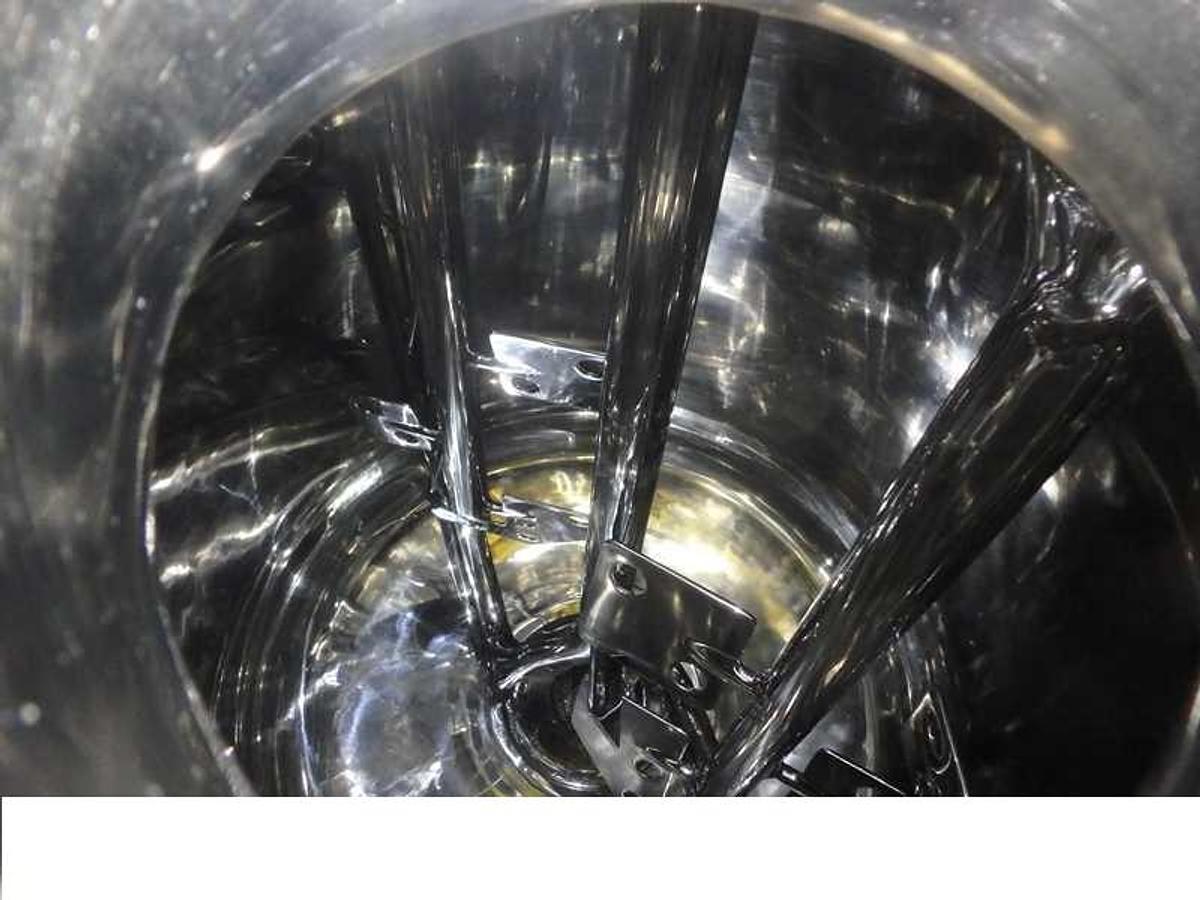
Reputable used equipment dealers typically offer buyers the option to inspect machinery in person, via live video call, or through detailed video recordings of the equipment. For Becomix mixing vessels and homogenizers, a thorough inspection should cover the condition of all product-contact surfaces, including the interior of the vessel, agitator blades, homogenizer rotor and stator, and any seals or gaskets. Stainless steel surfaces should be free of pitting, cracks, or excessive wear, as surface integrity is directly tied to sanitary performance and compliance in regulated environments.
Beyond the vessel itself, buyers should examine the mechanical and electrical components: the condition of the motor, gearbox, control panel, and any instrumentation. If the machine has vacuum capability, the integrity of the vacuum system, including seals and pump connections, deserves specific attention. It is worth noting that most used equipment dealers do not have the permitting or production infrastructure to run actual product through a machine during an inspection, so functional testing is typically limited to dry runs or observation of the drive systems under no-load conditions. Buyers who need a higher level of assurance about a machine's performance should factor in the cost of a post-purchase inspection by a qualified Becomix service technician before committing the equipment to production.
Are spare parts and replacement components available for used Becomix mixing equipment?
Parts availability for used Becomix equipment depends primarily on the age and model of the machine. Becomix, as an active manufacturer, generally supports its equipment lines with spare parts, but the level of support can diminish for older or discontinued models. Buyers considering a used Becomix machine should contact the manufacturer directly before purchasing to confirm whether critical wear components, such as rotor-stator sets, mechanical seals, agitator blades, and gaskets, are still available for the specific model in question.
For machines where manufacturer support is limited, there is often a secondary market for compatible components, and some specialized service companies manufacture aftermarket parts for common Becomix configurations. However, in GMP-regulated industries, the use of non-OEM parts can raise validation and compliance questions, so pharmaceutical and cosmetic manufacturers should factor that consideration into their purchasing decision. Asking the selling dealer about the machine's service history and whether any components were recently replaced can also provide useful insight into what is likely to need attention in the near term.
What are the typical shipping and logistics considerations when buying used Becomix equipment?
Becomix mixing vessels and homogenizers are heavy, precision-built machines that require careful handling during transit. Smaller units may be palletized and shipped via freight carrier, but larger vessels, particularly jacketed process vessels in the 125-liter to 500-liter range, often require custom crating to protect flanges, agitator shafts, and control panels from damage. The level of packaging required directly affects shipping costs, and buyers should request a detailed breakdown from the dealer covering palletization or crating, rigging for loading and unloading, and freight to their facility.
For larger or heavier equipment, specialized rigging equipment such as forklifts or cranes may be needed at both the origin and destination. If the buyer's facility is not equipped to receive heavy machinery, arranging third-party rigging services in advance is essential. International shipments add further complexity, including export documentation, customs clearance, and potential import duties depending on the destination country. The total landed cost of used Becomix equipment, meaning the purchase price plus all shipping, rigging, and import-related expenses, should be calculated before finalizing a purchase decision to avoid unexpected costs.
What payment terms should buyers expect when purchasing used Becomix mixing equipment?
Used equipment transactions in the mixing and processing machinery market typically require full payment before the equipment is released for shipping. This is standard practice across the industry, reflecting the fact that used machinery, unlike manufactured goods, cannot be restocked or resold easily if a buyer defaults after shipment. Buyers who are unfamiliar with a particular dealer should be prepared to pay in full prior to shipping and should conduct appropriate due diligence on the dealer's reputation and track record before transferring funds.
Some dealers extend payment terms or financing arrangements to repeat customers or buyers with established relationships, but this is the exception rather than the rule for first-time transactions. Buyers seeking financing for used equipment purchases may want to explore third-party equipment financing options independently. Regardless of payment structure, buyers should ensure that the purchase agreement clearly documents the equipment being sold, its described condition, and any agreed-upon inspection rights before payment is made. Paying by wire transfer is common in used equipment transactions, and buyers should verify banking details directly with the dealer through a confirmed communication channel to avoid fraud.