Category
Subcategory
Manufacturer
Model
FAQ:
What is BCast processing equipment used for?
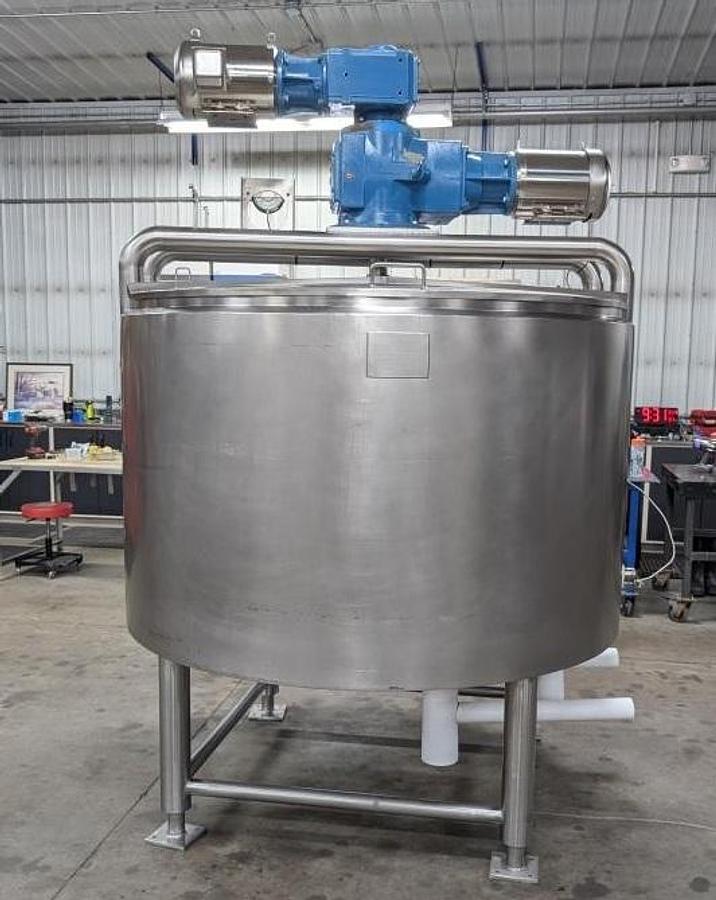
BCast processing equipment refers to industrial processing machinery used in food, beverage, pharmaceutical, and chemical production environments. The term 'BCast' in this context relates to batch casting or processing systems, such as jacketed processors and mixing vessels, that handle temperature-controlled production of products like confections, sauces, creams, and other formulations. These machines are built for commercial-scale manufacturing, where precise temperature control, sanitary construction, and consistent output are essential.
A typical example is a jacketed processor, which uses a double-wall vessel design to heat or cool product through a surrounding jacket filled with water, steam, or glycol. The 316 stainless steel construction found on many BCast processors makes them suitable for food-grade and pharmaceutical applications, as this alloy resists corrosion and is easy to sanitize. Capacities can range from small pilot-scale units to large production vessels of 700 gallons or more, depending on the scale of the operation.
What types of used BCast processing equipment are commonly available?
The used BCast processing equipment market includes jacketed processors, mixing tanks, batch processors, and temperature-controlled vessels in a range of sizes and configurations. Among the more commonly found units are stainless steel jacketed processors, which are widely used across food production, cosmetics manufacturing, and specialty chemical processing. These vessels come in varying capacities, from smaller bench-scale units to large-format processors exceeding 700 gallons.
Material of construction is a key differentiator. 316 stainless steel is the standard for food-grade and pharmaceutical applications due to its superior corrosion resistance compared to 304 stainless. Buyers will also encounter differences in agitator styles, jacket configurations (full jacket vs. half-pipe), and control system setups. Sourcing used equipment through dealers who specialize in processing machinery gives buyers access to a broader inventory than what might be available locally, and allows for comparison across multiple units before making a purchase decision.
What should I look for when buying a used jacketed processor?
Condition of the vessel interior is the first thing to evaluate on a used jacketed processor. Scratches, pitting, or weld repairs on the product-contact surfaces can affect cleanability and may indicate prior misuse or chemical damage. The jacket integrity is equally important, since any leaks or corrosion in the jacket can compromise temperature control and create contamination risks. Asking for detailed photos or arranging a video inspection of the interior, exterior, welds, and fittings gives a clearer picture of actual condition than a written description alone.
Beyond the vessel itself, buyers should assess the condition of agitator seals, drive components, valves, and any attached control systems. Older units may have outdated controls that require upgrades to integrate with modern production environments. It is also worth consulting the equipment manufacturer directly to understand parts availability for the specific model and age of the unit, since support levels vary considerably. Reputable used equipment dealers with a track record in the processing industry will typically accommodate in-person or virtual inspections and can provide documentation on the machine's history where available.
Does used BCast processing equipment come with a warranty?
Warranties on used processing equipment are not standard practice in the secondary market. Manufacturers typically only offer warranty coverage on equipment sold directly through their authorized channels, and that coverage does not transfer to subsequent buyers. Used equipment dealers generally sell machinery on an 'as is' basis, which places the responsibility of assessing condition squarely on the buyer before purchase.
Because of this, the inspection process takes on significant importance. Buyers should work with dealers who have a long history in the industry and who specialize in processing equipment, as these dealers tend to have more accurate condition assessments and more transparent disclosures. Requesting an in-person visit, a live video walkthrough, or detailed video documentation of the equipment in its current state is a reasonable and commonly accommodated request. Before finalizing a purchase, it is also advisable to contact the equipment manufacturer to understand what level of technical support, spare parts, and service documentation is still available for that particular model.
What is the typical price range for used industrial jacketed processors?
Pricing for used jacketed processors varies considerably based on capacity, material of construction, age, condition, and included accessories. Smaller units in the 50 to 200 gallon range in good working condition can be found in the low thousands of dollars, while larger processors in the 500 to 700 gallon range made from 316 stainless steel with full jacketing and agitation systems typically command significantly higher prices, often ranging from $15,000 to $50,000 or more depending on configuration and condition.
Additional factors that affect price include the complexity of the agitator and drive system, the type of jacket (standard vs. half-pipe), the presence of CIP (clean-in-place) fittings, and whether the unit includes a control panel or instrumentation. Buyers should also factor in freight, rigging, and any refurbishment costs when calculating the total cost of acquisition. A used unit in good condition can represent substantial savings compared to purchasing equivalent capacity from a manufacturer, but a thorough inspection is necessary to validate that the condition justifies the asking price.
How does 316 stainless steel differ from 304 stainless steel in processing equipment?
The difference between 316 and 304 stainless steel is significant in food, pharmaceutical, and chemical processing applications. Both are austenitic stainless steels and share similar appearance, but 316 contains molybdenum, which gives it substantially better resistance to chlorides and acidic environments. This makes 316 the preferred choice for product-contact surfaces in applications involving salt, acids, cleaning agents, or any ingredient that could cause pitting corrosion in 304.
For buyers evaluating used processing vessels, knowing the alloy is critical. A 316 stainless steel jacketed processor is generally more suitable for a wider range of products and cleaning protocols, and it retains higher resale value. In regulated industries like food production or pharmaceuticals, material certifications (mill certs) documenting the alloy composition may be required for compliance purposes. When purchasing used equipment, asking the dealer whether material certifications are available for the vessel can be an important part of due diligence.
How is used processing equipment typically shipped, and what are the costs involved?
Shipping costs for used processing equipment depend on the size and weight of the machine, the destination, and the level of packaging or crating required to protect the equipment in transit. Smaller processors may ship on a standard pallet, while larger jacketed vessels of several hundred gallons will typically require custom crating or skidding to prevent damage. Heavier units also require professional rigging for loading at the origin and unloading at the destination, which adds to the total landed cost.
Buyers should ask the dealer for a detailed breakdown of packaging, rigging, and freight costs before committing to a purchase, so there are no surprises at delivery. For very large or heavy equipment, a qualified rigger at the receiving facility may be necessary to safely move the machine into place. International shipments add customs, duties, and documentation requirements that should be clarified upfront. Getting the full landed cost picture, not just the equipment price, is essential for accurate budgeting.
What payment terms should buyers expect when purchasing used processing equipment?
Most used equipment dealers require full payment before the machine is released for shipping. This is standard practice in the secondary equipment market and reflects the nature of used machinery transactions, where the dealer needs to confirm cleared funds before arranging freight logistics. Payment is commonly accepted via wire transfer, and some dealers may accept other forms of verified payment depending on the transaction size.
Buyers who have an established relationship with a dealer may occasionally be offered extended terms, but this is not typical for first-time transactions. It is advisable to confirm the payment process and timeline with the dealer early in the buying process, particularly for larger purchases that may require internal approval or financing arrangements on the buyer's side. Understanding the payment and release schedule upfront helps avoid delays once a purchase decision is made.
Can used jacketed processors be inspected before purchase?
Inspections are a normal and expected part of the used equipment buying process, and reputable dealers will accommodate them in various formats. In-person inspections can often be arranged, particularly if the equipment is still located at the facility where it was used. In cases where the machine has already been moved to a dealer's warehouse, a site visit can typically be scheduled. For buyers who cannot travel, video inspections or detailed video recordings of the equipment are commonly offered as an alternative.
The goal of any inspection is to get an accurate picture of the machine's current condition, including the vessel interior, jacket, agitator, seals, drive components, and any instrumentation. Keep in mind that most used equipment dealers are not production facilities and do not have the permits or infrastructure to run actual product through a machine for a live demonstration. Inspections focus on mechanical condition, visual assessment, and where possible, observation of the agitator and drive running under no-load conditions. Buyers should come prepared with a list of specific things they want to see and any questions about the machine's history.
What industries commonly use jacketed batch processors like the BCast 700 gallon unit?
Jacketed batch processors are used across a broad range of industries where temperature-controlled mixing, cooking, or blending is part of the production process. Food and beverage manufacturing is one of the largest markets, with applications in confectionery, sauces, soups, dairy products, and specialty ingredients. The 316 stainless steel construction and hygienic design of units like the BCast 700 gallon processor make them well-suited for food-grade production environments that require frequent cleaning and compliance with FDA or other regulatory standards.
Beyond food production, these processors are used in cosmetics and personal care manufacturing for creams, lotions, and gels, as well as in pharmaceutical production for ointments and topical formulations. Specialty chemical and nutraceutical manufacturers also rely on jacketed vessels for temperature-sensitive processing. The 700 gallon capacity positions a unit like this in the mid-to-large production range, making it appropriate for contract manufacturers or established brands running regular batch production rather than small-scale or pilot operations.