Category
Manufacturer
Model
B. H. Hubbert &Amp; Son
B. H. Hubbert & Son stands out in the metallurgy and metalforming industries with their heavy-duty forging and pressing machines. They are renowned for producing robust and durable equipment tailored for high-intensity industrial applications. Their machinery is crucial for operations requiring precision and efficiency, particularly in metal forming and fabrication industries.
FAQ:
What types of equipment did B. H. Hubbert & Son manufacture?
B. H. Hubbert & Son built a reputation in the metallurgy and metalforming industries, producing heavy-duty forging and pressing machines designed for high-intensity industrial use. Their equipment was engineered for precision and efficiency, making it a go-to choice for metal forming and fabrication operations that demanded reliable, durable machinery. The company became particularly well-regarded for machinery that could hold up under sustained production demands without sacrificing accuracy.
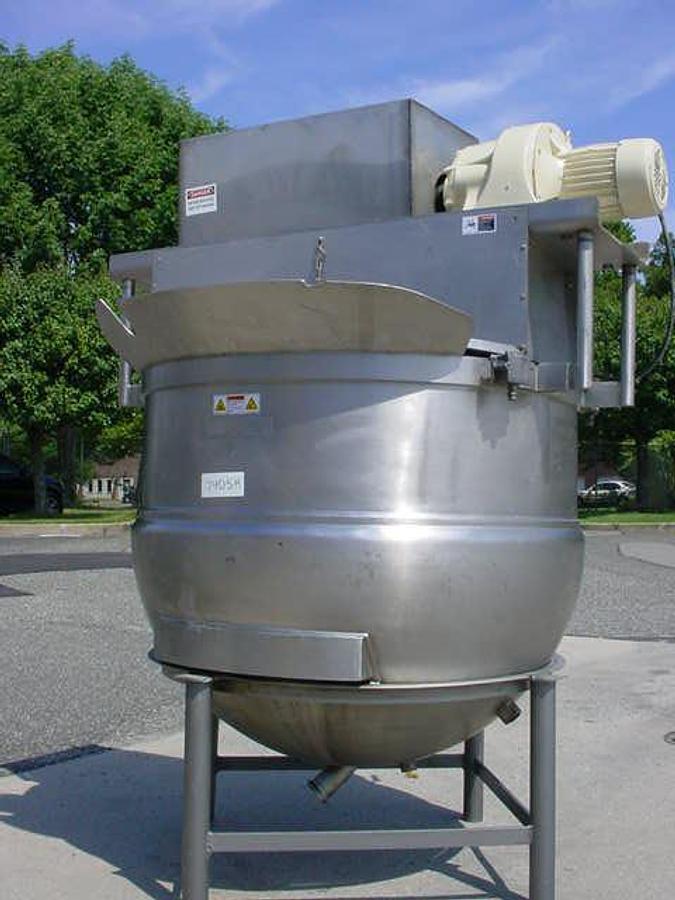
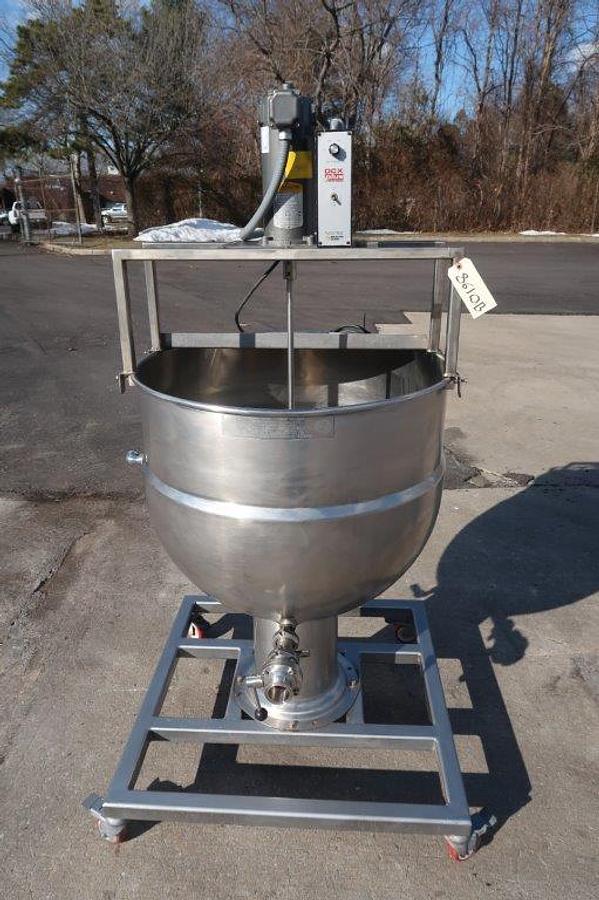
Beyond forging and pressing equipment, B. H. Hubbert & Son also produced stainless steel processing vessels, including mix kettles built for industrial food, chemical, and pharmaceutical applications. Examples include jacketed stainless steel mix kettles in capacities such as 60 gallons rated at 40 PSI, and larger double motion kettles in the 350-gallon range rated at 125 PSI. This range of equipment reflects a manufacturer that served both heavy metalworking environments and process industries requiring sanitary, pressure-rated vessels.
What is a double motion mix kettle and what is it used for?
A double motion mix kettle is a type of industrial mixing vessel that uses two independent agitation mechanisms operating simultaneously, typically a central agitator and a wall-scraping sweep arm that rotates in the opposite direction. This counter-rotating action ensures thorough blending of thick, viscous, or heat-sensitive materials by preventing product from sticking to the vessel walls and ensuring consistent temperature distribution throughout the batch. The design is especially effective for materials that tend to settle, stratify, or scorch when exposed to a stationary heat source.
These kettles are widely used in food processing, confectionery, pharmaceutical manufacturing, and chemical production. Common applications include cooking sauces, batters, creams, ointments, and adhesives. When paired with a steam or hot water jacket, as seen in higher-PSI-rated models, the kettle can apply precise, even heat to the product while the double motion agitation keeps the mixture homogeneous. PSI ratings on the jacket indicate the maximum allowable working pressure, which directly affects the temperature range the jacket can sustain during production.
What should buyers expect when purchasing used industrial mix kettles?
Used industrial mix kettles vary considerably in condition depending on how they were maintained, what products were processed in them, and how long they sat idle before being listed for sale. Buyers should look closely at the condition of the interior stainless steel surface, checking for pitting, discoloration, weld repairs, or residue that may indicate chemical exposure or improper cleaning practices. The jacket integrity is equally important, particularly on pressure-rated models, since any compromise to the jacket welds or fittings could affect safe operation. Agitator shafts, seals, and drive components should also be evaluated for wear.
For pressure-rated vessels, buyers should ask whether the kettle has a current ASME certification or documentation of prior pressure testing. Even on used equipment, this paperwork can provide meaningful insight into the vessel's history. A reputable dealer will typically accommodate in-person or video inspections so buyers can assess the equipment before committing to a purchase. It is also worth consulting with the manufacturer or a qualified process equipment technician to understand what refurbishment, re-certification, or parts replacement may be required before putting the kettle back into service.
How do you evaluate the condition of used forging or pressing equipment before buying?
Evaluating used forging and pressing equipment requires a systematic review of both the mechanical and structural components. Key areas to inspect include the frame and bed for cracks or stress fractures, the ram and guides for wear and alignment, clutch and brake systems for responsiveness and holding capacity, and hydraulic or pneumatic systems for leaks and pressure consistency. Electrical controls and safety systems should be tested as well, since older industrial presses may have outdated or non-compliant safety guarding that will need to be upgraded before the machine can be put into production.
Reputable used equipment dealers will typically offer in-person inspections, virtual walkthroughs, or detailed video documentation of the machine in its current state. Some equipment may still be installed at the facility where it was last used, which can allow a buyer to see it in its operating environment. Keep in mind that most dealers do not have the permitting or infrastructure to run full production tests, so the inspection will generally focus on mechanical function rather than output quality. Buyers are encouraged to bring in a qualified millwright or equipment technician for any in-person inspection of heavy forging machinery.
Are replacement parts available for older B. H. Hubbert & Son equipment?
Parts availability for equipment from specialty or regional manufacturers like B. H. Hubbert & Son can be limited, particularly for machines that are several decades old. Unlike large-volume equipment producers that maintain extensive parts networks, smaller manufacturers may no longer be in production or may have limited documentation available through third-party channels. This makes it especially important for buyers to assess the condition of wear components at the time of purchase, since sourcing direct replacements may require custom fabrication or adaptation of parts from comparable equipment.
Buyers should consult directly with the manufacturer if the company is still operating, or reach out to specialized industrial parts suppliers and machine rebuilders who work with similar equipment categories. For stainless steel vessels like mix kettles, many components such as agitator seals, shaft bearings, and valve fittings are standardized across the industry and can often be sourced from third-party suppliers. For more proprietary mechanical components on forging or pressing equipment, a qualified machinist may be able to reverse-engineer and fabricate replacements. Joining industry trade groups or forums focused on metalforming or process equipment can also surface leads on parts or knowledgeable technicians.
What does PSI jacket rating mean on a used stainless steel mix kettle?
The PSI rating on a jacketed mix kettle refers to the maximum allowable working pressure of the jacket, which is the space between the inner vessel wall and the outer jacket shell where a heating or cooling medium circulates. Steam is the most common heating medium in jacketed kettles used for food and chemical processing, and the jacket PSI rating determines what steam pressure, and therefore what temperature, can be safely applied to the vessel. A 40 PSI jacket, for example, corresponds to steam temperatures around 287 degrees Fahrenheit, while a 125 PSI jacket can accommodate steam at approximately 353 degrees Fahrenheit, allowing for faster heating or processing of materials that require higher temperatures.
On used equipment, the jacket rating is only meaningful if the vessel has been properly maintained and the jacket integrity is intact. Corrosion, weld failures, or previous repairs to the jacket can compromise its pressure-holding capacity, which is a safety concern. ASME-coded vessels will have a nameplate indicating the rated working pressure and the date of manufacture or last inspection. Buyers of used jacketed kettles should request this documentation and, if it is unavailable, consider having the vessel inspected and hydrostatically tested by a qualified pressure vessel inspector before returning it to service.
How is used industrial equipment typically priced, and what factors affect the value?
Pricing for used industrial equipment is driven by a combination of factors including the type of machine, its capacity, age, condition, brand reputation, and current market demand for that equipment category. Heavy-duty forging presses and jacketed process vessels from established manufacturers tend to hold their value better than commodity equipment, particularly when they are well-maintained and still have serviceable components. Specialty configurations, such as double motion agitation or high-pressure jacket ratings, can command a premium because they serve a narrower range of applications and are less commonly available on the secondary market.
Additional cost considerations include the expense of rigging, crating, and freight, which for large or heavy machinery can be a significant portion of the total acquisition cost. Buyers should always request a full landed cost estimate from the dealer before finalizing a purchase, factoring in loading at origin, transport, and unloading at the destination. Equipment that is still installed and potentially operational at a production facility may be priced differently than decommissioned machinery sitting in a warehouse, since in-place equipment may carry a higher confidence level for buyers regarding its last known operating condition.
What should buyers know about inspecting used equipment before purchase?
Inspections are one of the most important steps in buying used industrial equipment, and reputable dealers will typically offer multiple options to accommodate buyers who cannot travel to the machine's location. In-person inspections allow the buyer or their representative to physically examine the equipment, take measurements, check for wear, and assess overall condition firsthand. Video inspections and walkthroughs conducted by the dealer are a practical alternative for buyers at a distance, and detailed photo documentation can supplement either format.
It is worth noting that most used equipment dealers do not have production capabilities at their facilities, so functional testing under actual production conditions is generally not possible. Equipment that is still installed at an operating plant may offer more opportunity for observation, but even then, running the machine through a full production cycle may not be feasible. Buyers should use the inspection to verify key mechanical functions, check for visible damage or wear, confirm that major components are present and intact, and gather enough information to make an informed purchasing decision. Engaging an independent equipment appraiser or technician familiar with the specific equipment type can add an extra layer of confidence.
What are typical payment terms when purchasing used industrial equipment from a dealer?
Most used equipment dealers require payment in full before the machinery is released for shipping or pickup. This is standard practice in the industry and reflects the nature of selling high-value, one-of-a-kind assets where holding costs and risk are significant for the seller. Payment is commonly accepted by wire transfer, and buyers should confirm the accepted payment methods with the dealer early in the process to avoid delays once a purchase agreement is reached.
Some dealers may extend payment terms to established customers with a prior purchasing history, but this is not the norm for first-time transactions. Buyers who need financing should explore equipment financing options through third-party lenders that specialize in used industrial machinery before approaching a dealer, as this can speed up the transaction once a machine is identified. It is also a good practice to clarify with the dealer whether a deposit is required to hold equipment while financing or inspection arrangements are being finalized, since desirable machines can sell quickly on the secondary market.
How is used industrial equipment typically shipped, and what costs should buyers anticipate?
Shipping used industrial equipment involves several layers of cost and logistical planning that buyers should understand before finalizing a purchase. Smaller items like benchtop equipment or compact vessels may ship via freight carrier on a standard pallet, while larger machines such as forging presses or 350-gallon kettles require custom crating, heavy-duty rigging for loading, and flatbed or specialized freight transport. The level of packaging required to protect the equipment in transit directly affects shipping costs, and buyers should ask the dealer for a detailed breakdown of palletization or crating charges, rigging fees, and freight estimates.
For very large or heavy equipment, a rigging company will typically be needed at both the origin and destination to safely load and unload the machinery, and those costs are usually passed on to the buyer. Buyers should also factor in any permits required for oversized loads, as well as the cost of a forklift or crane at the receiving end if the buyer's facility does not already have that equipment available. Getting a full landed cost estimate before agreeing to a purchase helps avoid surprises and allows for an accurate comparison between machines listed at different price points.