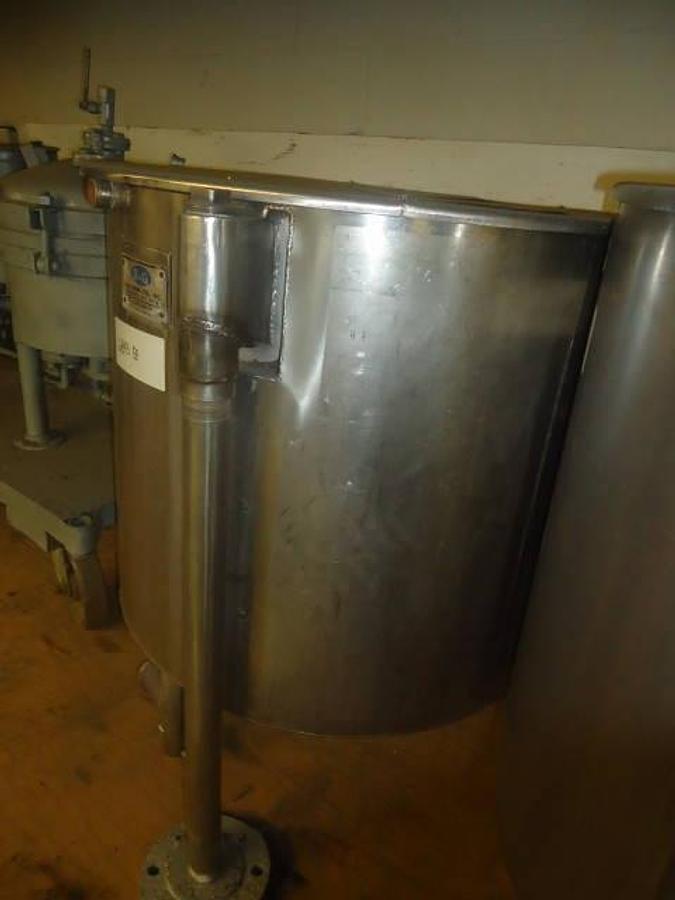
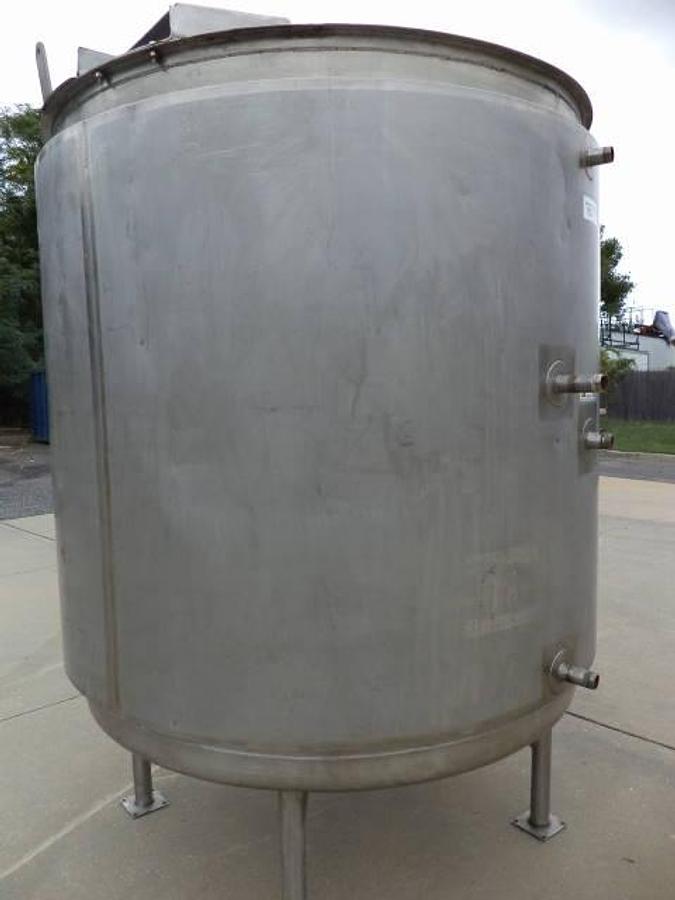
Category
Manufacturer
Model
B & G
B & G is known for its top-of-the-line machinery in the food and beverage industry, particularly focusing on conveyor and packaging systems. Their expertise in designing customized solutions makes them a preferred partner for companies looking to streamline production processes. B & G’s robust machinery ensures high standards of quality and reliability, making them a staple in the industry.
FAQ:
What sizes do B&G stainless steel tanks typically come in?
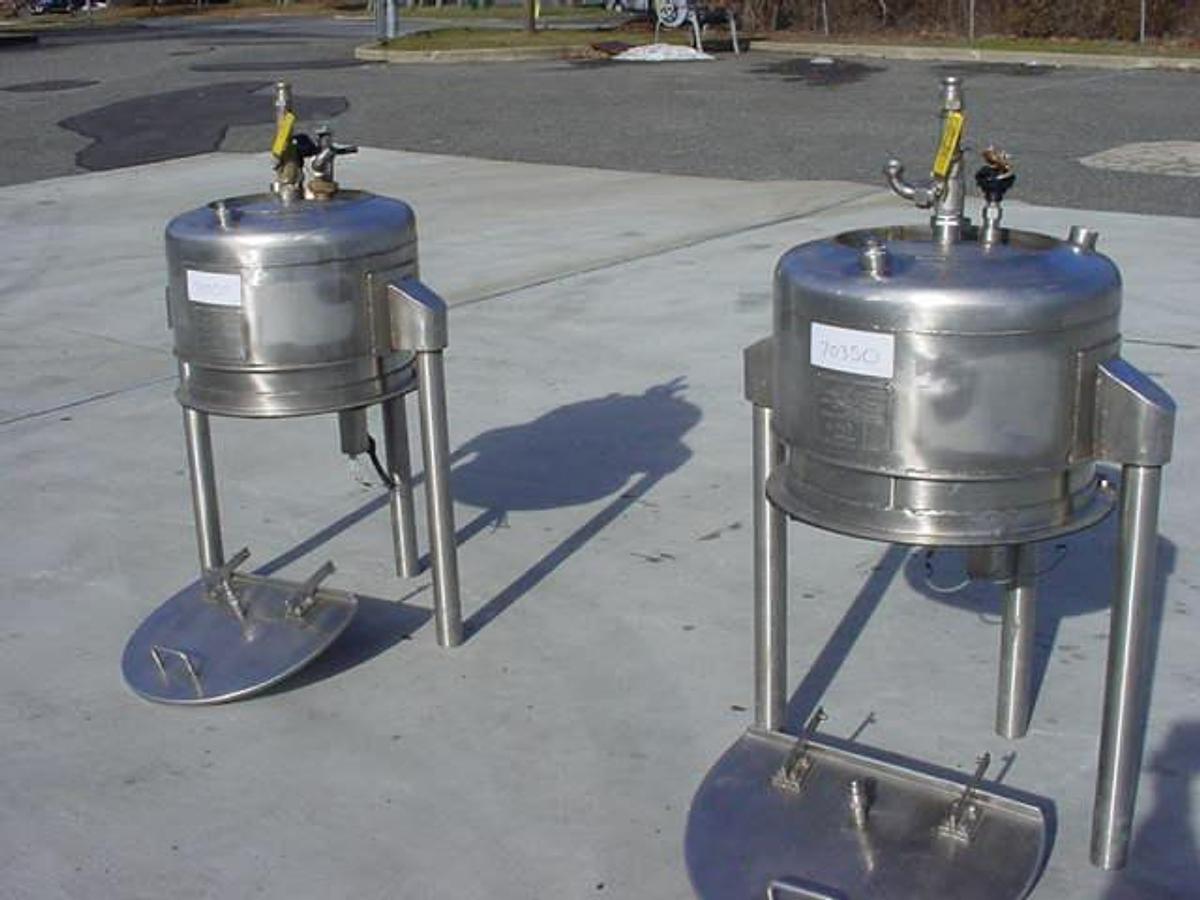
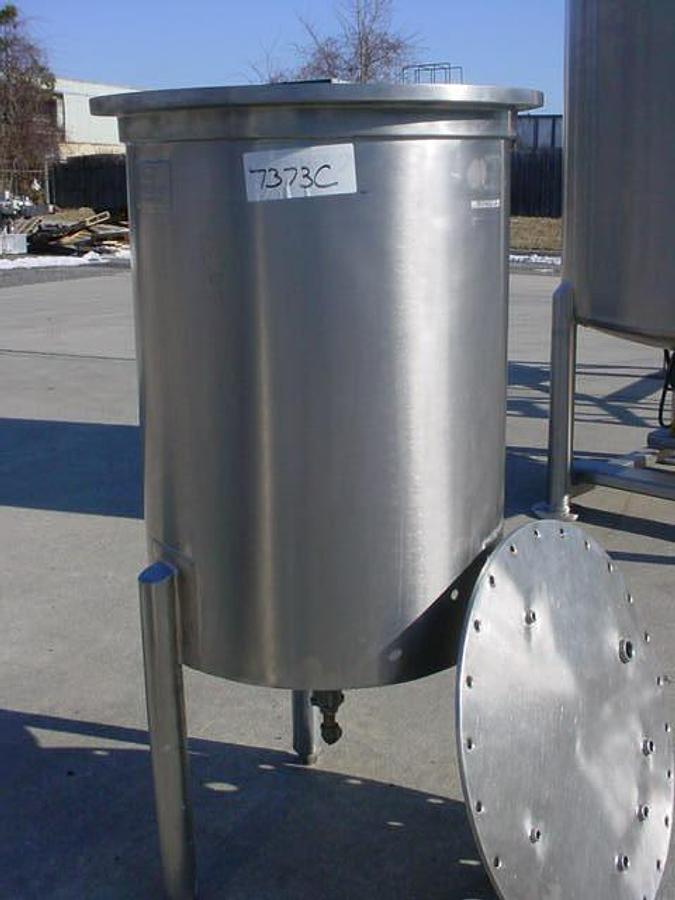
B&G stainless steel tanks are manufactured across a wide range of capacities to suit different production scales and application requirements. Units available on the used equipment market commonly range from small-batch sizes around 20 gallons up to large-volume tanks of 1,250 gallons or more. Mid-range capacities such as 50, 60, 65, and 200 gallons are frequently encountered and are well suited to pilot production, specialty food processing, or chemical blending operations where precise batch control matters.
Because these are used machines sourced from actual production environments, the available inventory at any given time reflects what has come off active production lines. Buyers with specific volume requirements should check current listings carefully and consider whether a slightly larger or smaller tank can be adapted to their process. A 200-gallon portable jacketed tank, for example, offers flexibility that a fixed large vessel does not, which can be an advantage in facilities where layout changes are common.
What grade of stainless steel is used in B&G tanks?
B&G tanks are commonly constructed from 316 or 316L stainless steel, both of which are considered premium grades for industrial and food-grade applications. The addition of molybdenum in 316 stainless gives it meaningfully better resistance to chlorides, acids, and aggressive cleaning agents compared to the more common 304 grade. The "L" designation in 316L refers to a lower carbon content, which reduces the risk of carbide precipitation during welding and makes the material better suited to sanitary fabrication where weld integrity is critical.
For food, beverage, dairy, and pharmaceutical processing, 316 and 316L are the standard choices because they meet the corrosion resistance requirements set by regulatory bodies and industry sanitation standards. Buyers evaluating used B&G tanks should confirm the specific alloy grade listed in the machine specifications, as this directly affects suitability for their intended product or chemical. The grade is typically stamped or documented in the original mill certification paperwork, though on used equipment that documentation may or may not be available.
What does a jacketed stainless steel tank do, and why does it matter?
A jacketed tank has a second outer wall surrounding part or all of the vessel, creating a space through which a heating or cooling medium, typically steam, hot water, glycol, or chilled water, can be circulated. This allows the contents of the tank to be heated, cooled, or held at a precise temperature without direct contact between the heat transfer fluid and the product. For food processing, fermentation, pharmaceutical manufacturing, and chemical blending, temperature control is often critical to product quality and consistency.
B&G jacketed tanks are rated for specific jacket pressures, with some units listed at 50 PSI and others at 60 PSIG, which determines the maximum operating pressure of the heating or cooling circuit. Buyers should match the jacket pressure rating to their utility supply and process requirements. On used equipment, it is also worth verifying that the jacket has been pressure tested or inspected, since jacket integrity can degrade over time depending on how the vessel was used and what media passed through it. A reputable dealer should be able to provide information on the tank's service history or facilitate an inspection.
Are B&G stainless steel tanks suitable for food and beverage applications?
B&G has a well-established presence in the food and beverage industry, and many of their tanks are built to the sanitary construction standards that food processing requires. Tanks fabricated from 316 or 316L stainless steel with polished interior finishes are suitable for direct product contact in food, beverage, dairy, brewing, and similar applications. The smooth, non-porous surface resists bacterial adhesion and can withstand the caustic and acidic cleaning agents used in clean-in-place (CIP) and steam-in-place (SIP) sanitation cycles.
When purchasing a used B&G tank for food or beverage use, buyers should pay close attention to the interior surface condition. Pitting, cracks, or weld defects can harbor bacteria and may be difficult to sanitize properly. Requesting a detailed inspection, either in person or via video, is strongly recommended before committing to a purchase. It is also worth consulting with the relevant regulatory authority or a sanitation specialist to confirm that a particular used vessel meets current requirements for the intended application, as standards can vary by product type and jurisdiction.
What is a cone bottom tank and what advantages does it offer?
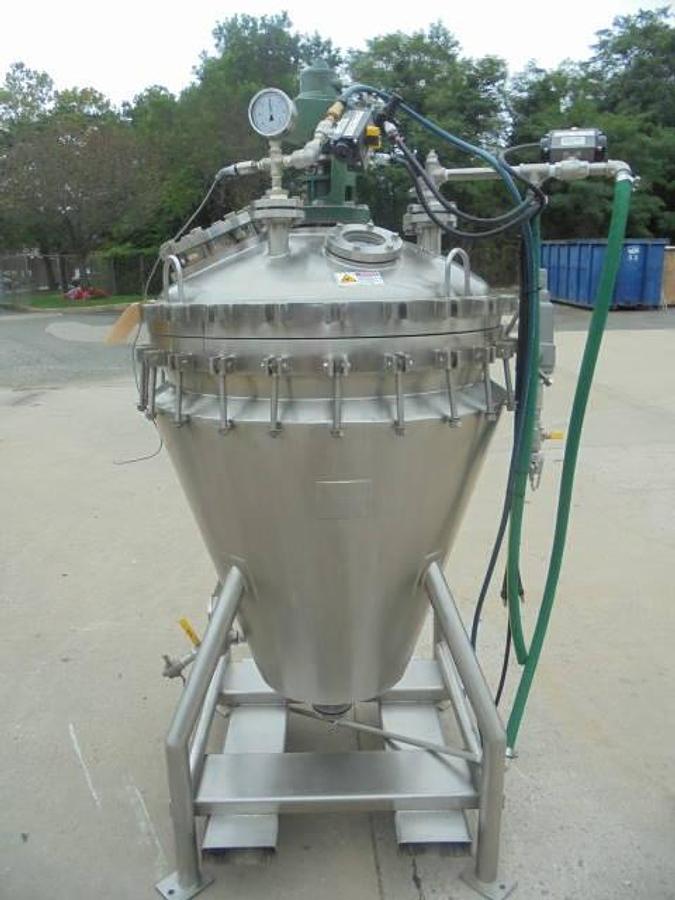
A cone bottom tank has a conical or V-shaped lower section rather than a flat or dished bottom. This geometry causes solids, sediment, or viscous materials to migrate toward the lowest point of the cone, where they can be fully drained through a single outlet valve without manual intervention or residual product left behind. For applications involving slurries, particulate-laden liquids, fermentation with yeast or biomass, or any product where complete drainage and cleanability matter, the cone bottom design is a practical advantage.
B&G cone bottom tanks are available in both pressure-rated and vacuum-capable configurations, with some units also featuring jackets for temperature control and agitators for mixing. A vacuum cone bottom mix tank, for instance, is designed to handle processes where air entrainment must be minimized, such as certain pharmaceutical or specialty food applications. On the used market, cone bottom tanks tend to hold their value well because of their versatility. Buyers should inspect the cone section carefully, as this area is subject to stress and wear and is also where any residual product buildup or corrosion is most likely to appear.
Can B&G stainless steel tanks be used for chemical storage or blending?
Stainless steel tanks, particularly those built from 316 or 316L alloy, are widely used for storing and blending a broad range of chemicals including cleaning agents, fertilizers, pesticides, solvents, and process chemicals. The corrosion resistance of 316 stainless makes it suitable for many acidic and alkaline environments where carbon steel or plastic would degrade. That said, stainless steel is not universally compatible with all chemicals. Halide-rich environments, highly concentrated acids such as hydrochloric or sulfuric acid, and certain chlorinated compounds can attack even 316 stainless under specific conditions.
Buyers intending to use a B&G tank for chemical applications should conduct a compatibility check between the specific chemical and 316 or 316L stainless steel before purchase. Chemical compatibility charts published by materials suppliers and engineering references are a good starting point. It is also worth reviewing the tank's pressure rating and any ancillary components such as gaskets, seals, and agitator shaft materials, since these may have different compatibility profiles than the tank shell itself. A used tank that previously held food-grade products may be repurposed for chemical use more easily than one going in the opposite direction.
What should buyers know about inspecting a used B&G stainless steel tank before purchasing?
Inspecting a used stainless steel tank before purchase is one of the most important steps a buyer can take. Reputable dealers typically offer in-person inspections, virtual walkthroughs, or detailed video documentation of the equipment. Key areas to examine include the interior surface condition (looking for pitting, cracks, discoloration, or weld defects), the condition of any jacket or insulation, the integrity of nozzles and fittings, and the mechanical condition of any agitator or drive assembly. For pressure-rated vessels, asking whether the tank has a current or recent pressure test certification is worthwhile.
Some used tanks may still be installed in an active production facility at the time of sale, which can actually be an advantage since it allows the buyer to see the equipment operating under real conditions. Other units may be decommissioned and in storage. Keep in mind that most equipment dealers do not have the production permits or facilities to run a full product test, so functional verification is typically limited to mechanical checks rather than full production trials. Buyers with specific process requirements should factor this into their evaluation and, if needed, consult with a process engineer or the tank manufacturer to assess suitability based on the specifications and inspection findings.
What is the typical pressure rating for B&G jacketed stainless steel tanks?
B&G jacketed tanks are manufactured to specific pressure ratings that govern both the vessel interior and the jacket circuit independently. Based on units commonly found on the used market, jacket pressure ratings of 50 PSI and 60 PSIG are frequently cited. These ratings reflect the maximum allowable working pressure for the heating or cooling medium circulating through the jacket. The interior vessel may carry a different pressure rating depending on whether the tank is designed for atmospheric, pressurized, or vacuum service.
Pressure vessels are typically fabricated and stamped in accordance with ASME (American Society of Mechanical Engineers) standards, and used tanks that carry an ASME stamp provide buyers with documented assurance that the vessel was built to a recognized engineering code. When evaluating a used pressure vessel, buyers should look for the ASME nameplate or stamp, confirm the listed maximum allowable working pressure (MAWP), and check whether any repairs or modifications have been made since manufacture. Any alterations to a pressure vessel should have been performed by a certified repair organization and documented accordingly. This is a point worth raising directly with the dealer during the inspection process.
What does 'portable' mean in the context of a stainless steel tank, and is it a useful feature?
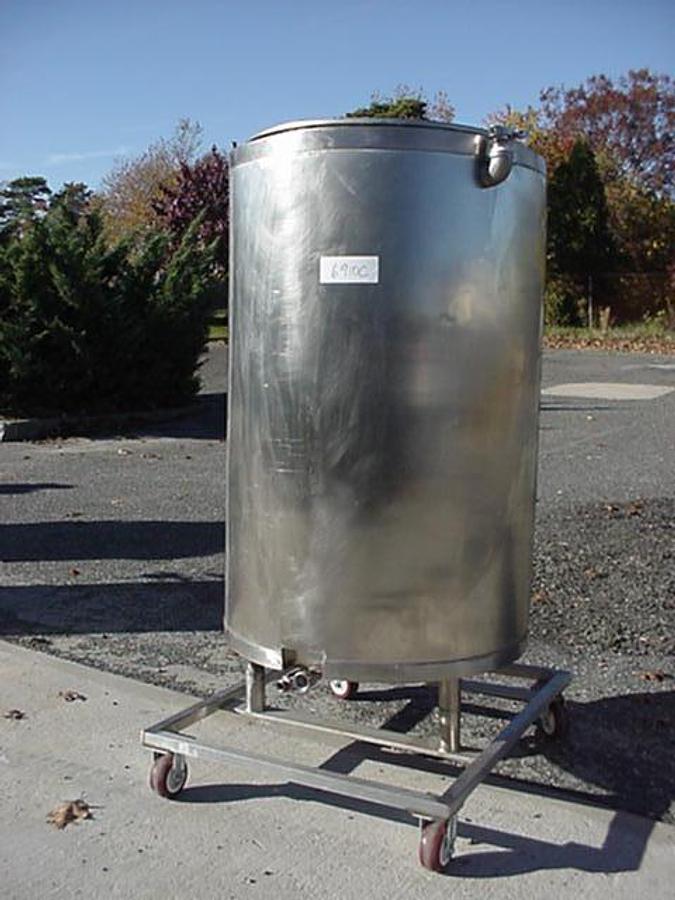
A portable stainless steel tank is mounted on casters or a wheeled frame, allowing it to be moved around a facility without the need for forklifts or fixed piping connections. This is a practical feature for operations that batch-process multiple products in the same space, need to move product between workstations, or want flexibility to reconfigure their production floor without major infrastructure changes. A 200-gallon portable jacketed tank, for instance, can be rolled to a filling station, a mixing area, or a holding position as the process requires.
Portability does come with some trade-offs. Caster-mounted tanks are generally not suitable for high-pressure applications or situations where the vessel needs to be anchored for safety or process reasons. The casters, frame welds, and any flexible hose connections should be inspected carefully on a used unit, as these components experience wear from repeated movement and are sometimes overlooked during routine maintenance. For buyers in food processing, cosmetics, or specialty chemical production where small-to-medium batch flexibility is a priority, a used portable tank in good condition can offer significant operational value at a fraction of the cost of a comparable stationary vessel.
How does shipping and logistics work when purchasing a used stainless steel tank?
Shipping a used stainless steel tank involves more planning than typical freight shipments because of the size, weight, and fragility of certain components such as agitator shafts, fittings, and insulation. Smaller tanks in the 20 to 65 gallon range can often be palletized and shipped via standard LTL (less-than-truckload) freight, though proper blocking, bracing, and wrapping are essential to prevent damage in transit. Larger tanks, particularly those in the 200 to 1,250 gallon range, typically require flatbed trucking, custom crating, and professional rigging for both loading at the origin and unloading at the destination.
Buyers should ask the dealer for a detailed breakdown of packaging, rigging, and freight costs before finalizing a purchase, since these can add meaningfully to the total landed cost of the equipment. Rigging services, which involve the use of cranes, forklifts, or specialized lifting equipment to safely move heavy vessels, are usually quoted separately and vary based on the weight of the tank and the complexity of the move. It is also worth confirming who is responsible for securing any permits required for oversized loads, and whether the dealer coordinates the full logistics chain or expects the buyer to arrange their own carrier. Getting clarity on these details upfront avoids surprises at delivery.