Category
Manufacturer
Model
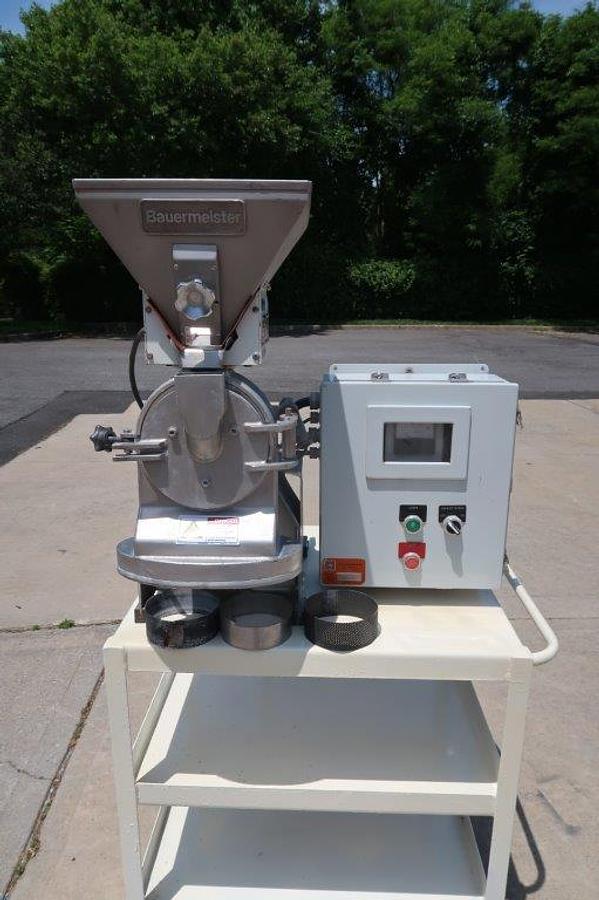
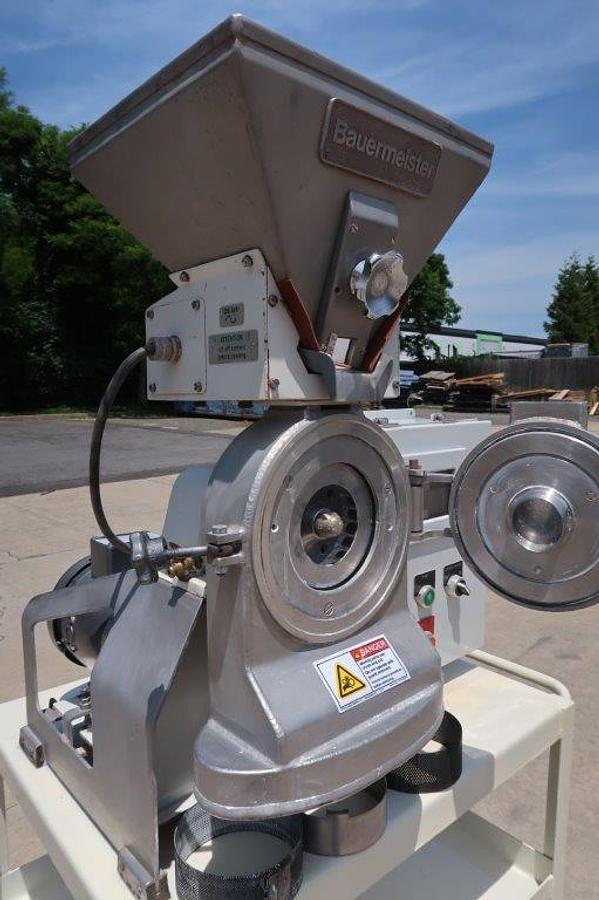
Azo Bauermeister
Azo Bauermeister, often referred to simply as Bauermeister, excels in providing milling equipment to the food processing and chemical industries. Known for their high-precision grinding and sifting machines, they help companies achieve consistent particle sizes in their products, which is critical for both quality control and production efficiency. Their equipment is especially valuable in the spice and flour milling sectors, offering robust solutions that are both efficient and reliable.
FAQ:
What types of milling equipment does Azo Bauermeister manufacture?
Azo Bauermeister produces a range of size reduction and milling machines designed to handle diverse materials across several industries. Their lineup includes universal mills, impact mills, pin mills, and classifier mills, each engineered for specific material properties and target particle size requirements. The UTL Fine Grinding Mill is one of their well-known models, built in stainless steel and suited for applications that demand precise, consistent particle output. Depending on the model, these machines can be configured for hygienic processing environments, including designs compatible with CIP (clean-in-place) and SIP (sterilize-in-place) protocols.
Beyond the mill types themselves, Bauermeister equipment is often paired with sifting and classifying systems to create complete milling lines. Some configurations carry ATEX ratings, making them appropriate for processing materials that generate explosive dust, which is a common concern in flour, spice, and fine chemical applications. The breadth of their product range is part of why Bauermeister machines appear across so many different production environments, and why the used market for their equipment remains consistently active.
What industries use Azo Bauermeister milling equipment?
Azo Bauermeister equipment is used across food processing, chemical manufacturing, and pharmaceutical production. Within food processing, the machines are particularly common in spice milling and flour production, where achieving a consistent, repeatable particle size is essential for both product quality and regulatory compliance. The stainless steel construction and hygienic design options on many Bauermeister models make them well-suited for food-grade environments where sanitation standards are strict.
In the chemical and pharmaceutical sectors, Bauermeister mills are valued for their precision and their ability to handle a wide range of material hardnesses and moisture contents. ATEX-rated models serve facilities where fine powders create explosion risk, a safety consideration that is especially relevant in chemical plants and certain food facilities. Because these machines are built to demanding industrial standards and tend to have long operational lifespans, they hold their value well and are frequently sought after in the used equipment market by buyers across all three of these core industries.
What particle size ranges can Azo Bauermeister mills achieve?
The particle size output of a Bauermeister mill depends heavily on the specific model and configuration. Fine grinding mills in their lineup, such as the UTL series, are capable of producing very fine powders and are used in applications where tight particle distribution is critical to the end product. Pin mills and impact mills in the Bauermeister range typically handle medium to fine grinding tasks, while classifier mills add an internal air classification step that allows operators to dial in a precise upper particle size cutoff and return oversized material for further grinding.
In practical terms, Bauermeister equipment is used in applications ranging from coarse reduction of dried herbs and spices down to fine pharmaceutical powders measured in the low micron range. The exact achievable fineness for any given machine depends on rotor speed, screen or classifier settings, feed rate, and the physical properties of the material being processed. Buyers evaluating a specific used Bauermeister mill should review the machine's original specification sheet and, where possible, discuss the intended application with a knowledgeable equipment dealer to confirm the unit is appropriate for their target particle size.
Why is used Azo Bauermeister milling equipment a practical option for buyers?
Bauermeister machines are built to demanding German engineering standards and are known for long operational lifespans. That durability means a well-maintained used unit can continue to perform reliably for many years after its initial installation. For buyers who need proven milling capability without the lead times and capital outlay associated with sourcing equipment through a manufacturer, the used market offers a practical path to getting production-ready machinery into their facility.
The used market for Bauermeister equipment is active precisely because these machines retain their functional value over time. Buyers can often find models that were previously used in food-grade or pharmaceutical environments, which means they were built and maintained to high sanitation standards. Purchasing used equipment does come with the responsibility of thorough inspection, since used machines are sold as-is without manufacturer warranties. Working with a reputable dealer who specializes in food and chemical processing equipment, and who can facilitate a proper inspection before purchase, is the most reliable way to assess whether a specific unit meets production requirements.
How do I verify the condition of a used Azo Bauermeister mill before buying?
Inspecting a used Bauermeister mill thoroughly before committing to a purchase is one of the most important steps a buyer can take. Reputable used equipment dealers will typically offer inspection options that include in-person visits, video walkthroughs, or detailed photo documentation of the machine. If the equipment is still installed at the facility where it was last used, it may be possible to observe it in an operational state, which gives a clearer picture of mechanical condition than a static inspection alone. Buyers should pay close attention to wear components such as grinding elements, screens, liners, and seals, as these parts directly affect performance and represent replacement costs.
Beyond the physical inspection, buyers should ask about the machine's service history, the industry it was used in, and how long it has been out of production. Contacting the manufacturer directly is also worthwhile, as Bauermeister can often advise on what parts and support are available for a given model and age of machine. Keep in mind that most equipment dealers do not have the permitting or production setup to run actual product through a machine during inspection, so assessments are based on mechanical condition rather than live output testing. Selecting a dealer with a long track record in food and chemical processing equipment adds an important layer of confidence to the process.
What should buyers know about shipping used Azo Bauermeister milling equipment?
Milling equipment from Bauermeister ranges in size and weight from compact bench-top units to large industrial machines, and shipping costs will vary considerably depending on the specific model. Proper packaging is critical to prevent damage in transit. Smaller machines may be adequately protected with palletization, while larger mills often require custom crating to secure internal components and protect precision surfaces. Buyers should ask the dealer specifically what level of packaging is included in the quoted price and whether additional crating costs apply.
For heavier machines, specialized rigging is typically needed for both loading at the origin and unloading at the destination. Rigging costs are usually separate from freight charges and should be factored into the total landed cost of the equipment before finalizing a purchase decision. International shipments add customs documentation and duties to the calculation. Getting a clear, itemized breakdown of packaging, rigging, freight, and any applicable import costs from the dealer upfront helps buyers avoid unexpected expenses and accurately compare the total cost of acquiring a specific machine.
What are the typical payment terms for purchasing used Azo Bauermeister equipment?
Most used industrial equipment dealers require full payment before a machine is released for shipping. This is standard practice in the industry and reflects the nature of used equipment transactions, where the seller needs to confirm funds before arranging logistics for heavy machinery. Buyers who are working with a dealer for the first time should expect to pay in full prior to shipment. Some dealers extend payment terms to repeat customers with an established purchasing history, but this is not the norm for first-time transactions.
Buyers should clarify acceptable payment methods early in the process, as wire transfers are the most common form of payment for industrial equipment purchases of this scale. It is also worth confirming the full landed cost, including packaging, rigging, and freight, before submitting payment, so that the total financial commitment is understood before the transaction is finalized. Choosing a dealer with a verifiable track record and clear communication around payment and logistics reduces risk on both sides of the transaction.
What maintenance does Azo Bauermeister milling equipment typically require?
Bauermeister mills, like most high-speed size reduction equipment, have wear components that require periodic inspection and replacement depending on throughput and the abrasiveness of the material being processed. Grinding elements such as pins, hammers, or beater bars, along with screens and liners, are the parts most subject to wear. Seals, bearings, and drive components also require routine attention. Establishing a preventive maintenance schedule based on operating hours and material type is the most effective way to extend the service life of the machine and maintain consistent output quality.
For buyers acquiring a used Bauermeister mill, understanding the current condition of wear parts is an important part of the pre-purchase assessment. Replacement parts availability can vary depending on the age and model of the machine, so it is advisable to contact the manufacturer directly to confirm what components are still available for a specific unit. Older or discontinued models may require sourcing parts through third-party suppliers or having components fabricated, which affects ongoing maintenance costs. A dealer who specializes in food and chemical processing equipment can often provide guidance on parts sourcing and connect buyers with service resources appropriate for their specific machine.
What is the difference between a pin mill and an impact mill in the Bauermeister lineup?
Pin mills and impact mills are both high-speed size reduction machines, but they differ in how they apply force to the material. A pin mill uses two discs fitted with rows of interlocking pins, one or both of which rotate at high speed. Material fed into the center of the disc assembly is struck repeatedly by the pins as it moves outward, breaking down through impact and attrition. Pin mills are well-suited for friable, dry materials and can achieve relatively fine particle sizes. They are common in spice, sugar, and dry food ingredient processing.
Impact mills, by contrast, use a single high-speed rotor with blades, hammers, or beaters that strike material as it enters the grinding chamber. The particle size is controlled by rotor speed and the size of the screen or outlet aperture. Impact mills tend to handle a broader range of material types and can process somewhat coarser feed materials than pin mills. Both designs appear in the Bauermeister product range, and the right choice depends on the specific material, target particle size, required throughput, and whether the application involves heat-sensitive products, since pin mills generally generate less heat during grinding. Buyers evaluating used equipment should match the mill type to their specific processing requirements rather than selecting based on availability alone.
How does the hygienic design of Bauermeister mills affect suitability for food and pharmaceutical applications?
Hygienic design in milling equipment refers to construction features that minimize the risk of contamination, simplify cleaning, and allow thorough inspection of all product-contact surfaces. Bauermeister mills built for food and pharmaceutical use typically feature stainless steel construction, smooth internal surfaces without crevices where material can accumulate, and quick-release or tool-free disassembly for cleaning access. Models with CIP and SIP capability allow cleaning fluids or steam to be circulated through the machine without full disassembly, which reduces downtime in production environments with frequent product changeovers.
For buyers sourcing used Bauermeister equipment intended for food or pharmaceutical production, confirming that the specific unit was originally built to hygienic standards is important. Not all Bauermeister models are configured for food-grade use; some are designed for chemical or industrial applications where sanitation requirements are less stringent. Reviewing the machine's original specification documentation and, where possible, its service and cleaning history helps buyers determine whether a used unit is appropriate for their regulatory environment. A dealer familiar with food processing equipment can help identify which models in the used market carry the construction features required for hygienic production.