Category
Manufacturer
Model
FAQ:
What is an Autolabe pressure sensitive labeler and how does it work?
An Autolabe pressure sensitive labeler is a labeling machine designed to apply pre-printed, peel-and-stick adhesive labels to containers, bottles, jars, boxes, and other packaging formats. The machine feeds a roll of labels through a dispensing mechanism, peels the backing liner away at a peel plate or beak, and applies the exposed label directly onto the product surface as it passes through the label application zone. The process is driven by a combination of a label drive motor, a product sensor, and a conveyor or product feed system that synchronizes label placement with product movement.
Autolabe machines have built a strong reputation in the labeling industry for mechanical simplicity and reliable performance across semi-automatic and fully automatic production environments. Because pressure sensitive labels do not require heat, moisture, or glue pots to activate, setup is straightforward and changeovers between label rolls are relatively quick. These machines are found across a wide range of industries, from food and beverage to cosmetics, pharmaceuticals, and industrial chemicals, precisely because the pressure sensitive application method works on almost any smooth or semi-smooth surface without specialized tooling.
What types of containers can an Autolabe pressure sensitive labeler handle?
Autolabe pressure sensitive labelers are designed to handle a broad variety of container shapes, including round bottles, flat-sided containers, tapered containers, and some irregularly shaped packaging. Many Autolabe models feature adjustable label application heads, which means the machine can be reconfigured to accommodate different container geometries without requiring major mechanical retooling. Round containers are typically handled with a wrap or spot application setup, while front-and-back labeling configurations allow flat or oval containers to receive two labels in a single pass.
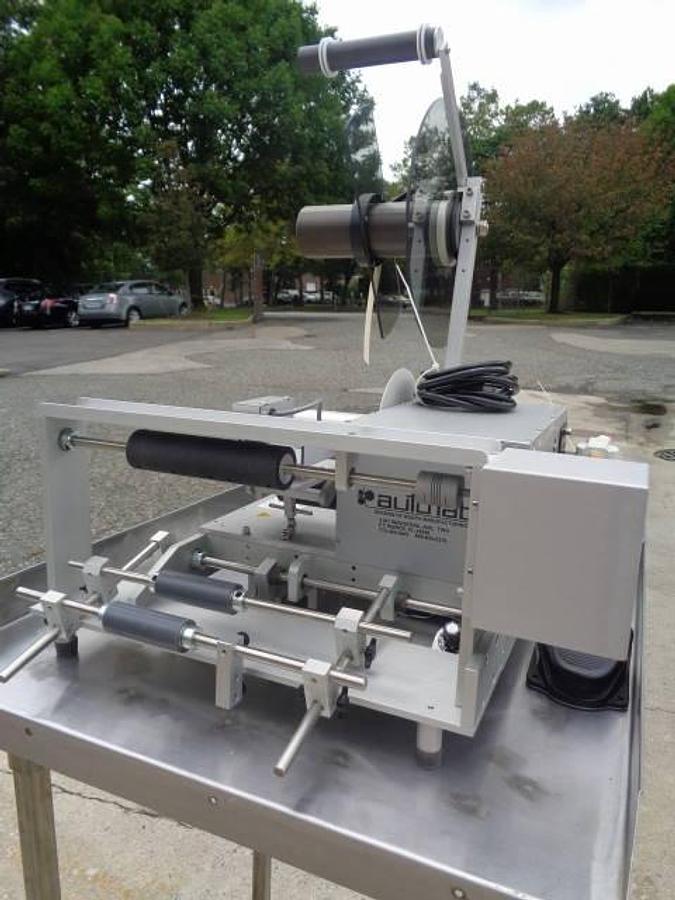
The specific capabilities depend on the model. For example, the Autolabe 550 is a tabletop unit configured for spot or wraparound labeling, making it well suited for smaller production runs or limited-footprint operations. A front-and-back labeling model, on the other hand, is built to apply two labels simultaneously, which is common in food, beverage, and personal care product lines. Before purchasing a used Autolabe, buyers should confirm the machine's configuration matches their container dimensions and label placement requirements, since some adjustments may require additional parts or tooling.
What industries are Autolabe pressure sensitive labelers best suited for?
Autolabe pressure sensitive labelers are used across a wide range of industries where consistent, accurate label application is critical to product presentation and regulatory compliance. Food and beverage producers rely on these machines for labeling bottles, jars, cans, and cartons. Pharmaceutical and nutraceutical manufacturers use them for labeling pill bottles, supplement containers, and liquid medicine packaging where placement accuracy is essential. Cosmetics and personal care brands apply them to tubes, bottles, and jars, and chemical and industrial product companies use them on containers that need clear identification labels for safety and compliance purposes.
The versatility of pressure sensitive labeling technology is a big reason these machines appear in so many different production environments. Because the labels are pre-printed and simply require mechanical application, the same machine can often be adapted to different product lines with label roll and guide adjustments. Autolabe's reputation for durability and low maintenance makes used units particularly appealing to small and mid-size manufacturers who need reliable throughput without the overhead of complex maintenance programs.
What label sizes and materials are compatible with Autolabe pressure sensitive labelers?
Autolabe pressure sensitive labelers are compatible with a wide range of label materials, including paper, polypropylene (BOPP), polyethylene, foil, and other flexible label stocks that are supplied on a release liner. The machine feeds the label roll through a series of guides and rollers, so the label web width, roll outer diameter, and core size all need to fall within the machine's specified tolerances. Label gap (the space between individual labels on the liner) is also an important specification, as the machine's sensor detects this gap to time each label application accurately.
Before purchasing a used Autolabe, buyers should pull the machine's technical documentation or consult with the seller to confirm the compatible label web width range, maximum roll diameter, and core size requirements. Mismatches between the machine's mechanical guides and the buyer's label roll dimensions can result in misfeeds or misapplication. If the buyer's label supplier uses a non-standard core size or roll format, it is worth verifying compatibility before completing a purchase, since retrofitting a used machine for non-standard label stock can add unexpected costs.
What is the typical labeling speed of an Autolabe pressure sensitive labeler?
Labeling speed on Autolabe machines varies by model and application type. Tabletop semi-automatic models are generally designed for lower-volume production, typically handling anywhere from 20 to 60 products per minute depending on label size, container handling speed, and the complexity of label placement. Inline automatic models integrated with a conveyor system can achieve higher throughput, often in the range of 60 to 200 or more labels per minute under optimized production conditions. The actual speed in any given application depends on how the machine is configured, the container feed rate, and the label length.
For buyers evaluating a used Autolabe for a specific production line, it is worth requesting information from the seller about the model's rated speed range and asking whether the machine was previously run at high cycle rates. Machines that have operated at or near their maximum rated speed for extended periods may show more wear on drive components and label feed mechanisms. Inspecting these components during a pre-purchase evaluation, either in person or via a detailed video inspection, helps buyers assess whether the machine's actual throughput capacity aligns with their production requirements.
What is the typical price range for a used Autolabe pressure sensitive labeler?
Pricing for used Autolabe pressure sensitive labelers varies considerably based on the model, configuration, age, and overall mechanical condition. Tabletop semi-automatic units like the Autolabe 550 typically sell in a lower price range than larger inline automatic models with conveyor integration. In the used equipment market, simpler tabletop models can be found anywhere from a few thousand dollars to around ten thousand dollars, while more capable automatic inline labelers in good working condition can range from ten thousand to thirty thousand dollars or more depending on features and accessories included.
Buyers should factor in more than just the purchase price when evaluating total cost. Shipping, rigging, any necessary reconditioning, and replacement parts for worn components can add meaningfully to the landed cost of a used machine. It is a good practice to request a detailed condition report from the seller and, where possible, arrange an inspection before finalizing a purchase. Comparing the total landed cost against the cost of a comparable machine in better condition from another source is a straightforward way to make sure the investment makes sense for the intended application.
What should a buyer inspect before purchasing a used Autolabe labeler?
Purchasing used labeling equipment requires a careful evaluation of the machine's mechanical and electrical condition. Key areas to inspect on a used Autolabe include the label drive motor and drive belt for wear, the peel plate or beak for damage or deformation, the label web guides and rollers for scoring or buildup, the product sensor for responsiveness, and the overall frame and mounting hardware for signs of impact damage or corrosion. The control panel and wiring should also be checked for any obvious damage, loose connections, or outdated components that may be difficult to source.
Used equipment dealers will typically accommodate in-person inspections or virtual inspections via live video or recorded video of the machine. If the machine is still installed at a production facility, it may be possible to observe it running under actual production conditions, which gives a much clearer picture of its working state than a static inspection alone. Buyers should also contact the manufacturer directly to understand what level of parts and technical support is available for the specific model and age of machine they are considering, since older models may have limited parts availability that affects long-term serviceability.
Can an Autolabe pressure sensitive labeler be integrated into an existing production line?
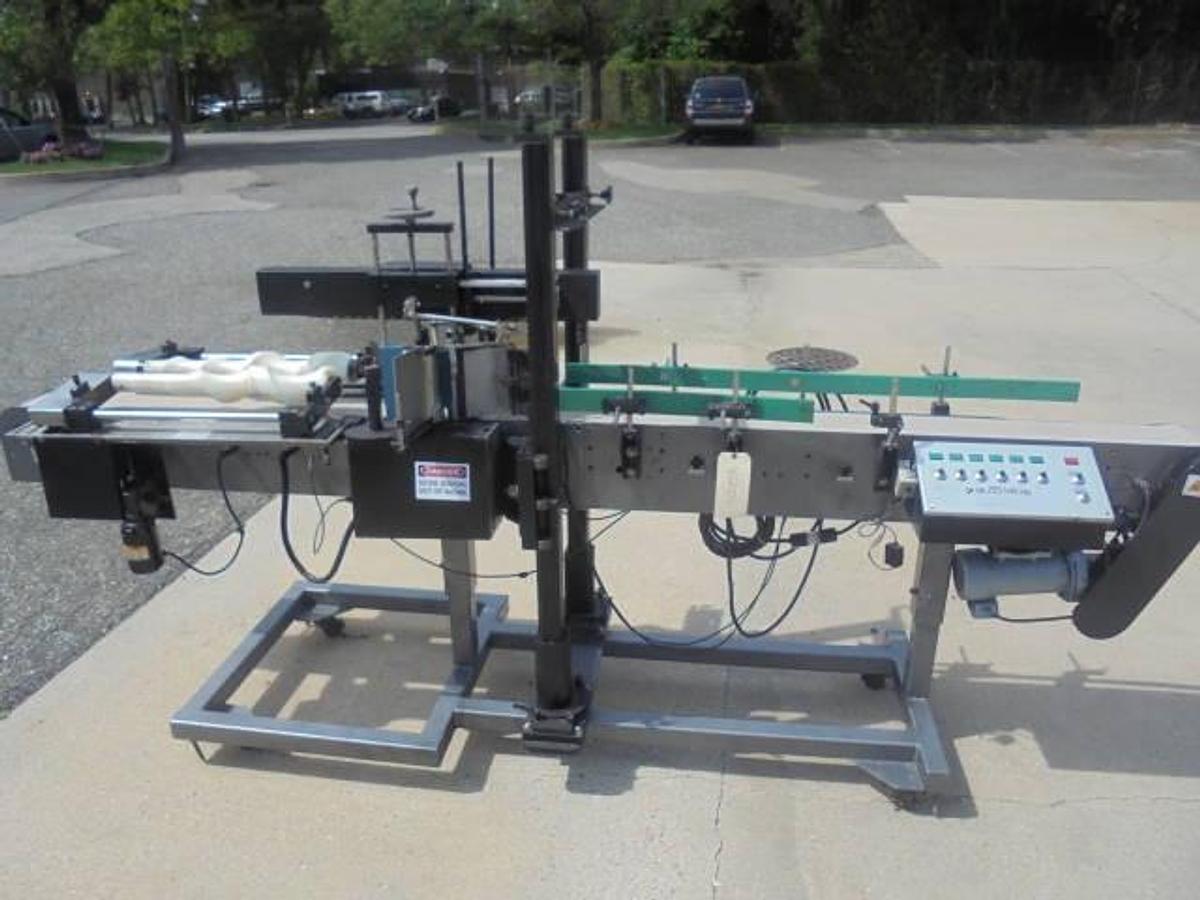
Many Autolabe models are designed with production line integration in mind. Inline automatic models mount directly over or alongside a conveyor system, using the conveyor to feed products through the label application zone at a consistent speed. The labeler's drive system synchronizes with the product flow so that labels are applied at the correct position on each container. Some models include adjustable mounting brackets and label head positioning that allow the machine to be fitted to conveyors of different widths and heights without major fabrication work.
Tabletop models like the Autolabe 550 are more self-contained and are typically used in standalone or semi-automatic configurations where an operator hand-feeds products or places them on a small integrated product transport. These are common in smaller production environments or for lower-volume specialty runs. When evaluating a used Autolabe for line integration, buyers should confirm the machine's physical dimensions, conveyor interface requirements, and electrical specifications to make sure they are compatible with the existing line. If the machine was previously integrated into a production line, the seller may be able to provide details about how it was configured, which can simplify reinstallation.
What is the difference between the Autolabe 550 and a front-and-back Autolabe labeler?
The Autolabe 550 is a tabletop pressure sensitive labeler configured for spot or wraparound label application. It is a compact unit suited for lower-volume production or operations where floor space is limited. Spot application places a single label on one face of a container, while wraparound application wraps the label around a cylindrical container such as a round bottle. The 550 is commonly used in food, beverage, and specialty product environments where versatility and ease of setup are priorities.
A front-and-back Autolabe labeler, by contrast, is configured to apply two labels simultaneously, one to the front panel and one to the back panel of a container, in a single pass through the machine. This configuration is common for products that carry separate front and back label designs, such as many food, beverage, and personal care products. Front-and-back models are generally larger and more mechanically complex than a tabletop spot labeler, and they are typically integrated into a conveyor-fed production line. Buyers choosing between these configurations should match the machine type to their specific label placement requirements and production volume rather than selecting based on price alone.
What are the shipping and payment considerations when buying a used Autolabe labeler?
Shipping costs for used labeling equipment depend on the size and weight of the machine, the distance to the destination, and the level of packaging required to protect it in transit. Smaller tabletop units like the Autolabe 550 can typically be palletized and shipped via freight carrier at a relatively modest cost. Larger inline models may require custom crating and heavier-duty rigging for loading and unloading, both of which add to the total shipping cost. Buyers should ask the seller for a detailed breakdown of packaging, rigging, and freight charges before finalizing a purchase so there are no surprises in the total landed cost.
On payment terms, most used equipment dealers require full payment before the machine is released for shipping. Some dealers may extend terms to repeat customers, but this is not the norm for first-time transactions. Because used machines are typically sold as-is, buyers carry the responsibility of due diligence before payment is made. Arranging an inspection, reviewing any available documentation, and confirming the machine's condition through video or in-person review before sending payment is the standard recommended approach in the used equipment market.