Category
Manufacturer
Model
Autobag
Autobag supplies innovative packaging solutions, specializing in the manufacturing of automated bagging systems. They are well-regarded for their high-speed systems designed for small-item packaging across industries like e-commerce, food, and pharmaceuticals. Autobag’s equipment is pivotal for increasing throughput and reducing manual labor in high-volume packaging environments.
FAQ:
What is an Autobag bagging machine and how does it work?
Autobag is a brand under Pregis (formerly part of Automated Packaging Systems) and has been one of the most recognized names in automated bagging for decades. Autobag machines use pre-opened bag-on-a-roll technology, where a continuous roll of pre-opened poly bags feeds through the machine automatically. The operator or an integrated feeder system places the product into the open bag, and the machine seals and advances to the next bag in one continuous motion. This eliminates the time-consuming steps of manually opening individual bags, which is where much of the labor savings comes from in high-volume environments.
The machines range from semi-automatic tabletop units designed for smaller operations to fully integrated inline systems built for large-scale fulfillment centers. Some models include optional print-on-demand modules that print labels or barcodes directly onto each bag during the sealing cycle, removing a separate labeling step entirely. Autobag equipment is widely used across e-commerce fulfillment, retail distribution, pharmaceutical packaging, hardware parts, and certain food-safe applications depending on the specific model and configuration. The core appeal is throughput: where manual bagging might yield a few hundred bags per hour, an Autobag system can process bags at rates exceeding 40 per minute on capable models.
What models of used Autobag bagging machines are commonly available on the secondary market?
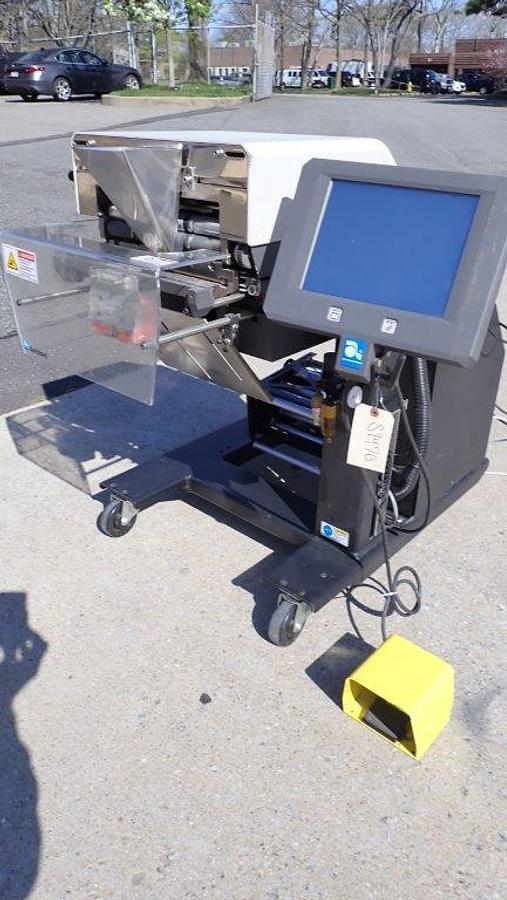
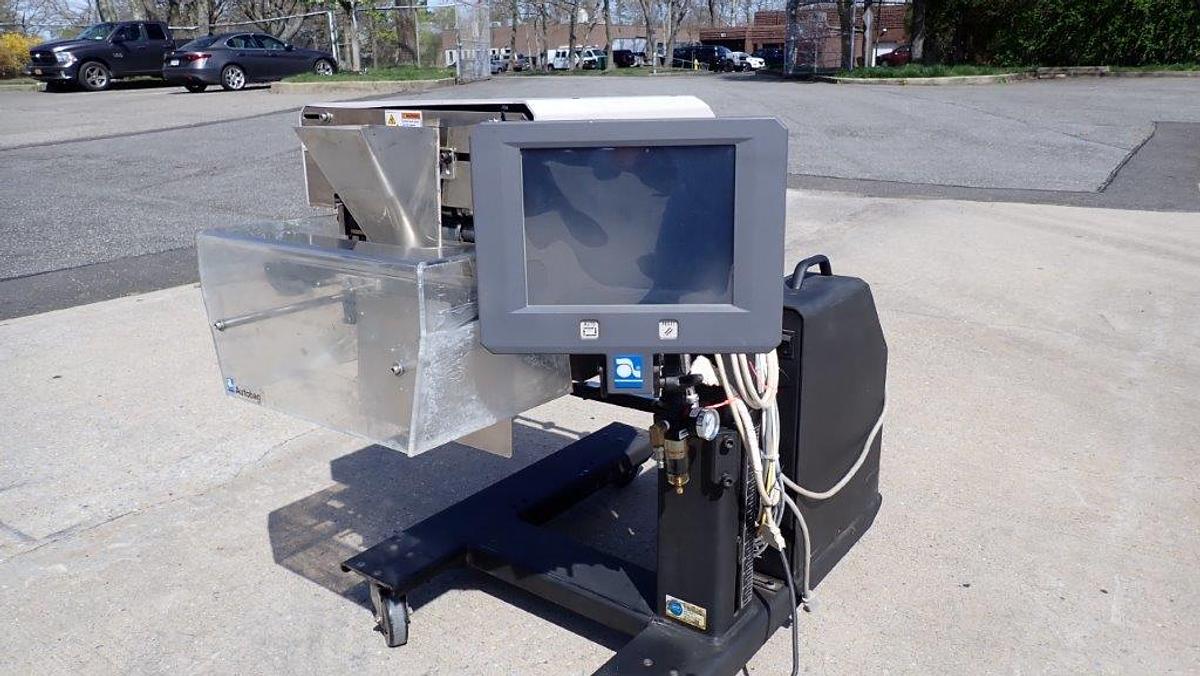
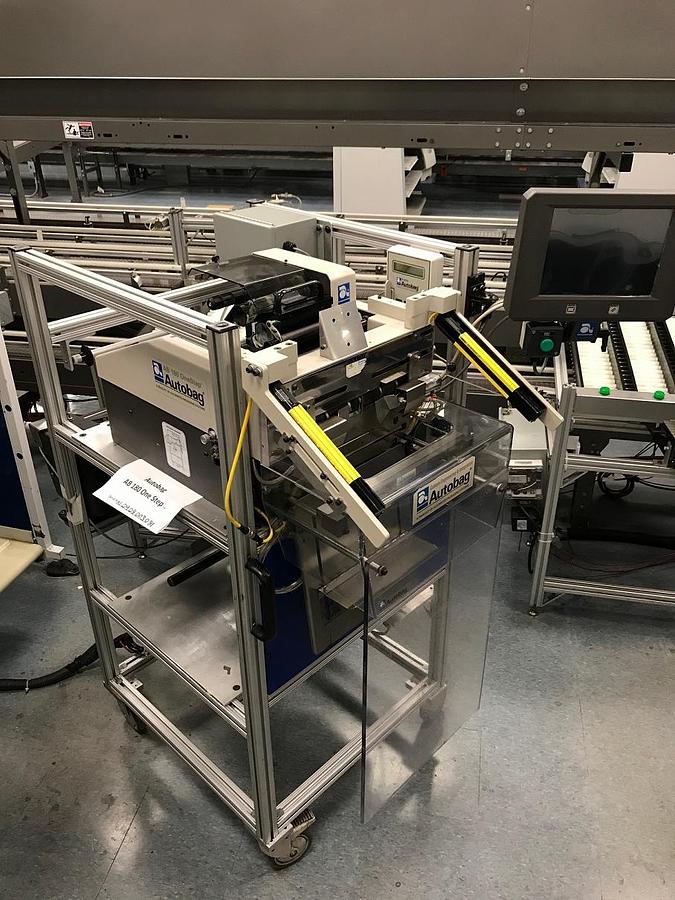
Several Autobag models appear regularly on the used equipment market, and the most frequently listed include the AB-180, AB-145, and H-75, along with the H-100 bagger. The AB-180 is one of the more popular models and is available in portable configurations, sometimes paired with integrated printers. It is a versatile machine suited for a wide range of product types and bag sizes. The AB-145 is a portable auto-fill and sealing unit that appeals to operations with floor space constraints or those that need to move the machine between workstations.
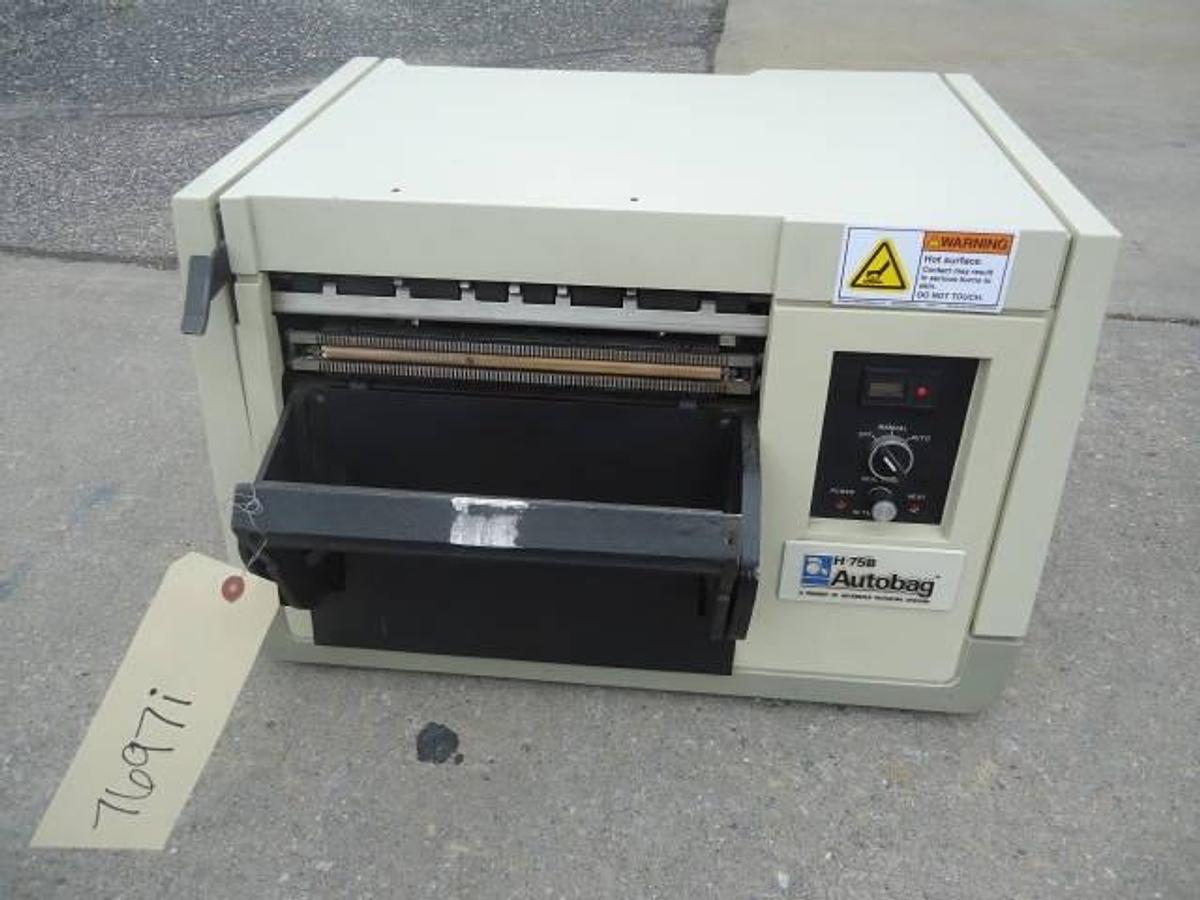
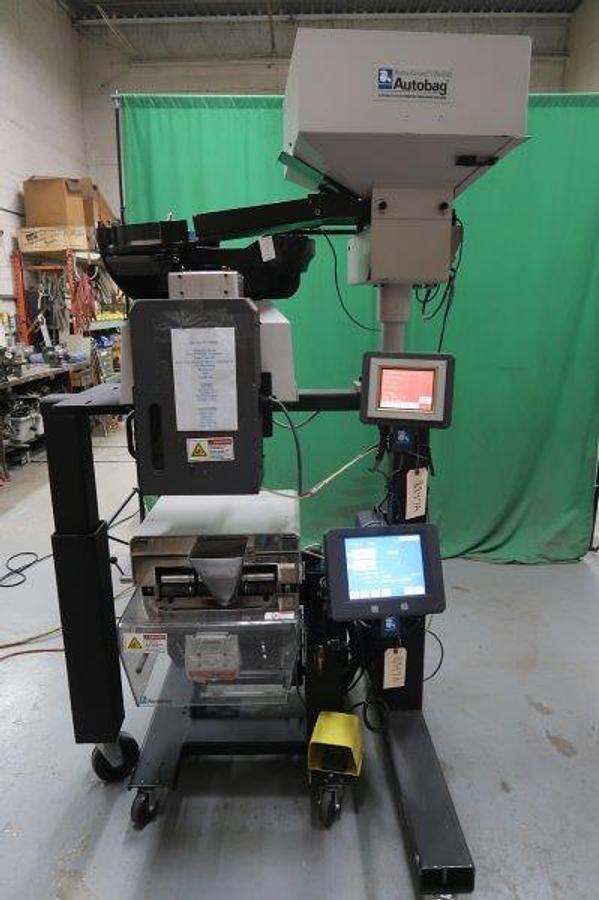
The H-75 and H-100 are horizontal baggers from Automated Packaging Systems under the Autobag brand, designed for different throughput requirements. The H-100 is often listed with a companion P100 printer unit, which allows for inline printing during the bagging cycle. When evaluating used listings, buyers should pay close attention to the specific configuration, included accessories like feeders or printers, and the overall condition as described or shown by the seller. An Accu-Count feeder attachment, for example, adds automated counting capability and significantly changes the value and application of an AB-180 unit compared to the base machine alone.
What is the typical price range for used Autobag bagging machines?
Pricing for used Autobag machines varies considerably based on the model, age, condition, included accessories, and the seller. Entry-level or older semi-automatic models in average condition can be found at lower price points, while well-maintained units with integrated printers, feeders, or more advanced automation command significantly higher prices. The AB-180 with an Accu-Count feeder and printer, for instance, is a more complete and capable system than a base unit, and that will be reflected in the asking price. Buyers should treat any listed price as a starting point for evaluation rather than a final landed cost.
Total cost of ownership goes beyond the purchase price. Shipping, rigging, any needed reconditioning, and ongoing consumables like pre-opened bag rolls all factor into what the machine actually costs to operate. It is worth contacting the manufacturer or an authorized service provider before purchasing to understand parts availability and support for the specific model being considered, since older or discontinued models may have limited support. Comparing a few reputable used equipment dealers rather than relying on aggregation listings gives a better sense of fair market value and also provides more reliable information about the machine's actual condition.
What types of products can be packaged using an Autobag bagging machine?
Autobag machines are designed for small-item packaging across a wide range of industries. Common applications include e-commerce order fulfillment (apparel, accessories, small consumer goods), pharmaceutical and medical device packaging, hardware and fasteners, retail poly-bagging of folded garments, and certain food-safe applications depending on the model and bag material used. The machines excel in environments where a consistent, repeatable bag-and-seal cycle is needed at high volumes, and where the product dimensions fit within the bag roll being used.
The key constraint is product size and shape. Autobag systems work best with items that can be dropped or placed into a pre-opened bag without jamming the feed mechanism. Bulky, irregularly shaped, or very heavy items are generally not a good fit. For operations packaging a mix of product sizes, it is worth confirming that the machine's bag width and length range can accommodate the full SKU range before purchasing. Some models offer more flexibility in bag sizing than others, and used listings should specify the compatible bag roll dimensions for the unit being sold.
How fast are Autobag bagging machines, and what affects throughput?
Throughput rates vary by model and configuration, but capable Autobag systems can produce more than 40 bags per minute under ideal conditions. That translates to well over 2,000 bags per hour, which represents a substantial improvement over manual bagging operations. The AB-180 and similar models are built for high-speed production environments where labor reduction and packaging consistency are priorities. Models equipped with automated feeders, like those paired with an Accu-Count feeder, can push throughput further by automating the product-loading step.
Actual throughput in a real production environment depends on several factors beyond the machine's rated speed. Product size and weight, operator skill, the complexity of the bag cycle, and whether printing is enabled all affect how many bags per minute are actually completed. Used machines may also perform below their rated specifications depending on wear and the condition of key components like the sealing bar and bag advance mechanism. When evaluating a used Autobag machine, asking the seller about the machine's recent production history and requesting a video demonstration of the machine running can give a more realistic picture of what to expect.
Are Autobag machines compatible with third-party pre-opened bag rolls, or do they require brand-specific consumables?
Autobag machines are engineered around Autobag brand pre-opened bag-on-a-roll consumables, and the machines are designed to work with specific bag roll dimensions and perforation spacing. That said, third-party compatible bag rolls are available from various suppliers and are used by many operations as a cost-saving measure. Compatibility depends on the specific machine model and the specifications of the third-party roll, so it requires some due diligence to confirm fit before committing to an alternative supplier.
For buyers purchasing a used Autobag machine, the consumable cost is an important part of the total cost of ownership calculation. Pre-opened bag rolls are a recurring expense, and the per-unit bag cost can add up quickly in high-volume operations. It is worth sourcing bag roll pricing from multiple suppliers before purchase to understand what the ongoing material cost will look like. Consulting with the machine manufacturer or a packaging materials specialist can help identify compatible options and avoid compatibility issues that could cause machine jams or seal quality problems.
What should buyers inspect when purchasing a used Autobag bagging machine?
Buying used packaging equipment puts the responsibility of evaluation squarely on the buyer, so a thorough inspection is essential. The sealing bar and heating elements are among the most wear-prone components on any bagging machine and should be examined closely for signs of damage, uneven wear, or inconsistent seal quality. The bag advance mechanism, drive rollers, and any print heads on integrated printer models also deserve careful attention. Asking for a video of the machine running a full bag cycle is a reasonable and standard request, and reputable dealers will accommodate either in-person or video inspections.
Buyers should also ask about the machine's history: how many hours it has run, what products it was used with, and whether it has had any recent repairs or part replacements. If the machine is still installed at a production facility, some dealers can arrange an in-person inspection at that location. Keep in mind that most used equipment dealers do not have the permitting or setup required to run actual product through a machine in a test environment, so inspections typically focus on mechanical condition and a dry-run cycle rather than a full production test. Consulting with Autobag's manufacturer support team about the specific model's parts availability and service support is also a smart step before finalizing a purchase.
Do Autobag bagging machines require professional installation, or can buyers set them up independently?
Many Autobag models, particularly the portable tabletop units like the AB-180 and AB-145, are designed to be relatively straightforward to set up and do not require specialized installation crews. They typically require a standard electrical connection and a supply of pre-opened bag rolls to begin operating. The machine's controls are designed for production floor use, and operators can generally be trained without extensive technical background. That said, the complexity of setup scales with the machine's automation level and any integrated accessories.
For machines equipped with integrated printers, automated feeders like the Accu-Count, or inline conveyor systems, the setup process is more involved. Connecting and calibrating a print module, for instance, requires familiarity with the printer's software and the machine's trigger settings. Buyers who are purchasing a used machine without access to the manufacturer's original setup documentation may find it helpful to request any available manuals from the seller. Reaching out to the manufacturer directly for technical support documentation is also an option, though the level of support available will depend on the age and current production status of the specific model.
What ongoing maintenance does an Autobag bagging machine require?
Regular maintenance on Autobag machines centers on keeping the sealing and bag-advance systems in good working order. The sealing bar and its non-stick coating or tape should be inspected regularly and replaced when worn, since a degraded sealing surface leads to inconsistent seals and potential product damage. Drive rollers and the bag advance mechanism should be cleaned and checked for wear on a scheduled basis. If the machine includes a thermal print head, that component requires regular cleaning and periodic replacement depending on print volume.
Lubrication of moving parts, cleaning of sensors and photoeyes, and periodic inspection of electrical connections are standard maintenance tasks that apply to most models. Machines that have been sitting idle for an extended period before purchase may need more attention upfront to bring them back to reliable operating condition. Before buying a used Autobag machine, it is worth asking the seller what maintenance was performed during the machine's operating life and whether any parts were recently replaced. Having a relationship with a service technician familiar with Autobag equipment, or confirming that the manufacturer still supports the model with parts, will make ongoing maintenance significantly easier.
What should buyers know about shipping and payment when purchasing a used Autobag machine?
Shipping costs for used bagging equipment depend on the size and weight of the machine, how it is packaged, and the distance involved. Smaller portable units like the AB-145 or a tabletop AB-180 can often be crated and shipped via freight carrier at a reasonable cost, while larger or heavier configurations may require specialized rigging for loading and unloading, which adds to the total landed cost. Buyers should ask the seller specifically about how the machine will be packaged, what rigging is required, and for a complete shipping cost estimate before agreeing to a purchase price.
On payment terms, most used equipment dealers require full payment prior to shipping. Some dealers may extend terms to established repeat customers, but that is the exception rather than the rule for first-time transactions. Because used machinery is typically sold as-is, buyers carry the inspection burden before payment is made. Taking full advantage of any inspection options offered, whether in person, via video call, or through video footage provided by the seller, is the best way to make an informed purchase decision. Understanding the full landed cost, including machine price, shipping, rigging, and any reconditioning needed, gives a realistic picture of the total investment.