Category
Manufacturer
Model
Apacks
Apacks is an industry leader in liquid filling systems, particularly serving the cosmetic, pharmaceutical, and food and beverage markets. Their expertise lies in providing automated filling solutions that ensure precise and sanitary filling processes. Apacks’ technology adapts to a wide range of bottle sizes and shapes, offering scalability and flexibility to production lines.
FAQ:
What industries are Apacks filling machines designed for?
Apacks filling machines are built to serve a range of industries where precise, sanitary liquid filling is critical. The most common applications are in cosmetics, pharmaceuticals, food and beverage, nutraceuticals, and chemicals. The machines are designed with sanitary construction in mind, which makes them particularly well-suited for regulated industries where contamination control and fill accuracy are non-negotiable.
The flexibility of Apacks equipment also means a single machine can often be adapted across product lines within the same facility. A cosmetics manufacturer filling lotions, for example, might use the same platform to fill serums or cleaning solutions with minimal changeover. This adaptability has made Apacks a recognized name among small to mid-sized production operations looking to consolidate their filling needs without purchasing multiple specialized machines.
What types of filling machines does Apacks manufacture?
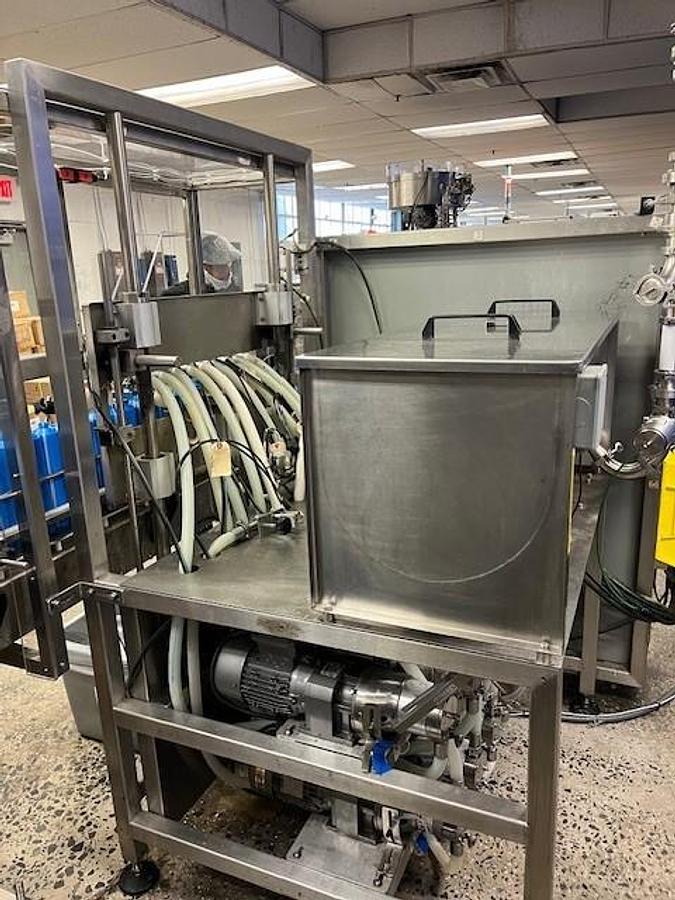
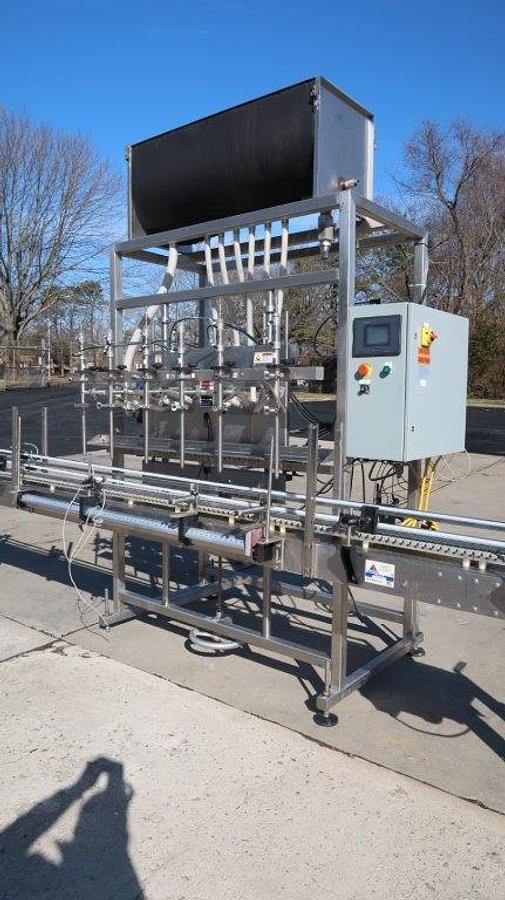
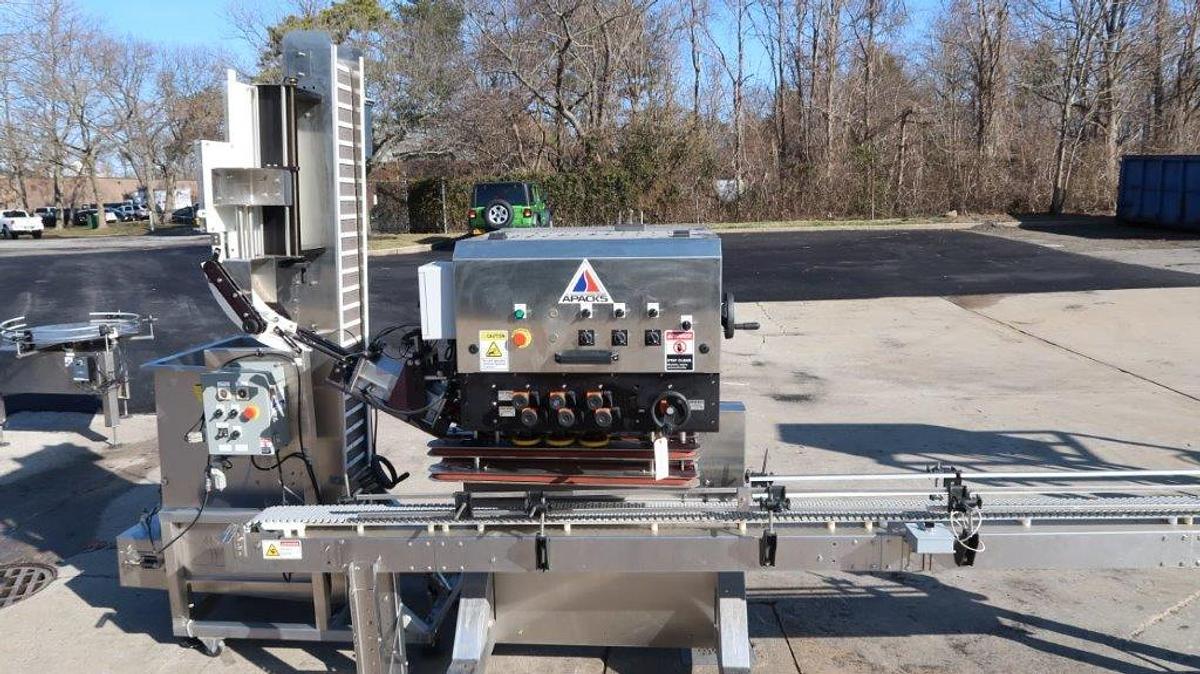
Apacks produces several categories of filling equipment, covering both liquid and viscous product applications. Their lineup includes inline positive displacement fillers, pressure gravity filling machines, and rotary unscrambling and accumulating tables. They also manufacture automatic screw capping machines with cap elevators, which are often paired with their filling systems to create a more complete packaging line.
The pressure gravity filling machines are particularly well-regarded for handling free-flowing liquids, while positive displacement fillers are better suited for thicker or more viscous products that require consistent metered output. Apacks also offers multi-head configurations, such as six-head filling machines, which increase throughput without requiring a full high-speed production line. This range of machine types makes Apacks equipment a practical choice for operations at various stages of growth, from small batch production up to higher-volume automated runs.
Can Apacks filling machines handle both thin liquids and viscous products?
Yes, different models within the Apacks lineup are engineered to handle different product viscosities. Pressure gravity fillers work best with thin, free-flowing liquids like water-based beverages, tinctures, or light oils. For thicker products such as lotions, gels, sauces, or creams, inline positive displacement fillers are the more appropriate choice because they use a pump mechanism to move product regardless of its flow characteristics.
When evaluating a used Apacks machine for a specific application, it is worth identifying the filler type before purchasing. A pressure gravity machine will not perform reliably with a high-viscosity product, and a positive displacement filler may be over-engineered for a simple water-based liquid. Reviewing the machine's specifications and, where possible, consulting with the selling dealer about the product types the machine was previously used for can help ensure a good match between the equipment and the intended application.
What fill volume ranges do Apacks filling machines typically support?
Apacks filling machines are designed with fill volume flexibility as a core feature. Many models are capable of handling a wide range of fill sizes, from just a few milliliters up to several liters per container, depending on the specific machine configuration and the pump or valve setup installed. This range makes them practical for operations that run multiple SKUs in different container sizes without wanting to invest in separate machines for each.
For used Apacks machines, the fill range will depend on the specific model and how it was configured at the time of manufacture or last use. Some machines may have been set up for a narrow fill range suited to a particular production run. Buyers should review the listed specifications carefully and ask the selling dealer about the fill range the machine was operating at, as well as whether adjustments are possible to accommodate different container sizes or fill volumes.
What should buyers know about purchasing a used Apacks filling machine?
Used Apacks filling machines are sold by equipment dealers on an as-is basis, which is standard practice in the used machinery market. Unlike purchasing directly from a manufacturer, buying used means the buyer takes on the responsibility of assessing the machine's condition before committing to a purchase. Reputable used equipment dealers will typically offer in-person inspections, virtual walkthroughs, or video captures of the machine to give buyers an accurate picture of its current working order. Some machines may still be in active production at a facility, while others may have been decommissioned.
It is worth noting that most equipment dealers do not have the permitting or facilities to run actual product through a machine during inspection, so testing is generally limited to mechanical operation rather than full production runs. Buyers should factor this into their due diligence process. Consulting with the Apacks manufacturer directly about the specific model's age, available parts, and level of technical support is also a smart step before finalizing any purchase, as older models may have more limited support resources than more recent production runs.
Are Apacks filling machines suitable for small businesses or startups?
Apacks has built its reputation specifically around serving small to mid-sized businesses, and their machines are frequently cited for being accessible to operations without large technical teams. The equipment is designed with ease of use in mind, requiring minimal operator training compared to more complex industrial filling systems. This makes Apacks machines a practical entry point for startups or growing businesses that need reliable automated filling without the overhead of a full-scale production infrastructure.
Buying a used Apacks machine can make this even more accessible from a cost standpoint, since used equipment typically sells at a significant discount compared to purchasing directly from a manufacturer. For a small business looking to move from manual filling to semi-automated or fully automated production, a used Apacks machine in good working condition can represent a meaningful step up in throughput and consistency. The key is to work with a dealer who can provide detailed condition information and support the buyer through the inspection and acquisition process.
What is the production speed of Apacks filling machines?
Production speed varies across the Apacks lineup depending on the machine type and configuration. As a reference point, Apacks' six-spindle automatic screw capping machine is rated at up to 200 caps per minute, which gives a sense of the throughput capacity their automatic equipment can achieve. Filling machine speeds will depend on the number of fill heads, the fill volume per container, and the viscosity of the product being filled.
Multi-head configurations, such as six-head filling machines, naturally produce higher output than single or dual-head setups because multiple containers are filled simultaneously. For buyers evaluating a used Apacks machine, it is useful to look at the number of fill heads and the fill volume range as the primary indicators of expected throughput. The dealer should be able to provide the machine's rated speed, though actual production rates in a buyer's facility may vary based on line integration, container handling, and product characteristics.
What is the role of rotary unscrambling and accumulating tables in a filling line?
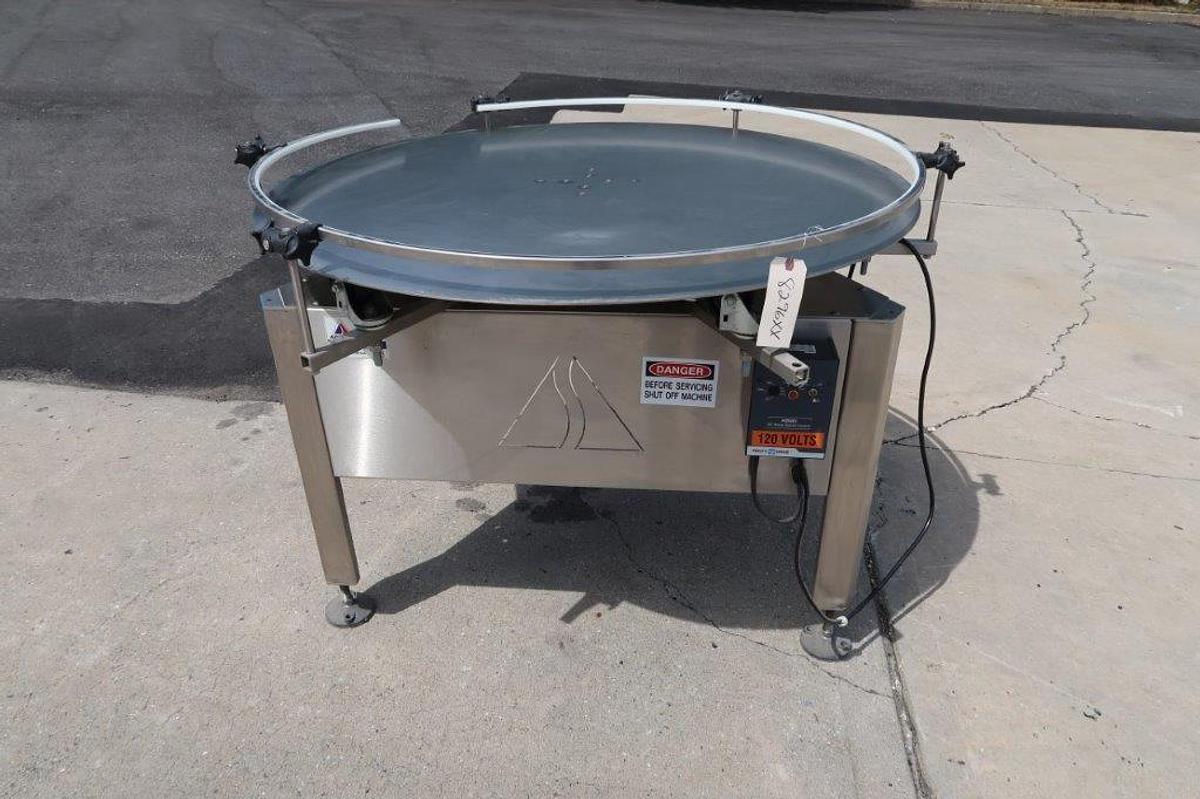
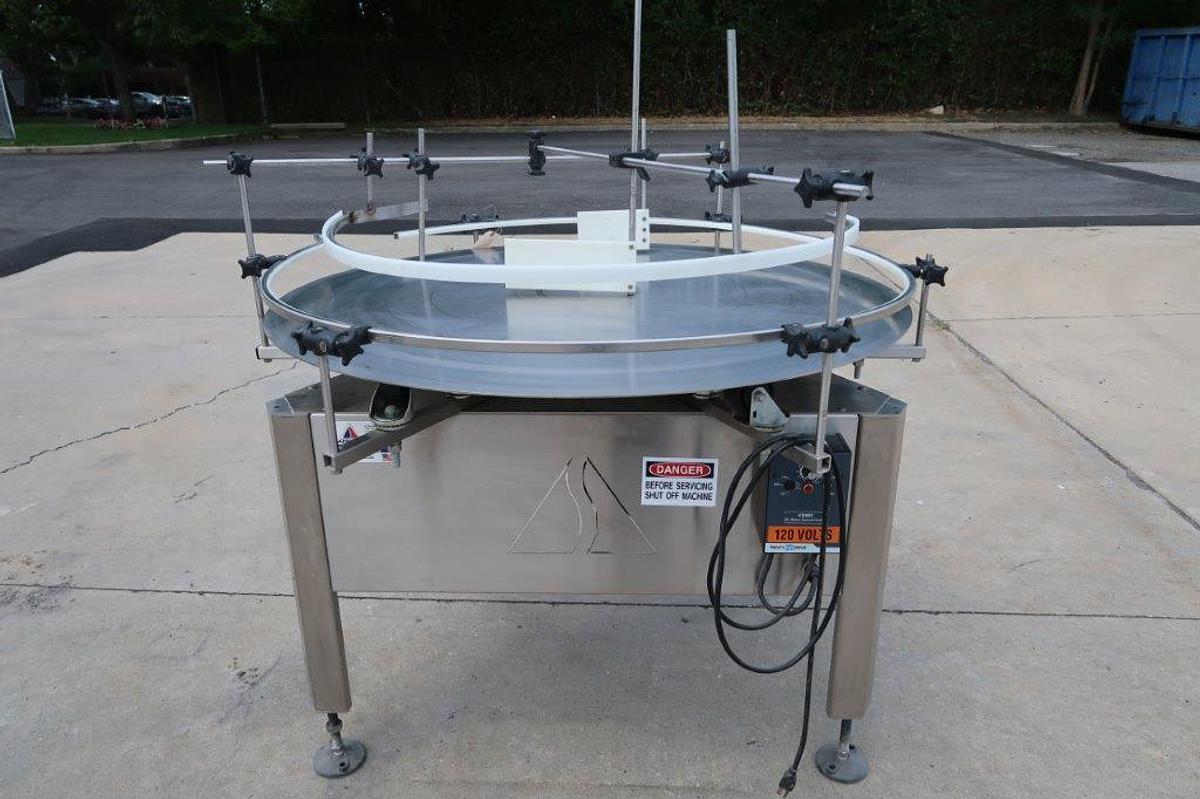
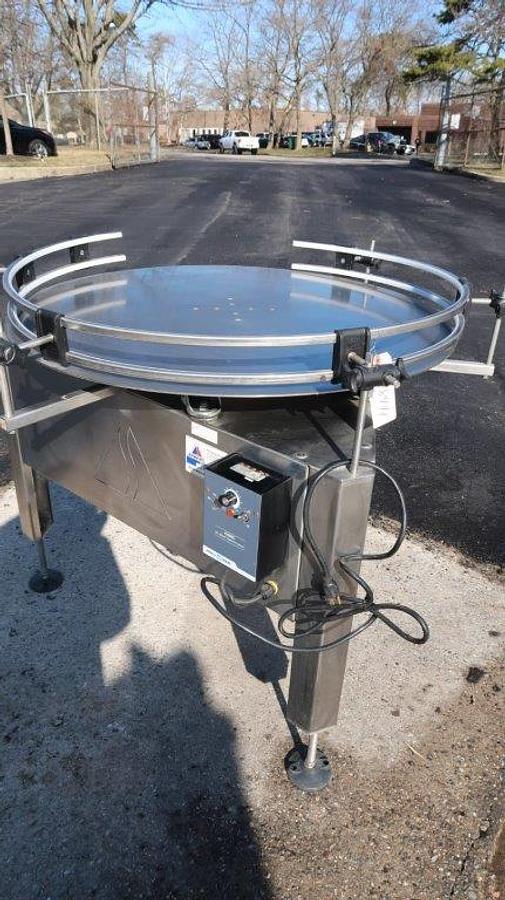
Rotary unscrambling and accumulating tables are used at the infeed stage of a packaging line to orient and feed containers in a consistent, controlled manner before they reach the filler. Unscrambling tables take randomly oriented bottles or containers and sort them into an upright, single-file stream that the filling machine can process reliably. Accumulating tables serve a related but distinct function, acting as a buffer that holds containers and releases them at a controlled rate to keep the downstream filling and capping equipment running smoothly.
Apacks manufactures these tables in stainless steel construction with varispeed drives, which allow operators to adjust the table's rotation speed to match the pace of the rest of the line. The all-stainless build is particularly relevant for food, beverage, pharmaceutical, and cosmetic applications where sanitary surfaces are required. When purchasing a used Apacks rotary table, the condition of the stainless surface, the drive motor, and the speed control mechanism are the primary things to assess during an inspection.
How does shipping work for used Apacks filling machines?
Shipping used filling machinery requires careful planning because these are often heavy, precision pieces of equipment that can be damaged if improperly packaged or handled. Costs will vary based on the size and weight of the machine, the level of crating or palletization required, and the distance being shipped. Larger machines may require specialized rigging equipment for loading and unloading, which adds to the overall cost. Buyers should ask the selling dealer for a detailed breakdown of packaging, rigging, and freight charges before finalizing a purchase so there are no surprises in the total landed cost.
For particularly large or heavy machines, freight quotes should be obtained from carriers experienced in industrial machinery transport. Some dealers handle all logistics in-house, while others work with third-party freight brokers. Either way, buyers should confirm how the machine will be packaged, who is responsible for rigging at the origin and destination, and what the process looks like if damage occurs in transit. Getting this information in writing before the sale is standard practice and protects both parties.
What are the typical payment terms for purchasing used Apacks equipment?
Used equipment dealers generally require payment in full before a machine is released for shipping. This is the standard practice across the used machinery industry and applies to most transactions regardless of the machine type or price point. Some dealers may offer extended terms or payment flexibility to repeat customers with an established purchase history, but buyers making a first-time purchase should expect to pay the full amount upfront.
Accepted payment methods vary by dealer but commonly include wire transfer, ACH, or cashier's check for larger transactions. Credit card payments may be accepted for smaller purchases, though some dealers pass along processing fees. Before committing to a purchase, buyers should confirm the accepted payment methods, the timeline between payment and machine release, and any conditions tied to the sale. Clarifying these details early in the process avoids delays and ensures both parties are aligned on expectations before the transaction is finalized.