Category
Manufacturer
Model
Ams
AMS Filling Systems is recognized for innovative filling and packaging technologies used mainly in the pharmaceutical and food industries. Their equipment is typically involved in powder and granule filling processes, offering precise and efficient solutions for bulk and custom packaging needs.
FAQ:
What is AMS filling equipment and what industries use it?
AMS Filling Systems is a manufacturer recognized for filling and packaging technologies designed around precision and efficiency. Their machines are built primarily for powder and granule filling applications, and they have a strong presence in pharmaceutical and food production environments where accurate dosing and repeatable output are critical. The equipment covers both bulk and custom packaging formats, making it adaptable across a range of production scales.
Beyond pharma and food, AMS filling machines are also found in nutraceutical, chemical, and cosmetic manufacturing settings where dry product handling is routine. The brand's focus on auger-based filling technology makes it a practical choice for operations dealing with free-flowing or slightly cohesive powders that require consistent fill weights within tight tolerances. Used AMS equipment is actively sought on the secondary market because of the brand's reputation for build quality and the durability of its stainless steel construction.
What types of products can AMS filling machines handle?
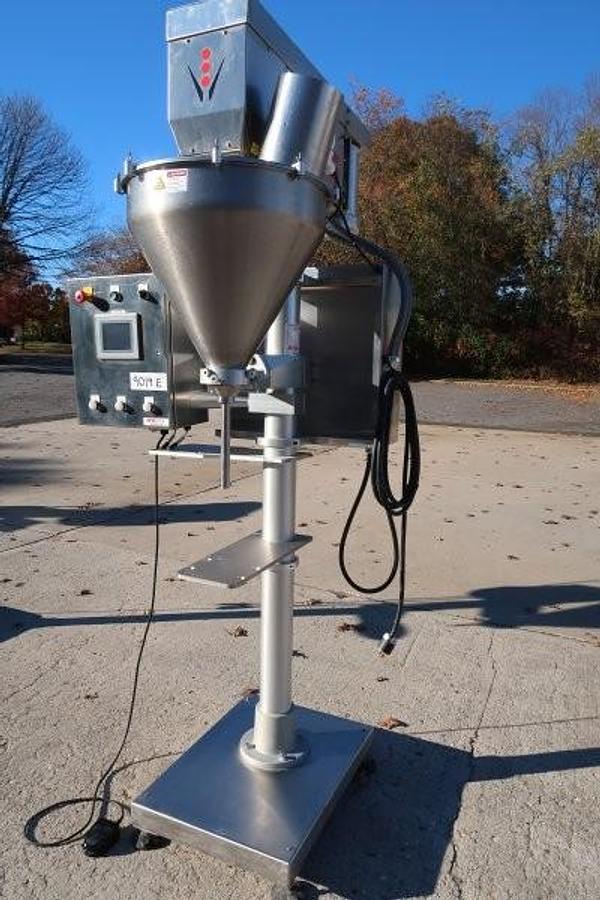
AMS filling equipment is engineered primarily for dry product applications, specifically powders and granules. Auger-style fillers like the AMS A-100 are well suited for a wide range of dry materials including protein powders, pharmaceutical granules, spice blends, flour, powdered supplements, and similar free-flowing or semi-cohesive bulk materials. The auger mechanism allows for controlled, metered dispensing that maintains fill accuracy even with products that vary slightly in bulk density.
The machines are generally not designed for liquid or paste filling, which requires different valve and pump-based systems. Buyers sourcing used AMS equipment for powder applications should confirm the specific auger diameter and pitch on the machine being considered, since these variables directly affect the range of products the filler can handle accurately. Some configurations also accommodate granular materials with larger particle sizes, so reviewing the original equipment specifications alongside the current condition of the auger and hopper assembly is an important part of the evaluation process.
What fill volume ranges are typical for AMS powder filling machines?
Fill volume capabilities for AMS auger fillers vary depending on the model and the auger configuration installed. The A-100 and similar single-head auger fillers are typically capable of handling fill weights ranging from a few grams up to several kilograms per cycle, with the exact range depending on the auger size, motor speed, and the bulk density of the product being filled. Machines can often be adjusted by swapping auger assemblies or modifying timing parameters to shift the target fill range.
For buyers evaluating used AMS equipment, it is worth verifying whether the machine comes with multiple auger assemblies or just the one currently installed, as this affects how versatile the machine will be across different SKUs. Fill accuracy on well-maintained AMS auger fillers is generally cited within a tolerance of plus or minus one percent or better for consistent free-flowing powders, though actual performance on used equipment will depend on wear, calibration history, and the properties of the specific product being run. Requesting a video inspection or test run documentation from the seller is a practical way to assess current fill accuracy before purchase.
What are the differences between AMS semi-automatic and fully automatic filling machine configurations?
AMS produces filling equipment across a spectrum of automation levels. Semi-automatic configurations, such as pedestal-mounted single-head fillers, require an operator to position each container manually under the fill head and initiate the fill cycle, either by foot pedal or manual trigger. These setups are common in smaller production environments or for specialty runs where container sizes change frequently. They tend to have a lower footprint and require less integration with upstream and downstream equipment.
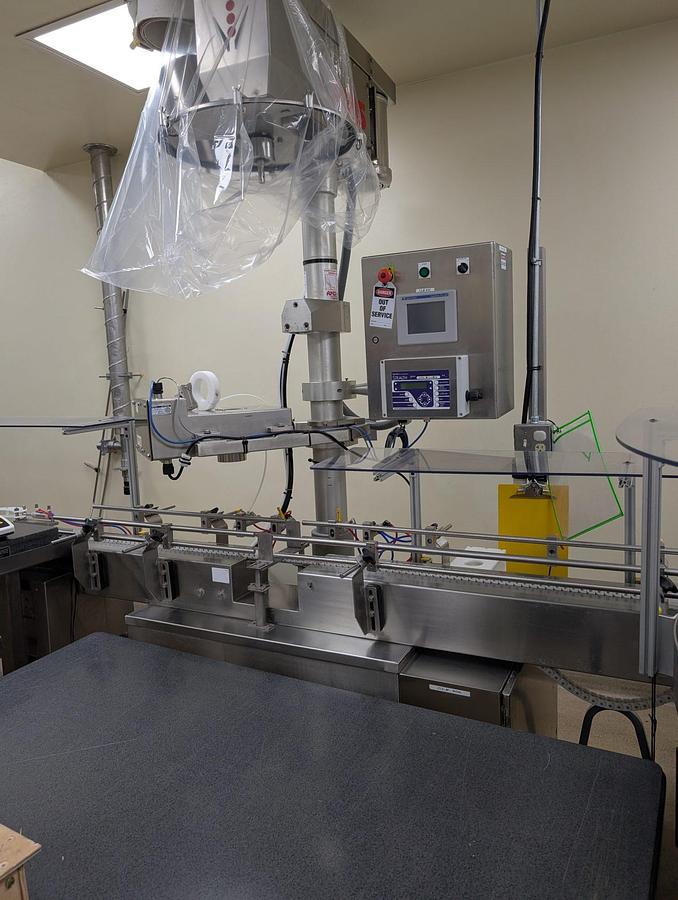
Fully automatic configurations integrate a conveyor system that indexes containers into the fill position, triggers the fill cycle automatically, and moves filled containers out without operator intervention between cycles. The AMS Automatic Single Head Powder Filler with conveyor is an example of this style, where throughput is higher and labor requirements per unit are lower. For buyers sourcing used AMS equipment, the choice between semi-automatic and automatic often comes down to current production volume, available floor space, and whether the line already has conveying infrastructure in place. Used automatic systems may require more thorough inspection of the conveyor components, sensors, and controls in addition to the fill head itself.
How does AMS filling equipment integrate with existing conveyor and production line systems?
AMS filling machines are designed with production line integration in mind. Automatic models come with built-in conveyor systems or are engineered to accept standard conveyor infeed and outfeed connections, which makes them compatible with most conventional packaging line layouts. The AMS Automatic Single Head Powder Filler, for example, includes a conveyor as part of the machine assembly, allowing it to function as a standalone station or be linked into a broader line. Conveyor belt height, speed, and container guide rail spacing are the primary variables that need to match the existing line configuration.
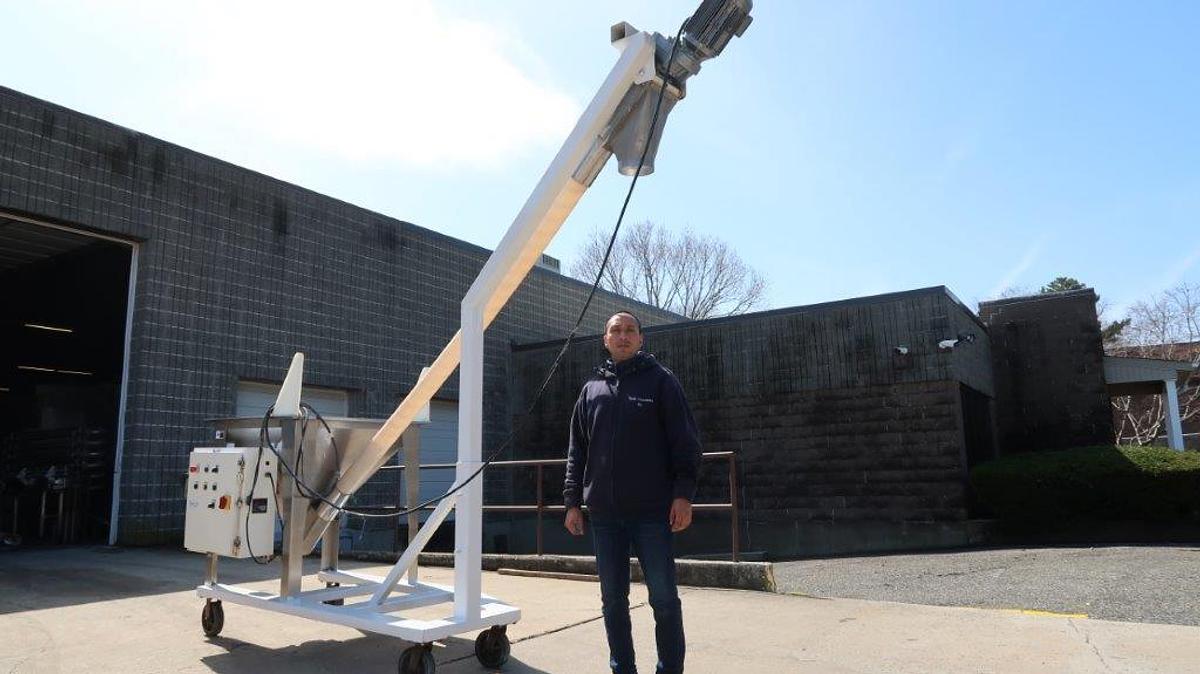
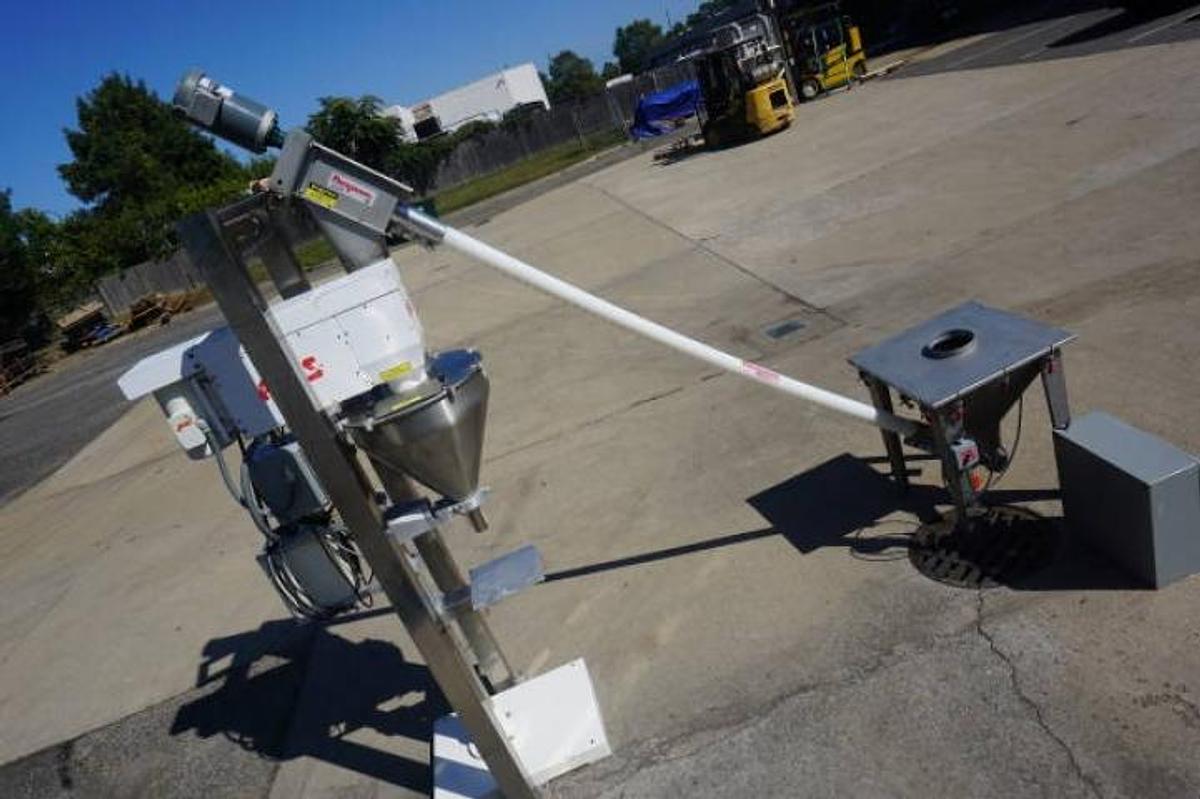
For used equipment specifically, buyers should confirm the conveyor belt dimensions, the drive motor specifications, and the height of the fill head relative to the containers they plan to run. Some used machines may have been configured for a specific container height or belt width at their previous facility, and minor mechanical adjustments may be needed to fit a different production environment. AMS also offered flexible screw conveying systems, such as the 4-inch diameter inclined portable unit, which can be used upstream to feed powder into the filler hopper from bulk bags or floor-level containers, reducing manual handling and improving feed consistency.
What should buyers look for when inspecting used AMS filling equipment before purchase?
Inspecting used filling equipment requires attention to both mechanical condition and sanitary integrity. For AMS auger fillers, the key components to evaluate are the auger itself (checking for wear, bending, or damage to the flights), the auger tube or barrel (looking for scoring or excessive clearance), the hopper condition (checking for cracks, dents, or weld repairs), and the drive system including the motor, gearbox, and any timing or indexing controls. Worn auger components directly affect fill accuracy, so their condition is a primary indicator of how much reconditioning the machine may need.
Beyond the fill head, buyers should inspect the control panel and any PLC or timer-based systems for functionality and the availability of replacement components. Electrical components on older machines can sometimes be the most difficult and costly to source. Most reputable used equipment dealers will accommodate in-person inspections at their facility, or offer video inspections and photo documentation for remote buyers. If the machine is still installed at a production facility, a live inspection showing the machine running product is the most informative option. Keep in mind that used equipment dealers generally do not have the permits or production infrastructure to run actual product through the machine themselves, so live demonstrations at dealer facilities are typically limited to dry cycling or mechanical operation checks.
How is used AMS filling equipment typically priced compared to buying new from a manufacturer?
Used AMS filling equipment is generally priced at a significant discount compared to purchasing equivalent equipment directly from the manufacturer. Depending on the age, model, condition, and configuration of the machine, used auger fillers and related conveying systems can represent savings of 40 to 70 percent or more compared to current manufacturer pricing for comparable specifications. This makes the secondary market an attractive option for startups, contract packagers expanding capacity, and established manufacturers looking to add redundancy without the lead times associated with ordering new equipment.
Pricing on the used market varies based on several factors: how recently the machine was last in production use, whether it includes accessories like additional auger sets or feeders, the overall cosmetic and mechanical condition, and market demand for that specific model. Buyers should factor in the full landed cost when evaluating any used machine, including freight, rigging, any necessary refurbishment, and the cost of spare parts or consumables needed to bring the machine to production-ready condition. Getting a clear picture of these costs upfront allows for a realistic comparison against other sourcing options.
What are the typical shipping and logistics considerations for used AMS filling equipment?
Shipping used filling equipment involves more planning than standard freight because these machines are precision instruments with components that can shift, bend, or crack if not properly secured during transit. Smaller bench-top or pedestal-mounted AMS fillers can often be palletized and shrink-wrapped with appropriate blocking and bracing, while larger automatic systems with integrated conveyors may require custom wooden crating to protect the fill head, conveyor frame, and control panel. The level of packaging required directly affects shipping costs, and buyers should ask sellers specifically what packaging method will be used before agreeing to a price.
For heavier or larger machines, rigging costs for loading at the seller's facility and unloading at the buyer's facility can add a meaningful amount to the total landed cost. Forklift access, dock height, and the dimensions of the machine relative to doorways and aisles at the destination all need to be confirmed in advance. Freight carriers that specialize in industrial machinery are generally preferable to standard LTL carriers for equipment of this type, as they have experience securing and handling machines that cannot be stacked or subjected to rough handling. Buyers should request a detailed quote covering packaging, rigging, and freight before finalizing any purchase.
What payment terms do used equipment dealers typically offer for AMS filling machines?
Most used equipment dealers require payment in full prior to releasing a machine for shipment. This is standard practice in the secondary machinery market and reflects the nature of used equipment transactions, where the seller needs to confirm cleared funds before the machine changes hands. Accepted payment methods typically include wire transfer, ACH, and in some cases cashier's check, though policies vary by dealer. Credit card payments are less common for larger transactions due to processing fees and chargeback exposure on high-value items.
Some dealers extend payment terms or financing options to established customers with a purchase history, or to buyers who arrange third-party equipment financing through a lender. For buyers who are new to a particular dealer, building that relationship often starts with a straightforward purchase paid in full. It is worth asking the dealer directly about their payment options during the inquiry process, particularly for higher-value machines or when purchasing multiple pieces of equipment at once. Understanding the payment requirements upfront prevents delays once a purchase decision has been made.
How should buyers evaluate the long-term parts and support availability for used AMS filling equipment?
Parts availability is one of the most practical considerations when buying any used filling equipment, and AMS machines are no exception. Before committing to a purchase, buyers should contact AMS Filling Systems directly to ask about current parts support for the specific model they are considering. Manufacturers vary in how long they continue to support older models, and the answer can differ significantly depending on whether the machine uses proprietary components or more standard off-the-shelf parts like motors, bearings, and belts. Knowing this upfront helps buyers assess the long-term maintenance risk.
For auger-based fillers specifically, the auger assembly, hopper seals, and drive components are the parts that see the most wear and are most likely to need replacement over time. If the manufacturer no longer stocks a particular auger size or tube, buyers may need to work with a machinist or third-party parts supplier to fabricate replacements. Dealers who specialize in filling and packaging equipment are often a useful resource here, as they may carry spare parts inventory or have established supplier relationships that general-purpose machinery dealers do not. Selecting a dealer with deep experience in the filling equipment category, rather than a generalist reseller, tends to result in better pre-sale guidance on parts and support questions.