Category
Manufacturer
Model
Allpax
Allpax provides innovative retort sterilization and food processing solutions, catering to the food and beverage industry. Their equipment is used for in-container sterilization processes, critical for sterilizing ready-to-eat food products while maintaining safety and quality standards.
FAQ:
What types of Allpax retort autoclave equipment are commonly available on the used market?
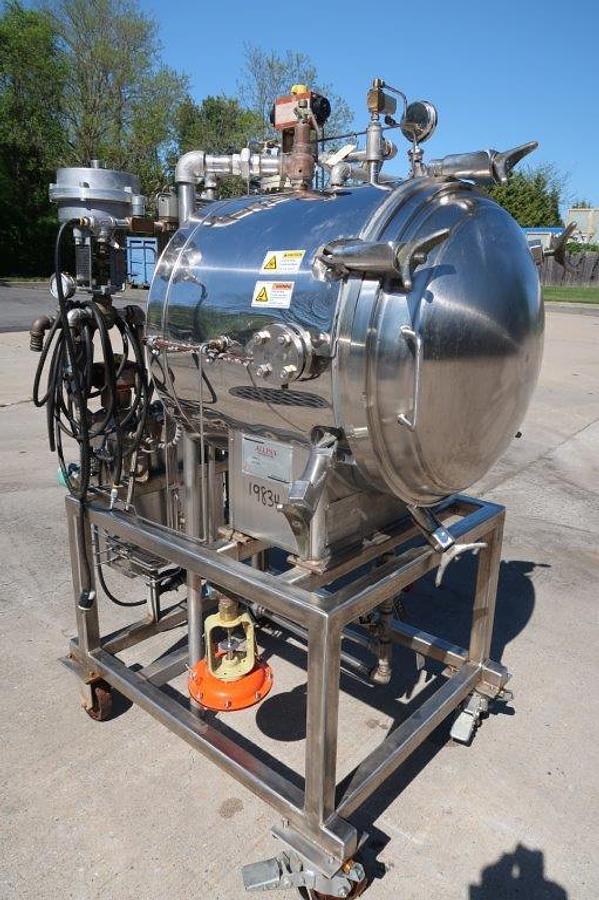
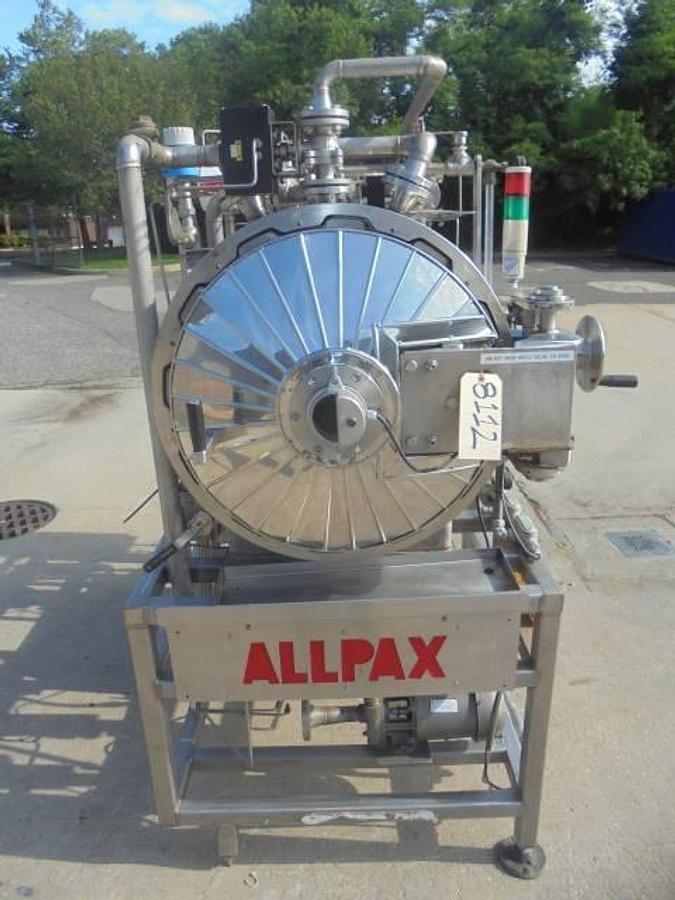
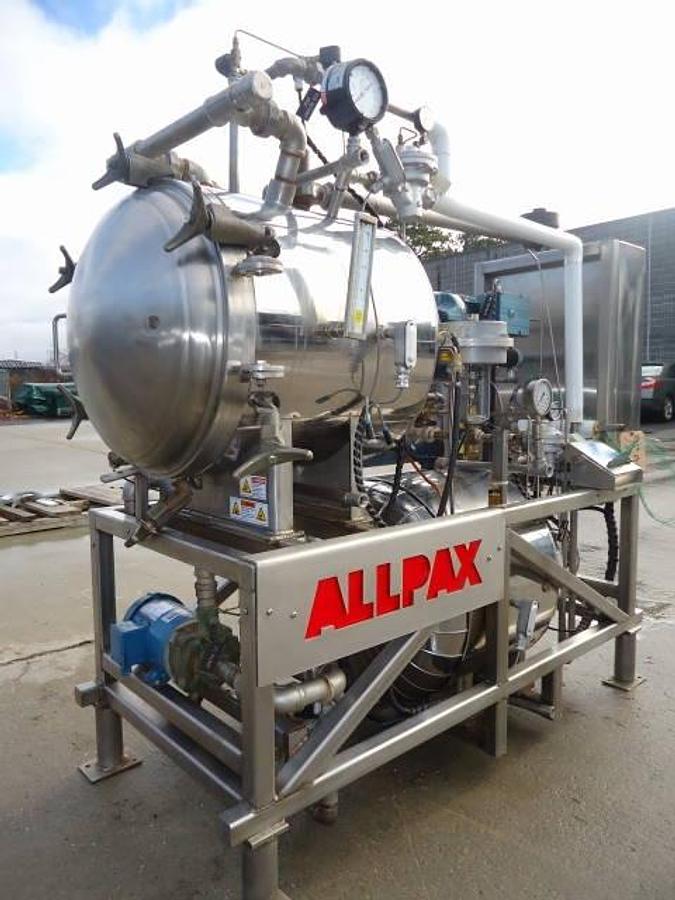
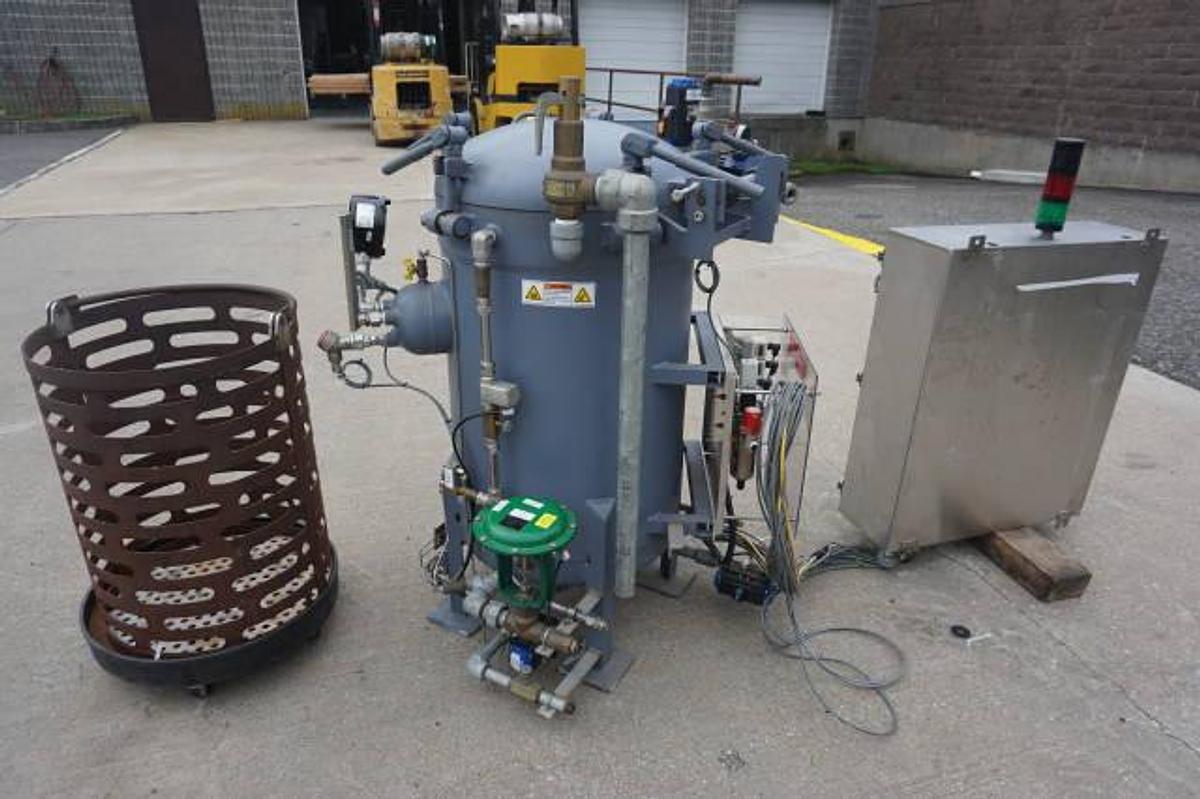
Allpax produces a broad range of retort and autoclave systems, and used examples tend to span several distinct categories. The most frequently encountered units include horizontal batch retorts (such as the Allpax 2402 and 3801 series), vertical autoclave/retort configurations, and smaller pilot plant or laboratory-scale systems designed for R&D and process development work. Horizontal models are the workhorse of commercial food production lines, while vertical units are often favored where floor space is limited. Lab-scale retorts like the Allpax pilot plant horizontal autoclave give smaller producers and food scientists the ability to run controlled thermal process trials before scaling to full production.
Used Allpax equipment surfaces across all of these categories, and buyers can sometimes find programmable stainless steel R&D retorts that are well-suited to product development applications. Multi-vessel configurations designed for higher-throughput production also appear on the secondary market, typically coming out of larger food manufacturing facilities that have upgraded or consolidated operations. Because Allpax has been a dominant North American manufacturer for decades, the installed base is large, which means used inventory tends to be reasonably available compared to less common brands.
What is an Allpax retort autoclave used for in food production?
Allpax retort autoclaves are thermal processing systems built specifically for in-container sterilization of food and beverage products. The process, commonly called retorting, involves sealing food inside containers (cans, pouches, glass jars, trays, or plastic cups) and then subjecting those containers to elevated temperature and pressure for a precisely controlled period of time. This kills harmful microorganisms, including Clostridium botulinum spores, making the product shelf-stable without refrigeration. The technology underpins the production of canned soups, ready-to-eat meals, pet food, baby food, seafood, vegetables, and a wide range of other packaged goods.
Beyond basic sterilization, Allpax systems are engineered to maintain product quality throughout the thermal process. Different heating media options, including steam, steam/air combinations, water spray, and full water immersion, allow processors to match the process to the container type and product characteristics. Pouches and flexible packaging, for example, often require steam/air or water immersion processing to manage overpressure and prevent seal damage, while rigid cans can typically be processed with saturated steam. This flexibility makes Allpax equipment relevant across a wide spectrum of food manufacturing applications.
What heating media options are available on Allpax retort systems?
Allpax retort systems are designed to support multiple heating media configurations, which is one reason they are used across such a diverse range of food packaging formats. The primary modes include saturated steam, steam/air (also called steam-air overpressure), water spray, and full water immersion. Saturated steam is the most straightforward and energy-efficient method, commonly used for metal cans. Steam/air processing introduces compressed air alongside steam to create an overpressure environment, which is essential for flexible pouches and semi-rigid containers that could otherwise deform or lose seal integrity under purely steam conditions.
Water spray and full water immersion methods circulate heated water around the containers, providing very uniform heat distribution and excellent overpressure control. These methods are particularly well-suited for glass jars, flexible retort pouches, and trays. When evaluating a used Allpax unit, buyers should confirm which heating media the specific machine was configured for, since the vessel, piping, and control programming will reflect the process it was built to run. Retrofitting a unit from one heating medium to another is possible in some cases but can be a significant engineering and cost consideration.
What control systems and data logging capabilities do Allpax retort autoclaves typically have?
Allpax retort systems are generally equipped with PLC-based control architectures, with many units built around Allen-Bradley and Rockwell Automation platforms. Touchscreen HMI panels allow operators to program, monitor, and document thermal processes with a relatively high degree of precision. The control systems are designed to manage critical process variables including temperature, pressure, and come-up time, with automated sequencing that reduces the risk of operator error during production runs. Process deviations can trigger alarms and, depending on the configuration, automatic corrective responses.
Data logging is a central feature of these systems, and many Allpax units are built to comply with 21 CFR Part 11, the FDA regulation governing electronic records and signatures in regulated industries. This means process data is captured, time-stamped, and stored in a manner that supports regulatory traceability and audit readiness. For food manufacturers operating under FDA low-acid canned food (LACF) regulations or USDA oversight, this documentation capability is not optional but a regulatory requirement. When buying a used Allpax retort, it is worth confirming the software version and verifying whether the existing control system can still be supported by the manufacturer or a qualified controls integrator.
Are used Allpax retort autoclaves compliant with FDA and USDA food safety regulations?
Allpax retort systems are engineered to meet FDA, USDA, and international thermal processing standards, including the requirements associated with the Better Process Control School guidelines that govern commercial sterilization of low-acid canned foods in the United States. A machine built to these standards will have the instrumentation, control logic, and documentation capabilities needed to support a validated scheduled process. That said, regulatory compliance is ultimately a function of how the equipment is installed, calibrated, maintained, and operated, not just what it was built to do.
When purchasing a used retort, buyers should plan for a thorough inspection and recalibration of all critical instruments, including temperature sensors, pressure gauges, and timing systems, before putting the machine into production. The FDA requires that thermal processing equipment be evaluated and that scheduled processes be established by a recognized process authority. Consulting with a process authority and, where applicable, the equipment manufacturer early in the evaluation process is advisable. Age and model can affect the level of technical support and parts availability, so checking with Allpax directly about support options for a specific unit is a practical step before committing to a purchase.
What should buyers look for when inspecting a used Allpax retort autoclave?
A thorough inspection of a used Allpax retort should cover both the mechanical condition of the vessel and associated components and the functional state of the control system. On the mechanical side, key areas include the condition of the vessel shell and door seals, the integrity of the heat exchanger or steam distribution components, the state of the instrumentation (temperature probes, pressure transducers, safety relief valves), and the condition of any internal baskets, crates, or racking systems. Stainless steel construction, which is standard on Allpax units, holds up well over time, but corrosion, pitting, or weld repairs in critical areas deserve close attention.
Reputable used equipment dealers will accommodate in-person inspections or provide detailed video walkthroughs of the machine. Some units may still be in production at the selling facility, which can allow a buyer to observe the equipment running under actual process conditions, though dealers typically cannot run actual food production at their own facilities due to permitting requirements. Buyers should also ask about the machine's service history, the availability of spare parts, and whether the control system software and hardware are still supported. Reaching out to Allpax directly to discuss the specific model and serial number can provide useful context about what to expect in terms of ongoing support.
What is the difference between a batch retort and a continuous retort, and which type does Allpax make?
Batch retorts process a defined load of containers in a single cycle. Containers are loaded into the vessel (or into baskets that are then loaded into the vessel), the vessel is sealed, the thermal process runs to completion, and the load is then unloaded before the next cycle begins. This approach is flexible and well-suited to operations that run multiple products or container sizes, since process parameters can be changed between batches. Allpax is well known for its batch retort systems, including horizontal and vertical configurations across a range of vessel sizes, from pilot-scale lab units up to large multi-vessel production systems.
Continuous retorts, by contrast, move containers through the system in an uninterrupted flow, which suits very high-volume, single-product operations. Allpax also manufactures continuous retort systems, though these tend to appear less frequently on the used market given their scale and the specificity of the applications they serve. For most food manufacturers evaluating used equipment, batch retorts represent the more practical and commonly available option. The right choice depends on production volume, product variety, and container type, and consulting with a thermal processing engineer or process authority can help clarify which configuration fits a given operation.
What is the typical price range for used Allpax retort autoclave equipment?
Pricing for used Allpax retort autoclaves varies considerably depending on the model, vessel size, age, configuration, and overall condition of the machine. Smaller pilot plant or laboratory-scale units tend to be the most accessible entry point, while larger horizontal batch retorts and multi-vessel systems command significantly higher prices reflecting their production capacity and the cost of the original equipment. As a general reference point, used retort autoclaves in the food processing industry can range from tens of thousands of dollars for a small single-vessel unit to several hundred thousand dollars for a large, well-equipped production system.
Beyond the purchase price, buyers should factor in the full landed cost of the equipment. This includes freight and rigging (larger retorts require specialized heavy-lift equipment for loading and unloading), any crating or packaging costs, and the cost of installation, reconnection of utilities, recalibration of instruments, and any necessary repairs or control system updates. Getting a clear picture of these downstream costs before finalizing a purchase helps avoid surprises and allows for a more accurate comparison between available options. Asking the dealer for a detailed breakdown of shipping, rigging, and packaging costs upfront is a straightforward way to understand the true cost of acquisition.
How does the shipping and delivery process work for used Allpax retort equipment?
Shipping a used retort autoclave involves more logistical complexity than standard freight because of the size, weight, and sensitivity of the equipment. Smaller pilot plant and lab-scale units can often be palletized and shipped via standard LTL freight carriers, but larger horizontal retorts and multi-vessel systems typically require flatbed transport and heavy-duty rigging for both loading at the origin and unloading at the destination. Buyers should expect that rigging costs will be added to the base freight charge, and these costs can be substantial for larger machines.
Used equipment dealers will generally package or crate machinery to a level appropriate for the equipment and the shipping method, and the extent of that packaging affects cost. Buyers should ask the dealer specifically about how the machine will be prepared for transit, what rigging is required at each end, and what the estimated freight cost is to their facility. Getting this information early allows buyers to understand the full landed cost before making a purchasing decision. Payment for used industrial equipment is typically required in full prior to shipment, so having financing or funds arranged in advance of finalizing the purchase is standard practice in the industry.
What vessel sizes and processing capacities are available in the Allpax retort product line?
Allpax retort systems span a wide range of vessel sizes, making the product line relevant to operations at very different scales. On the smaller end, pilot plant and laboratory retorts are designed for process development, small-batch production, and regulatory validation work. These units typically have vessel diameters in the range of 24 inches and are built to run the same process modes as full-scale production equipment, which makes them useful for scaling up validated processes. The Allpax 2402 series, for example, is a well-known 24-inch diameter horizontal retort that appears in both R&D and smaller production contexts.
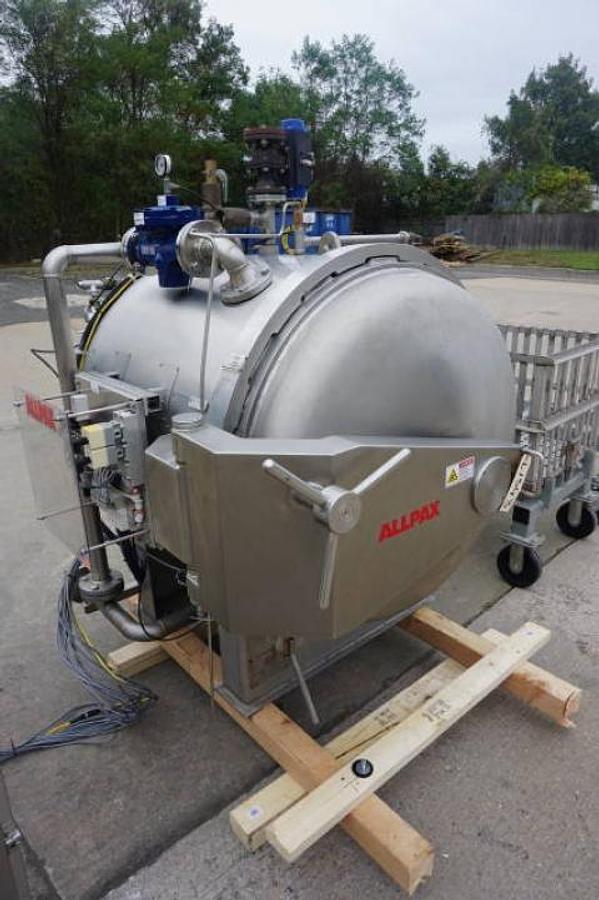
Larger production retorts, such as the 3801 series and multi-vessel configurations, are built for higher throughput and are sized to accommodate standard commercial basket and crate dimensions. Vessel length, the number of vessels in a system, and the loading configuration (horizontal vs. vertical) all influence how many containers can be processed per cycle and per hour. When evaluating a used unit, buyers should confirm the internal vessel dimensions and the basket or crate configuration, since these details determine compatibility with existing container handling systems and production line layouts. Allpax and qualified used equipment dealers can typically provide dimensional drawings and specifications for specific machines.