Category
Manufacturer
Model
All-Fill
FAQ:
What types of products can All-Fill equipment fill and package?
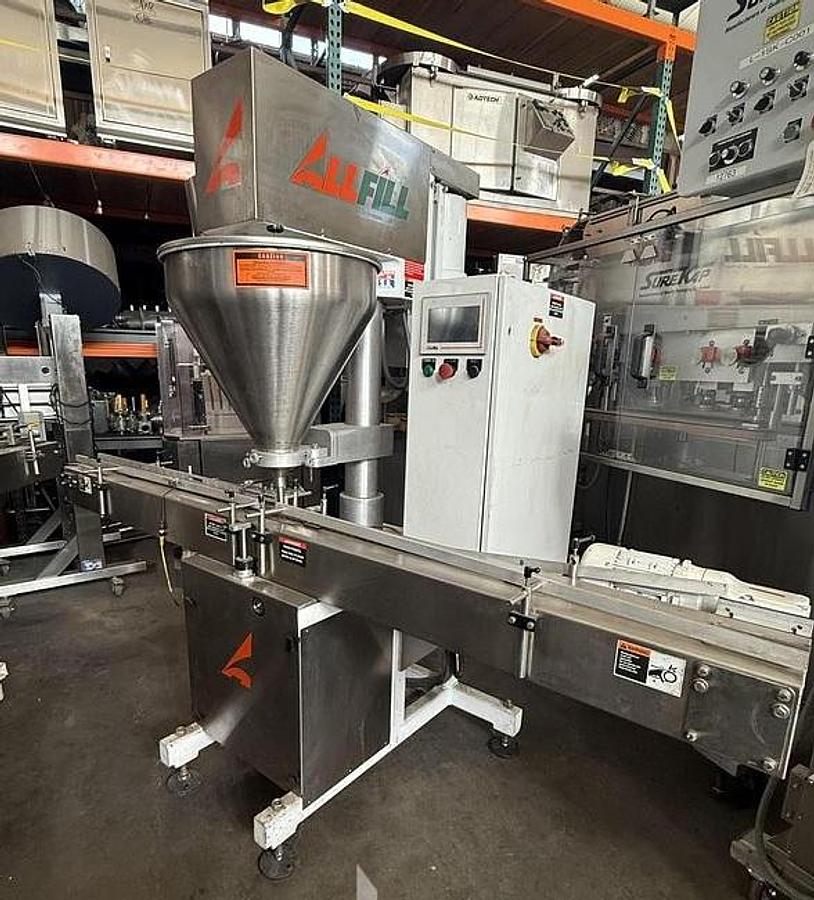
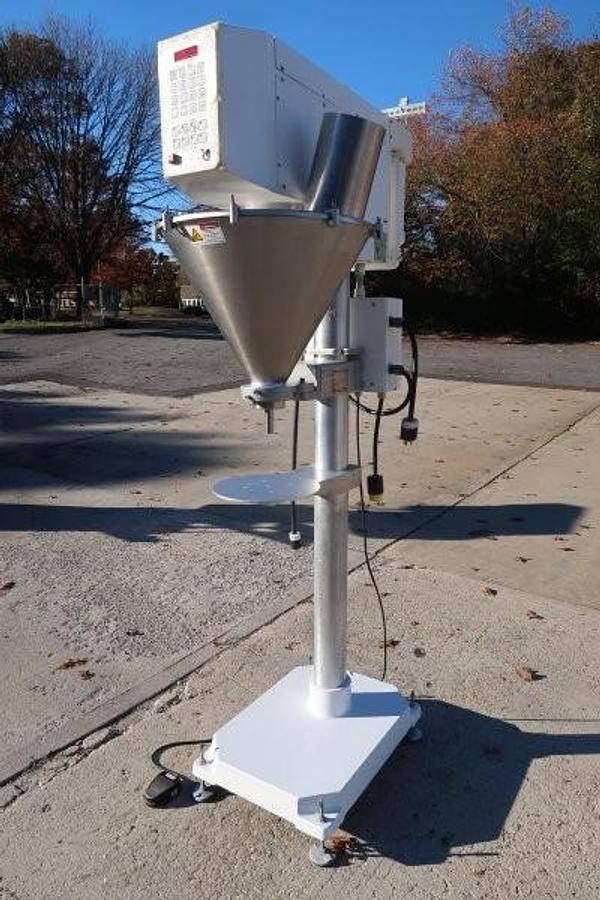
All-Fill filling machines are built to handle a wide range of dry products, and that versatility is one of the main reasons they show up so frequently in food, pharmaceutical, chemical, and pet food production environments. Auger fillers, which are among the most common All-Fill models available on the used market, are particularly well suited for free-flowing and non-free-flowing dry powders. Common applications include spices, protein powders, coffee, flour, baking mixes, powdered pharmaceuticals, and granular chemical compounds. The machines use a rotating auger screw inside a product hopper to meter precise amounts of material into containers, bags, or pouches.
Beyond auger filling, All-Fill has produced net weigh fillers and volumetric cup fillers over the years, which expand the range of products that can be handled to include items like seeds, granules, and other particulate materials that are better measured by weight than by volume. When shopping for a used All-Fill machine, it is worth identifying the specific filling technology of each unit and matching it to the physical characteristics of your product, such as bulk density, particle size, and flowability, before making a purchase. Consulting with the equipment dealer about the specific model's intended application can help confirm a good fit.
What filling technologies does All-Fill offer, and how do they differ?
All-Fill has built its reputation primarily around three filling technologies: auger filling, net weigh filling, and volumetric cup filling. Auger fillers use a precision-machined screw that rotates a set number of turns to dispense a controlled volume of product, making them ideal for powders and finely ground materials where consistency is critical. Net weigh fillers, by contrast, measure each fill by actual weight using load cells, which makes them better suited for products where density can vary batch to batch. Volumetric cup fillers use fixed-size cups to scoop and deposit product, a simpler and faster method often used for free-flowing granules or flakes.
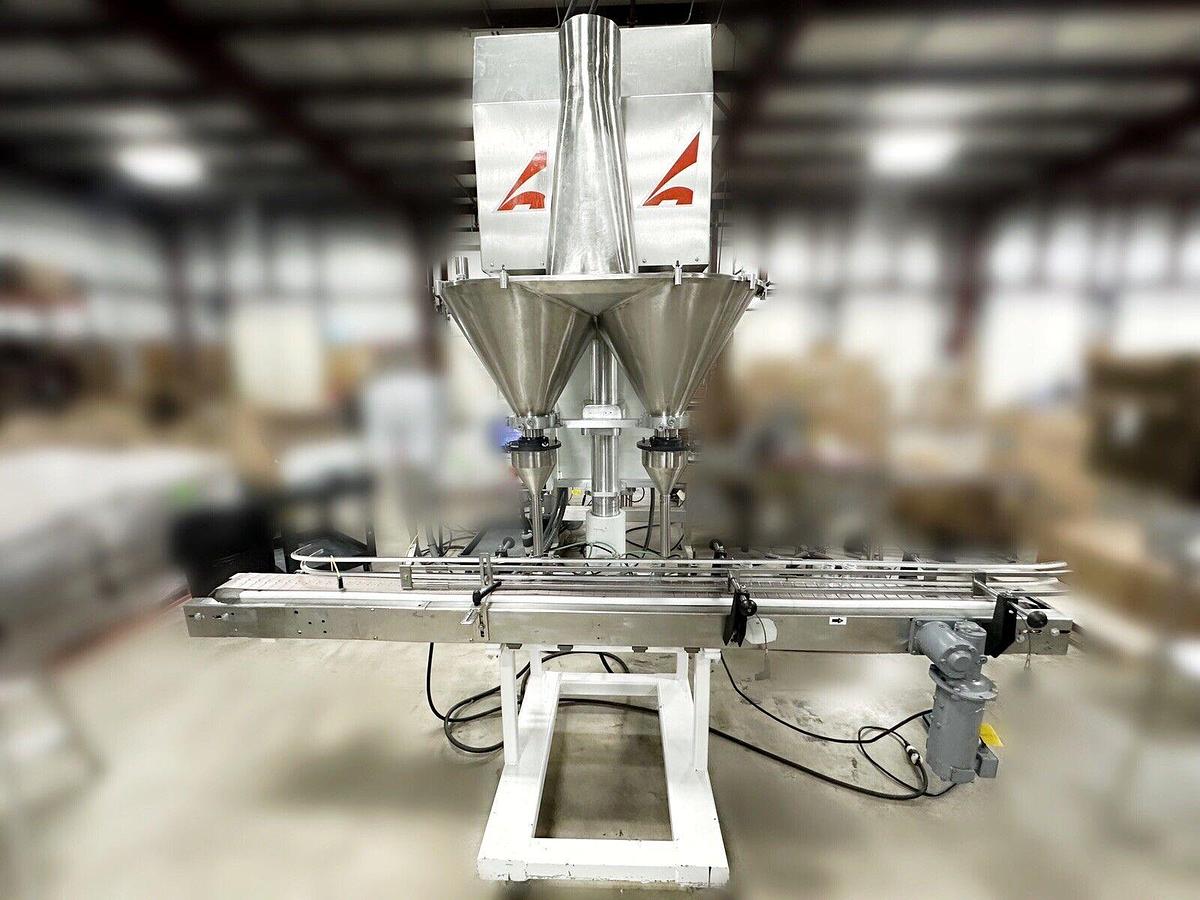
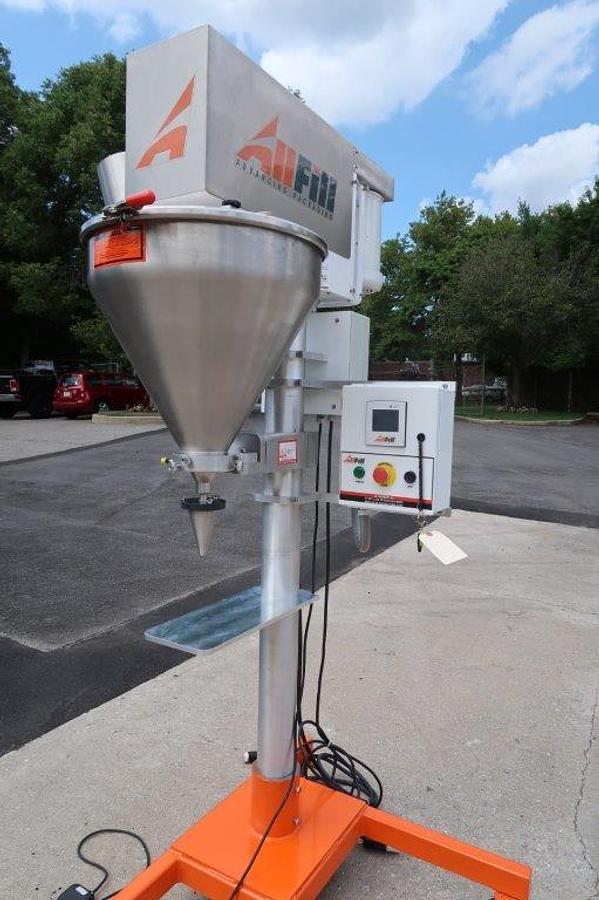
For most dry powder applications, the auger filler is the workhorse of the All-Fill lineup. Models like the single-head auger filler with a B-350 controller and the dual-head TASV-600 represent different tiers of throughput and automation. Single-head units are typically used for lower to mid-volume production runs, while dual-head configurations like the TASV-600 can significantly increase output by filling two containers simultaneously. Understanding which technology a specific used machine uses is essential before purchasing, since changeover parts, tooling, and augers are often product-specific and may need to be sourced separately.
What is the typical production speed or output capacity of All-Fill filling machines?
Production speed on All-Fill machines varies considerably depending on the model, the filling technology, the target fill weight, and the physical characteristics of the product being filled. Entry-level tabletop auger fillers may produce anywhere from 10 to 30 fills per minute under ideal conditions, while mid-range floor-standing units can reach 40 to 60 fills per minute. High-speed or dual-head configurations, such as the TASV-600, are designed for higher-volume environments and can push output rates significantly higher by filling two containers in each cycle.
When evaluating a used All-Fill machine, it is important to understand that published speed specifications typically reflect ideal conditions with a specific product and container type. Real-world throughput can be lower depending on product flowability, fill weight, and how well the machine has been maintained. Buyers should ask the equipment dealer for any available documentation on the machine's prior production history, and if possible, arrange a video inspection or in-person visit to see the machine cycle through its operation. This gives a much more realistic picture of actual output capacity than spec sheets alone.
How accurate are All-Fill auger fillers, and why does fill accuracy matter?
Fill accuracy is one of the most frequently cited strengths of All-Fill auger filling equipment. Many models are engineered to achieve fill tolerances within plus or minus 0.5 percent of the target weight, which is a tight standard for dry powder filling. That level of precision directly reduces product giveaway, meaning manufacturers are not consistently overfilling containers and giving away product for free. Over high-volume production runs, even small improvements in fill accuracy can translate into meaningful cost savings and better compliance with net weight labeling regulations.
For used machines, actual accuracy in the field depends heavily on the condition of the auger, the auger tube, and the load cell or timing system, as well as how well the machine has been calibrated and maintained by the previous owner. Worn augers or damaged seals can degrade accuracy over time. Before purchasing a used All-Fill filler, buyers should ask whether the machine has been recently serviced and whether the auger and associated tooling are included with the sale. Some dealers may be able to demonstrate fill cycles on video so buyers can assess consistency, though keep in mind that most equipment dealers are not set up to run actual production tests with specific products.
Can All-Fill machines be reconfigured to handle multiple products or container sizes?
All-Fill equipment has a reputation in the industry for relatively straightforward changeover, which makes the machines appealing for contract packagers and manufacturers who run multiple SKUs on the same line. Switching between products typically involves swapping the auger and auger tube for ones sized to the new product, adjusting fill settings on the controller, and cleaning the hopper and product contact surfaces. On models with a digital controller like the B-350, saving and recalling fill parameters for different products is a standard feature, which reduces setup time when switching back to a previously run product.
Changing container sizes usually requires adjusting the container conveyor, the fill head height, and in some cases the container hold-down or centering guides. The ease of these adjustments depends on the specific model and its age. When buying a used All-Fill machine, it is worth asking the seller which augers, tubes, and change parts are included with the unit, since tooling is often product-specific and purchasing additional augers separately can add to the overall cost. Buyers planning to run multiple products should confirm that compatible tooling is available for their intended applications before completing the purchase.
What should buyers look for when inspecting a used All-Fill filling machine?
Inspecting a used All-Fill machine requires attention to both the mechanical and electrical components. On the mechanical side, the auger and auger tube are the most wear-prone parts and should be examined closely for chips, cracks, or uneven wear, since a damaged auger will directly affect fill accuracy and consistency. The hopper, seals, and product contact surfaces should be free of corrosion, pitting, or residue buildup that could indicate poor maintenance or contamination risk. The drive motor, gearbox, and any conveyor components should be checked for smooth operation without unusual noise or vibration.
On the controls side, the condition of the controller, wiring, and sensors matters a great deal. Older machines may use discontinued control systems that are difficult to repair or reprogram, so it is worth confirming whether the manufacturer still supports the control platform on a given model. Most reputable used equipment dealers will accommodate in-person inspections or provide detailed video walkthroughs of the machine in operation. For machines still installed at a production facility, some dealers can arrange a visit to the plant so buyers can observe the equipment running live. Buyers should also ask the manufacturer directly about parts availability and technical support for the specific model and age of machine they are considering, as this varies significantly.
Are replacement parts and spare components readily available for used All-Fill machines?
Parts availability for used All-Fill equipment depends primarily on the age and model of the machine. All-Fill Inc. has been manufacturing filling equipment since 1966, and the company has a broad installed base across North America. For many current and recent-generation models, parts such as augers, auger tubes, seals, and electronic components can be sourced directly from the manufacturer. However, for older or discontinued models, some parts may be limited, made to order, or no longer available through the factory, which can complicate maintenance and repairs down the road.
Before purchasing a used All-Fill machine, it is strongly recommended to contact All-Fill directly and provide the model number and serial number of the specific unit. The manufacturer can advise on what level of parts and technical support is available for that machine. This step is particularly important for older units, where the control system or proprietary components may no longer be in production. Some buyers also choose to purchase spare augers, seals, and wear parts at the time of the machine purchase if they are available, reducing the risk of production downtime later. A reputable used equipment dealer specializing in filling and packaging machinery can often help identify which components are included with a sale and which may need to be sourced separately.
How does a used All-Fill machine integrate with an existing packaging line?
All-Fill filling machines are generally designed to work as standalone units or as part of a larger automated packaging line. Integration with upstream and downstream equipment, such as container unscramblers, conveyors, checkweighers, capping machines, and labelers, depends on the specific model and its available I/O connections. Many All-Fill units include standard electrical interfaces that allow them to communicate with line control systems, receive container-present signals, or trigger downstream equipment after a fill cycle is complete. The B-350 controller found on certain auger filler models, for example, supports programmable fill parameters and can interface with external automation components.
For buyers looking to add a used All-Fill filler to an existing line, it is important to verify the machine's electrical specifications, including voltage and phase requirements, as well as its physical footprint and conveyor height relative to the rest of the line. Older machines may require electrical upgrades or custom integration work to communicate with modern line control systems. Consulting with a packaging systems integrator or the equipment dealer before purchase can help identify any compatibility issues early. Dealers who specialize in filling and packaging equipment are often familiar with common integration challenges and can provide guidance on what to expect during installation.
What is the typical price range for used All-Fill filling machines?
Pricing for used All-Fill equipment varies widely based on the model, age, condition, configuration, and what tooling or accessories are included with the sale. Entry-level tabletop or single-head auger fillers in good working condition can often be found in the range of a few thousand to tens of thousands of dollars, while larger, more automated systems or dual-head configurations like the TASV-600 can command significantly higher prices depending on their condition and production capability. Machines that come with a full set of augers, change parts, and documentation typically carry a premium over bare units sold without tooling.
Buyers should also factor in costs beyond the purchase price when calculating the total investment. Shipping, rigging, crating, and any necessary refurbishment or integration work can add meaningfully to the landed cost of the equipment. It is a good practice to request a detailed quote from the dealer that breaks out all of these costs before committing to a purchase. In some cases, the cost of sourcing missing tooling or upgrading electrical components can be substantial, so a thorough pre-purchase inspection and parts availability check are important steps in evaluating the true cost of any used filling machine.
What should buyers understand about shipping and payment when purchasing used All-Fill equipment?
Shipping used filling equipment requires careful planning, particularly for larger floor-standing machines that may weigh several hundred to over a thousand pounds. Proper crating or palletization is essential to prevent damage in transit, and the level of packaging required will affect shipping costs. Heavier machines often require professional rigging services for loading at the origin and unloading at the destination, which adds to the total cost. Buyers should ask the dealer for a detailed breakdown of packaging, rigging, freight, and any applicable handling fees before finalizing a purchase, so there are no surprises in the total landed cost.
On the payment side, most used equipment dealers require payment in full before the machine is released for shipping. Some dealers may extend payment terms to established repeat customers, but this is not standard practice for first-time buyers. Used equipment is typically sold as-is, which places the responsibility for due diligence squarely on the buyer. This makes pre-purchase inspection, whether in person, via video walkthrough, or through detailed photo documentation, an important step before funds are transferred. Choosing a dealer with a long track record in the filling and packaging equipment space provides an added layer of confidence that the machine has been accurately represented.