Category
Manufacturer
Model
All Fill
All Fill specializes in designing and producing filling machines for a variety of industries, including food and pharmaceuticals. Their offerings include powder and liquid filling machines that are recognized for their precision and adaptability to different packaging formats.
FAQ:
What types of products can All Fill filling machines handle?
All Fill filling machines are designed to handle a wide range of product types across multiple industries. Their auger fillers are particularly well-suited for free-flowing and non-free-flowing powders, granules, and similar dry materials. Common applications include spices, flour, protein powders, pharmaceutical powders, chemical compounds, and cosmetic powders. Piston fillers in the All Fill lineup handle liquid and semi-liquid products such as sauces, lotions, gels, and pastes. This breadth of capability makes All Fill equipment a common choice in food processing, nutraceuticals, pharmaceuticals, cosmetics, and industrial chemical packaging.
The adaptability of these machines is one reason they hold up well across different production environments. Many models feature variable speed controls, interchangeable tooling, and adjustable fill parameters, which allows operators to switch between product types with relatively modest changeover time. Stainless steel construction on most models supports sanitation requirements for food-grade and pharmaceutical applications. When evaluating a used All Fill machine, buyers should confirm which product categories the specific model was designed for, since auger fillers, piston fillers, and rotary fillers each have different strengths depending on product viscosity, density, and flow characteristics.
What is the difference between All Fill auger fillers and piston fillers?
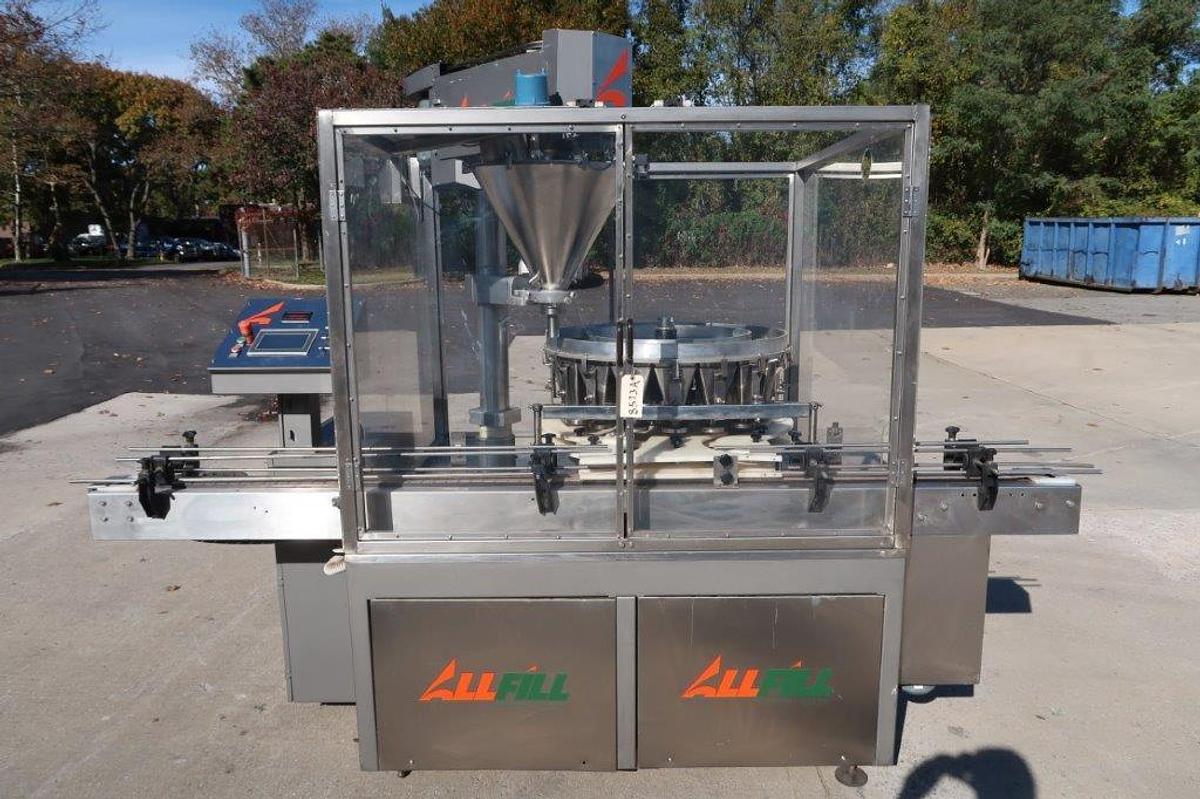
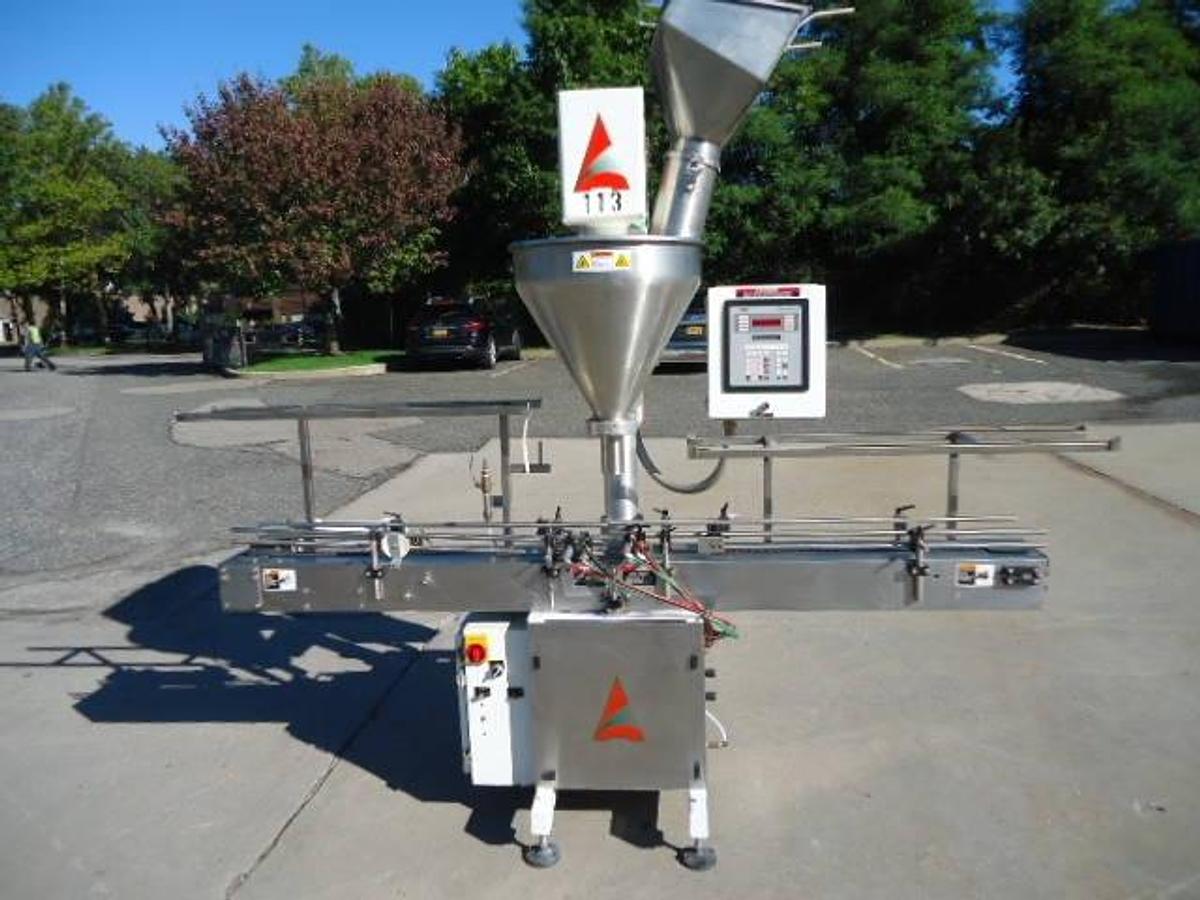
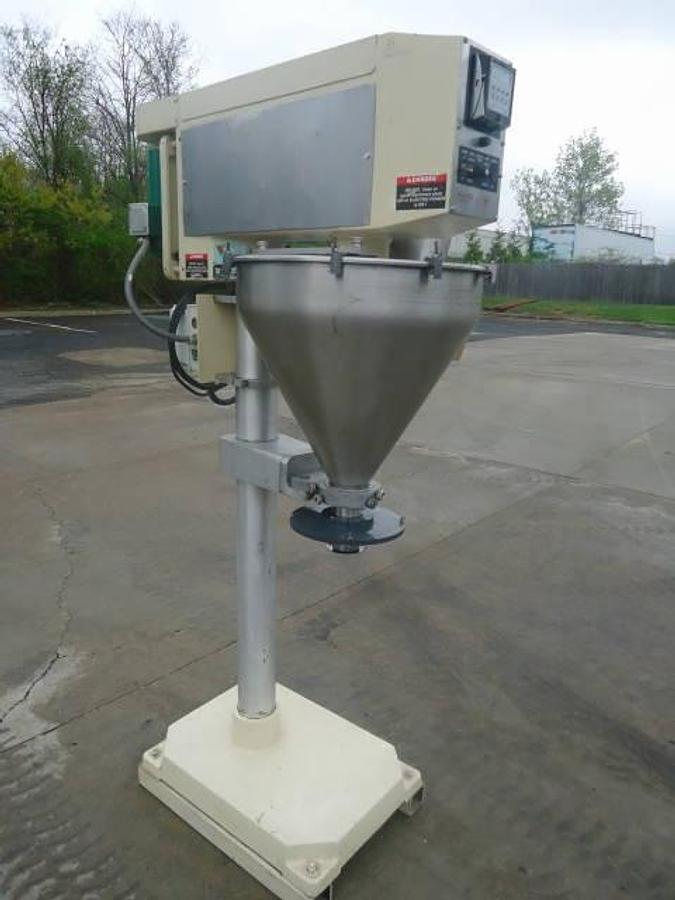
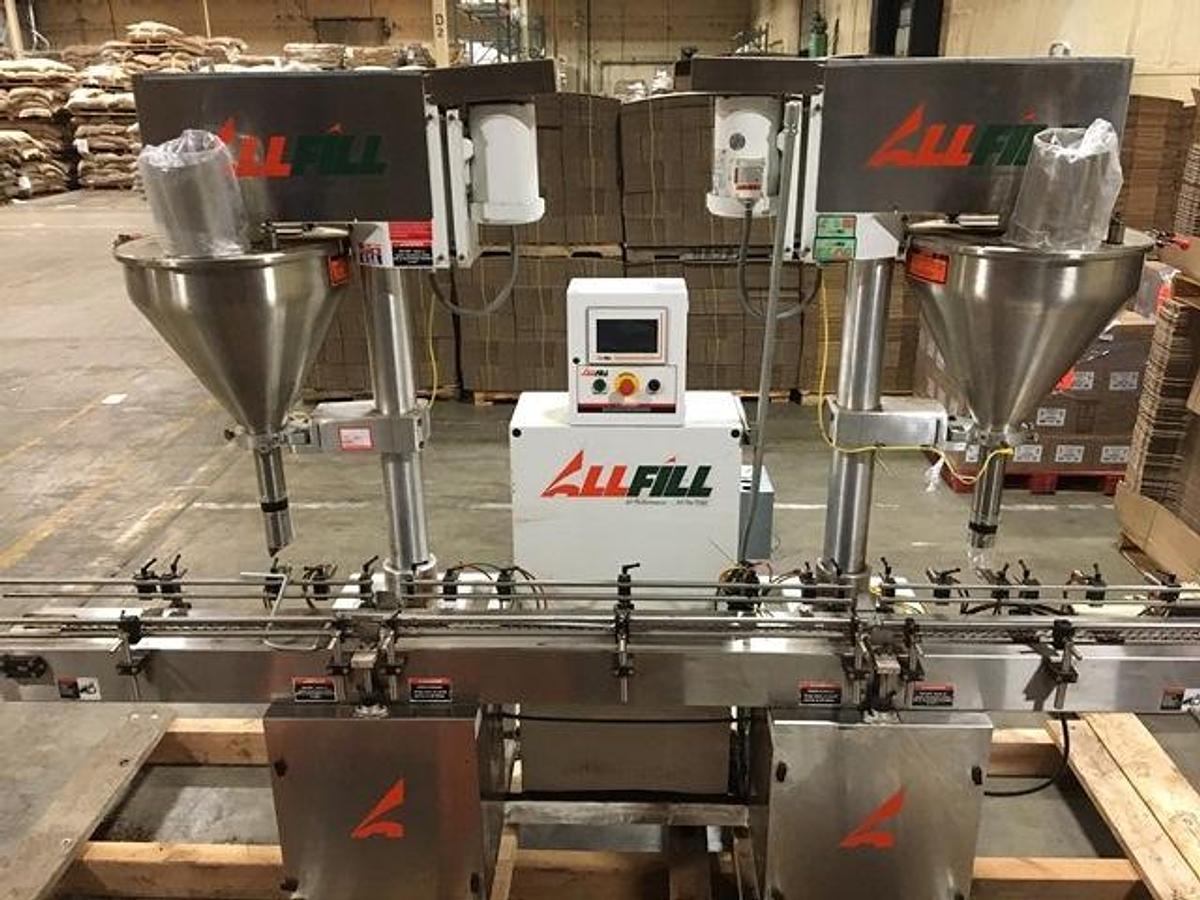
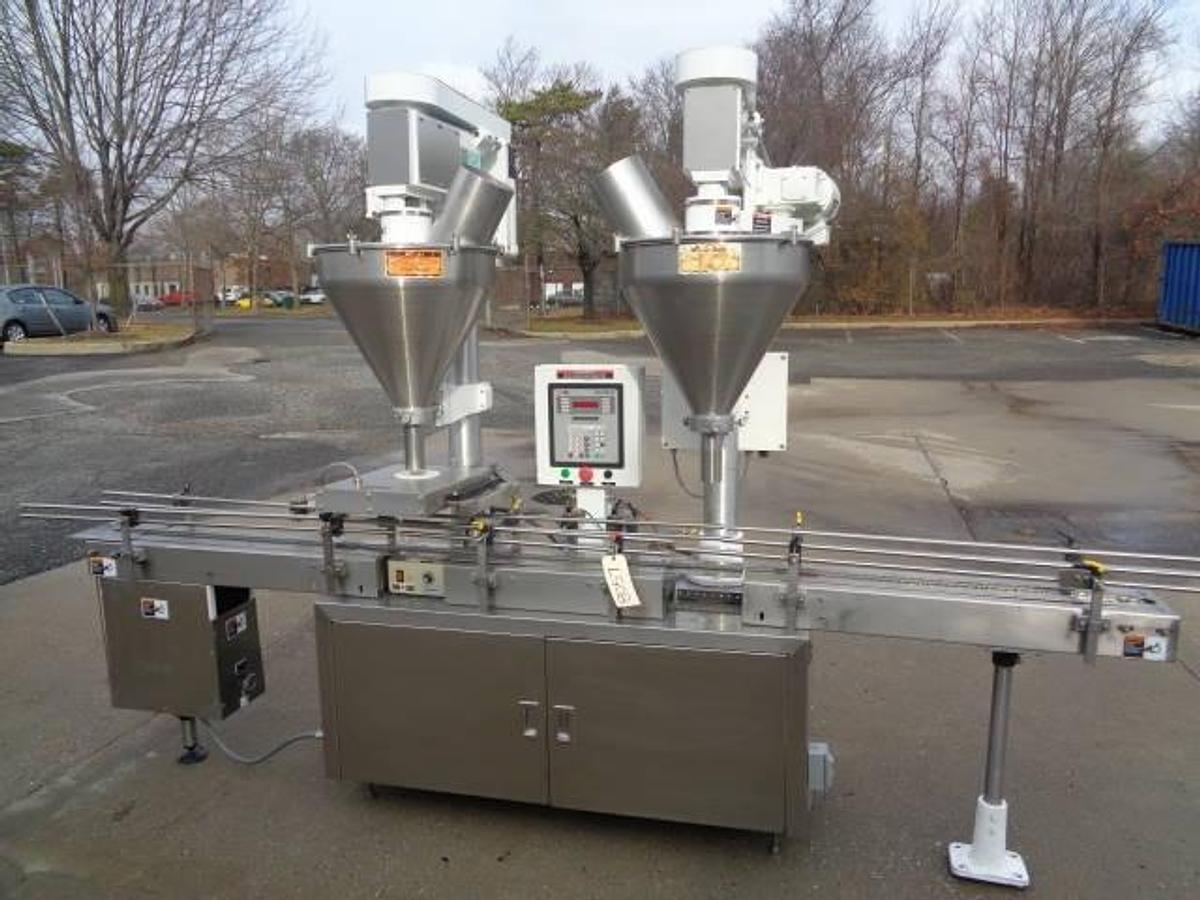
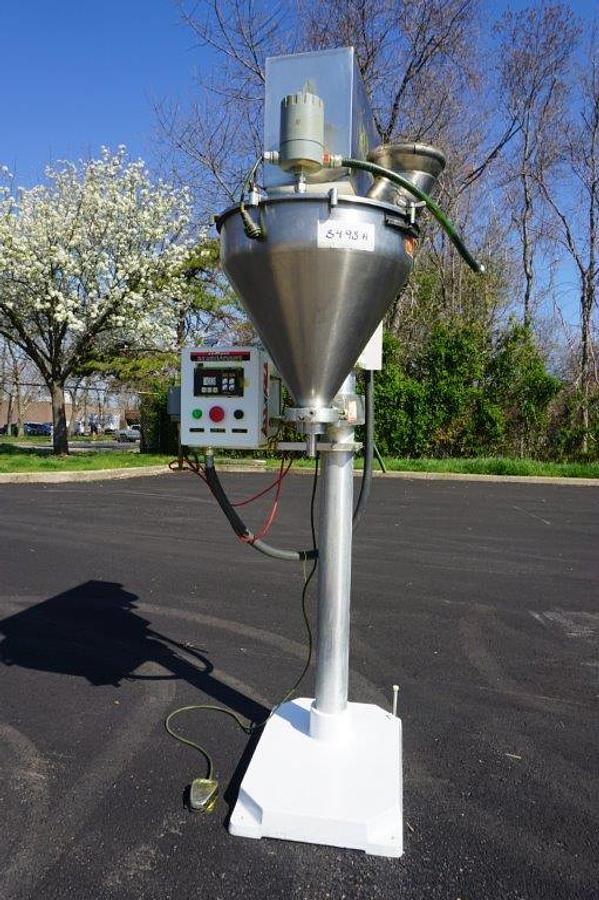
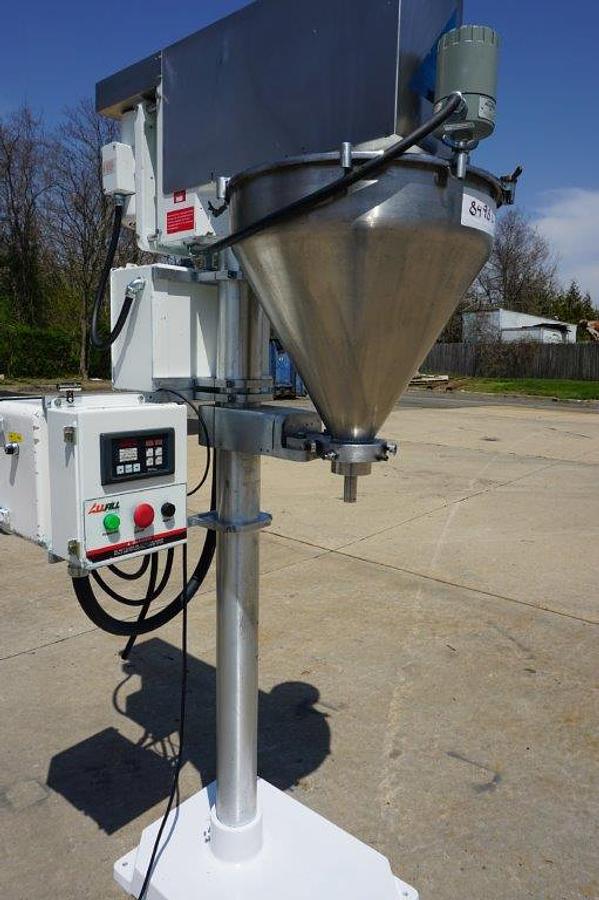
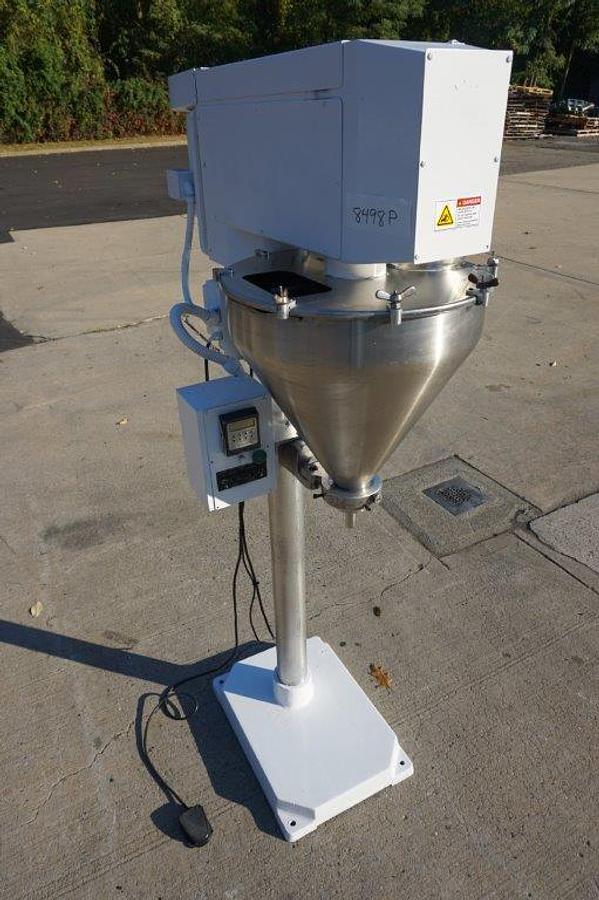
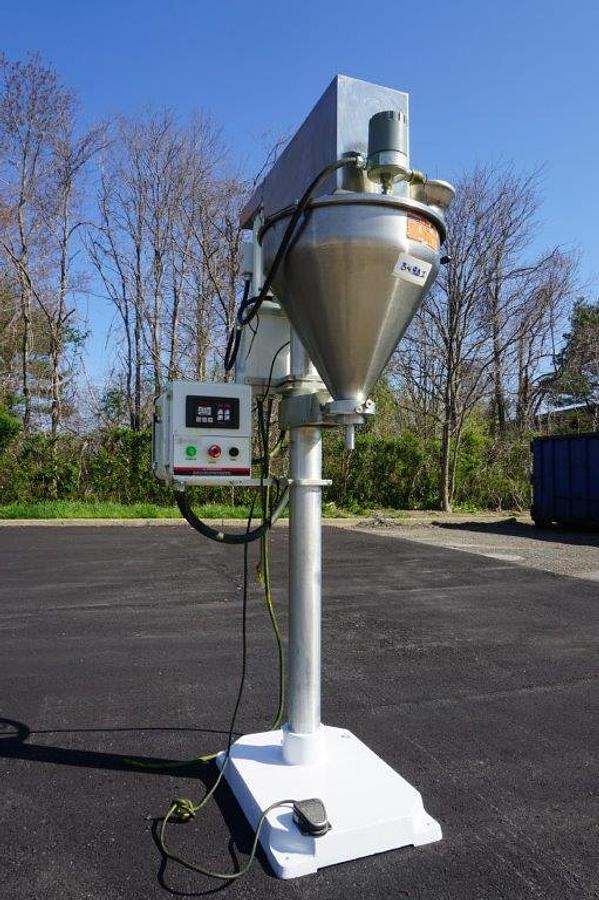
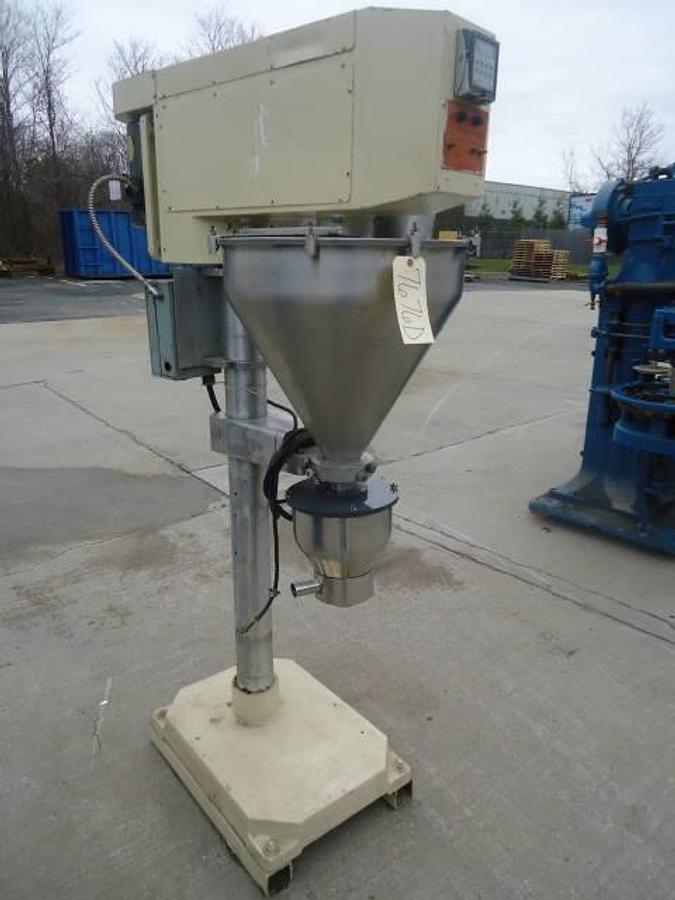
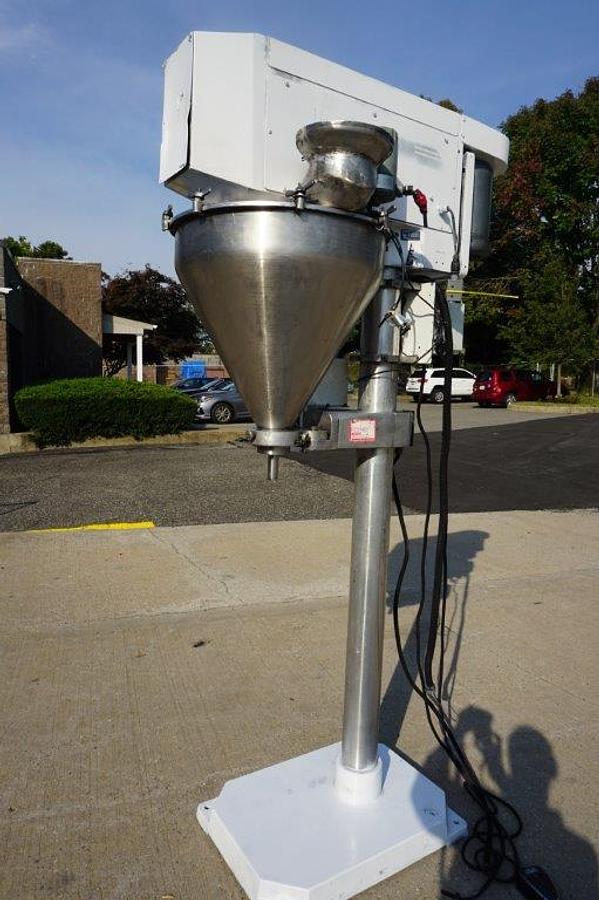
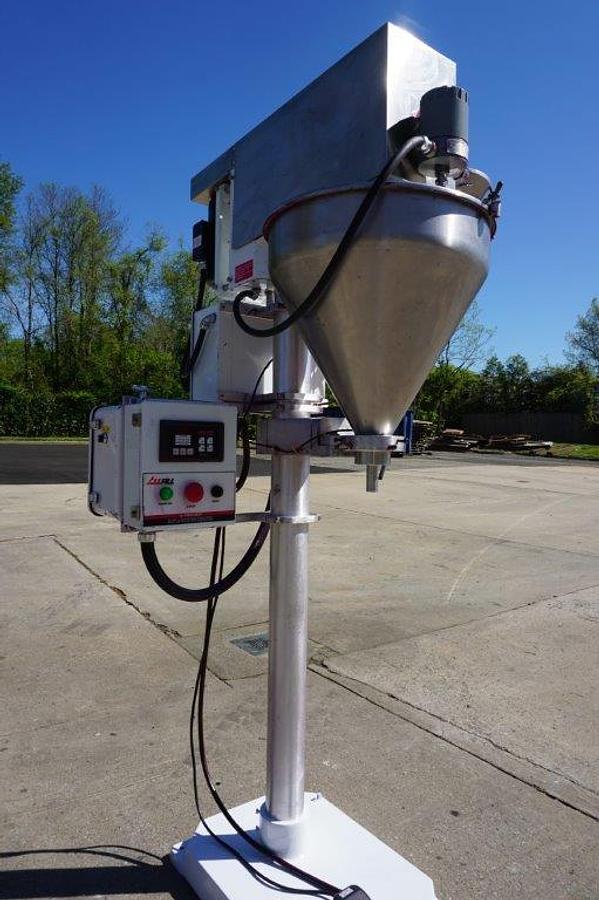
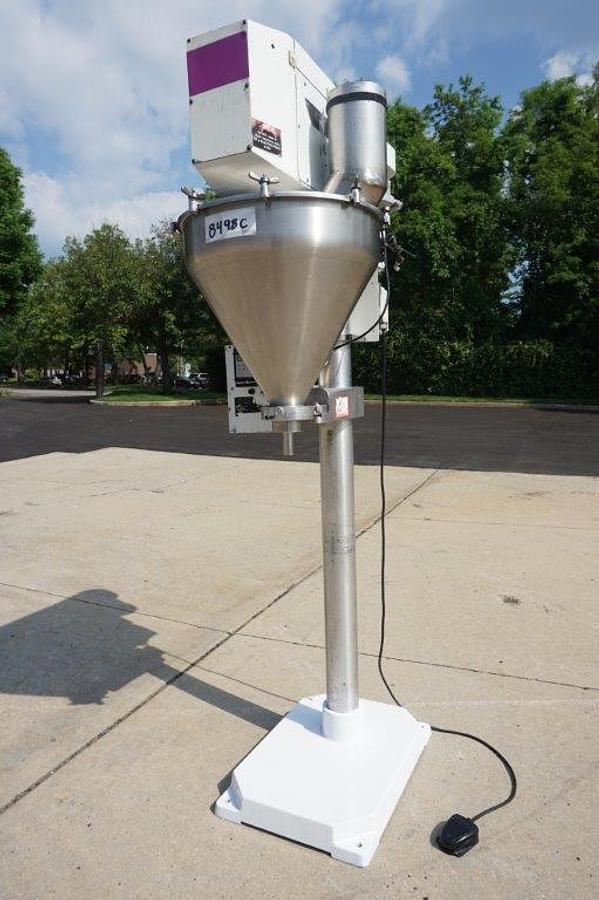
Auger fillers and piston fillers serve fundamentally different purposes, and All Fill manufactures both. An auger filler uses a rotating screw mechanism inside a product hopper to dispense measured volumes of dry or powdered material into containers. The fill volume is controlled by the number of auger rotations per cycle, which can be adjusted with precision. All Fill auger fillers are widely used for powders and granules in food, pharmaceutical, and chemical applications. Models like the single auger pedestal filler and the dual head automatic powder filling machine represent different ends of the throughput spectrum, from semi-automatic benchtop units to high-speed rotary systems.
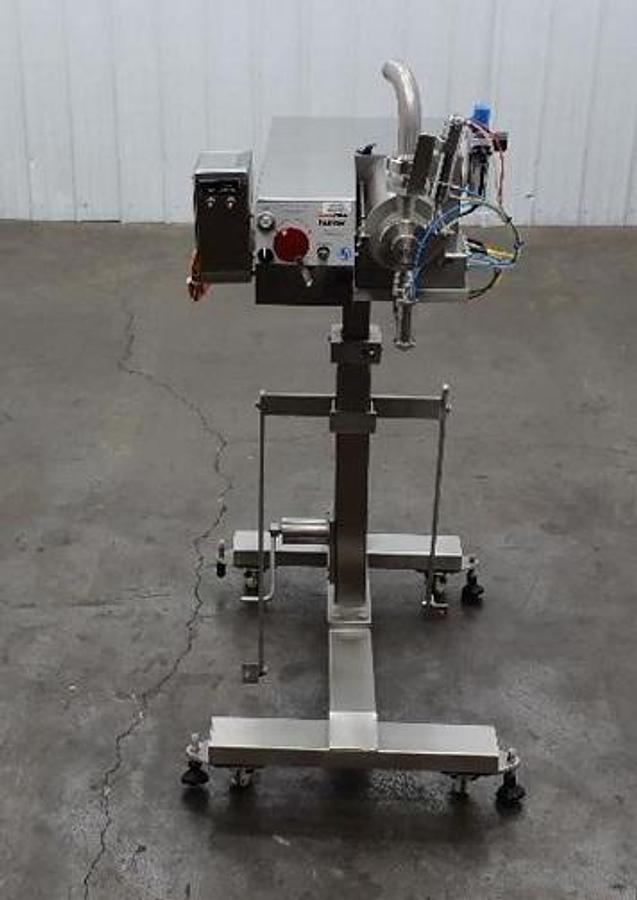
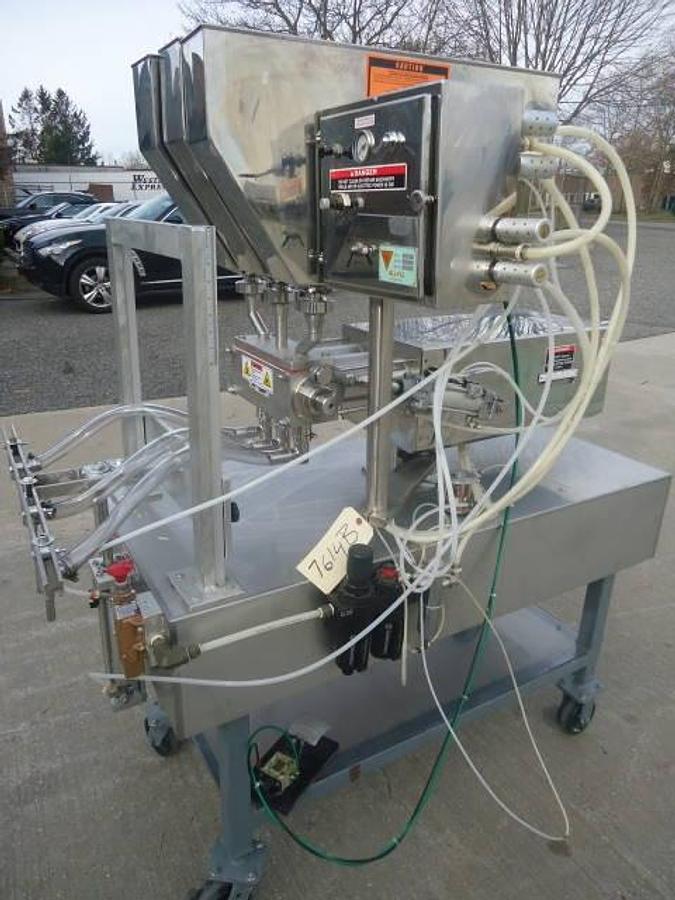
Piston fillers, by contrast, use a cylinder-and-piston mechanism to draw in and dispense a fixed volume of liquid or semi-liquid product per stroke. All Fill's piston filler models, including their three-head air-operated piston filler, are built for products that would not flow through an auger system. Choosing between the two comes down to product type: if the material is a dry powder or granule, an auger filler is the standard choice; if the product is a liquid, gel, or paste, a piston filler is more appropriate. When purchasing used equipment, buyers should verify that the machine type matches their specific product and that wear components like auger flights, seals, and pistons are in serviceable condition.
How accurate are All Fill filling machines?
All Fill machines have a strong reputation for fill accuracy, which is one of the primary reasons they are specified in regulated industries like pharmaceuticals and food production. Under good operating conditions with appropriate product characteristics, All Fill auger fillers can achieve fill tolerances in the range of plus or minus 0.5% or better. The actual accuracy achieved in practice depends on several variables: product density consistency, particle size uniformity, environmental conditions like humidity, and the condition of the machine's auger flights and seals. Products that are highly consistent in bulk density tend to produce the tightest fill results.
For used machines, fill accuracy is a critical inspection point. Worn auger flights, damaged seals, or out-of-calibration controllers can all degrade performance from the machine's original specifications. Buyers should ask dealers about the machine's service history and, where possible, request a demonstration or video of the machine running product. It is also worth consulting All Fill directly to understand what fill accuracy specifications apply to the specific model and age of machine being considered, since older models may have different control systems than current production equipment. Establishing baseline accuracy expectations before purchase helps avoid surprises during commissioning.
Are All Fill filling machines suitable for small businesses or only large-scale production?
All Fill produces equipment across a wide range of throughput levels, so their machines are not limited to high-volume industrial operations. Semi-automatic models, such as single auger pedestal fillers with foot switch actuation, are specifically designed for lower-volume or batch production environments. These machines allow an operator to manually position containers and trigger fills one at a time, making them practical for small manufacturers, contract packagers, or businesses that run multiple short production runs of different products. The relatively compact footprint of pedestal-mounted units also makes them easier to fit into smaller production spaces.
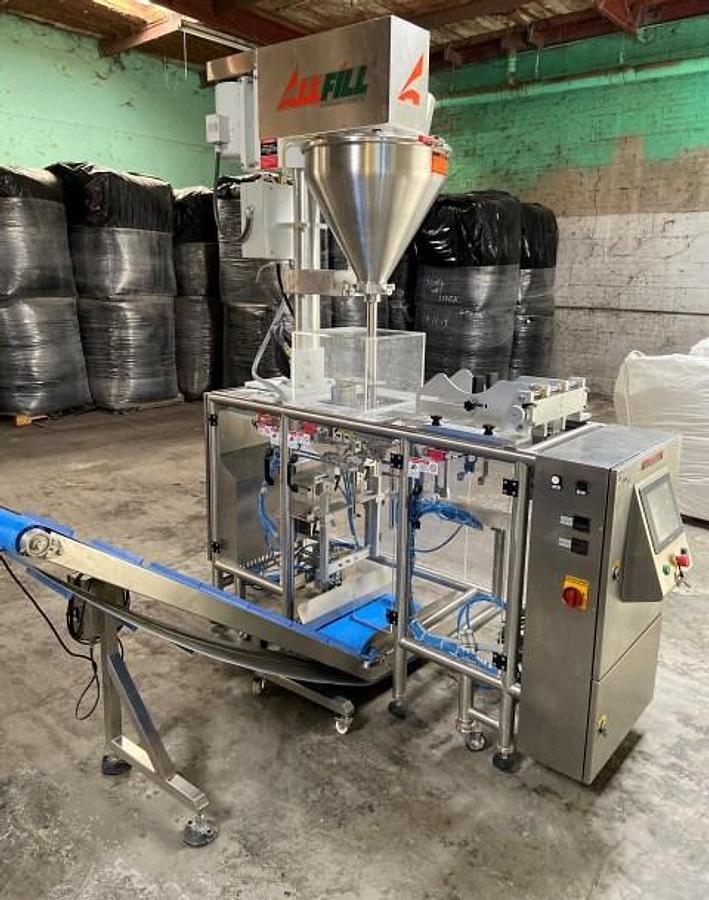
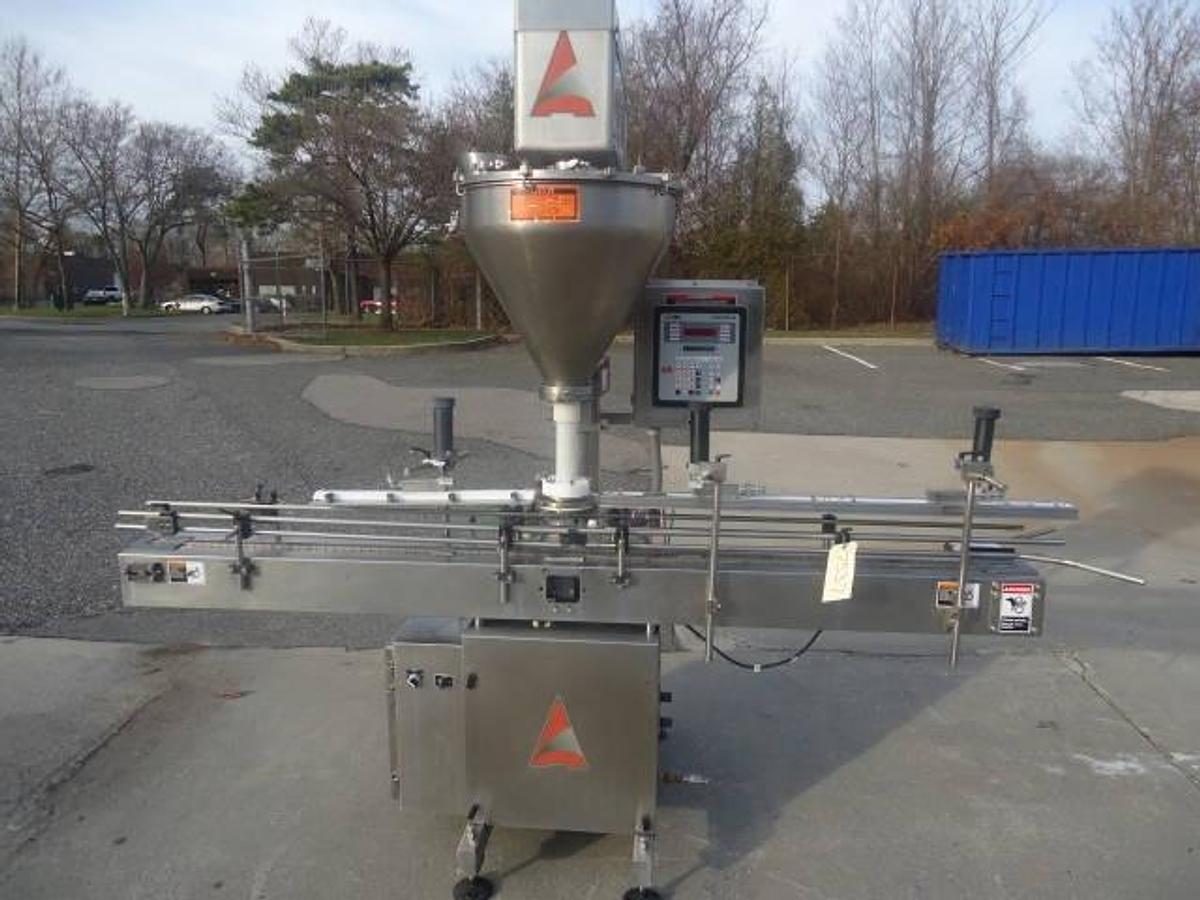
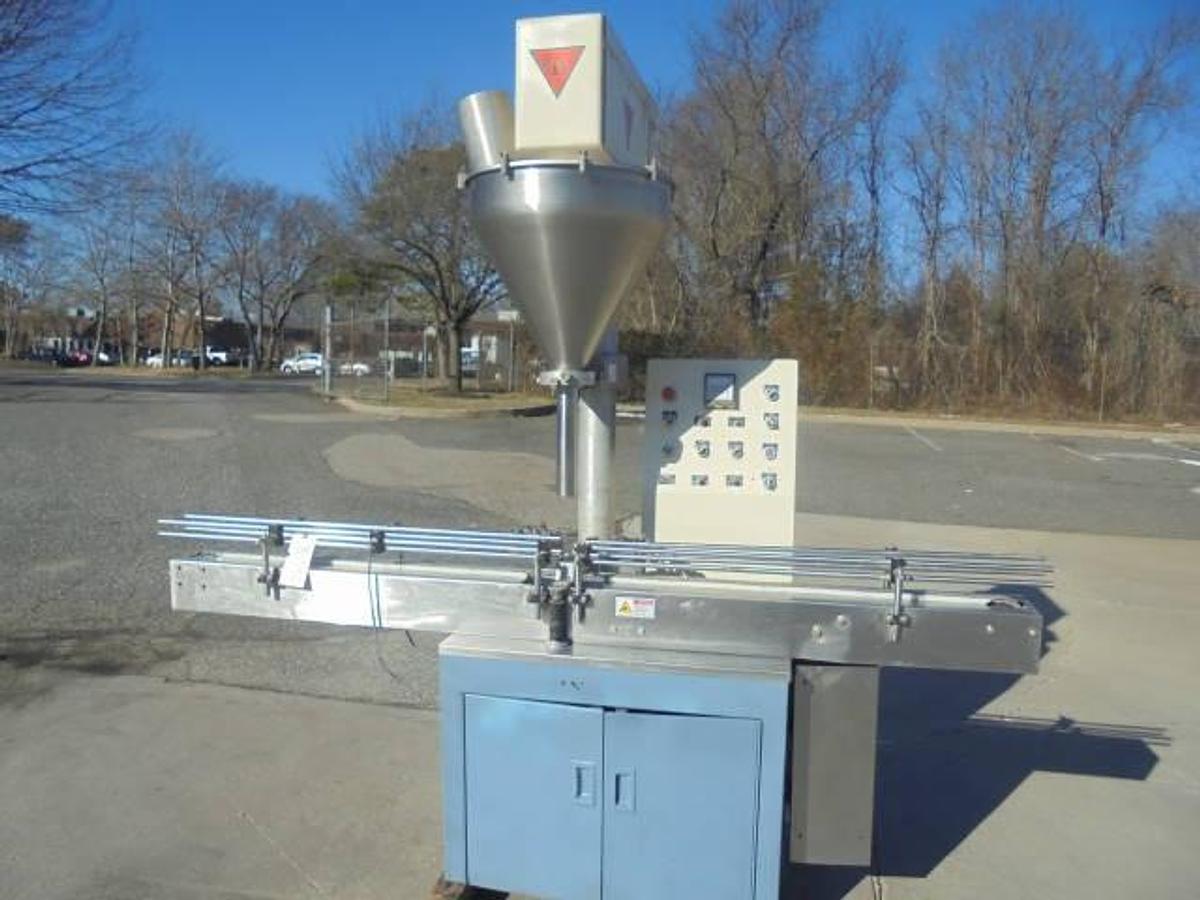
At the higher end, fully automatic models like the DHA-400 dual head automatic powder filler and the SHA-100 automatic powder filler with conveyor are built for continuous, high-speed production lines. These machines integrate with conveyors and other packaging line equipment to minimize manual handling. For a small business purchasing used equipment, a semi-automatic All Fill machine can represent a significant step up in consistency and speed compared to manual filling, without the cost or complexity of a fully automated system. The key is matching the machine's designed throughput and automation level to the actual production volume and labor resources of the operation.
What should buyers inspect when purchasing a used All Fill filling machine?
Buying used filling equipment requires a more thorough evaluation process than purchasing from a manufacturer, because machine condition varies based on how intensively the equipment was used, how well it was maintained, and how long it may have been in storage. For All Fill auger fillers specifically, the most important mechanical components to inspect are the auger flights and the drive assembly. Worn or damaged auger flights directly affect fill accuracy and consistency. Seals, gaskets, and the hopper interior should be examined for wear, corrosion, or product buildup that could indicate sanitation issues or contamination risk. Electrical components, including the control panel, motor drives, and any programmable controllers, should be checked for functionality.
Reputable used equipment dealers will typically accommodate in-person inspections at their facility, or provide detailed video walkthroughs of the machine. Some machines may still be located at the facility where they were last in production, which can allow buyers to see the equipment in its operating environment. Keep in mind that most used equipment dealers are not set up to run product through machines during inspections, since production operations require different permitting than a resale facility. Buyers should also contact All Fill directly to ask about parts availability and technical support for the specific model and manufacturing year, since older machines may have limited parts availability or may require custom fabrication for certain components.
Can used All Fill filling machines be integrated with existing packaging lines?
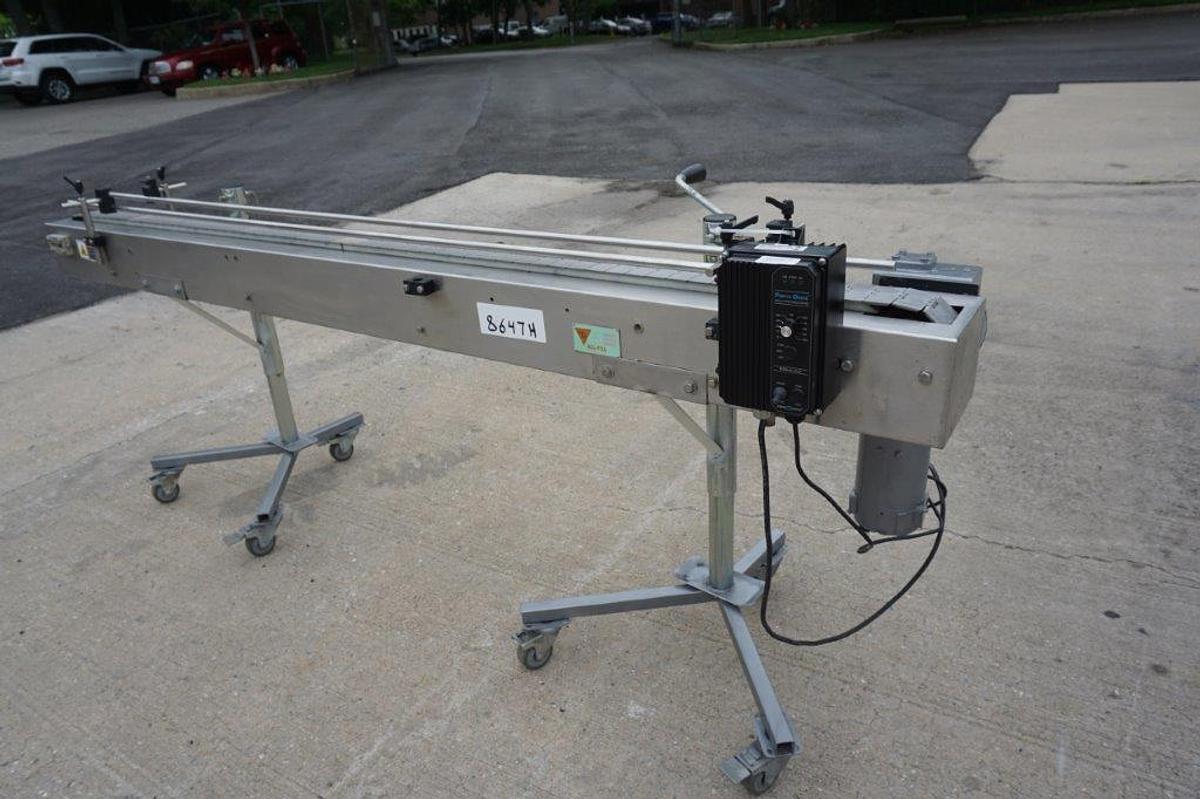
All Fill machines are designed with integration in mind, and many models include features that facilitate connection to upstream and downstream packaging equipment. Conveyor interfaces, container indexing systems, and programmable fill triggers are common on automatic models like the SHA-100 with conveyor and the rotary filling machines in the All Fill lineup. These machines can typically be connected to bottle conveyors, capping equipment, labeling systems, and other line components. The AFI motorized bottle conveyor, for example, is a complementary piece of equipment that pairs with filling machines to automate container handling through the fill station.
For used machines, integration feasibility depends on the specific model's control architecture and physical configuration. Older machines may use control systems that are less straightforward to interface with modern programmable logic controllers or line management software. Buyers planning to integrate a used All Fill machine into an existing line should document their current line's communication protocols, conveyor speeds, and container specifications before purchasing, and verify compatibility with the machine being considered. Consulting a packaging line integrator or the machine manufacturer's technical team can help identify any adaptation work required. Physical dimensions, infeed and outfeed heights, and container handling requirements should all be confirmed against the existing line layout.
What fill weight ranges are compatible with All Fill auger filling machines?
All Fill auger filling machines cover a broad range of fill weights, from small pharmaceutical or spice fills measured in fractions of a gram up to larger fills of several kilograms for industrial or food applications. The specific range for any given machine depends on the auger diameter, hopper capacity, and control system installed. Smaller auger diameters are used for fine powders and small fill weights where precision is critical, while larger augers handle higher-volume fills more efficiently. Many All Fill models are designed to be adjustable within a range, allowing operators to change fill targets by modifying auger rotation counts through the controller.
For used machines, the fill range is tied to the tooling and configuration that comes with the equipment. Some used machines may include multiple auger sizes or interchangeable tooling that expands the usable fill range. Buyers should ask dealers to confirm what tooling is included with a specific machine and what fill weight range it was set up to run in its previous application. If a buyer's target fill weight is near the edges of a machine's designed range, it is worth consulting with All Fill's technical team to confirm whether the machine can be adapted or retuned to hit the required targets accurately.
What is the typical process for buying a used All Fill machine, from inquiry to delivery?
The process generally starts with identifying a specific machine or model type that fits the production requirement, then contacting the dealer to get detailed specifications, photos, and condition information. Most reputable used equipment dealers will provide additional documentation upon request, including machine history if available, and will arrange an in-person visit or video inspection so the buyer can assess condition before committing. This inspection step is particularly important with used filling equipment, since machine condition can vary significantly based on prior use and maintenance. Buyers should use this stage to ask about the machine's last known operating status, what product it was running, and whether any repairs or parts replacements have been made.
Once a purchase agreement is reached, most used equipment dealers require full payment prior to shipping. Payment terms for repeat customers may vary by dealer. After payment, the machine is prepared for shipment, which involves palletizing or crating to prevent transit damage. Larger machines may require specialized rigging for loading and unloading, which adds to the total landed cost. Buyers should get a clear breakdown of packaging, rigging, and freight charges before finalizing the purchase so there are no surprises in the final cost. Delivery timelines depend on the machine's location, the shipping method selected, and any preparation work needed before the machine can be moved.
How do All Fill machines compare to other powder filling equipment brands?
All Fill has been producing filling equipment since 1969, which gives their machines a long track record in demanding production environments. In the powder filling segment, All Fill is recognized alongside other established manufacturers for consistent fill accuracy and durable construction. Their machines are commonly specified in food, pharmaceutical, and chemical applications where fill precision and sanitation compliance are priorities. The stainless steel construction used on most All Fill models meets food-grade and pharmaceutical-grade standards, which is a key requirement in regulated industries. Their range of semi-automatic and automatic configurations means there are suitable models for both small-batch and high-volume operations.
From a used equipment standpoint, All Fill machines tend to hold their value reasonably well because of the brand's reputation and the availability of parts and technical support for many models. Buyers comparing All Fill to other brands on the used market should consider factors like parts availability for the specific model year, the manufacturer's ongoing support for older equipment, and the availability of trained technicians who can service the machine. All Fill's long manufacturing history means there is a relatively large installed base of their equipment, which generally supports a more active secondary market and better access to replacement parts compared to less common brands.
What industries commonly use All Fill filling machines?
All Fill filling machines are used across a broad range of industries, with food and beverage, pharmaceuticals, nutraceuticals, cosmetics, and industrial chemicals being the most common sectors. In food production, All Fill auger fillers are frequently used for dry goods like spices, baking mixes, protein powders, coffee, and snack seasonings. Pharmaceutical and nutraceutical manufacturers use them for capsule filling powders, vitamin blends, and other fine powders where dosing accuracy is critical. The stainless steel construction and cleanable design of most All Fill models support compliance with FDA and GMP standards that apply in these regulated industries.
In cosmetics and personal care, All Fill machines handle talc, face powder, dry shampoo, and similar formulations. Chemical manufacturers use them for detergents, agricultural powders, and other granular or powdered industrial products. The machine's ability to handle products with varying flow characteristics, from free-flowing granules to cohesive powders that require agitation, makes them adaptable across this wide industry range. When evaluating a used All Fill machine, buyers should confirm that the model was designed or configured for their specific industry's requirements, since machines previously used in chemical applications may need thorough cleaning and inspection before being repurposed for food or pharmaceutical production.