Category
Manufacturer
Model
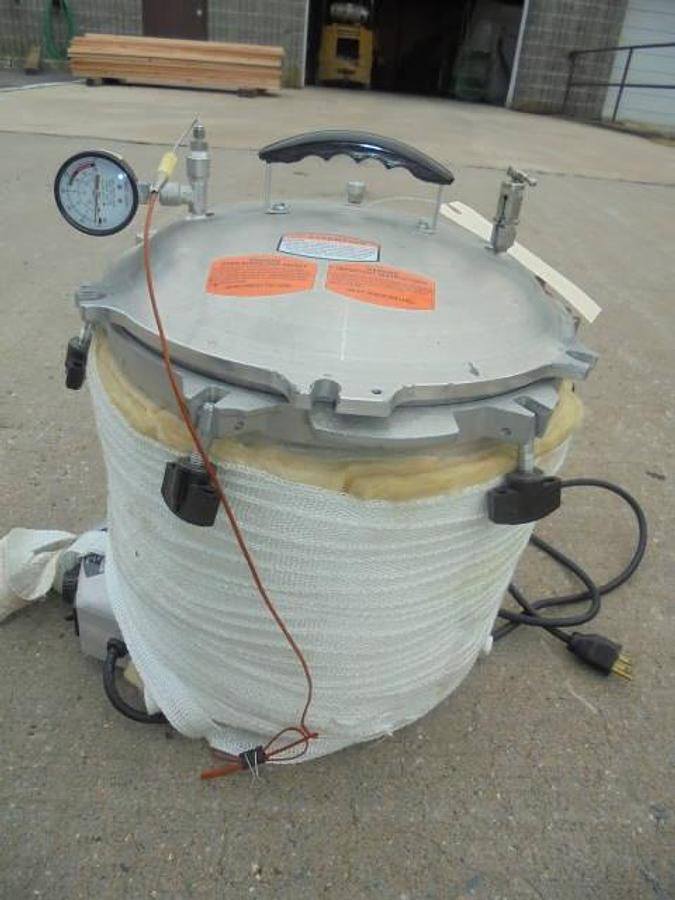
All American
All American manufactures a wide range of sterilizers and autoclaves, serving the healthcare, laboratory, and pharmaceutical sectors. They are particularly noted for their high-performance stainless steel sterilization units, ensuring reliable sterilization of medical and laboratory equipment.
FAQ:
What is an All American sterilizer and what industries use them?
All American sterilizers are pressure-based steam sterilization units manufactured by Wisconsin Aluminum Foundry (WAF), a company based in Manitowoc, Wisconsin. They are built primarily from stainless steel and are designed to reliably sterilize medical instruments, laboratory equipment, and a wide range of other materials that require elimination of microbial contamination. The brand has a long-standing reputation in the sterilization market, particularly for the durability of its construction and the consistency of its sterilization cycles.
These units are used across a surprisingly broad range of industries. Healthcare settings such as dental offices and veterinary practices rely on them for instrument sterilization. Laboratory and pharmaceutical environments use them for media preparation and equipment decontamination. They are also widely adopted in mycology and mushroom cultivation, where sterilizing grain and substrate is a critical step in the growing process. Tattoo and body art studios, food processing operations, and small research facilities round out the common user base. That versatility across professional and semi-professional settings is a large part of why All American sterilizers remain in high demand on the used equipment market.
What is the difference between an All American sterilizer and an autoclave?
The terms sterilizer and autoclave are often used interchangeably, and in practical terms, an All American sterilizer functions on the same core principle as an autoclave: pressurized steam is used to reach temperatures high enough to destroy bacteria, spores, viruses, and other microorganisms. The distinction is largely one of scale and context. The word autoclave is more commonly used in clinical and industrial settings to describe larger, more automated units, while sterilizer tends to describe smaller, more manually operated pressure-based units.
All American sterilizers occupy a middle ground. Smaller tabletop models are straightforward to operate and are common in smaller labs, dental offices, and hobbyist mycology setups. Larger models in the series scale up considerably in chamber volume and are appropriate for higher-throughput environments. Both types achieve the same fundamental goal: reaching 15 PSI and approximately 250 degrees Fahrenheit (121 degrees Celsius), which is the industry-standard combination for effective steam sterilization. Whether a unit is labeled a sterilizer or an autoclave, the performance benchmark is the same.
What sizes are available for All American sterilizers?
All American sterilizers are produced in a wide range of chamber sizes, making them adaptable to everything from small-scale laboratory work to larger production environments. The lineup spans from roughly 10.5 quarts on the compact end up to 941 quarts for high-volume applications. Popular models in the series include the 25, 50, 75, 100, 200, and 941, with the numbers generally corresponding to the quart capacity of the sterilization chamber.
Choosing the right size depends heavily on the volume and type of material being sterilized. A mycology hobbyist sterilizing quart jars of grain will have very different needs than a veterinary clinic processing a full load of surgical instruments or a food processing facility running large batches of product. When buying a used All American sterilizer, it is worth carefully reviewing the listed specifications for the specific model, including chamber dimensions and rated capacity, to confirm the unit fits the intended application before purchasing.
What is the metal-to-metal sealing system on All American sterilizers, and why does it matter?
One of the most frequently cited design features of All American sterilizers is the metal-to-metal sealing system. Rather than relying on a rubber or silicone gasket to create a pressure-tight seal between the lid and the body of the unit, All American uses precision-machined metal surfaces that mate directly together. This approach eliminates a common failure point found in many competing sterilizers, where gaskets degrade over time from repeated heat and pressure cycling, eventually requiring replacement to maintain a proper seal.
For buyers in the used equipment market, this design characteristic is particularly relevant. A rubber gasket on a heavily used sterilizer may be cracked, hardened, or deformed, which can compromise sterilization performance. The metal-to-metal design is inherently more durable over time, meaning a well-maintained used All American unit is less likely to have seal-related issues than a comparable unit that depends on gasket integrity. That said, buyers should still inspect the sealing surfaces carefully during any pre-purchase inspection to confirm there is no corrosion, warping, or damage to the mating surfaces.
What pressure and temperature do All American sterilizers reach, and is that sufficient for sterilization?
All American sterilizers are designed to reach 15 PSI of steam pressure, which corresponds to a chamber temperature of approximately 250 degrees Fahrenheit, or 121 degrees Celsius. This is the internationally recognized standard for steam sterilization, sometimes referred to as the gravity cycle standard. At this temperature and pressure, exposure times of 15 to 30 minutes are generally sufficient to destroy vegetative bacteria, most viruses, and bacterial spores, depending on the load size and density of the material being sterilized.
This 121 degree Celsius benchmark is not arbitrary. It is the threshold established by sterilization science at which even heat-resistant bacterial endospores are reliably destroyed within a reasonable dwell time. The combination of saturated steam, elevated pressure, and sustained temperature is what makes steam sterilization so effective compared to dry heat or chemical methods. Users should always follow validated cycle parameters for their specific application, as load configuration, container type, and material density can all affect heat penetration and required exposure time.
Do All American sterilizers require electricity, or can they be used on a gas stove?
All American produces both electric and stovetop models, which is one of the reasons the brand has such a wide user base. The stovetop models are heated externally using a gas or electric range, giving users flexibility in settings where a dedicated electrical connection for the unit itself is not available or practical. This makes stovetop models popular with mushroom cultivators, homesteaders, and small operations that do not need a permanently installed unit. The All American 25X, for example, is an electric steam sterilizer, meaning it has a built-in heating element and plugs directly into a standard electrical outlet.
When evaluating a used All American sterilizer, confirming whether the unit is electric or stovetop is an important first step, since the two types have different operational requirements and installation considerations. Electric models should be inspected with attention to the heating element, controls, and wiring condition. Stovetop models should be evaluated for the integrity of the base and the sealing surfaces. Either type can deliver reliable sterilization performance when properly maintained, but buyers should match the model type to their available infrastructure before purchasing.
Are All American sterilizers suitable for mycology and mushroom cultivation?
All American sterilizers have developed a strong following in the mycology community, particularly among mushroom cultivators who need to sterilize grain, brown rice flour, sawdust, and other substrates before inoculating with fungal spores or mycelium. Contamination from competing molds and bacteria is one of the primary causes of failed mushroom grows, and steam sterilization at 15 PSI and 121 degrees Celsius is the most reliable way to eliminate those contaminants before inoculation. The durability and consistent pressure performance of All American units make them a preferred choice for this application.
For mycology use, chamber size matters quite a bit. Cultivators running small experimental batches may find a 25-quart model sufficient, while those producing at higher volumes often look for 50-quart or larger units that can accommodate more jars or bags per cycle. Used All American sterilizers are frequently available from laboratory and research environments that have upgraded to larger automated systems, making them a practical and cost-effective option for cultivators who want reliable performance without the cost of purchasing a unit direct from a manufacturer. Buyers should verify that the unit holds pressure consistently and that all gauges and safety valves are functioning before use.
What should buyers inspect when purchasing a used All American sterilizer?
Buying a used All American sterilizer requires a more deliberate inspection process than purchasing new equipment, since the condition of the unit directly affects both its performance and safety. Key areas to evaluate include the condition of the pressure gauge (accuracy matters for confirming proper cycle parameters), the safety/overpressure valve (which must function correctly to prevent dangerous pressure buildup), the sealing surfaces on both the lid and body, and the general condition of the stainless steel chamber interior. Pitting, heavy discoloration, or scale buildup can indicate heavy prior use or improper maintenance. On electric models, the heating element and any controls or thermostats should also be assessed.
Reputable used equipment dealers will typically accommodate in-person inspections, video walkthroughs, or photo documentation of the machine's current condition. Some units may still be in service at a facility, in which case an inspection can sometimes be arranged at the operating location. Keep in mind that most used equipment dealers do not have the permitting or infrastructure to run full production sterilization cycles for testing purposes, so the inspection will generally focus on physical condition and operational readiness rather than a live sterilization run. Buyers should also contact the manufacturer to understand what level of parts and technical support is available for the specific model and age of the unit they are considering.
What are typical shipping considerations for a used All American sterilizer?
Shipping costs and logistics for used sterilizers vary depending on the size and weight of the unit. Smaller tabletop models in the 25 to 75-quart range are relatively straightforward to palletize and ship via freight carrier, though proper packaging is still important to prevent damage to gauges, valves, and the sealing surfaces during transit. Larger units in the 200-quart and 941-quart range are significantly heavier and may require specialized rigging equipment for loading and unloading, which adds to the total landed cost.
Buyers should ask the dealer for a clear breakdown of all shipping-related costs before finalizing a purchase. This includes palletization or crating fees, freight charges, and any rigging or liftgate fees required at the delivery location. Understanding the full landed cost upfront prevents surprises and allows for accurate comparison between units listed at different price points. For large sterilizers, confirming that the receiving facility has appropriate unloading equipment, such as a forklift or loading dock, is an important logistical step that should be addressed before the unit ships.
What are typical payment terms when buying a used All American sterilizer from a dealer?
Used equipment dealers generally require full payment prior to shipping a unit. This is standard practice in the industry and reflects the nature of used machinery transactions, where the dealer needs to confirm cleared funds before releasing equipment. Some dealers may offer extended payment terms to repeat customers or established buyers with a prior purchasing relationship, but buyers approaching a dealer for the first time should plan on paying in full upfront.
Before submitting payment, buyers should ensure they have completed any desired inspection of the unit, reviewed all available documentation on the machine's condition, and confirmed the total landed cost including shipping, crating, and any rigging fees. Since used equipment is typically sold as-is, there is no substitute for doing thorough due diligence before the transaction is finalized. Selecting a dealer with a long track record of selling sterilization and laboratory equipment specifically is one of the better ways to reduce risk, as specialized dealers tend to have more relevant knowledge about the equipment they are selling and are more likely to provide accurate condition assessments.