Category
Manufacturer
Model
FAQ:
What is an AK Robins blancher and what is it used for?
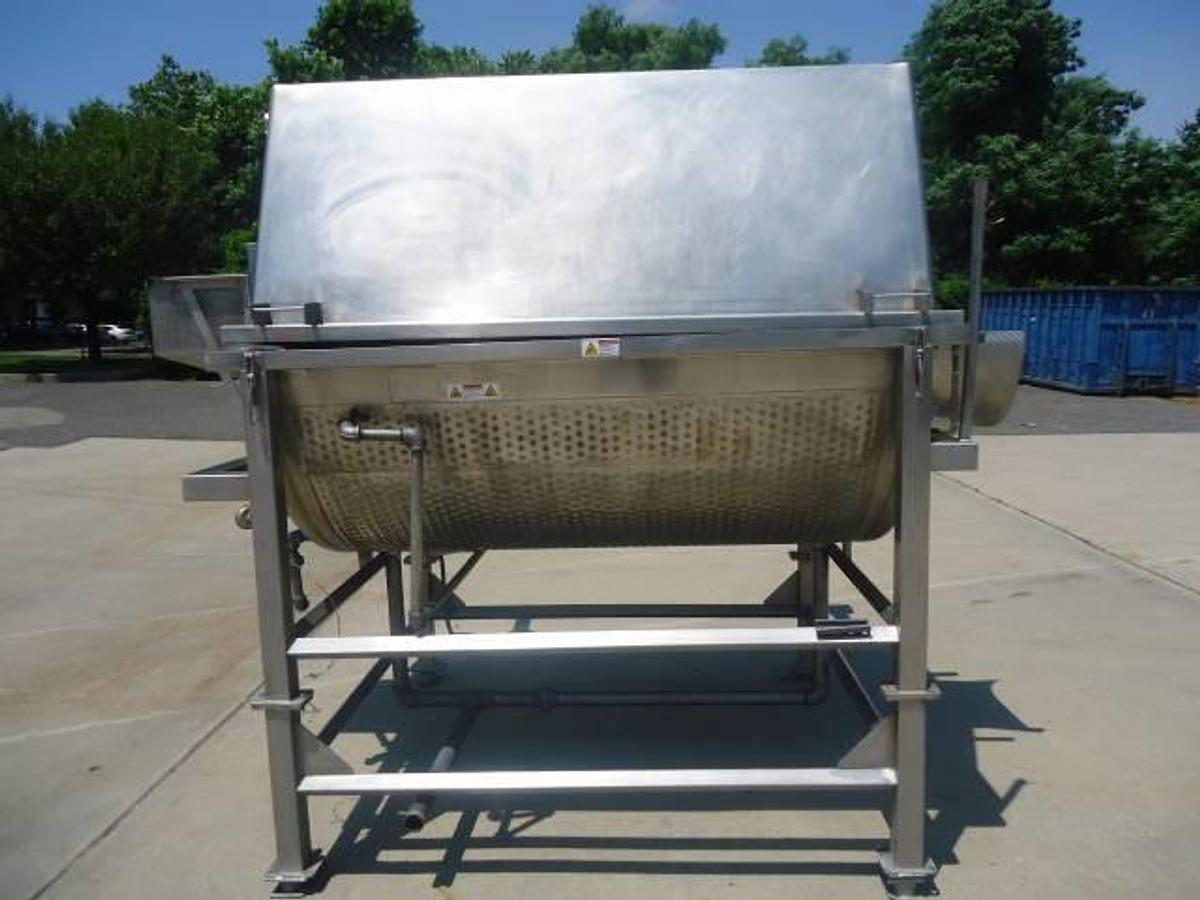
An AK Robins blancher is a commercial food processing machine designed to blanch fruits, vegetables, and other produce by briefly exposing them to hot water or steam before cooling. Blanching is a critical step in food preservation because it deactivates enzymes that would otherwise cause produce to lose color, texture, flavor, and nutritional value during freezing or canning. AK Robins has built a reputation in the food processing equipment industry for producing reliable blanching machinery suited to small-scale and mid-scale operations, including farms, food co-ops, institutional kitchens, and food manufacturing facilities.
The continuous blancher design, such as the 48-inch diameter jacketed model, allows product to move through the blanching process without stopping, which improves throughput compared to batch-style equipment. The jacketed construction means the vessel walls are double-layered, allowing steam or hot water to circulate around the processing chamber for more consistent and efficient heat transfer. This type of machine is particularly well-suited for processors handling significant volumes of produce who need repeatable results across large runs.
What does "continuous" mean in the context of a continuous blancher?
A continuous blancher processes product in a steady, uninterrupted flow rather than in individual batches. Product is fed into one end of the machine, moves through the heated blanching zone for a controlled period of time, and exits at the other end ready for cooling, freezing, or further processing. This design dramatically increases throughput compared to batch blanching, where the operator must load, process, unload, and reload the machine repeatedly. For commercial food processors working with high volumes of vegetables, fruits, or other produce, continuous operation is often essential to keeping up with harvest or production schedules.
The residence time inside a continuous blancher can typically be adjusted by changing conveyor or rotation speed, allowing operators to dial in the correct blanching duration for different products. Leafy greens, for example, require much shorter blanch times than dense root vegetables, so this adjustability is a practical necessity in facilities that process multiple product types. When evaluating a used continuous blancher, buyers should pay close attention to the condition of the conveyor or rotating drum mechanism, as these components handle the most mechanical wear over the life of the machine.
What is a jacketed blancher and why does the jacketed design matter?
A jacketed blancher has a double-walled vessel construction in which the outer jacket surrounds the inner processing chamber. Steam or hot water is circulated through the space between the two walls, heating the inner chamber indirectly and evenly rather than relying solely on direct immersion heating. This design provides more uniform temperature distribution across the processing zone, which translates to more consistent blanching results and reduces the risk of uneven cooking or product damage from hot spots. The jacketed design also tends to be more energy-efficient because the insulating effect of the outer jacket reduces heat loss to the surrounding environment.
For food processors handling delicate produce, the temperature consistency of a jacketed system can make a meaningful difference in finished product quality. It also gives operators more precise control over blanching temperatures, which is important when working with products that have narrow processing windows. When inspecting a used jacketed blancher, buyers should examine the jacket for any signs of corrosion, weld failures, or pressure-related damage, as repairs to double-wall construction can be complex and costly.
What types of produce can be processed with an AK Robins blancher?
AK Robins blanchers are designed for commercial food processing applications and can handle a wide variety of fruits and vegetables. Common products processed in continuous blanchers of this type include green beans, peas, corn, spinach, broccoli, carrots, potatoes, and similar produce destined for freezing or canning. The machine is particularly well-suited for high-volume operations where consistent blanching across large quantities of a single product is the primary goal. Some facilities also use blanchers to process fruits like peaches or tomatoes when preparing them for further canning or puree operations.
The specific products a blancher can handle effectively depend on factors like drum or conveyor configuration, water temperature range, and residence time adjustability. A 48-inch diameter continuous unit is a substantial piece of commercial equipment and is generally not intended for small household quantities. Buyers should consider whether the machine's throughput capacity and temperature range align with the specific products they intend to process, and when inspecting a used unit, it helps to ask whether the previous operator used it for similar products.
What should buyers know about purchasing a used AK Robins blancher versus buying new equipment?
Buying a used AK Robins blancher can offer significant cost savings compared to purchasing new commercial food processing equipment, which can run into tens of thousands of dollars depending on capacity and configuration. Used equipment from established manufacturers like AK Robins tends to hold its functional value well when properly maintained, and the continuous jacketed blancher design is mechanically straightforward enough that a well-maintained used unit can deliver many additional years of reliable service. The key is sourcing the machine from a reputable used equipment dealer with a track record in food processing machinery, and conducting a thorough inspection before committing to a purchase.
Buyers should understand that used equipment is sold as-is, which means the responsibility for evaluating condition falls on the buyer rather than the seller. This makes the inspection process critical. Prospective buyers should request detailed photos, video walkthroughs, or in-person inspections to assess the condition of wear components like seals, bearings, the conveyor or drum mechanism, and any heating elements. It is also worth contacting the manufacturer directly to understand what level of parts and technical support is available for the specific model and age of the machine being considered, since older models may have limited parts availability.
How should buyers inspect a used blancher before purchasing?
Inspecting a used blancher thoroughly before purchase is one of the most important steps a buyer can take to protect their investment. Reputable used equipment dealers will typically accommodate in-person inspections, video calls, or provide detailed video footage of the machine. The goal is to get an accurate picture of the equipment's current condition, including the state of the processing vessel, heating jacket, drive components, seals, and any electrical or pneumatic controls. Buyers should look closely at the interior surfaces for corrosion, pitting, or buildup that might indicate poor maintenance or sanitation practices. The condition of welds on the jacket and vessel walls is also worth scrutinizing.
In some cases, the machine may still be in active production at its current facility, which allows for a live operational inspection. In other cases, the equipment may have been decommissioned and is no longer running. Either scenario is common in the used equipment market. Keep in mind that most used equipment dealers do not have production facilities and therefore cannot run the machine with actual product during an inspection, as that would require food production permitting they typically do not hold. Buyers should factor this limitation into their evaluation and rely on visual inspection, operational history documentation, and manufacturer consultation to fill in the gaps.
What materials are AK Robins blanchers typically constructed from?
Commercial blanchers intended for food processing applications, including those produced by AK Robins, are generally constructed from stainless steel for all product-contact surfaces. Stainless steel is the standard material in food processing equipment because it resists corrosion from the acidic compounds found in many fruits and vegetables, tolerates repeated high-temperature cleaning and sanitizing cycles, and does not impart any flavor or contamination to the product. Food-grade stainless steel construction is essentially a baseline expectation for any equipment subject to food safety inspections or regulatory oversight.
Beyond the primary vessel and product-contact surfaces, supporting structures, frames, and drive components may incorporate other materials such as carbon steel or food-grade plastics depending on the specific design and age of the machine. When evaluating a used unit, buyers should pay particular attention to the condition of stainless steel surfaces, looking for pitting, deep scratches, or rust that could harbor bacteria and make sanitation difficult. Surface condition is especially important for buyers operating under USDA, FDA, or third-party food safety audit programs, where equipment sanitation standards are closely scrutinized.
What is the typical capacity of an AK Robins 48-inch diameter continuous blancher?
The 48-inch diameter specification on a continuous blancher refers to the diameter of the processing drum or vessel, which is a primary indicator of the machine's throughput capacity. A drum of this size is a substantial commercial unit capable of handling significant volumes of produce per hour, making it appropriate for mid-scale to larger food processing operations rather than small-batch or artisan producers. The actual pounds-per-hour throughput will vary depending on the product being processed, the required blanch time, and the operating speed of the machine, but units of this size are generally designed for continuous commercial production environments.
Buyers evaluating this type of equipment should consider their own production volumes carefully to ensure the machine's capacity is a reasonable match for their operation. Oversized equipment can be inefficient to operate at low volumes, while undersized equipment creates bottlenecks. When speaking with a dealer about a specific used unit, it is worth asking about the production context from which the machine came, as this can provide useful context about the volumes it was handling and whether it was operating near capacity or lightly loaded during its previous service life.
What are typical shipping and logistics considerations when buying a used commercial blancher?
Commercial blanching equipment of this size and weight requires careful planning around packaging, rigging, and freight. A 48-inch diameter continuous blancher is a large, heavy piece of industrial equipment that will typically need to be rigged for loading at the seller's location and unloaded with appropriate equipment at the buyer's facility. Depending on the machine's weight and dimensions, this can involve forklifts, cranes, or specialized rigging crews, all of which add to the total landed cost of the purchase. Buyers should ask the dealer for specifics on how the machine will be packaged or crated, since inadequate packaging is a common cause of transit damage.
Shipping costs for equipment of this size can vary considerably based on distance, the level of crating required, and whether the buyer's facility has a loading dock or requires a liftgate delivery. Buyers should request a full breakdown of packaging, rigging, and freight costs from the dealer before finalizing a purchase so there are no surprises when the invoice arrives. It is also worth confirming who is responsible for arranging and paying for unloading at the destination, as this is sometimes a point of confusion. Most used equipment dealers require full payment prior to shipping, so having all cost details confirmed in advance is important.
Are replacement parts and technical support available for older AK Robins blanchers?
Parts availability and technical support for used commercial food processing equipment can vary significantly depending on the age of the machine and the manufacturer's current product lineup. For prospective buyers of a used AK Robins blancher, it is worth contacting the manufacturer directly before purchasing to ask specifically about parts availability and support for the model in question. Some manufacturers maintain robust aftermarket parts programs for older equipment, while others may have limited or no stock for machines beyond a certain age. Getting a clear answer on this before purchase helps buyers understand the long-term maintainability of the equipment.
For many components on continuous blanchers, such as bearings, seals, drive belts, and standard hardware, buyers may be able to source replacement parts from industrial supply distributors rather than relying exclusively on the equipment manufacturer. This is a common approach for maintaining older food processing equipment and can extend the useful life of a machine considerably. Buyers with in-house maintenance capabilities or access to a food equipment service technician are generally better positioned to manage an older used machine than those who would need to rely entirely on manufacturer support for every repair.