Category
Manufacturer
Model
FAQ:
What types of equipment does Aesus Systems manufacture?
Aesus Systems is a Canadian-based manufacturer specializing in packaging line equipment, with a product range that covers labeling, capping, and product handling machinery. Their lineup includes pressure sensitive labelers (both spot and wrap-around configurations), rotary unscrambling and accumulating tables, cap tighteners and retorquers, and screw capping machines. Many of their machines are built in all stainless steel, which makes them well suited for industries with strict hygiene and sanitation requirements.
The equipment is designed to fit into both semi-automatic and fully automatic production environments, and the modular nature of many Aesus machines means they can be integrated into existing packaging lines without requiring a complete line overhaul. Their machines handle a wide range of container types and sizes, which is part of why they appear regularly in food and beverage, pharmaceutical, cosmetics, nutraceutical, and chemical manufacturing facilities.
What is the Aesus 'Eco Wrap Prism' labeler and what does it do?
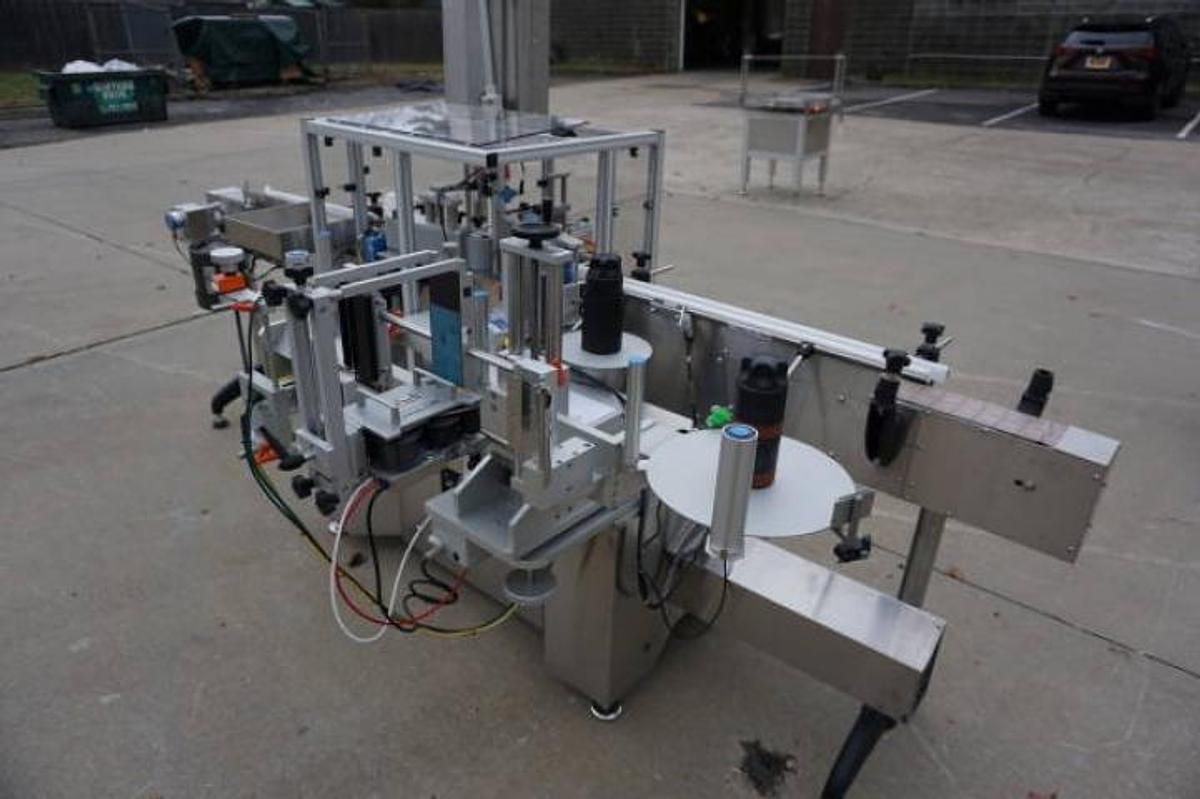
The Aesus 'Eco Wrap Prism' is an automatic pressure sensitive labeler capable of applying labels in both spot and wrap-around configurations. Pressure sensitive labeling is one of the most common methods used in packaging lines because it works across a wide variety of container shapes and materials without requiring heat or adhesive application equipment. The wrap-around capability means the machine can apply a label that fully encircles a container, which is standard for bottles, jars, and cylindrical packaging in industries like food, beverage, and personal care.
The stainless steel construction of the Eco Wrap Prism makes it appropriate for production environments where washdowns or exposure to moisture and chemicals are routine. Used units of this machine appear on the secondary market periodically and can represent a cost-effective way for smaller or mid-sized producers to add automated labeling to their line without the capital outlay of buying factory-direct. Buyers considering a used Eco Wrap Prism should confirm the label head condition, the drive system, and whether the machine has been maintained and calibrated regularly during its service life.
What is a rotary unscrambling and accumulating table used for in a packaging line?
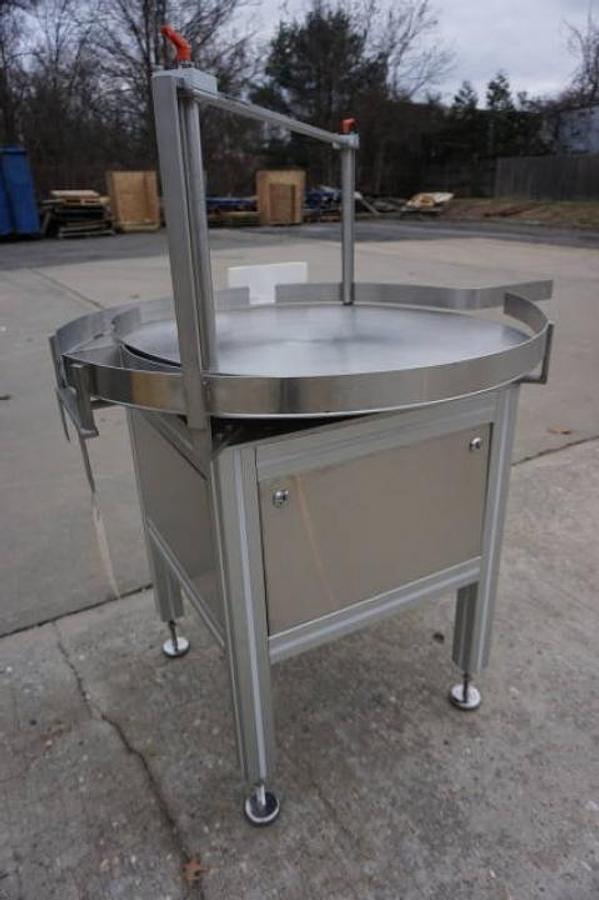
A rotary unscrambling and accumulating table serves as a buffer and orientation station within a packaging line. Containers coming off a production or filling process often arrive in bulk or at inconsistent intervals. The rotary table gathers those containers, uses centrifugal motion to spread them outward toward a guide rail, and feeds them into the next stage of the line in a single-file, upright orientation. This prevents bottlenecks and keeps the downstream equipment running at a consistent pace. The Aesus Systems 36-inch diameter rotary table with variable speed control gives operators flexibility to match the feed rate to the speed of the rest of the line.
Variable speed is a particularly useful feature because it allows the same table to work across different container sizes and line speeds without requiring mechanical adjustments. In used equipment purchases, buyers should pay close attention to the condition of the turntable surface, the drive motor, and the speed control mechanism, as these are the components that see the most wear over time. An inspection, whether in person or via video, should confirm that the table runs smoothly at both low and high speeds without vibration or irregular movement.
What does a four spindle cap tightener or retorquer do, and when is one needed?
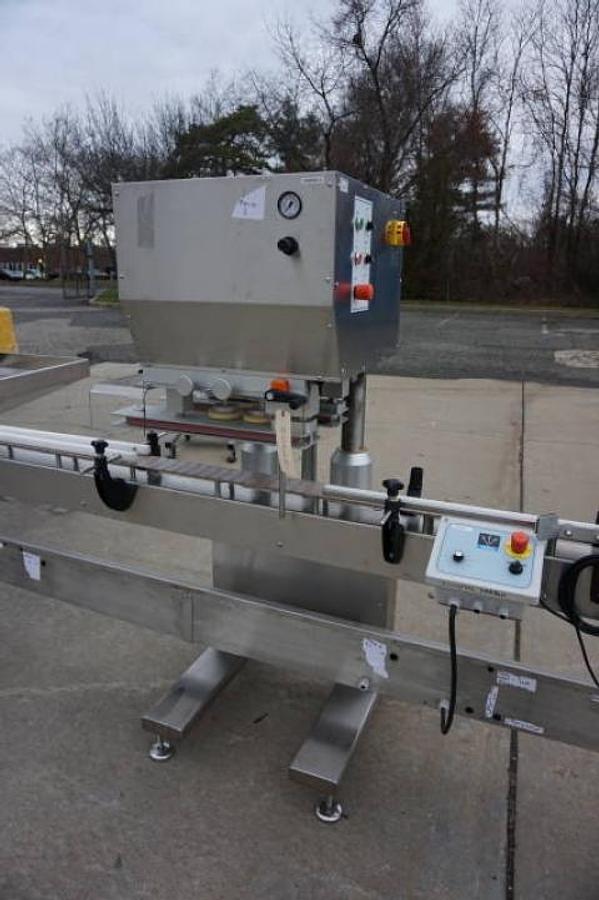
A cap tightener, sometimes called a retorquer, is a machine that applies a final, consistent torque to caps after they have been placed on containers. In many packaging lines, caps are applied by a capping machine but may not always be seated with perfectly uniform torque due to container variation, cap variation, or line speed. A retorquer passes the capped containers through a set of spinning spindles that grip the cap and apply a controlled downward and rotational force to ensure every cap is tightened to the same specification. The four spindle design on the Aesus unit allows it to handle a range of cap diameters and provides redundancy in the tightening process.
Retorquers are especially common in pharmaceutical, nutraceutical, and food production where tamper evidence and seal integrity are regulatory requirements. All stainless steel construction is standard for these environments. When evaluating a used cap tightener, buyers should inspect the spindle discs for wear, check the drive belts or chains, and verify that the machine can be adjusted to accommodate the specific cap sizes used in their operation. A video or in-person inspection that shows the machine running with actual caps is the most reliable way to assess its current condition.
What is the Aesus 'Delta Star' screw capping machine and what applications does it handle?
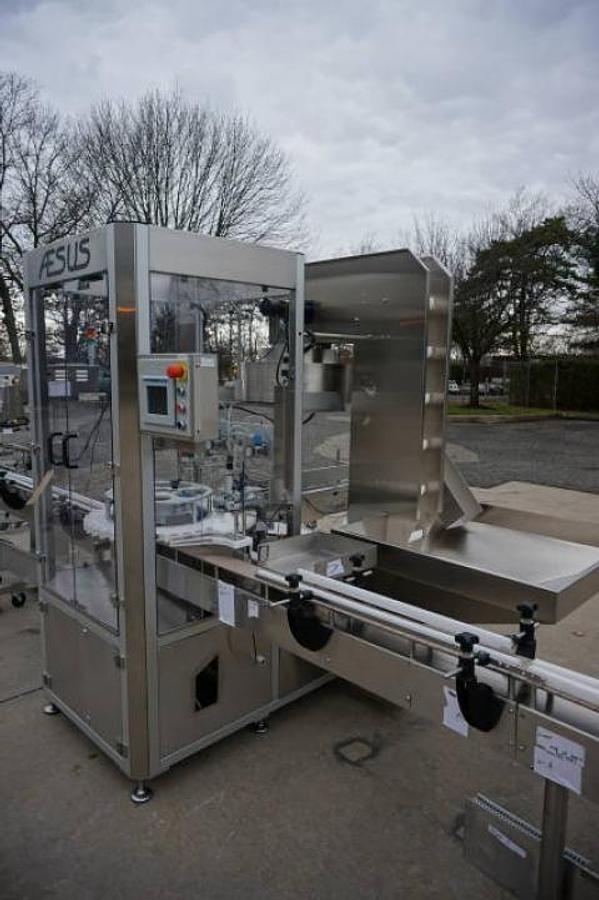
The Aesus 'Delta Star' is a screw capping machine designed to apply threaded caps to containers automatically. Screw capping machines are a staple in packaging lines for products sold in bottles with standard threaded closures, which covers a broad range of industries including food and beverage, personal care, household chemicals, and pharmaceuticals. The Delta Star's all stainless steel construction indicates it was built for environments where corrosion resistance and easy cleaning are priorities.
Automatic screw cappers like the Delta Star typically use a chuck or spindle system to pick up caps from a hopper or cap elevator, place them on the container, and apply the correct torque in a single pass. Throughput capacity and the range of cap and container sizes the machine can handle are the key specifications buyers should verify before purchasing a used unit. Since these machines are used in regulated industries, it is also worth confirming with the manufacturer whether documentation, manuals, or parts support is still available for the specific model and production year of the machine being considered.
What industries commonly use Aesus Systems packaging equipment?
Aesus Systems equipment is found across a broad range of industries that share a common need for reliable, sanitary packaging line machinery. The most frequent end users are in food and beverage production, pharmaceuticals, nutraceuticals, cosmetics and personal care, and industrial chemicals. The stainless steel construction that Aesus uses on many of its machines is a direct response to the washdown and sanitation requirements in these sectors, where equipment regularly comes into contact with liquids, powders, or compounds that would corrode standard carbon steel components.
Smaller craft producers, contract packagers, and large-scale manufacturers all appear in the buyer base for Aesus equipment. The machines are often noted for striking a practical balance between industrial build quality and a price point that is more accessible than comparable European-manufactured equipment. This makes them a common choice for operations that need reliable throughput without the capital investment associated with top-tier European packaging machinery brands. Used Aesus machines are regularly available on the secondary market precisely because these industries have high equipment turnover as production lines are upgraded or reconfigured.
What should buyers know about purchasing used packaging equipment compared to buying factory-direct?
Buying used packaging equipment differs from buying factory-direct in a few important ways that buyers should understand before committing to a purchase. The most significant difference is that used machines are sold as-is, meaning the seller is not in a position to offer the kind of coverage that a manufacturer provides on a machine it has built and tested before shipment. This shifts the responsibility for evaluating the machine's condition squarely onto the buyer. Reputable used equipment dealers with a long track record in the packaging industry are the safest starting point, as they are more likely to have accurate knowledge of a machine's history and to facilitate a proper inspection.
Buyers should request an in-person inspection, a video walkthrough, or at minimum detailed photographs that show the machine's current state, including wear points, electrical components, and any visible repairs or modifications. It is also worth contacting the manufacturer directly to ask about parts availability and technical support for the specific model and age of machine being considered, since older or discontinued models may have limited support. Understanding these factors upfront allows buyers to make an informed decision and accurately estimate the total cost of ownership, including any refurbishment or parts replacement that may be needed after acquisition.
How should buyers inspect used Aesus Systems equipment before purchasing?
A thorough inspection is the most important step in any used packaging equipment purchase, and Aesus Systems machines are no exception. Most reputable dealers will accommodate in-person inspections at their warehouse or, if the machine is still installed at a production facility, can arrange access to the site. Virtual inspections via live video call are a practical alternative for buyers who cannot travel, and many dealers will also provide pre-recorded video of the machine running. The goal in any inspection is to get an accurate picture of the machine's current working condition, including how it runs under power, the state of its wear components, and whether all adjustments and controls are functional.
Buyers should pay particular attention to the condition of contact parts (belts, spindles, guides, and labeler heads), the state of the electrical panel and wiring, and any signs of corrosion or damage on the stainless steel frame and components. One important caveat is that most used equipment dealers are not set up to run full production tests with actual product, as that would require production-level permitting and facilities. What dealers can typically demonstrate is that the machine powers on, runs mechanically, and moves through its operating cycle. For a complete assessment of how the machine will perform with a specific product and container, buyers may need to conduct their own trials after acquisition.
What are the typical shipping and logistics considerations for used packaging machinery?
Shipping used packaging equipment involves more planning than standard freight because these machines are heavy, often have precision components that are sensitive to impact, and may require special handling to avoid damage in transit. Proper packaging is critical. Depending on the size and weight of the machine, this can mean securing it to a pallet, building a custom crate, or both. Larger machines like rotary tables or automatic cappers may also require rigging equipment for loading and unloading, which adds to the overall cost. Buyers should ask the dealer specifically about how the machine will be packaged, what rigging will be used, and what the estimated freight cost is so they have a clear picture of the total landed cost before finalizing the purchase.
For international shipments, additional considerations include customs documentation, import duties, and compliance with the destination country's equipment import regulations. Lead times for freight vary depending on the origin and destination, the carrier, and whether the machine needs any preparation before it ships. Buyers should also consider whether they have the equipment and space at their facility to receive and position a large machine, as unloading a multi-hundred-pound piece of equipment without proper rigging can cause damage to the machine or injury to personnel. Discussing all of these logistics details with the dealer before purchase prevents surprises at delivery.
What payment terms are typical when buying used packaging equipment from a dealer?
The standard practice among used equipment dealers is to require full payment before a machine is released for shipment. This is the norm across the industry and reflects the fact that used equipment transactions do not carry the same financing infrastructure as new equipment sales through manufacturers. Buyers should expect to pay in full upfront unless they have an established relationship with the dealer, in which case some dealers may offer payment terms on a case-by-case basis. Wire transfer is the most common payment method for equipment purchases of this type.
For buyers who need financing, third-party equipment financing companies can sometimes be used to fund a used equipment purchase, though approval depends on the buyer's credit profile and the appraised value of the specific machine. It is worth exploring this option independently before approaching a dealer, as dealers themselves typically do not act as lenders. Buyers should also factor in all ancillary costs, including shipping, rigging, any refurbishment needed after delivery, and installation, when budgeting for a used equipment acquisition. Getting a clear cost breakdown from the dealer before committing to a purchase is the best way to avoid unexpected expenses.