Category
Manufacturer
Model
FAQ:
What types of products can Acasi filling machines handle?
Acasi filling machines are designed to handle a wide range of liquid and semi-liquid products, making them a practical choice across several industries. Common applications include cosmetics such as lotions and serums, food and beverage products like sauces and juices, pharmaceuticals, household chemicals, and nutraceuticals. The specific filler type determines what viscosity range a machine can handle well. Piston fillers, for example, are well-suited to thicker, higher-viscosity products like creams, gels, and chunky sauces. Overflow fillers work best with thin, free-flowing liquids where a consistent fill level in the container is more important than fill-by-volume accuracy. Gravity fillers handle low-viscosity, non-foaming liquids, while pump fillers offer flexibility across a broader viscosity range.
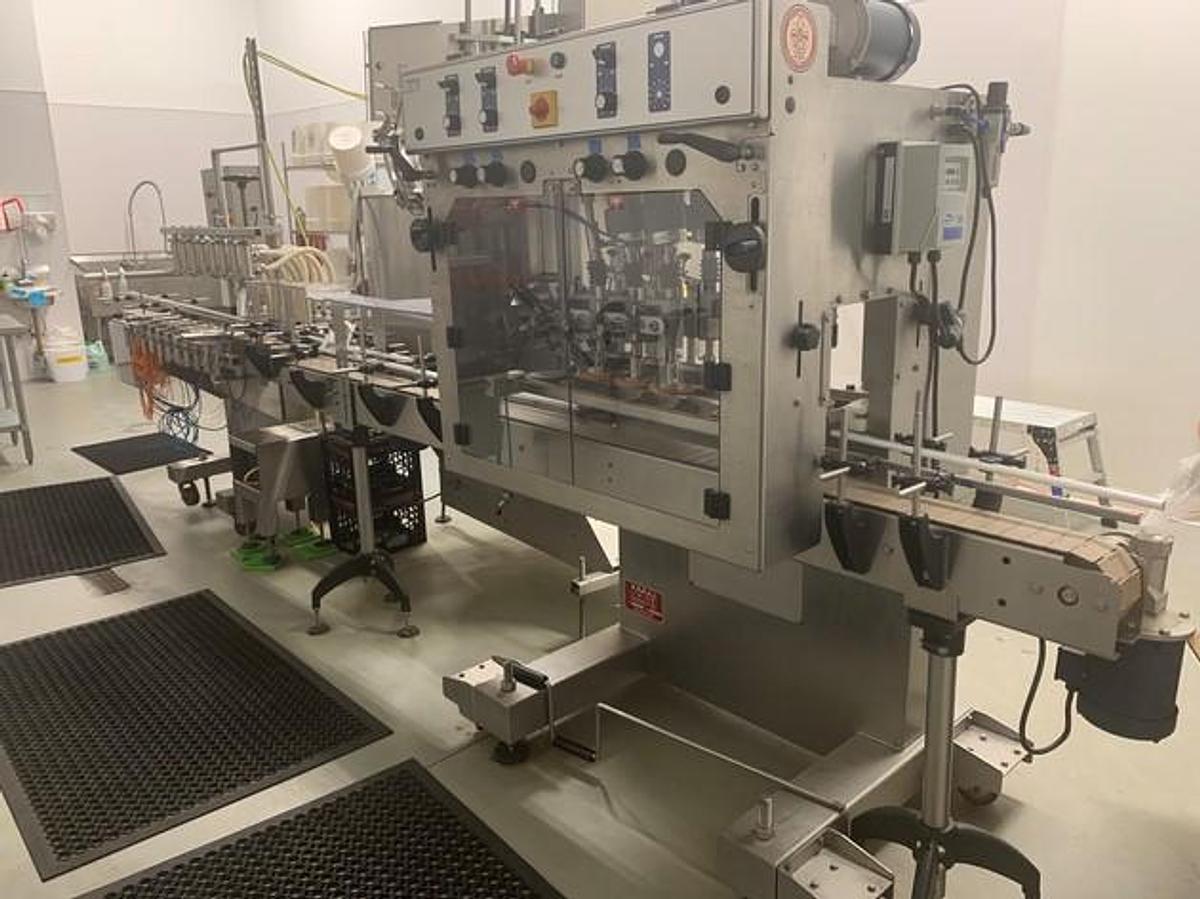
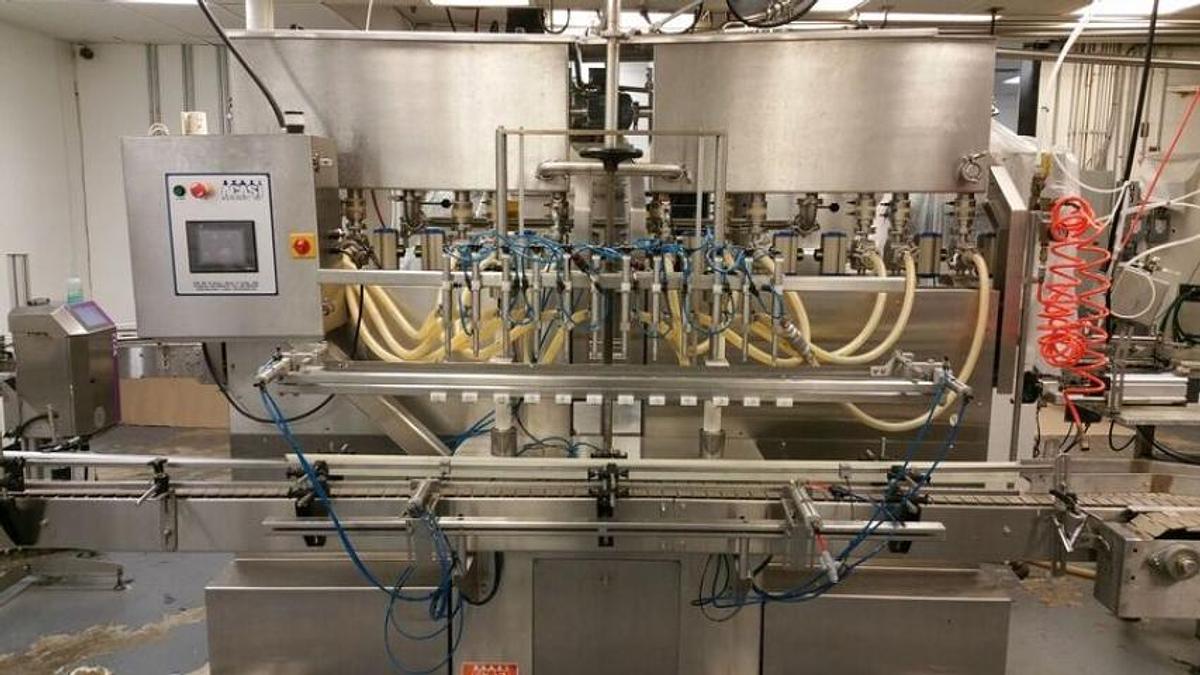
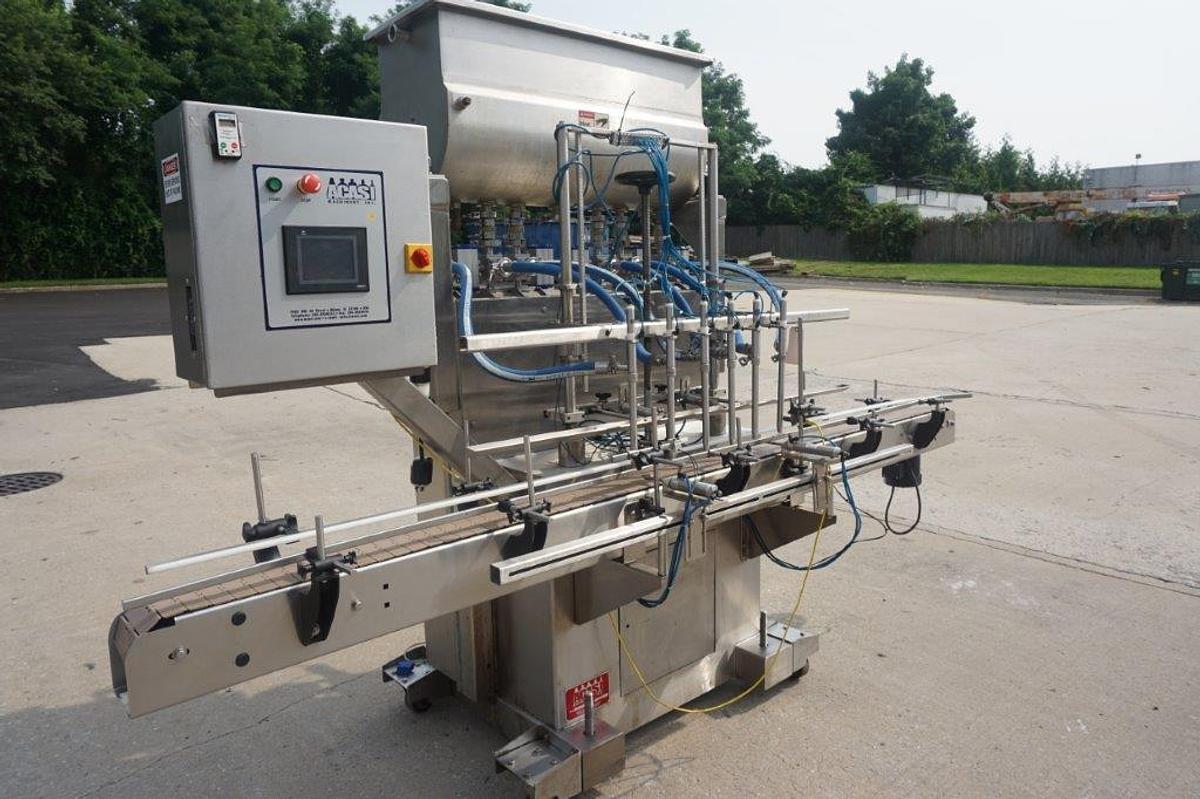
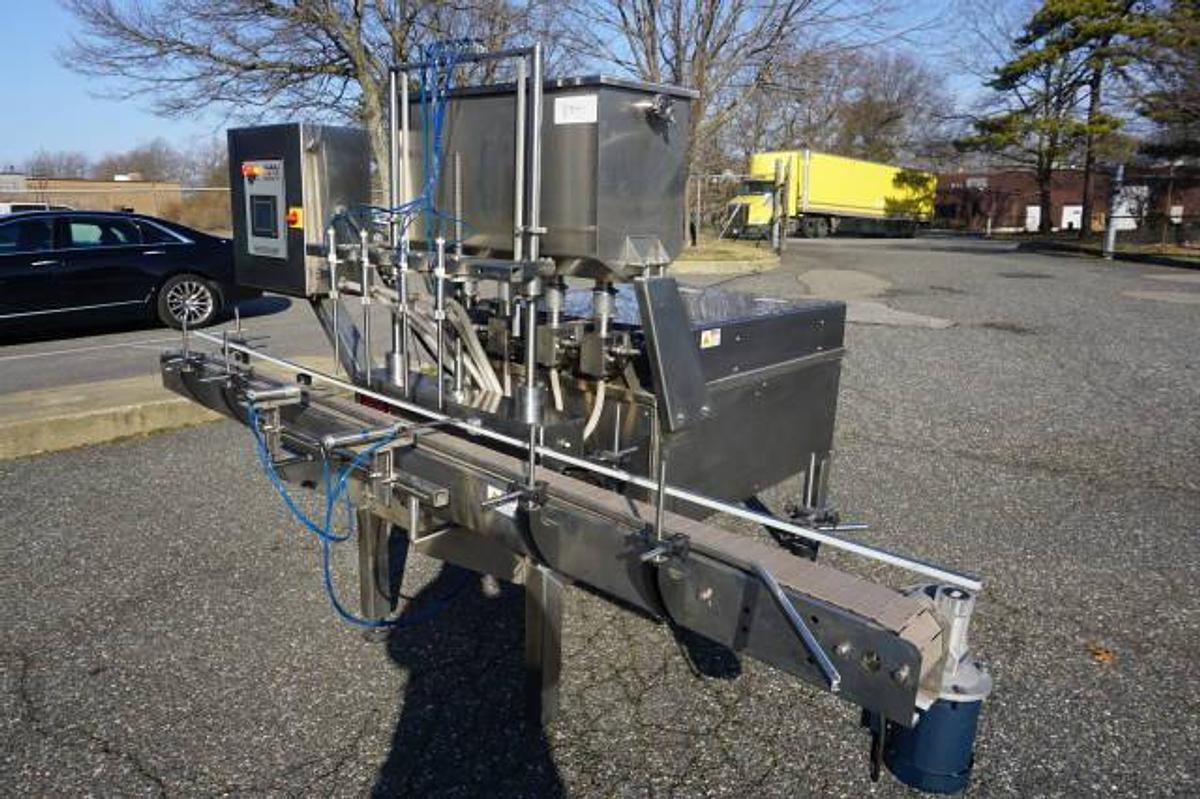
Used Acasi machines available on the market include models like the 6-piston fully automatic filler designed for hot filling, the 12-head fully automatic piston inline filler with conveyor, and the eight-head straight-line automatic pressure overflow filler. Each of these is built for different production scenarios and product types, so buyers should match the filler style to their specific product characteristics before purchasing. Consulting with a used equipment dealer who specializes in packaging machinery can help narrow down which Acasi model fits a particular application.
What is the difference between a piston filler and an overflow filler from Acasi?
Piston fillers and overflow fillers are two of the most common Acasi machine types found on the used equipment market, and they serve distinctly different purposes. A piston filler uses a cylinder-and-piston mechanism to draw a precise, measured volume of product and dispense it into a container. This makes piston fillers ideal for thick or viscous products, products with particulates, and any application where fill-by-weight or fill-by-volume accuracy is critical. Acasi piston filler models range from four-head configurations up to 12-head inline systems with conveyors, accommodating a wide range of production speeds.
An overflow filler, by contrast, fills containers to a consistent visible level regardless of minor container-volume variations. Product is pumped into the container until it reaches a set level, at which point the overflow returns to the supply tank. This method is especially popular for clear bottles where a uniform fill line is important for shelf presentation. Acasi's eight-head straight-line automatic pressure overflow filler is one example of this style available on the used market. Overflow fillers tend to work best with thin, low-viscosity, non-foaming liquids. Choosing between the two comes down to product viscosity, container type, and whether volume accuracy or visual fill consistency is the higher priority.
What should buyers know about purchasing a used Acasi filling machine versus buying new from a manufacturer?
Buying a used Acasi filling machine can offer significant cost savings compared to purchasing directly from a manufacturer, but there are important differences buyers should understand before committing. Used machines are sold as-is by equipment dealers, meaning there is no manufacturer warranty attached to the sale. The condition of the machine depends entirely on how it was maintained and operated during its previous service life. This makes the reputation and specialization of the dealer a critical factor. Buyers should look for dealers with a long track record in packaging and filling equipment specifically, since a generalist machinery dealer may not have the technical knowledge to accurately represent a machine's condition.
Inspections are a key part of buying used filling equipment responsibly. Reputable dealers will accommodate in-person inspections, virtual walkthroughs, or video captures of the machine so buyers can assess its current working order. Some machines may still be in active production at a facility, which can actually be a positive sign of operational condition. Buyers should also contact Acasi directly to understand what level of technical support and parts availability they can expect for a particular model and age, since older machines may have more limited support. Understanding these factors upfront helps buyers make a well-informed decision and avoid surprises after the purchase.
Are used Acasi filling machines suitable for small businesses or startups?
Acasi machines have historically been positioned as an accessible option for small to mid-sized businesses, and that value proposition carries over into the used equipment market. Because Acasi's product line includes semi-automatic models alongside fully automatic systems, smaller operations can find machines that match their current production volumes without overpaying for capacity they do not need. A four-head automatic piston filler, for instance, offers meaningful throughput improvement over fully manual filling without the footprint or price of a large industrial line.
For startups and growing businesses, used Acasi equipment can be a practical way to establish a filling operation at a lower initial capital outlay. The trade-off is that used machines require more due diligence on the buyer's part. There is no coverage from a manufacturer, so buyers need to inspect the machine carefully, understand its service history as best as possible, and factor in any refurbishment or parts costs before finalizing the purchase price. Working with a dealer who specializes in filling and packaging machinery is especially valuable here, as they can speak to the machine's condition and help buyers understand what ongoing maintenance to expect.
What fill volume ranges do Acasi filling machines typically support?
Acasi filling machines are designed to cover a practical range of fill volumes suited to the small and mid-sized production environments the brand primarily serves. Piston fillers in particular are adjustable, allowing operators to dial in fill volumes within a set range by adjusting the stroke length of the piston. Depending on the specific model and cylinder size, piston fillers can typically handle fills ranging from a few milliliters up to several liters, making them adaptable across container sizes from small cosmetic bottles to larger industrial containers.
Overflow fillers are adjusted differently. Rather than controlling a dispensed volume, the fill level is set by the position of the overflow nozzle, and the machine fills to that level consistently across containers. This makes them less about a specific volume range and more about container geometry and fill height. When evaluating a used Acasi machine, buyers should confirm the fill range and any tooling or nozzle configurations included with the machine, since these directly affect what container sizes and fill volumes the machine can run without additional parts. A dealer specializing in packaging equipment should be able to provide these specifications for any listed machine.
What does hot filling capability mean on an Acasi filling machine, and why does it matter?
Hot filling refers to the process of filling containers with product that has been heated to a high temperature, typically as part of a preservation or sterilization process. Many food and beverage products, including juices, sauces, jams, and certain nutraceutical liquids, are processed this way to extend shelf life without relying solely on refrigeration or chemical preservatives. A filling machine rated for hot filling is built with materials and seals that can withstand sustained exposure to elevated temperatures without degrading or causing contamination.
Not all filling machines are designed for hot fill applications. Standard machines may use seals, gaskets, or contact-part materials that break down when exposed to consistently high-temperature product, leading to maintenance issues or product quality problems. The Acasi 6-piston fully automatic filling machine listed on the used market is specifically noted as suitable for hot filling, which makes it a relevant option for food and beverage producers running hot-fill lines. Buyers in this space should confirm that all product-contact parts on any used machine are appropriate for their specific fill temperature and product type, and inspect the condition of seals and gaskets as part of any pre-purchase evaluation.
Can a used Acasi filling machine be integrated into an existing production line?
Acasi filling machines are built with production line integration in mind, and many models are designed to work alongside conveyors, cappers, and labelers as part of a complete packaging system. The 12-head fully automatic piston inline filler, for example, comes with a conveyor, which is a strong indicator of its suitability for inline production environments. Fully automatic models like this are built to accept containers from upstream equipment and pass them downstream after filling without manual intervention, making them compatible with higher-throughput line configurations.
That said, integrating any used machine into an existing line requires careful attention to specifications. Buyers should confirm conveyor heights, container handling dimensions, fill speed (measured in containers per minute), and electrical requirements before assuming a used Acasi machine will drop directly into their current setup. Some modifications or additional tooling may be needed depending on the container sizes being run and the speed of adjacent equipment. A used equipment dealer with packaging industry experience can help assess compatibility, and in some cases, the dealer or a third-party integrator can assist with line setup. Planning this evaluation before purchase avoids costly surprises during installation.
How should buyers evaluate the condition of a used Acasi filling machine before purchasing?
Evaluating the condition of a used filling machine requires a methodical approach since there is no coverage from a manufacturer to fall back on if problems emerge after purchase. The most important step is requesting a thorough inspection, either in person, via a live video call, or through detailed video footage provided by the dealer. The inspection should cover the physical condition of the frame and major components, the state of product-contact parts like pistons, cylinders, nozzles, and seals, and the condition of any electrical or pneumatic systems. Signs of corrosion, worn seals, damaged nozzles, or makeshift repairs are worth noting and factoring into the purchase decision.
Buyers should also ask about the machine's service history and the environment it operated in. A machine that ran food-grade or pharmaceutical products and was regularly sanitized is in a different situation than one that handled harsh chemicals with inconsistent maintenance. It is worth contacting Acasi directly to ask about parts availability and technical support for the specific model and serial number in question, since the age of the machine affects what resources are available. Keep in mind that most used equipment dealers are not set up to run live production tests, as doing so requires product, permitting, and production-grade facilities. The goal of an inspection is to get an accurate picture of the machine's mechanical condition and identify any obvious issues before committing to a purchase.
What are typical shipping and logistics considerations when buying a used Acasi filling machine?
Shipping a used filling machine involves more complexity than standard freight, and buyers should factor logistics costs into their total budget from the start. Filling machines vary significantly in size and weight depending on the number of fill heads and level of automation. A compact four-head piston filler will ship very differently than a 12-head inline system with an integrated conveyor. Smaller machines may be adequately protected with standard palletization, while larger or more delicate equipment often requires custom crating to prevent damage in transit.
For heavier machines, professional rigging is typically required for both loading at the dealer's facility and unloading at the buyer's location. Rigging costs are separate from freight charges and can add meaningfully to the landed cost of the equipment. Buyers should ask the dealer for a detailed breakdown of packaging, rigging, and freight costs before finalizing a purchase so there are no surprises. It is also worth confirming what equipment the buyer has available at their facility for unloading, since a machine arriving on a flatbed without a dock or forklift on-site creates an immediate problem. Planning these logistics in advance is a straightforward way to avoid delays and added expense.
What payment terms should buyers expect when purchasing a used Acasi filling machine from a dealer?
Payment practices in the used industrial equipment market are fairly consistent across reputable dealers. In most cases, full payment is required before the machine is released for shipping. This is standard practice in the industry and reflects the nature of used equipment transactions, where dealers need to confirm funds before committing to packing, rigging, and freight scheduling. Buyers should plan accordingly and have financing or funds arranged before entering into a purchase agreement.
Some dealers extend payment terms to repeat customers or established accounts, but this is not something first-time buyers should count on. For larger purchases, buyers who need financing may want to explore equipment financing options through third-party lenders before approaching a dealer, since dealers themselves rarely offer installment payment plans. Wire transfer is a common payment method for used machinery purchases given the transaction amounts involved. Buyers should also confirm with the dealer exactly what triggers the release of the machine for shipment and what documentation, such as a bill of sale or transfer of title, will be provided at the time of payment.