Category
Manufacturer
Model
APV/Gaulin
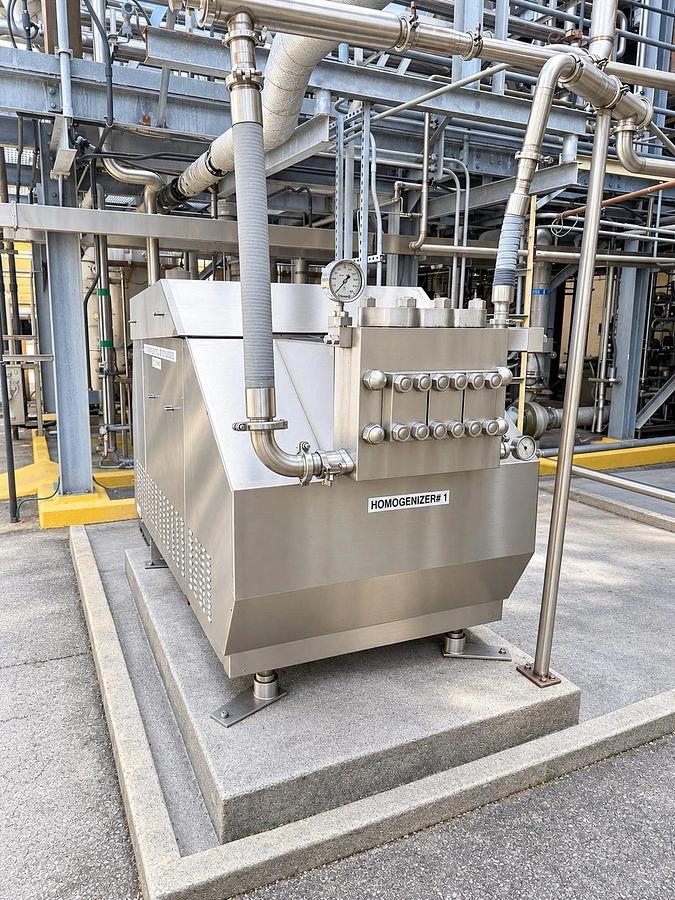
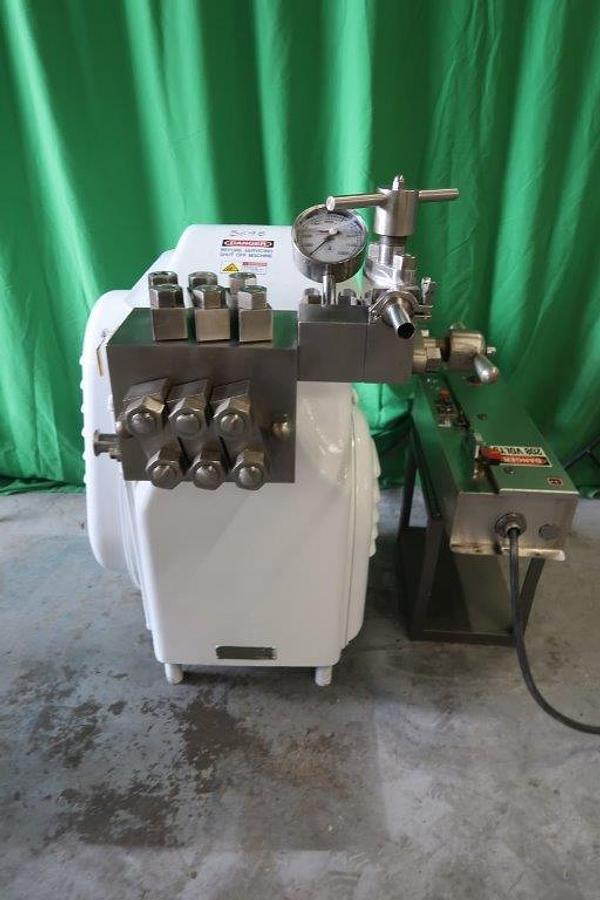
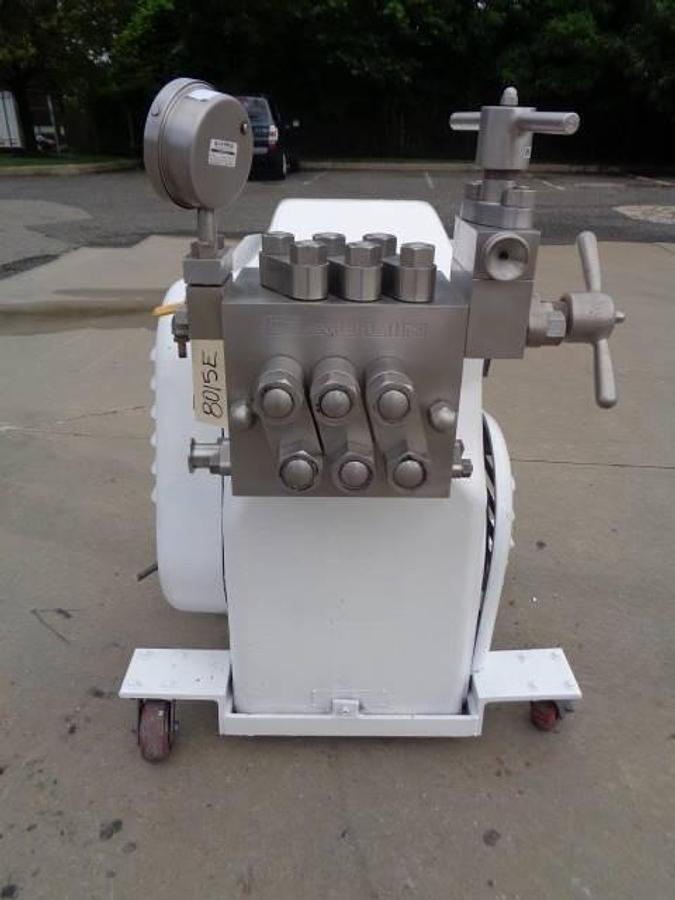
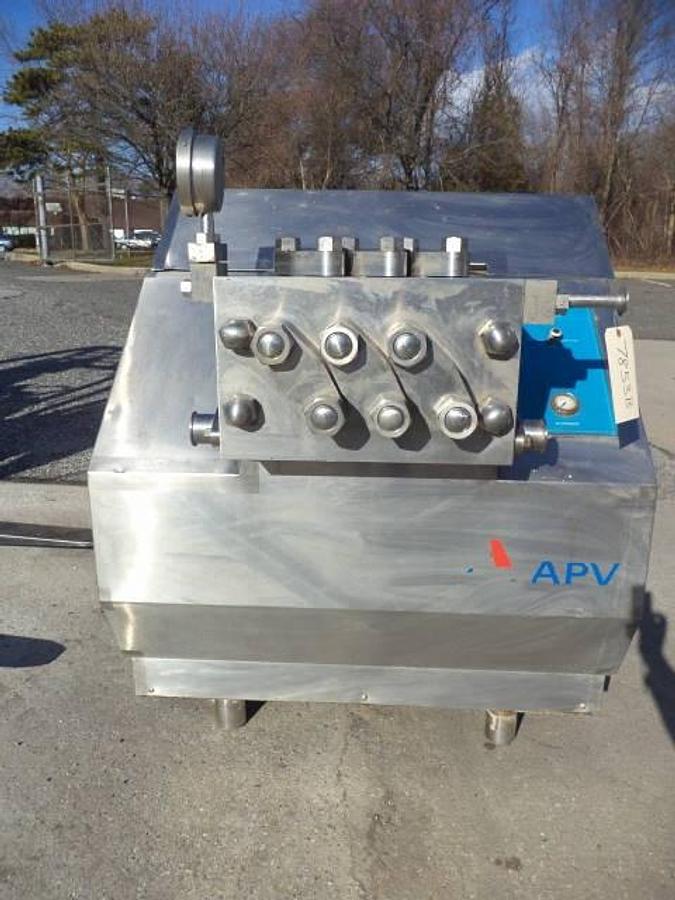
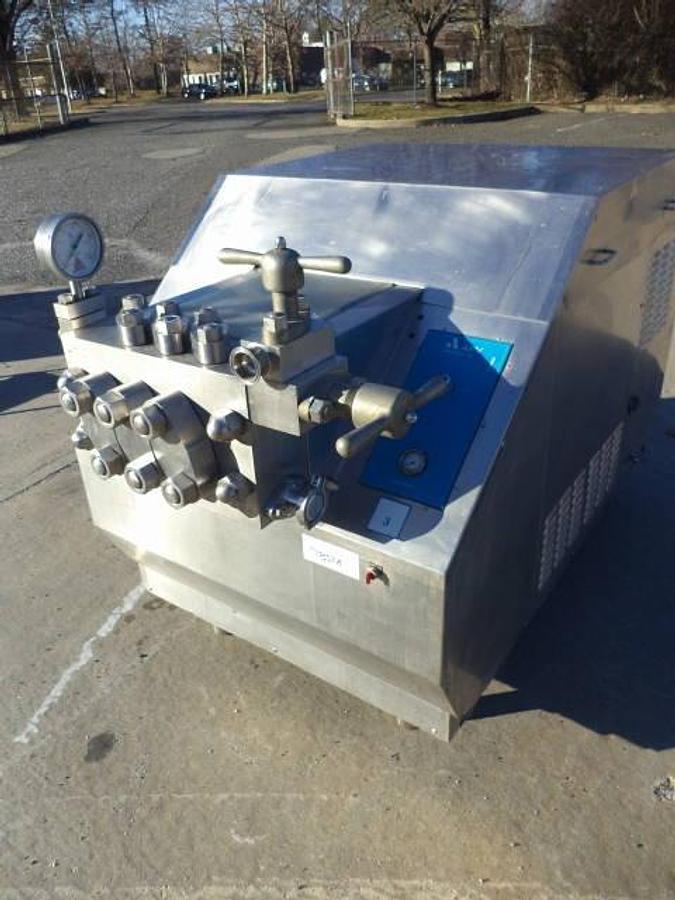
APV/Gaulin offers industry-leading high-pressure homogenizers, primarily serving the dairy and beverage sectors. Their machines ensure uniform particle reduction, enhancing the texture and stability of various products. APV/Gaulin’s equipment is vital for producing emulsions and dispersions, recognized for its robustness and efficiency in industrial applications.
FAQ:
What is an APV Gaulin homogenizer and what is it used for?
APV Gaulin homogenizers are high-pressure processing machines designed to reduce particle size, create stable emulsions, and improve the texture and consistency of liquid products. They work by forcing a liquid through a precision-engineered homogenizing valve at extremely high pressure, which breaks down fat globules, cells, or other particles into uniformly small sizes. The result is a product with improved stability, mouthfeel, and shelf life. APV Gaulin built a strong reputation over decades for producing machines that could handle the demanding, continuous-run requirements of industrial food and beverage production.
The most common applications include dairy processing (milk, cream, yogurt, and ice cream mix), beverage production, pharmaceutical emulsions, and cosmetic formulations. In dairy specifically, homogenization prevents cream from separating and gives products a consistent texture consumers expect. Beyond food, these machines are used to create stable dispersions in nutraceuticals and certain chemical processing applications. The two-stage homogenizing valve design found in many APV Gaulin models is particularly valued because it allows operators to fine-tune the homogenizing effect, giving them better control over final particle size distribution compared to single-stage units.
What industries are APV Gaulin homogenizers best suited for?
APV Gaulin homogenizers were engineered primarily for the dairy and beverage industries, and those remain their strongest application areas. Dairy processors use them for fluid milk, flavored milk, cream, half-and-half, yogurt base, and ice cream mix. Beverage manufacturers rely on them for juice processing, plant-based milk alternatives, and nutritional drinks where emulsion stability is critical. The machines are built to run continuously at high pressures in sanitary production environments, which makes them well-matched to the throughput demands of commercial dairy and beverage plants.
Beyond food and beverage, APV Gaulin units are used in pharmaceutical manufacturing for injectable emulsions and liposomal drug formulations, in cosmetics for creams and lotions, and in certain specialty chemical applications involving fine dispersions. Most APV Gaulin models feature stainless steel product-contact surfaces and are designed to be compatible with CIP (Clean-in-Place) sanitation systems, which is a baseline requirement in regulated food and pharmaceutical production. They also conform to FDA and 3-A Sanitary Standards, making them acceptable for use in facilities subject to those regulatory frameworks. This sanitary design is one reason used APV Gaulin equipment remains in demand even as the machines age.
What pressure ranges can APV Gaulin homogenizers achieve?
APV Gaulin homogenizers cover a wide range of operating pressures depending on the model and intended application. Smaller and mid-range units commonly operate between 4,000 and 8,000 PSI, which is sufficient for most standard dairy and beverage homogenization tasks. Higher-end industrial models are capable of reaching 10,000 PSI or more, which is necessary for more demanding applications such as pharmaceutical emulsions, certain nutraceutical formulations, or products requiring very fine particle size reduction. For reference, used units currently available on the market include models rated at 4,200 PSI, 8,000 PSI, and 10,000 PSI, giving buyers options across a broad performance spectrum.
The two-stage valve configuration found in many APV Gaulin models gives operators additional flexibility. The first stage handles the primary homogenization work, while the second stage helps break up any clusters that re-form immediately after the first pass. This setup allows the operator to split pressure between the two stages to dial in the desired particle size and emulsion stability. For dairy applications, a common practice is to run roughly 80 percent of total pressure on the first stage and 20 percent on the second, though this varies by product. Understanding the pressure requirements of your specific product before purchasing a used unit is important, since selecting a machine with the right pressure capacity avoids the need to run equipment at its operational limits continuously.
What models and capacities of APV Gaulin homogenizers are commonly available on the used equipment market?
The used market for APV Gaulin homogenizers includes a range of models spanning laboratory-scale units that process a few liters per hour up to large industrial machines capable of handling thousands of liters per hour. Among the models most frequently encountered are the MC series, MR series, and MS series, along with the M3 and MP3 models. Specific units available at any given time vary, but examples include the APV Gaulin M3 two-stage high-pressure homogenizer rated at 10,000 PSI, the MP3 two-stage unit rated at 8,000 PSI, the MS18 two-stage unit powered by a 75 HP motor, and the MS-18-5TPS-1500 high-pressure pump rated at 4,200 PSI. These examples illustrate the range of pressure ratings and motor sizes that buyers can realistically find.
Capacity selection depends heavily on production volume requirements. A smaller operation or a pilot plant might find a lower-capacity unit perfectly adequate, while a high-volume dairy processor would need one of the larger industrial models. Horsepower is a useful proxy for capacity since higher-HP machines generally move more product at comparable pressures. Buyers should also pay attention to the number of homogenizing stages a unit has, since two-stage machines offer more processing flexibility than single-stage units. When evaluating used APV Gaulin equipment, it helps to cross-reference the model number with technical documentation or contact the manufacturer's current support organization (SPX Flow) to confirm the original specifications before purchase.
Are APV Gaulin homogenizers still being manufactured, or is the brand primarily available as used equipment?
APV Gaulin as a standalone brand is no longer producing equipment under that name. The APV and Gaulin brands were acquired over time through a series of corporate mergers and acquisitions, and the technology and product lines were eventually absorbed into SPX Flow, which continues to manufacture and support high-pressure homogenizers. As a result, buyers looking specifically for APV Gaulin-branded machines are working within the used and surplus equipment market rather than purchasing from an active manufacturer's catalog. This is an important distinction because it affects parts availability, technical support, and what kind of documentation comes with a machine.
Despite the brand's discontinuation, used APV Gaulin homogenizers remain actively sought after because of the machines' reputation for heavy-duty construction and long service life. Many units built decades ago are still running in production facilities today, which speaks to the build quality of the equipment. Buyers considering used APV Gaulin machines should contact SPX Flow directly to understand what level of technical support and parts availability they can expect for a specific model and serial number, since older or less common configurations may have limited support compared to more recent models. The age and condition of the unit, combined with parts availability, should factor heavily into any purchase decision.
What should buyers know about spare parts and maintenance for used APV Gaulin homogenizers?
Maintenance on APV Gaulin homogenizers centers on a set of wear components that require regular inspection and replacement. The homogenizing valve seat and impact ring are the most critical wear parts, since they bear the brunt of the high-pressure product flow. Piston seals, plunger packing, and check valves also require periodic replacement depending on run hours and the abrasiveness of the product being processed. For buyers purchasing used equipment, understanding the current condition of these components is essential, since a machine that looks structurally sound may still need significant wear-part investment before it returns to reliable production service.
Spare parts for APV Gaulin homogenizers can be sourced through SPX Flow (the successor organization to the APV Gaulin brand), specialized aftermarket parts suppliers, and some industrial equipment dealers who carry legacy food processing parts. Availability varies by model, and older or less common configurations may have limited support through official channels, making aftermarket suppliers more important for those machines. Before purchasing a used unit, it is worth contacting parts suppliers to confirm that the critical wear components for that specific model are available and at what cost, since ongoing parts expense is a real factor in total cost of ownership. Buyers should also ask the selling dealer for any available maintenance records, as documentation of past service work can give a clearer picture of what the machine has been through and what may be due.
How does a two-stage homogenizer differ from a single-stage unit, and when does the second stage matter?
A two-stage homogenizer has two homogenizing valves in series rather than one. In the first stage, product is forced through the valve at high pressure, which does the primary work of breaking down particles and fat globules. Immediately after passing through the first valve, some of those broken particles can re-aggregate into small clusters before the product has a chance to stabilize. The second valve, operating at a lower pressure, disrupts those clusters and produces a more uniform final particle size distribution. The net result is a more stable emulsion and a more consistent product texture compared to what a single-stage machine can achieve at the same total pressure.
For standard fluid milk homogenization, a two-stage setup is considered best practice in commercial dairy processing, and most large-scale dairy plants use two-stage equipment as a baseline. Single-stage units can be appropriate for certain applications where extreme emulsion stability is less critical, or in operations where cost and simplicity outweigh the performance difference. For products like cream, ice cream mix, or nutritional beverages with higher fat content, the two-stage approach becomes more important because the re-aggregation problem is more pronounced with higher fat levels. Many of the APV Gaulin models available on the used market are two-stage configurations, which is part of why they remain popular with dairy and beverage processors looking for reliable, capable used equipment.
What does the inspection process look like when buying a used APV Gaulin homogenizer?
Inspecting a used homogenizer before purchase is one of the most important steps a buyer can take, given that these machines are sold without the protections that come with purchasing from an active manufacturer. Most reputable used equipment dealers will accommodate in-person inspections, virtual walkthroughs via video call, or recorded video documentation of the machine. In-person inspection is the most thorough option and allows a buyer or their technician to physically examine the condition of the pump block, homogenizing valve assembly, piston seals, drive components, and any instrumentation. Visual inspection can reveal signs of corrosion, cracking, weld repairs, or worn components that photos alone might not capture.
Some used APV Gaulin units are still installed in active production facilities at the time of sale, which can allow a buyer to observe the machine running under actual production conditions. This is a meaningful advantage since it gives a real-world indication of mechanical health. However, it is worth noting that even dealers who can demonstrate a machine running are generally not set up to test it with actual product, since production-level testing requires food-grade permitting and full facility infrastructure that equipment dealers do not typically maintain. Buyers should treat a running demonstration as confirmation that the machine operates mechanically, not as a substitute for a thorough inspection of wear components. Asking for maintenance records, hours of operation, and the reason for decommissioning can all add useful context when evaluating a used unit.
What are the typical payment and shipping considerations when purchasing a used APV Gaulin homogenizer?
Payment terms for used industrial equipment like APV Gaulin homogenizers typically require full payment before the machine ships. Some dealers extend terms to repeat customers or established buyers, but this is the exception rather than the rule for first-time transactions. Buyers should clarify payment expectations early in the process and confirm what documentation (such as a bill of sale or equipment inspection report) will accompany the transaction. Wire transfer is the most common payment method for transactions of this size, though individual dealers may have different preferences.
Shipping costs for homogenizers can vary considerably depending on the size and weight of the machine, the origin and destination, and the level of packaging required. Smaller units may ship on a standard pallet, while larger machines like the MS18 with its 75 HP motor will require more substantial crating and heavy-duty rigging for loading and unloading. Rigging costs at both origin and destination are typically separate from freight charges and should be factored into the total landed cost. Buyers should ask the dealer specifically about how the machine will be packaged, what rigging equipment is needed, and whether the dealer arranges freight or leaves that to the buyer. Getting a clear picture of all costs before committing to a purchase avoids surprises and allows for an accurate comparison between machines listed at different prices.
What questions should a buyer ask before purchasing a used APV Gaulin homogenizer?
A few targeted questions can significantly reduce the risk of a used homogenizer purchase going sideways. Start with the basics: what is the model and serial number, what are the rated pressure and capacity specifications, and how old is the machine? From there, ask about the condition of the key wear components, specifically the homogenizing valve seat, impact ring, piston seals, and check valves, and whether any of these have been recently replaced. Ask for maintenance records if they exist, and find out why the machine was taken out of service. A machine decommissioned because a facility upgraded to higher capacity is a very different situation from one that was pulled due to mechanical problems.
It is also worth asking whether an inspection can be arranged, either in person or via live video, and whether the machine can be demonstrated running under power. Confirm what documentation will be provided with the sale, including any available manuals, drawings, or parts lists, since documentation for older APV Gaulin models can be difficult to locate independently. Ask the dealer about their experience selling this type of equipment and how long they have been in the business, since working with a dealer who specializes in food processing or dairy equipment generally means more knowledgeable support through the transaction. Finally, contact SPX Flow before finalizing a purchase to understand what technical support and parts availability look like for that specific model, as this will affect the long-term cost and practicality of operating the machine.