Category
Manufacturer
Model
FAQ:
What is an API shrink film bundler and what is it used for?
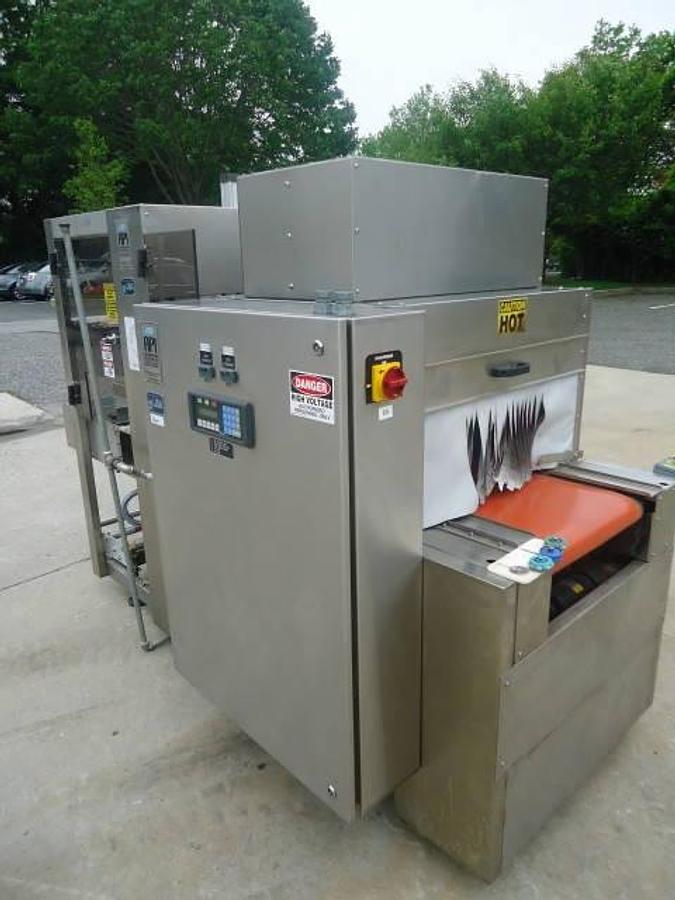
An API shrink film bundler is a packaging machine that groups multiple products together and wraps them tightly in heat-shrinkable film, typically polyethylene (PE) or polyolefin (POF), to create a stable multipack unit. The heat shrink process pulls the film snugly around the bundle, producing a tamper-evident, tightly secured package without requiring corrugated trays or cardboard sleeves. This makes the finished bundle clean-looking and suitable for retail display as well as warehouse storage and transport.
API shrink film bundlers are used across a wide range of industries. Food and beverage manufacturers use them to bundle canned goods, bottles, and cartons. Pharmaceutical and personal care companies rely on them for multipacking bottles, tubes, and containers. Industrial product manufacturers also use shrink bundling for hardware, automotive parts, and other grouped items. The API Duratech 2000, for example, is a stainless steel model capable of running at speeds up to 100 bundles per minute, making it well-suited for high-volume production environments where throughput and hygiene standards both matter.
What film types are compatible with API shrink film bundlers?
API shrink film bundlers are generally designed to run polyethylene (PE) film, which is the most common film type used in high-speed bundling applications. PE film is durable, cost-effective, and available in a wide range of gauges, making it a practical choice for food, beverage, and industrial packaging. Some API models are also compatible with polyolefin (POF) film, which offers a clearer, glossier finish and is often preferred for retail-facing packaging where appearance matters.
Film thickness, or gauge, is an important compatibility consideration. Thicker films provide more structural strength for heavier product groupings, while thinner films reduce material costs and are suitable for lighter bundles. Buyers evaluating a used API bundler should confirm the film roll diameter capacity the machine accommodates and verify that the seal bar length matches the widest bundle configuration they intend to run. When purchasing a used machine, it is also worth consulting with the manufacturer or a knowledgeable equipment dealer to confirm which film specifications the specific model was engineered to handle, since performance can vary between model generations.
What bundling speeds can an API shrink film bundler achieve?
Bundling speed on an API shrink film bundler is measured in bundles per minute (BPM) and varies depending on the specific model, the size of the bundle being produced, and the film type being used. The API Duratech 2000, one of the more recognized models in the API shrink bundler lineup, is rated at up to 100 bundles per minute. That level of throughput positions it firmly in the high-speed category, making it a practical fit for beverage bottling lines, canned goods facilities, and other operations where production volume is a priority.
Actual throughput in a production environment will depend on several factors beyond the machine's rated speed, including infeed product spacing, the complexity of the bundle pattern, and the condition of the machine itself. On a used machine, worn components such as seal bars, conveyor belts, or tunnel heating elements can reduce effective speed if they have not been serviced. Buyers should ask the seller about the machine's production history and, where possible, arrange an inspection to assess the current mechanical condition before assuming the machine will perform at its nameplate rating.
What are the key specifications to evaluate when buying a used API shrink film bundler?
Several specifications are worth examining closely when evaluating a used API shrink film bundler. Throughput capacity (bundles per minute) is the most obvious starting point, but equally important are the seal bar length, which determines the maximum bundle width the machine can handle, and the film roll diameter capacity, which affects how often operators need to change film rolls during a production run. Tunnel temperature range and conveyor speed through the shrink tunnel are also critical, since these settings control how cleanly the film shrinks around the bundle without burning or under-shrinking.
Beyond the technical specs, the construction material matters in certain environments. The API Duratech 2000, for instance, is built with stainless steel, which is an important feature for food, beverage, and pharmaceutical applications where washdown cleaning is required. Power requirements, footprint dimensions, and infeed/outfeed conveyor configurations should also be confirmed to make sure the machine integrates with an existing production line. For used equipment, it is equally important to review the machine's maintenance history, ask about any prior repairs or component replacements, and request an inspection, either in person or via video, to get an accurate picture of the machine's current condition.
What is the typical price range for a used API shrink film bundler?
Pricing for used API shrink film bundlers varies considerably based on the model, age, condition, included accessories, and current market demand. Entry-level or older API bundler models in fair working condition can sometimes be found in the range of a few thousand dollars, while higher-performance models like the API Duratech 2000 in good condition can command significantly more, often in the range of $15,000 to $50,000 or higher depending on the configuration and throughput capacity. High-speed stainless steel models with a strong service history tend to hold their value well in the used equipment market.
Beyond the purchase price, buyers should factor in the total landed cost of the equipment. This includes freight and rigging charges, which can be substantial for a large bundling system, as well as any reconditioning or parts replacement needed to bring the machine to production-ready condition. Operator training, integration with existing conveyors or infeed systems, and ongoing film and maintenance costs are also part of the real cost of ownership. Getting a clear breakdown of all these costs from the seller before committing to a purchase helps avoid surprises after the machine arrives.
How does a shrink film bundler differ from a shrink wrapper or stretch wrapper?
A shrink film bundler is specifically designed to group multiple individual units together into a single multipack, using heat-shrinkable film as the only structural element holding the bundle together. There are no trays, no cardboard, and no secondary packaging required. The machine feeds products into a grouping pattern, wraps them in film, and passes them through a heat tunnel where the film contracts tightly around the group. The result is a compact, stable bundle suitable for retail shelving or palletized shipping.
A shrink wrapper, by contrast, typically wraps a single item or a pre-assembled tray configuration rather than forming a bundle from loose individual products. A stretch wrapper is a different category of machine entirely, using cold stretch film applied under tension to wrap palletized loads for stability during shipping. Stretch wrappers do not use heat and are not used for creating retail multipacks. Understanding these distinctions matters when sourcing used equipment, because the infeed systems, film types, and downstream handling requirements are quite different across these three machine categories.
What should buyers expect during the inspection process for a used API shrink film bundler?
Inspecting a used API shrink film bundler before purchase is one of the most important steps a buyer can take to protect their investment. Reputable used equipment dealers typically offer inspection options that include in-person visits, live video walkthroughs, or recorded video of the machine. During an inspection, buyers should look closely at the condition of the seal bar and sealing components, the integrity of the heat tunnel, the state of the conveyor belts, and the overall cleanliness and corrosion level of the machine's frame and internal components. For stainless steel models like the Duratech 2000, surface condition can indicate how well the machine was maintained in a washdown environment.
One thing to keep in mind is that most used equipment dealers do not have the permits or production infrastructure to run actual product through a machine during an inspection. What buyers can reasonably expect is a mechanical check, a review of the controls and electrical systems, and confirmation that major components are present and visually intact. If the machine is still installed at the facility where it was last used, it may be possible to arrange an inspection at that location, where the equipment might still be in production or recently decommissioned. Buyers should also contact API directly to ask about parts availability and technical support for the specific model being considered, since the level of manufacturer support can vary based on the age of the machine.
How difficult is it to install and integrate a used API shrink film bundler into an existing production line?
Installation complexity for an API shrink film bundler depends on several factors, including the machine's size, its infeed and outfeed conveyor configuration, and how well it aligns with the existing line layout. Most shrink bundlers require a dedicated electrical circuit, and high-speed models may require three-phase power. The heat tunnel component also draws significant energy during operation, so confirming that the facility's electrical infrastructure can support the machine's power requirements is an early step in the installation planning process. Physical footprint and ceiling clearance for the tunnel exhaust are also practical considerations.
Integrating a used machine adds a layer of complexity compared to installing purpose-built equipment, because the infeed height, conveyor widths, and product grouping mechanisms may need adjustment to match the specific products and line speeds of the new facility. Buyers who are not experienced with shrink packaging equipment often benefit from working with a packaging systems integrator or a dealer who can advise on the integration requirements. Film threading and changeover procedures on API bundlers are generally considered straightforward by industry standards, but operators should still plan for a learning curve and allow time for line trials before committing to full production speeds on a used machine.
What should buyers understand about warranty coverage when purchasing a used API shrink film bundler?
Warranties on used packaging machinery work very differently from what buyers might expect when purchasing equipment directly from a manufacturer. Used equipment dealers typically sell machines on an as-is basis, meaning there is no warranty coverage provided by the seller. This places the responsibility for assessing the machine's condition squarely on the buyer, which is why thorough pre-purchase inspection is so important. Selecting a dealer with a long track record in the packaging machinery space and specific experience with shrink bundling equipment helps reduce the risk of purchasing a machine with undisclosed mechanical issues.
Buyers should also contact API directly before finalizing a purchase to understand what level of support the manufacturer can provide for the specific model and age of the machine being considered. Parts availability, technical documentation, and service support can vary significantly depending on how long a particular model has been in production. Older or discontinued models may have limited manufacturer support, which means buyers need to factor in the cost and availability of third-party parts and service when evaluating the total cost of ownership. A dealer who is knowledgeable about the equipment they are selling should be able to provide guidance on these questions.
What are the typical shipping and logistics considerations when buying a used API shrink film bundler?
Shipping a used API shrink film bundler involves more logistical planning than shipping standard freight, primarily because of the machine's size, weight, and the sensitivity of its mechanical and electrical components. Proper packaging is critical to prevent damage in transit. Depending on the machine's dimensions, the dealer may prepare it on a standard pallet, a custom-built crate, or a skid with blocking and bracing to secure moving parts. The level of packaging required directly affects freight costs, and buyers should ask for a detailed breakdown of crating and palletization charges before agreeing to a purchase.
For larger or heavier bundling systems, rigging equipment such as forklifts or cranes may be required both at the point of origin for loading and at the buyer's facility for unloading. These rigging costs are typically separate from the freight charges and can add up quickly if the buyer's facility is not equipped with the right material handling equipment. Buyers should confirm with the seller exactly what is included in the quoted shipping cost and what additional expenses they may be responsible for at their end. Understanding the full landed cost of the machine, including freight, rigging, and any applicable import fees for international shipments, is essential for accurate budgeting.