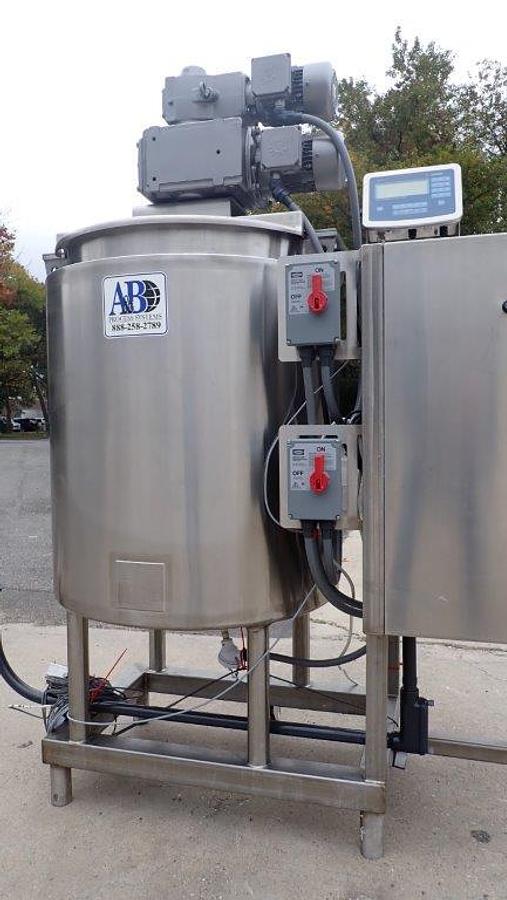
Category
Manufacturer
Model
A& B Process Systems
A&B Process Systems offers custom-engineered process solutions for industries such as pharmaceuticals and dairy. Known for their advanced system integration capabilities, they provide seamless processing modules that enhance operational efficiency and meet stringent industry standards.
FAQ:
What types of equipment does A&B Process Systems manufacture?
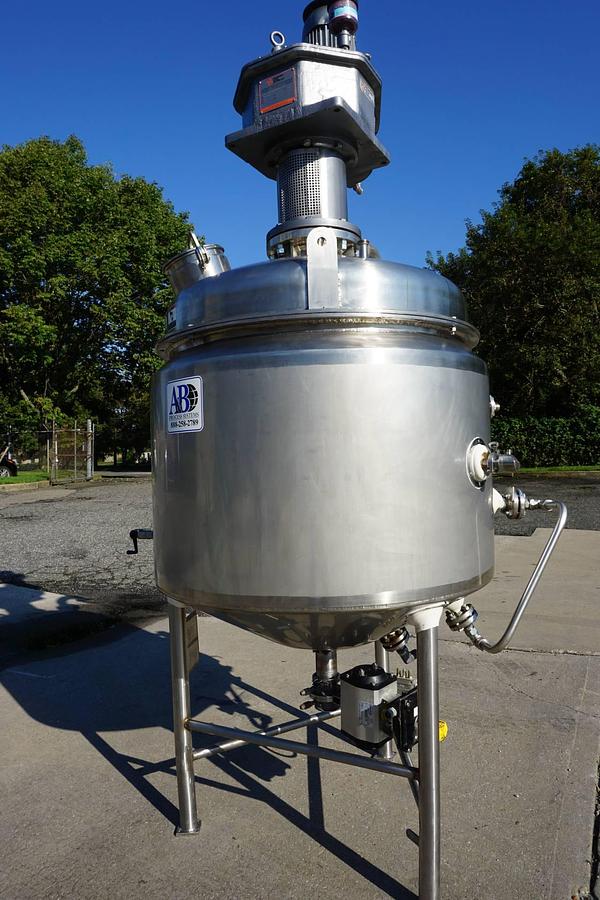
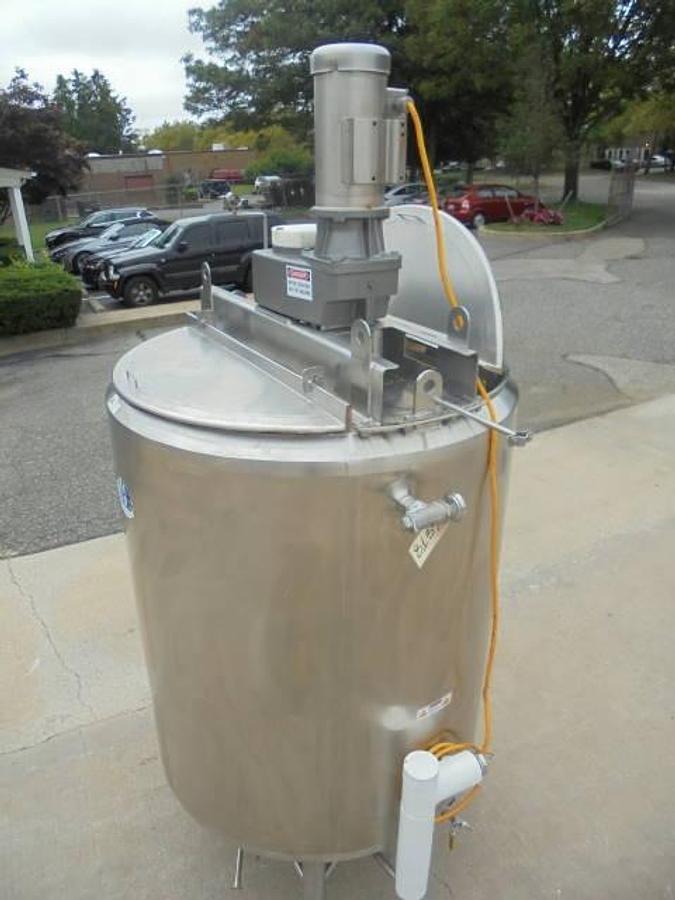
A&B Process Systems is a Wisconsin-based manufacturer that specializes in sanitary stainless steel process equipment. Their product line covers a wide range of processing needs, including custom-fabricated mix tanks, jacketed kettles, pressure vessels, scraper-agitated tanks, heat exchangers, skid-mounted systems, and complete turnkey processing solutions. Many of their tanks and vessels are built with 316L stainless steel construction and feature dimple jackets, double-motion agitation, or pressurized designs depending on the application.
A significant portion of their equipment is engineered to order rather than pulled from a standard catalog. This means buyers frequently encounter A&B units with specific capacities, jacket ratings, agitator configurations, and sanitary finishes that were originally built to a customer's exact process requirements. Common examples include 150 PSI jacketed reactors, double-motion mix kettles, and scraper-agitated tanks in the 160 to 750 gallon range, though larger and smaller configurations exist across the used market.
What industries use A&B Process Systems equipment?
A&B Process Systems equipment is designed primarily for industries that require sanitary processing conditions and strict hygiene standards. The dairy industry is one of their core markets, along with food and beverage processing, pharmaceuticals, and biotechnology. Their tanks and vessels are well-suited for any application where product contact surfaces must meet cleanability standards and where precise temperature or pressure control is critical to the process.
Because much of their equipment is built to 3-A Sanitary Standards, ASME pressure vessel codes, and can be configured to comply with FDA, cGMP, and USDA requirements, it crosses over well between industries. A jacketed stainless kettle originally built for a dairy application, for instance, may be entirely appropriate for a pharmaceutical or nutraceutical process after proper cleaning and validation review. This cross-industry versatility is one reason A&B equipment holds its value on the used market.
What sanitary and safety standards does A&B Process Systems equipment typically meet?
A&B Process Systems builds equipment to meet a range of industry-recognized standards depending on the intended application. Tanks and vessels intended for food, dairy, or pharmaceutical use are commonly fabricated to 3-A Sanitary Standards, which govern surface finish, drainage, and cleanability requirements. Pressure-rated vessels are typically built to ASME Section VIII codes, which is the standard most jurisdictions require for pressurized process equipment. Equipment destined for pharmaceutical or biotech environments may also be designed to cGMP guidelines and FDA material requirements.
When evaluating a used A&B Process Systems unit, buyers should look for documentation such as ASME stamps, mill certifications for the stainless steel, and any 3-A compliance records that may have accompanied the machine. Not every unit will have complete paperwork after years of service, so it is worth asking the selling dealer what documentation is available. For regulated industries like pharmaceuticals, confirming the pressure rating and material certifications before purchase is especially important, as requalification or re-inspection may be required before the equipment can be placed back into production.
What should I look for when buying used A&B Process Systems tanks or kettles?
The most important areas to evaluate on a used A&B Process Systems tank or kettle are the condition of the interior product contact surfaces, the integrity of the jacket, and the working condition of any agitator or drive components. Interior surfaces should be inspected for pitting, weld repairs, or surface roughness that could compromise sanitary performance. On jacketed vessels, buyers should ask whether the jacket has been pressure-tested recently and whether there is any history of leaks or repairs. Agitator seals, mechanical drives, and any attached instrumentation are also worth scrutinizing carefully.
Used equipment is sold as-is, so the burden of inspection falls entirely on the buyer. Reputable dealers will typically accommodate in-person inspections, virtual walkthroughs, or detailed video reviews of the equipment before purchase. If the machine is still installed at a plant, an inspection can sometimes be arranged at the facility. Keep in mind that most dealers cannot run product through the equipment during an inspection, but they can often demonstrate agitator operation, check for obvious mechanical issues, and provide photos of welds, nozzles, and interior finishes. Taking the time to do a thorough inspection before committing to a purchase is the single most effective way to avoid surprises after delivery.
Is used A&B Process Systems equipment a cost-effective alternative to ordering new custom-fabricated tanks?
For many buyers, purchasing a used A&B Process Systems unit represents significant savings compared to commissioning a custom-fabricated tank from scratch. Custom-engineered sanitary stainless vessels can take months to manufacture and carry substantial lead times, especially for jacketed or pressure-rated designs. A used unit that closely matches the required capacity, jacket pressure rating, and agitation configuration can often be put back into service far more quickly and at a fraction of the cost of a new build.
The trade-off is that used equipment requires careful evaluation to confirm it meets current process requirements. Since A&B builds to order, two tanks of the same nominal capacity may have different nozzle layouts, jacket designs, or agitator types. Buyers should review available specifications closely and, where possible, compare them against their process needs before purchasing. For applications where exact specifications are critical, such as pharmaceutical manufacturing, some buyers also budget for reconditioning or surface refinishing after acquisition. Even with those added costs, used A&B equipment frequently delivers strong value relative to the cost of a new custom fabrication.
What does a dimple jacket on a stainless steel mix tank do, and why does it matter?
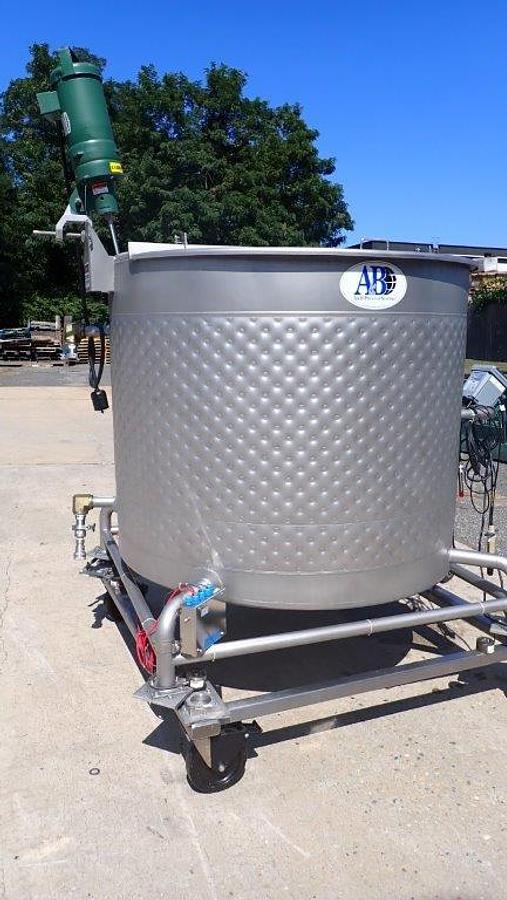
A dimple jacket is a type of heat transfer jacket welded to the outside of a stainless steel tank. Instead of a conventional full-shell jacket, a dimple jacket consists of a pattern of small pressed dimples that create flow channels for a heating or cooling medium, typically steam, hot water, glycol, or chilled water. The dimple pattern allows the heating or cooling fluid to distribute evenly across the tank wall, improving heat transfer efficiency while keeping the jacket lightweight and structurally sound.
For buyers evaluating used tanks with dimple jackets, the key considerations are the jacket's pressure rating, the condition of the welds around the dimples, and whether the jacket has any history of leaks. Dimple jackets on A&B Process Systems tanks are commonly rated for pressures such as 100 or 150 PSI, which accommodates steam heating in many food and dairy applications. Inspecting the jacket for corrosion, weld repairs, or pressure test history is an important part of due diligence on any used jacketed vessel. A well-maintained dimple jacket tank can provide many years of reliable service after resale.
What is a double-motion mix kettle, and what applications is it used for?
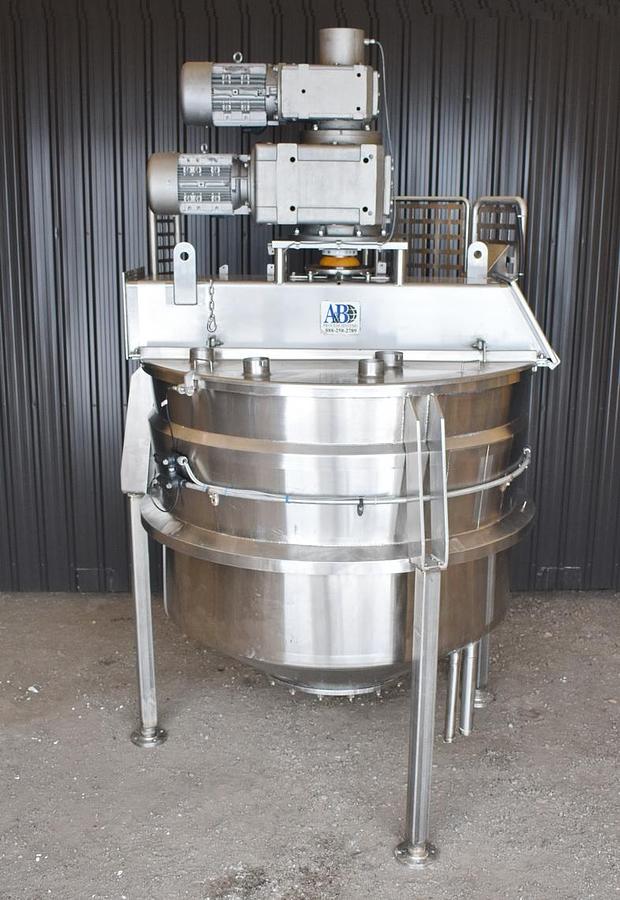
A double-motion mix kettle uses two independently driven agitator systems operating simultaneously within the same vessel. Typically, one agitator sweeps the outer portion of the tank, often close to the wall, while a second agitator works the center or inner zone. This dual-action mixing is particularly effective for viscous products that do not flow easily or for processes that require consistent heat transfer across the entire batch. The combination of wall-scraping and inner-zone agitation helps prevent product from sticking to heated surfaces and ensures uniform mixing throughout.
In the food, dairy, and pharmaceutical industries, double-motion kettles are commonly used for cooking, blending, or heating thick products like sauces, creams, confections, and certain pharmaceutical formulations. Used A&B Process Systems double-motion kettles in sizes such as 750 gallons appear on the resale market and can be well-suited for buyers who need reliable mixing performance for viscous or heat-sensitive products. When evaluating a used unit, pay particular attention to the condition of both agitator drives, the seal integrity, and the interior surface finish, since the scraping action of the outer agitator can gradually affect surface condition over years of production use.
How does shipping and rigging work when purchasing used stainless steel process tanks?
Shipping large stainless steel tanks and jacketed vessels requires more planning than standard freight. The equipment must be properly secured and protected to prevent damage in transit, which usually means palletizing smaller units or building custom crates for larger or more complex pieces. The level of packaging required directly affects the shipping cost, so buyers should ask the dealer specifically what preparation is included in the quoted price and what additional crating or skidding charges may apply.
Larger tanks and kettles often require professional rigging for loading at the dealer's facility and unloading at the destination. Rigging involves specialized equipment such as forklifts, cranes, or spreader bars, and the cost is typically separate from the freight charge. Buyers should request a full breakdown of packaging, rigging, and freight costs before finalizing a purchase so they understand the true landed cost of the equipment. For very large vessels or those being shipped long distances, working with a freight broker experienced in industrial machinery can help ensure the equipment arrives safely and that the carrier is properly insured for the load.
What payment terms should buyers expect when purchasing used process equipment from a dealer?
Most used equipment dealers require full payment before the equipment is released for shipping. This is standard practice in the industry and applies to the majority of transactions, particularly for buyers purchasing from a dealer for the first time. Payment is commonly accepted by wire transfer, though some dealers may accept other forms depending on the transaction size and the buyer's relationship with the seller.
Some dealers extend payment terms to established customers with a history of repeat purchases, but this is the exception rather than the rule for first-time buyers. Before completing a purchase, buyers should clarify exactly when payment is due, what the accepted payment methods are, and whether any deposit is required to hold the equipment while financing or internal approvals are arranged. Understanding the payment timeline is especially important when coordinating with freight and rigging logistics, since most dealers will not schedule pickup or loading until payment has cleared.
Can buyers inspect used A&B Process Systems equipment before purchasing?
Inspections are a standard part of the used equipment buying process and reputable dealers will typically accommodate them in several formats. In-person inspections allow a buyer or their representative to physically examine the equipment, check surface conditions, review welds and nozzles, and assess the mechanical components firsthand. Virtual inspections conducted via video call are also common and can be a practical option for buyers who are geographically distant from the equipment's location. Many dealers can also provide detailed video walkthroughs and photo sets covering the interior, exterior, jacket, agitator, and any associated components.
In some cases, the equipment being sold is still installed at a production facility rather than sitting in a dealer's warehouse. When this is the situation, an inspection may need to be coordinated between the dealer and the plant owner, and the machine may still be in active use or recently decommissioned. It is worth noting that dealers generally cannot run product through the equipment during an inspection, since operating a production process requires permitting and conditions that a resale dealer does not maintain. However, verifying that motors run, agitators turn, and mechanical components are intact is usually achievable during a properly arranged inspection visit.