





Spice and Seasoning Manufacturing Equipment
Blenders, Grinders, Sifters, Packaging Machines, and More
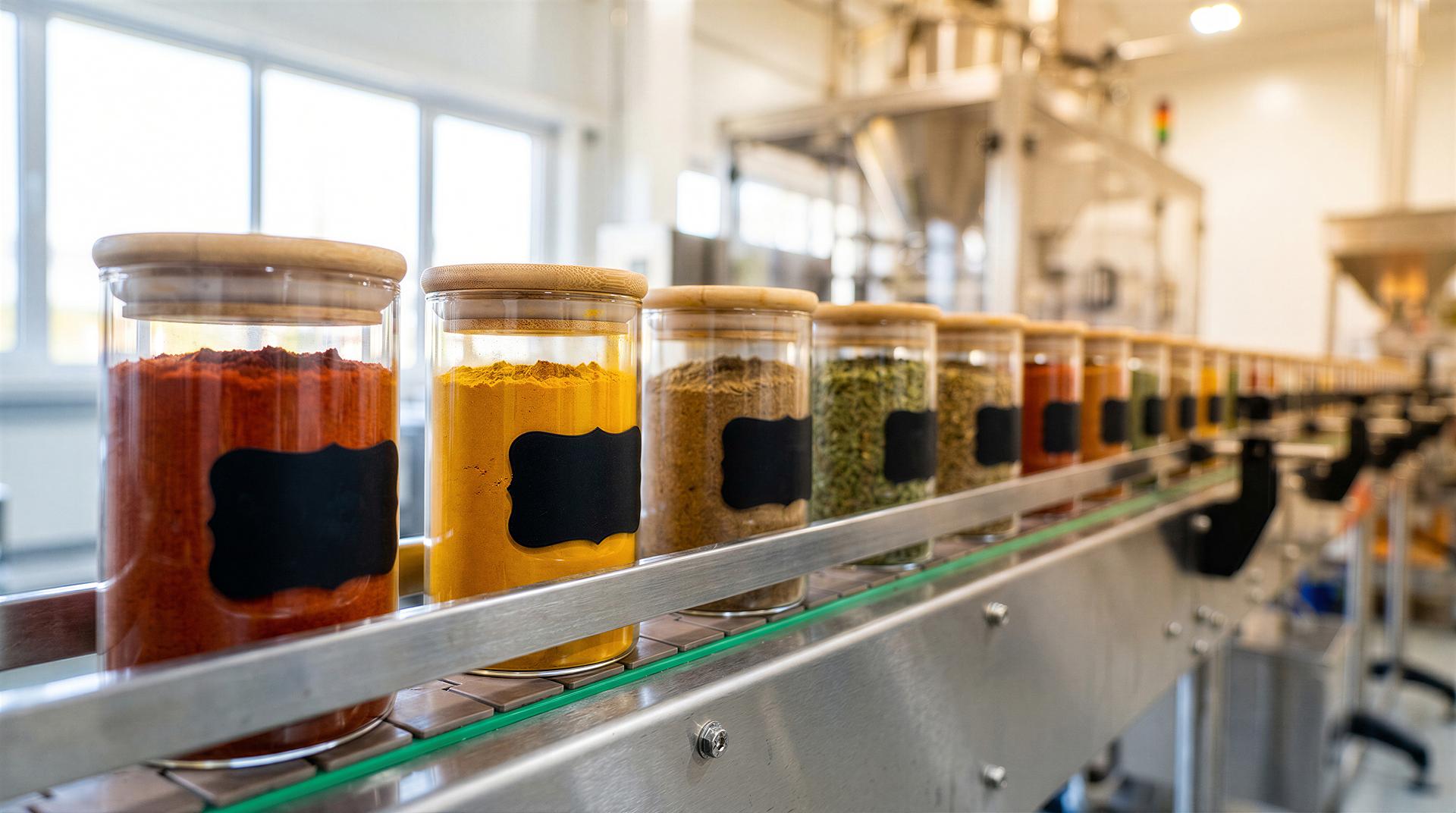
Wohl Associates offers pre-owned spice and seasoning processing equipment, including blenders, grinders, sifters, and packaging machines. Our machinery handles fine powders and granules with precision, enabling you to create and package flavorful blends efficiently. Enhance your production line with our dependable solutions for spices and seasonings.
Spice Equipment Categories
Frequently Asked Questions
What types of used spice processing equipment are available on the market?
The range of pre-owned spice and seasoning processing equipment is quite broad, covering virtually every stage of production. On the size-reduction side, buyers commonly find hammer mills, pin mills, and pulverizers capable of grinding whole spices down to fine powders. Blending equipment is another major category, with ribbon blenders, paddle blenders, and tumble blenders used to combine spice blends and seasonings at consistent ratios. Screening and classification equipment, such as vibratory screeners, helps separate particles by size to ensure product uniformity. Downstream from production, buyers can find powder fillers, form/fill/seal machines, cappers, labelers, checkweighers, and metal detectors, all of which are essential to a complete packaging line.
Conveying and material handling equipment rounds out a typical spice operation. Screw conveyors, bucket elevators, feeders, and dust collectors keep powders and granules moving through a facility safely and efficiently. Coders and unscramblers are also regularly available on the used market. Because spice production demands precision with fine powders and granules, buyers should pay close attention to the construction materials and tolerances of any machine they consider. Food-grade stainless steel, typically 304 or 316 grade, is the standard to look for, as it resists corrosion, cleans easily, and holds up to the abrasive nature of ground spices over time.
What are the most reliable brands of spice processing equipment to look for when buying used?
Certain manufacturers have built reputations in the spice and seasoning industry specifically because their machines hold up over years of demanding production and remain supportable long after purchase. Fitzpatrick and Hosokawa are frequently sought after for size-reduction equipment like hammer mills and pin mills, largely because replacement parts and technical documentation remain available even for older models. Prater and Bepex are also well-regarded in the milling and blending space. For packaging and filling lines, Bosch has a strong track record, and Schenck is a trusted name in precision feeding and weighing equipment.
When evaluating a specific brand and model, it is worth contacting the original manufacturer directly before committing to a purchase. Manufacturers can tell you whether a particular machine is still supported, whether parts are readily available, and what the expected service life looks like for that model. Older or discontinued models may have limited parts availability, which can significantly affect long-term operating costs. A used equipment dealer who specializes in the spice and food processing industry will generally carry a curated inventory of these established brands and can help buyers identify models with strong aftermarket support, making the investment more predictable over time.
How do I verify the condition of used spice processing equipment before buying?
Verifying condition is the most important step in any used equipment purchase, and reputable dealers will support this process in several ways. The starting point is documentation: ask for photos, service records, hours of use, and any available maintenance history. A dealer with a solid track record in the industry should be able to provide detailed information about where the machine came from, how it was used, and what its current condition is. Video walkthroughs are increasingly common and can give a buyer a realistic sense of wear, cleanliness, and overall condition before traveling to inspect in person.
For higher-value purchases, an in-person inspection is strongly recommended. Some machines are still installed and running at the facility where they were used, which gives buyers the opportunity to observe the equipment in operation. In other cases, the machine may have been decommissioned and is available for a static inspection. Keep in mind that most used equipment dealers are not set up to run actual product through a machine during an inspection, as that type of production activity requires different permitting than a dealer typically holds. The goal of the inspection is to assess the machine's mechanical condition, check for wear on contact surfaces, review electrical components, and confirm that the unit matches its description. Buyers who cannot travel can often arrange a third-party inspection through an independent machinery appraiser or equipment specialist.
Does used spice processing equipment come with a warranty?
Warranties on used processing equipment work differently than they do for machines purchased directly from a manufacturer. Original equipment warranties are tied to the initial sale and do not transfer with the machine when it changes hands. Used equipment dealers typically sell machinery on an as-is basis, meaning the buyer accepts the equipment in its current condition without a manufacturer-backed warranty covering defects or failures after the sale. This is standard practice across the used industrial equipment market, not something specific to any one dealer.
Because of this, due diligence before purchase carries far more weight than any post-sale protection. Buyers should prioritize working with dealers who have a long, verifiable history of selling equipment in the spice and food processing industry, as their reputation depends on accurately representing what they sell. Requesting thorough inspection opportunities, asking detailed questions about the machine's history, and consulting the original manufacturer about parts and support availability are all practical ways to reduce risk. Selecting a dealer who specializes in your industry rather than a generalist reseller also matters, since industry-specific dealers are more likely to understand the equipment they are selling and represent its condition accurately.
How do used spice mills and grinders handle different spice types and particle sizes?
Spice milling is not a one-size-fits-all process. Different spices have very different physical characteristics, including moisture content, oil content, fiber density, and hardness, all of which affect how they behave during grinding. Hammer mills work well for dry, brittle spices like dried chili, cumin, and coriander, breaking them down through impact. Pin mills are better suited for producing very fine, uniform powders and are often used for applications where particle size consistency is critical. Pulverizers handle a wide range of materials and can be adjusted for coarser or finer output depending on screen size and rotor speed.
Capacity is another major variable. Small-batch operations typically look for equipment capable of processing 50 to 500 pounds per hour, while large commercial spice manufacturers may require systems that handle multiple tons per hour. When evaluating a used mill or grinder, buyers should confirm that the machine's screen sizes, rotor configurations, and feed mechanisms are compatible with the specific spices they plan to process. Some machines may need minor refitting or screen changes after purchase to match a new application. A dealer familiar with spice processing equipment can help match a specific machine's capabilities to a buyer's production requirements, which is one of the practical advantages of working with an industry-focused seller rather than a general equipment reseller.
What should buyers know about food safety and FDA compliance when purchasing used spice equipment?
Food safety compliance is the buyer's responsibility when purchasing used processing equipment. The FDA does not certify individual machines, but it does set standards for equipment design and construction used in food production, primarily through current Good Manufacturing Practice (cGMP) regulations. The most fundamental requirement is that equipment contacting food must be made of non-toxic, non-absorbent materials that can be thoroughly cleaned and sanitized. Food-grade stainless steel, specifically 304 or 316 grade, is the industry standard for spice processing equipment because it resists corrosion, does not react with spice oils and acids, and meets sanitary design requirements.
Buyers should inspect used equipment carefully for signs of pitting, cracking, or surface degradation on any food-contact surfaces, as these can harbor bacteria and make thorough cleaning difficult. Gaskets, seals, and other non-metal components should also be evaluated, since these parts may need replacement to bring a machine into compliance with current sanitary standards. It is worth consulting with a food safety specialist or your own quality assurance team before integrating used equipment into a regulated production environment. Some facilities also require equipment to meet 3-A Sanitary Standards or other industry-specific design criteria, so buyers should confirm compatibility with their facility's compliance requirements before finalizing any purchase.
Can used spice processing equipment be refurbished or upgraded after purchase?
Refurbishing used spice equipment after purchase is common practice and can significantly extend a machine's useful life. The scope of refurbishment depends on the machine's condition and the buyer's production requirements. Common refurbishment work includes replacing worn screens, blades, or hammers in mills and grinders, reconditioning bearings and seals, repainting or re-coating exterior surfaces, and upgrading electrical controls to meet current safety codes. For blending and conveying equipment, worn paddles, ribbons, or auger flights are often replaced to restore mixing efficiency and accuracy.
Upgrades are also possible in many cases. Older machines can sometimes be fitted with modern variable frequency drives for better speed control, updated dust containment systems to meet current workplace safety standards, or improved sanitary fittings to bring them in line with current food-grade design requirements. The feasibility of any upgrade depends on the machine's design and the availability of compatible components, which is why consulting the original manufacturer early in the process is a good idea. Manufacturers can advise on what modifications are supported, what parts are available, and whether a proposed upgrade might affect the machine's rated capacity or performance. For buyers with in-house maintenance capabilities, a well-chosen used machine that needs some refurbishment can represent significant cost savings compared to purchasing a fully reconditioned unit.
What should buyers expect regarding shipping and delivery of used spice processing equipment?
Shipping used processing equipment involves more complexity than standard freight, and buyers should budget for it carefully. Packaging requirements vary significantly by machine size and weight. Smaller equipment like fillers, coders, or checkweighers may ship on standard pallets with appropriate blocking and bracing, while larger mills, blenders, or complete packaging lines typically require custom crating to prevent damage in transit. The cost of palletization or crating is usually an added charge and varies depending on what level of protection the machine requires for safe transport.
Larger and heavier equipment often requires specialized rigging for both loading at the seller's location and unloading at the buyer's facility. Rigging costs, which cover the equipment and labor needed to safely lift and position heavy machinery, are typically separate from the freight charge and should be confirmed upfront. Buyers should ask dealers for a complete breakdown of packaging, rigging, and freight costs before finalizing a purchase, so the full landed cost is clear before committing. Lead times for delivery depend on the machine's location, the complexity of the packaging required, and the carrier's availability. For international shipments, customs documentation and import duties add another layer of planning that buyers should factor into their timeline.
What capacity considerations matter most when selecting used spice blending equipment?
Matching blender capacity to actual production needs is one of the more consequential decisions in outfitting a spice operation. Running a blender significantly below its rated capacity can produce inconsistent blends, since the mixing action in ribbon and paddle blenders is designed to work efficiently within a specific fill range, typically 60 to 80 percent of the vessel's total volume. Conversely, overloading a blender stresses the drive system, reduces mixing quality, and accelerates wear on internal components. Buyers should have a clear picture of their batch sizes and production volumes before evaluating specific machines.
For small and mid-size spice operations, used ribbon blenders in the 5 to 50 cubic foot range cover a wide range of batch sizes and are among the most commonly available pieces of used equipment on the market. Larger commercial operations may require 100 cubic foot or greater capacity, along with matched conveying and feeding systems to keep the blender running efficiently. Beyond raw volume, buyers should also consider the blender's drive power, shaft and paddle construction, discharge valve design, and how easily the interior can be cleaned between runs. Spice blending often involves frequent product changeovers, so sanitary design and ease of cleaning are practical priorities that can affect daily operating efficiency as much as the blending performance itself.
What are typical payment terms when purchasing used spice processing equipment?
Payment practices in the used equipment market differ from what buyers may be accustomed to with standard commercial purchasing. Most used equipment dealers require full payment before a machine is released for shipping. This is standard across the industry and reflects the nature of the transaction, since used equipment is typically one-of-a-kind inventory that a dealer cannot easily resell to another buyer while a sale is pending. Wire transfer is the most common payment method for larger transactions, though dealers may accept other forms depending on the purchase amount and circumstances.
Some dealers extend payment terms to repeat customers or established buyers with a history of transactions, but this is not the norm for first-time purchases. Buyers who need financing should arrange it independently before finalizing a purchase, as third-party equipment financing is available through various lenders who specialize in industrial machinery. Having financing in place before approaching a dealer is practical, since it puts a buyer in a position to move quickly when the right machine becomes available. Used spice processing equipment in good condition from established brands can sell quickly, particularly for high-demand categories like ribbon blenders, mills, and complete packaging lines, so being prepared to transact promptly is a real advantage.
Explore Our Full Equipment Inventory
Browse thousands of listings across every category we support or reach our team directly for help finding the right machine for your operation.