





Pasta Manufacturing and Packaging Equipment
Fresh & Frozen Commercial Pasta Equipment
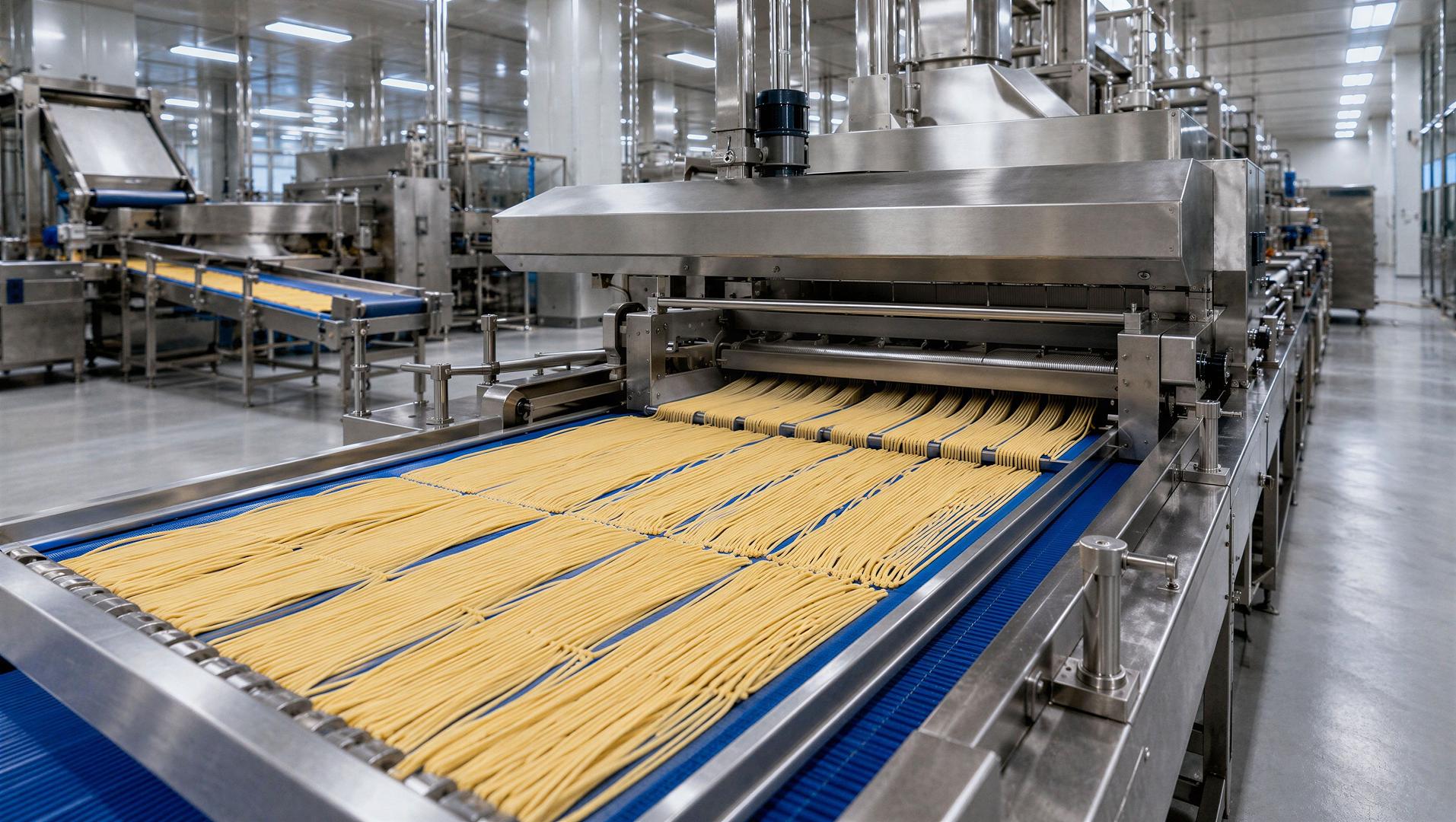
We stock a variety of high-quality and good value used pasta machinery specialized for all stages of pasta manufacturing including mixers, extruders/pasta presses, sheeters, dryers, pasteurizers/blanchers, formers, and tabletop models. We also have dedicated production machines for filled pastas such as ravioli, tortellini, and gnocchi. Our inventory includes used pasta equipment from prominent brands including TORESANI, ITALPAST, and DOMINIONI. Additionally, we stock equipment to package/vacuum pack fresh and frozen pasta.
Pasta Equipment Categories
Frequently Asked Questions
What types of used pasta manufacturing equipment are available on the secondary market?
Used pasta manufacturing equipment covers virtually every stage of production, from raw ingredient processing through to final packaging. The main categories buyers look for include mixers (such as double-arm and sigma-style mixers for dough preparation), extruders and pasta presses, sheeters, dryers, pasteurizers, blanchers, and formers. There are also dedicated machines for filled pasta varieties like ravioli, tortellini, and gnocchi, which require specialized forming and sealing mechanisms that differ significantly from standard extrusion lines. Tabletop models are also available for smaller-scale or artisan operations.
Beyond the production equipment itself, the secondary market also carries packaging machinery suited specifically to fresh and frozen pasta, including vacuum packaging systems, form/fill/seal machines, labelers, checkweighers, and metal detectors. Supporting equipment such as conveyors, screw feeders, chillers, freezers, dust collectors, and CIP (clean-in-place) cleaning systems are also commonly available. Buyers setting up or expanding a pasta facility can often source most of what they need from the used equipment market rather than purchasing everything at full original cost.
What is the difference between extruder-based and sheeting-based pasta equipment, and which do I need?
These two equipment types reflect fundamentally different approaches to pasta production, and the right choice depends on what products you intend to make. Extruder-based machines (also called pasta presses) force dough through shaped dies to produce short cuts like penne, rigatoni, and fusilli, as well as long formats like spaghetti and bucatini. The texture produced by extrusion, especially through bronze dies, is generally rougher and more porous, which many producers and consumers associate with higher-quality dried pasta. Industrial extruders can handle output ranging from small artisan-scale volumes up to thousands of kilograms per hour on continuous production lines.
Sheeting and laminating machines, by contrast, roll dough into thin sheets that are then cut or stamped into shapes like lasagna, tagliatelle, pappardelle, and fresh pasta sheets used for filled products. Sheeters are the backbone of fresh pasta production and are essential for anyone making ravioli, tortellini, or cannelloni at scale. Some operations use both types of equipment to cover a broader product range. When sourcing used equipment, it helps to have a clear product specification in mind first, since the machinery footprint, utilities requirements, and downstream equipment (like dryers or pasteurizers) differ significantly between the two approaches.
What brands of pasta manufacturing equipment are most sought after on the used market?
Brand reputation matters considerably in the used pasta equipment market, both for reliability and for the practical matter of sourcing spare parts. Brands like Dominioni, ITALPAST, and Toresani have strong reputations in the industry and appear regularly in used equipment inventories. Other names frequently sought on the secondary market include Buhler, La Monferrina, Pavan, and Storci, all of which are known for building durable machines with long service lives. The fact that these brands have been in the market for decades means that parts, technical documentation, and qualified service technicians are generally easier to find compared to obscure or discontinued brands.
When evaluating a used machine from any brand, it is worth contacting the original manufacturer directly to ask about parts availability and technical support for the specific model and age of the machine you are considering. Some manufacturers have discontinued support for older models, which can significantly affect long-term operating costs. A well-maintained machine from a reputable brand will almost always be a better investment than a cheaper machine from an unknown manufacturer, even if the upfront price difference seems attractive. Dealers who specialize in pasta equipment are typically a good resource for guidance on which models have the best track records in real production environments.
How do I verify the condition of used pasta equipment before buying?
Verifying the condition of used pasta machinery requires a layered approach, and buyers should not rely solely on photos or written descriptions. The most thorough option is an in-person inspection at the location where the machine is currently stored or still in operation. If the equipment is still running at a production facility, there may be an opportunity to observe it operating under real conditions, which gives a much clearer picture of mechanical health than a static inspection. If travel is not practical, many reputable dealers can arrange video inspections or provide detailed video walkthroughs of the machine in its current state. Requesting maintenance logs, service records, and any documentation of prior repairs is also standard practice and gives insight into how the machine was treated over its working life.
It is important to understand that most used equipment dealers do not have the production permits or food-grade facilities required to run actual pasta through a machine as a functional test. What dealers can typically demonstrate is that the machine powers on, that mechanical components move correctly, and that there are no obvious signs of damage or wear. Buyers with specific technical concerns should consider bringing in an independent equipment technician for the inspection. Keep in mind that some machines may be decommissioned and no longer in production at the time of sale, which makes a thorough physical inspection even more important. Choosing a dealer with a long track record in the pasta equipment space reduces the risk considerably, as their reputation depends on accurately representing what they sell.
Does used pasta manufacturing equipment come with a warranty?
Used pasta manufacturing equipment is typically sold on an as-is basis, which is standard practice across the used industrial machinery market. Warranties, when they exist at all, are generally only offered by original equipment manufacturers on machines sold directly from the factory. Once a machine enters the secondary market, that original warranty coverage has almost always expired or is no longer transferable. This places the responsibility for assessing condition squarely on the buyer, which is why thorough pre-purchase inspection is so critical.
Because there is no warranty safety net, buyers are strongly advised to work only with dealers who have an established reputation in the pasta or food processing equipment space and a verifiable history of transactions. A dealer who has been in the business for many years has a track record you can evaluate, and they are more likely to represent the condition of a machine accurately to protect their reputation. Before committing to a purchase, buyers should also consult with the original manufacturer of the machine to understand what level of technical support, parts supply, and service documentation is available for that specific model and age. This information directly affects the long-term cost of ownership and should factor into any purchase decision.
What production capacity should I look for when buying used pasta equipment?
Matching capacity to your actual production requirements is one of the most important decisions in the equipment selection process, and getting it wrong in either direction creates problems. On the lower end, artisan and small-batch pasta machines typically handle 50 to 100 kilograms per hour, which suits specialty producers, restaurants, or food service operations with limited volume needs. Mid-range commercial equipment often falls in the 200 to 500 kg/hour range, suitable for regional distributors or mid-sized food manufacturers. Industrial-scale continuous lines can reach 1,000 to 2,000 kilograms per hour or more, designed for high-volume pasta brands supplying retail or foodservice at scale.
A common mistake is purchasing oversized equipment because it appears to be a better deal per unit of capacity. Oversized machines often consume more energy, require more labor to operate and clean, and may not run efficiently at lower throughput levels. Undersized equipment, on the other hand, creates production bottlenecks that limit growth. When evaluating used machines, ask the dealer about the rated capacity and, if possible, the actual production volumes the machine was running before it was decommissioned or sold. Also factor in the capacity of downstream equipment like dryers, pasteurizers, and packaging lines, since a bottleneck anywhere in the process limits the effective output of the entire line.
What food safety and sanitation considerations apply to used pasta equipment?
Food safety compliance is a non-negotiable factor when bringing used pasta equipment into a production environment. Pasta manufacturing machinery that has been in prior use may carry residual contamination risks if it was not properly decommissioned and cleaned before being stored or resold. All contact surfaces, including dies, augers, rollers, and conveyor belts, need to be inspected for wear, corrosion, or damage that could harbor bacteria or create cleaning challenges. Stainless steel construction is the standard for food-contact components, and any machine with compromised surface integrity in these areas may require refurbishment before it can be placed back into production.
Buyers are responsible for ensuring that any used equipment they purchase meets applicable food-grade standards in their jurisdiction before it goes into service. This may involve a professional sanitation and inspection process, replacement of gaskets and seals, and potentially modifications to meet current regulatory requirements if the machine is older. CIP (clean-in-place) systems, which are often available as part of used equipment inventories, can simplify ongoing sanitation for larger production lines. It is also worth factoring in the cost of any required sanitation work, parts replacement, or compliance upgrades when evaluating the total cost of a used machine, not just the purchase price.
How does shipping and installation work for large used pasta manufacturing equipment?
Shipping large pasta production machinery is a logistical undertaking that requires planning well beyond arranging a standard freight pickup. The packaging requirements vary depending on the size and fragility of the equipment. Smaller machines may be palletized, while larger extruders, dryers, or complete production lines typically require custom crating to prevent damage in transit. Rigging, which involves the use of forklifts, cranes, or other heavy lifting equipment to load and unload machinery, adds cost and requires coordination at both the origin and destination. Buyers should ask dealers specifically about what packaging and rigging are included in the quoted price and what will be charged separately, since landed costs can differ significantly from the equipment price alone.
Installation requirements for pasta manufacturing equipment depend heavily on the type and scale of the machine. Extruders and continuous production lines often require three-phase electrical connections, compressed air, water supply, and in some cases steam or refrigeration hookups. Floor space, ceiling height, and load-bearing capacity of the facility floor are also relevant for larger machines. Buyers should obtain full utility and footprint specifications from the dealer before the equipment ships, so that site preparation can be completed in advance. Some dealers can connect buyers with rigging and installation contractors who have experience with food processing equipment, which can simplify the process considerably for buyers who are not familiar with heavy machinery logistics.
How do I find replacement parts for used pasta manufacturing machines?
Parts availability is one of the most practical factors to research before committing to a used pasta machine, because even well-maintained equipment will eventually need replacement components. The first step is to contact the original manufacturer with the machine's model number and serial number to ask directly what parts are still stocked or available to order. Established brands like Dominioni, ITALPAST, Toresani, Pavan, and Storci have been in the market long enough that many have parts programs for older equipment, though availability does vary by model age. Some manufacturers have discontinued support for certain legacy models entirely, which is critical information to have before purchasing.
Beyond the original manufacturer, there are third-party suppliers and machine shops that fabricate replacement parts for common pasta equipment components, particularly dies, augers, and rollers. Used parts from decommissioned machines of the same model are another option, and dealers who specialize in pasta equipment sometimes carry spare parts inventories alongside their machinery listings. When evaluating a used machine, it is worth asking the seller whether any spare parts are included with the sale, since prior owners often accumulate spares during the machine's working life. Factoring in parts availability and estimated maintenance costs over the first few years of ownership gives a much more accurate picture of the true cost of the equipment than the purchase price alone.
What payment terms should I expect when buying used pasta manufacturing equipment?
Payment practices in the used industrial equipment market are fairly standardized, and buyers should go in with clear expectations. The most common requirement is full payment prior to shipment. This protects the seller against non-payment once equipment has left their possession, and it is the norm across the industry regardless of the size of the transaction. Buyers who are working with a dealer for the first time should expect to pay in full before the machine ships. Wire transfer is the most common payment method for transactions of this size, though specific accepted methods vary by dealer.
Some dealers will extend payment terms to repeat customers or buyers with an established relationship, but this is at the dealer's discretion and not something a first-time buyer should count on. Before finalizing any purchase, buyers should get a clear written breakdown of all costs, including the equipment price, packaging, rigging, freight, and any applicable taxes or fees, so there are no surprises at the time of payment. Understanding the total landed cost of the equipment before committing to a purchase is essential, particularly for large machines where shipping and rigging costs can add meaningfully to the final figure.
Explore Our Full Equipment Inventory
Browse thousands of listings across every category we support or reach our team directly for help finding the right machine for your operation.