





Fruit and Vegetable Processing and Packaging Equipment
Slicers, Dicers, Peelers, Conveyors, and More
We specialize in pre-owned fruit and vegetable processing equipment, offering slicers, dicers, peelers, and conveyors to streamline your operations. Our machinery supports various applications, from washing and sorting to chopping and pureeing, enabling you to deliver fresh, high-quality products. Optimize your production line with our reliable equipment for this category.
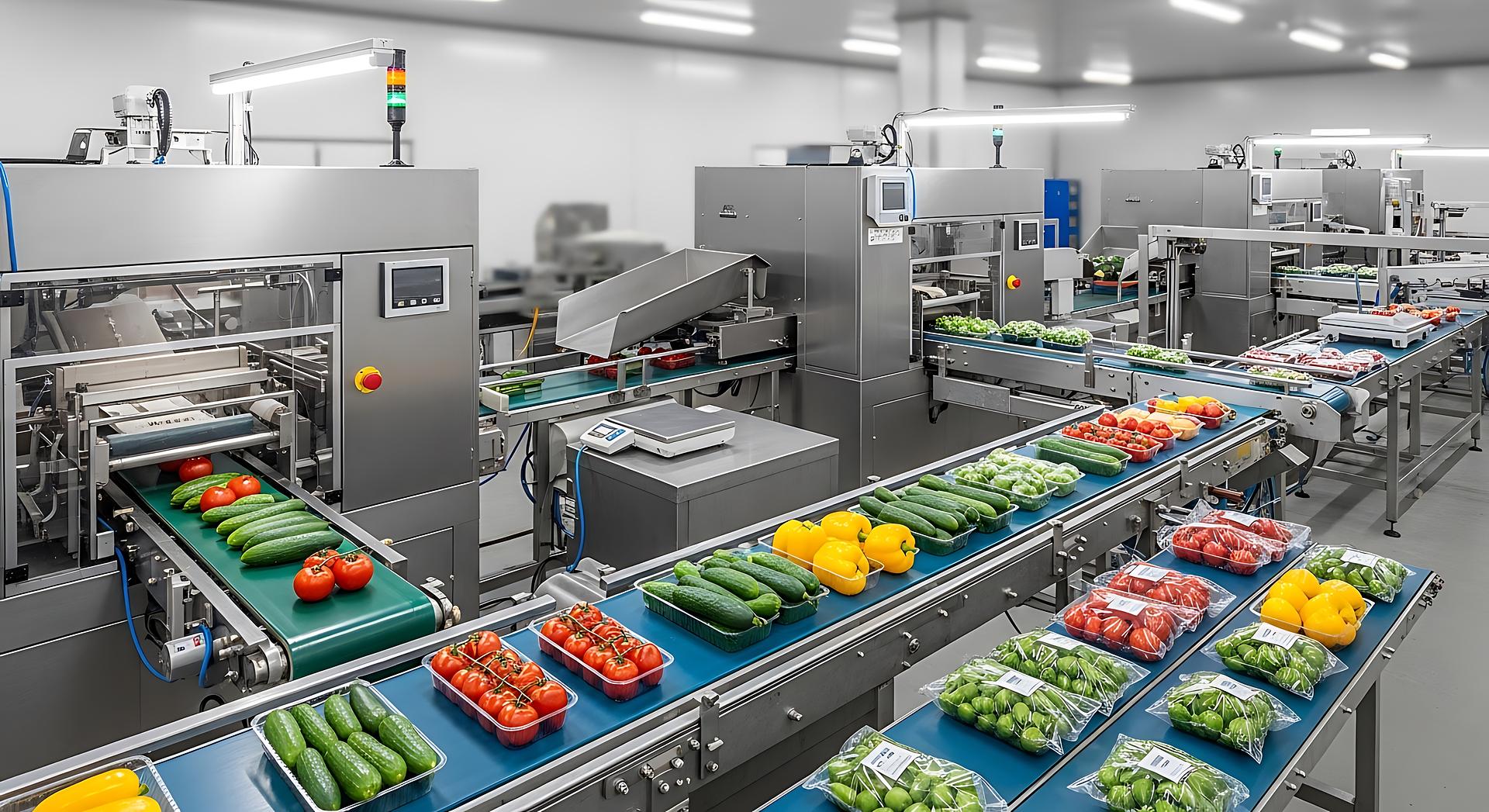
Fruit and Vegetable Equipment Categories
Frequently Asked Questions
What types of fruit and vegetable processing equipment are available for commercial operations?
Commercial fruit and vegetable processing covers a wide range of production steps, and the equipment reflects that variety. The main categories include slicers, dicers, and cutters for size reduction; peelers for skin removal; blanchers and cookers for heat treatment; washers and CIP/rinsing systems for sanitation; conveyors for product movement between stations; centrifuges and dryers for moisture control; and filling, sealing, and labeling equipment for packaging finished product. Beyond those core machines, a fully outfitted line might also include kettles, heat exchangers, evaporators, pumps, agitators, checkweighers, metal detectors, and case packers. The specific combination depends heavily on the end product, whether that is fresh-cut produce, canned goods, frozen vegetables, purees, juices, or dried snacks.
Used equipment markets carry all of these categories, which gives buyers the ability to source individual pieces to fill gaps in an existing line or to assemble a complete processing system at a fraction of the cost of buying everything straight from a manufacturer. Pre-owned machines from established brands are often available in good working condition, having come out of food plants that upgraded, consolidated, or changed product lines. Buyers sourcing used equipment should look for dealers who specialize specifically in food processing machinery, since they are more likely to accurately represent the condition and suitability of each machine for produce applications.
What should I know about buying used fruit and vegetable processing equipment?
Purchasing pre-owned processing equipment is a common and practical approach for food manufacturers looking to control capital costs. The key difference from buying directly from a manufacturer is that used machines are typically sold as-is, meaning the buyer takes on the responsibility of verifying condition before committing to a purchase. This makes the inspection process critical. Reputable used equipment dealers will offer in-person inspections, virtual walkthroughs, or detailed video captures of the machines so buyers can assess the current working order. Some machines may still be installed and running at a production facility, which gives buyers the rare opportunity to see the equipment operating under real conditions.
Before buying, it is worth contacting the original manufacturer of the specific machine to understand what level of support, replacement parts, and technical documentation is still available for that model and age of equipment. Older machines or discontinued models may have limited parts availability, which affects long-term serviceability. Buyers should also factor in the full landed cost of the equipment, including shipping, any required rigging for heavy machinery, and any refurbishment or reconditioning work needed before the machine goes back into production. Choosing a dealer with a long track record in food processing equipment specifically, rather than a generalist reseller, significantly reduces the risk of misrepresented condition or poor fit for the application.
What processing capacity should I look for in commercial fruit and vegetable equipment?
Capacity is one of the most important specifications to match carefully to your actual production needs. Small-scale commercial operations typically require equipment rated in the range of 100 to 500 kilograms per hour, while mid-size food manufacturers often need machines capable of handling 500 to 1,000 kg/hour. Large industrial operations processing for retail distribution or food service at scale may require 1,000 kg/hour or more per line, with some high-volume facilities running multiple parallel lines. Buying equipment with significantly more capacity than you need ties up capital unnecessarily, while undersized equipment creates bottlenecks that limit your entire line's output.
When evaluating used equipment, keep in mind that rated capacity figures are typically based on ideal conditions with a specific product type. Actual throughput can vary depending on the produce being processed, its moisture content, size uniformity, and how the machine has been maintained over its service life. Asking the dealer about the machine's production history, the types of produce it was used for, and any maintenance records available will give you a more realistic picture of what to expect. It is also worth thinking about where the machine fits in your overall line, since a high-capacity dicer paired with a lower-capacity blancher, for example, will still be limited by the slower piece of equipment.
What materials should fruit and vegetable processing equipment be constructed from?
Food-grade stainless steel is the standard construction material for commercial fruit and vegetable processing equipment, and for good reason. Grade 304 stainless steel is the most common choice across the industry, offering strong corrosion resistance, durability, and compatibility with standard food-grade cleaning chemicals. Grade 316 stainless steel is used in more demanding applications where equipment is exposed to high-acid produce, salt brines, or more aggressive sanitizing agents, since 316 provides better resistance to chloride-induced corrosion. Both grades are non-porous, which prevents bacteria from harboring in surface irregularities and makes them far easier to clean and sanitize than painted steel, aluminum, or plastic alternatives.
When evaluating used equipment, inspecting the condition of the stainless steel surfaces is an important part of the assessment. Look for pitting, cracks in welds, or areas where surface coatings have been applied over base metal, since these can create sanitation problems that are difficult or impossible to fully resolve. Food-contact surfaces should be smooth and intact. Bearings, seals, and gaskets are also worth scrutinizing, as these components wear over time and may need replacement before the machine is returned to food production. A machine with solid stainless steel construction but worn mechanical components is often a better candidate for refurbishment than one with structural or surface integrity issues.
How do I evaluate the condition of used produce processing equipment before buying?
The inspection process is the most important step in any used equipment purchase, and buyers should approach it systematically. Start by requesting detailed photos or video of the machine in its current state, covering all food-contact surfaces, the drive and mechanical components, electrical panels, and any visible wear points like blades, belts, seals, and bearings. A reputable dealer will accommodate virtual inspections via video call or provide thorough recorded walkthroughs if an in-person visit is not practical. For higher-value purchases, traveling to inspect the equipment in person is almost always worth the cost, particularly for large or complex machines.
One important limitation to understand is that most used equipment dealers are not food production facilities, so they typically cannot run actual product through a machine to demonstrate its full processing capability. What a dealer can show is that the machine powers on, that mechanical components move freely, and that there are no obvious signs of damage or excessive wear. If the equipment is still installed at a food plant where it was in active use, a dealer may be able to arrange an inspection there, and seeing it run in production is the most reliable way to assess its condition. Buyers should also ask about the machine's history, including how long it was in service, what products it processed, and whether any major repairs or modifications were made. This context helps estimate how much useful life remains and what maintenance may be needed before startup.
Can commercial produce processing equipment handle multiple types of fruits and vegetables?
Many commercial processing machines are designed with enough flexibility to handle a range of produce types, which is one of the key factors buyers evaluate when considering return on investment. Dicers, slicers, and cutters, for example, often accept interchangeable blade sets or grid plates that can be swapped to change cut size and shape, making them suitable for everything from potatoes and carrots to peppers, onions, and softer fruits. Blanchers, conveyors, and washing systems are generally even less product-specific, since they are designed around handling bulk produce of varying shapes and sizes rather than performing a precise mechanical operation on a specific item.
That said, some equipment is purpose-built for a particular produce type or process, and trying to adapt it outside its intended application usually results in poor yields, product damage, or excessive downtime. Citrus juicers, for instance, are engineered around the specific geometry of round citrus fruit and do not translate well to other applications. Corn cutters, pineapple corers, and similar machines are similarly specialized. When sourcing used equipment, it is worth being specific with the dealer about the range of products you intend to run, so they can help identify machines with the right design flexibility. Checking with the original manufacturer about the full range of approved applications for a specific model is also a practical step before committing to a purchase.
What food safety certifications and standards should I look for in fruit and vegetable processing equipment?
Commercial produce processing equipment sold into regulated markets is typically expected to meet specific design and construction standards that support food safety compliance. In the United States, equipment used in food processing is commonly evaluated against NSF/ANSI standards, which address materials, surface finishes, and design features that affect cleanability and sanitation. The 3-A Sanitary Standards are particularly relevant for equipment handling liquid or semi-liquid products like purees and juices. FDA regulations governing food contact materials also apply to the components that touch produce directly. In European markets, CE marking indicates that equipment meets applicable EU machinery and food safety directives.
When buying used equipment, the original certifications were issued to the machine as it was manufactured and configured. Any modifications made after the original sale, or significant wear to food-contact surfaces, could affect whether the machine still meets those standards in practice. Buyers operating under HACCP plans or third-party food safety audits should evaluate used equipment against their own program requirements rather than assuming original certifications carry forward without question. It is a good practice to document the equipment's provenance, review any available maintenance or modification history, and have the machine assessed by a qualified technician familiar with food safety equipment standards before placing it into a certified production environment.
What are the power and utility requirements for commercial fruit and vegetable processing equipment?
Power requirements for commercial processing equipment vary considerably depending on the type and scale of the machine. Small benchtop or light-duty units may operate on standard single-phase power, but most commercial-grade processing equipment runs on three-phase electrical service, commonly at 208V, 230V, or 460V in North American facilities. European and international equipment is often configured for 380V or 400V three-phase. Larger machines like industrial blanchers, freezers, centrifuges, and high-capacity conveyors can draw significant amperage, so verifying that your facility's electrical infrastructure can support the equipment before purchase is an important step that is sometimes overlooked.
Beyond electricity, many processing machines have additional utility requirements worth accounting for. Blanchers and cookers require steam or hot water supply. Washers and CIP systems need adequate water pressure and volume, plus drainage capacity. Chillers and freeze dryers may require refrigerant connections or specific ventilation. Compressed air is used by many packaging and filling machines for pneumatic controls and actuators. When sourcing used equipment, ask the dealer for the original equipment specifications sheet if available, since it will list all utility requirements. If the specs are not available, the manufacturer may still be able to provide them based on the model number. Getting these details right before the machine ships prevents costly surprises during installation.
How does shipping and logistics work when purchasing used fruit and vegetable processing equipment?
Shipping used processing equipment involves more planning than most freight shipments because of the size, weight, and fragility of the machinery involved. Smaller machines are typically palletized and shrink-wrapped or crated before shipping, and the level of packaging required directly affects freight costs. Larger or heavier equipment may require custom crating built to the machine's specific dimensions, and some pieces need to be partially disassembled before they can be safely moved. Buyers should ask dealers specifically about how the equipment will be packaged and what that packaging cost includes, since this is often quoted separately from the equipment price itself.
For large industrial machines, rigging is typically required for both loading at the origin and unloading at the destination. Rigging involves specialized equipment like forklifts, cranes, or machinery skates operated by crews experienced in moving heavy industrial equipment, and it adds to the total landed cost. Buyers should get a clear picture of all costs involved, including the equipment price, packaging, domestic freight or international shipping, import duties if applicable, and destination rigging, before making a purchasing decision. Most used equipment dealers require full payment before a machine ships. Once you have a complete landed cost figure, it becomes much easier to compare the value of a used machine against other sourcing options.
What is the typical lifespan of commercial fruit and vegetable processing equipment, and how does that affect buying used?
Well-built commercial food processing equipment is designed for demanding production environments and can have a remarkably long service life when properly maintained. Stainless steel-constructed machines from reputable manufacturers commonly remain in productive use for 20 to 30 years or more, with major components like frames, tanks, and structural elements lasting the life of the machine. Wear parts such as blades, belts, seals, bearings, and gaskets have shorter service intervals and are expected to be replaced periodically as part of routine maintenance. The overall condition of a used machine therefore depends less on its age alone and more on how it was maintained and how intensively it was run during its service life.
This longevity is part of what makes the used equipment market viable for produce processing. A 15-year-old blancher or dicer from a well-regarded manufacturer, properly maintained and recently serviced, can deliver many more years of reliable production. The practical risk in buying used is not the age of the machine per se, but the uncertainty around its maintenance history and the availability of replacement parts going forward. Before purchasing, buyers should contact the original manufacturer to confirm whether parts are still stocked or can be fabricated for that model. Dealers who specialize in food processing equipment are generally better positioned to advise on parts availability and the realistic remaining service life of specific machines than general industrial equipment resellers.
Explore Our Full Equipment Inventory
Browse thousands of listings across every category we support or reach our team directly for help finding the right machine for your operation.