





Cosmetics Manufacturing Equipment
Mixers, Homogenizers, Filling Lines, Capping Machines, and More
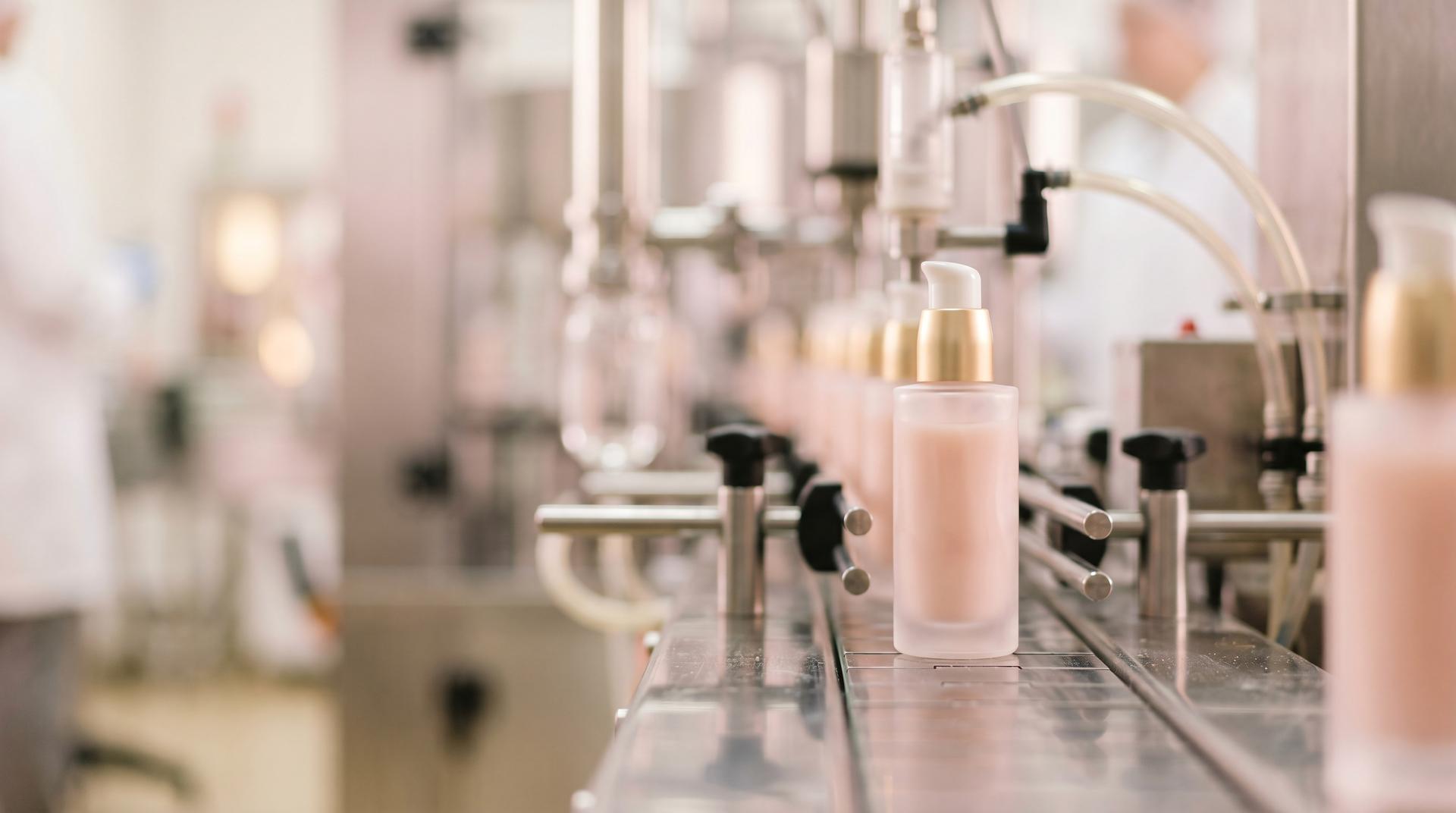
In the cosmetics industry, precision and quality are paramount. We provide a range of pre-owned cosmetics processing equipment, including mixers, homogenizers, filling lines, and capping machines. Our machinery is designed to handle the production of creams, lotions, powders, and more, ensuring consistency and reliability in your products. Enhance your production capabilities with our trusted solutions.
Cosmetics Equipment Categories
Frequently Asked Questions
What types of equipment are needed to set up a cosmetics manufacturing facility?
A functional cosmetics production facility typically requires several categories of equipment working in sequence. At the core are mixing and blending systems, which include agitators, homogenizers, high-shear mixers, ribbon blenders, and double-arm sigma mixers depending on the product type. Heating and cooling kettles or jacketed tanks are used to process emulsions and temperature-sensitive formulations. From there, filling lines handle the transfer of finished product into containers, with different filler types suited to different viscosities: liquid fillers and positive displacement piston fillers for creams and serums, and powder fillers for loose or pressed powder products. Capping machines, labelers, coders, and cartoners complete the packaging side of the line.
Beyond the core production equipment, supporting machinery plays a significant role in maintaining product quality and throughput. Colloid mills and roll mills are used for particle size reduction in certain formulations. Filter presses help clarify liquid products. Conveyors and unscramblers keep containers moving efficiently through the line. Metal detectors add a quality control checkpoint before products are packaged for sale. For manufacturers producing soaps or tube-packaged products, specialized soap equipment and tube filling and sealing machines are also part of the picture. The specific combination of equipment needed depends heavily on the product categories being manufactured, batch sizes, and the level of automation required.
What is the difference between a homogenizer and an emulsifier in cosmetics production?
The terms are sometimes used interchangeably in casual conversation, but they refer to distinct processes and equipment types. An emulsifier, in the context of cosmetics manufacturing, typically refers to a mixing system designed to combine two immiscible phases, most often oil and water, into a stable blend. This is done through mechanical agitation combined with the use of chemical emulsifying agents in the formula. Many jacketed mixing tanks with anchor or paddle agitators serve this function at a basic level. A homogenizer, on the other hand, applies much more intense mechanical force, typically through a rotor-stator assembly or high-pressure valve, to reduce droplet or particle size to a very fine and uniform distribution. The result is a smoother, more stable product with improved texture and a longer shelf life.
For most cosmetics manufacturers producing lotions, creams, and serums, a high-shear mixer or inline homogenizer is the preferred choice because it handles both the emulsification and homogenization steps in one pass. Vacuum homogenizing mixers take this further by processing the batch under vacuum, which eliminates air incorporation, reduces oxidation of sensitive active ingredients, and produces a noticeably finer texture. The right choice depends on the formula complexity, the desired product finish, and the batch volume. Used homogenizers and high-shear mixers are available across a wide range of sizes and configurations, making it practical for smaller manufacturers to access the same technology used in large-scale production without the cost of purchasing equipment directly from the original manufacturer.
What materials should cosmetics manufacturing equipment be made from?
Stainless steel is the standard material for any equipment that comes into direct contact with cosmetic formulations. Specifically, 316L stainless steel is the most widely specified grade in the cosmetics and personal care industry. Compared to the more common 304 grade, 316L contains molybdenum, which significantly improves its resistance to corrosion from chlorides, acids, and the wide range of active ingredients found in cosmetic formulas. It is also non-reactive, meaning it will not leach metals or alter the chemistry of the product being processed. The low carbon content of the 316L designation also makes it more resistant to sensitization during welding, which matters for equipment that is fabricated or repaired. Surfaces that contact product should have a polished or electropolished finish to minimize pores where bacteria or residue could accumulate.
When evaluating used cosmetics manufacturing equipment, verifying the material of construction is one of the most important steps in the inspection process. Buyers should ask for documentation or markings confirming the steel grade, particularly for tanks, kettles, mixing vessels, and any piping or fittings in the product flow path. Gaskets and seals are another area to scrutinize, as they should be made from food-grade or pharmaceutical-grade elastomers such as PTFE or silicone rather than standard rubber compounds that can react with certain ingredients. Equipment that was previously used in food processing or pharmaceutical production often meets or exceeds the material standards required for cosmetics, which can make it a practical and cost-effective option for manufacturers sourcing pre-owned machinery.
How does used cosmetics manufacturing equipment differ from buying directly from the original manufacturer?
The most significant practical difference is cost. Pre-owned cosmetics manufacturing equipment can be acquired at a fraction of the price of equivalent equipment purchased directly from the original manufacturer. For a startup or a company scaling up production capacity, this price difference can be substantial enough to allow the purchase of a more capable machine, a more complete production line, or simply a better allocation of capital toward other parts of the business. The trade-off is that used equipment comes without the original manufacturer's warranty, which means the buyer takes on more responsibility for assessing the condition of the machine before purchase.
Used equipment is sold on an as-is basis, so the inspection process becomes the buyer's primary tool for managing risk. Reputable used equipment dealers who specialize in a specific industry, such as cosmetics and personal care manufacturing, are generally a better source than general industrial surplus dealers because they understand the relevant specifications, material requirements, and common failure points for this type of machinery. Before buying, prospective buyers should request an in-person or video inspection to assess the machine's current condition, and it is worth contacting the original manufacturer to understand what level of support, parts availability, and technical documentation still exists for the specific model and age of the equipment being considered. Age and production history can significantly affect how much manufacturer support remains available.
How do I evaluate the condition of used cosmetics mixing or filling equipment before purchasing?
The inspection is the most critical step in any used equipment purchase, and buyers should treat it as non-negotiable. Most reputable dealers will accommodate in-person inspections at their facility, or they can provide detailed video walkthroughs of the equipment if travel is not practical. A good inspection should cover the condition of all product-contact surfaces, looking for pitting, corrosion, or damage to the stainless steel that could compromise sanitation. Seals, gaskets, and o-rings should be checked, as these are wear items that may need replacement. For mixing equipment, the agitator shaft, bearings, and mechanical seal assembly are key areas to examine. For filling machines, the condition of the fill heads, nozzles, and any servo or pneumatic drive components will indicate how much service the machine has seen.
Keep in mind that most used equipment dealers do not have the permitting required to run actual cosmetic product through a machine during an inspection, so a functional test will typically demonstrate mechanical operation rather than a live production run. Some equipment may still be in active production at the facility where it originated, in which case the dealer may be able to arrange an inspection at the plant where the machine is currently operating. Buyers should also request any available service records, manuals, or documentation from the dealer. After the inspection, consulting with the original manufacturer about parts availability and technical support for that specific model is a practical step that can help buyers anticipate the cost and feasibility of keeping the equipment running long-term.
What is GMP compliance and why does it matter when selecting cosmetics manufacturing equipment?
Good Manufacturing Practice, commonly referred to as GMP, is a set of guidelines and regulations that govern how cosmetics and personal care products are manufactured, tested, and controlled to ensure consistent quality and safety. In the United States, the relevant framework is FDA 21 CFR Part 111, which applies to dietary supplements but is also widely referenced as a benchmark for cosmetics production. The EU operates under Cosmetics Regulation 1223/2009, which includes specific GMP requirements aligned with ISO 22716, the international standard for cosmetics GMP. These frameworks address facility design, equipment construction, cleaning and sanitation procedures, documentation, and quality control processes. Equipment that is designed and maintained in compliance with these standards reduces the risk of contamination, cross-contamination, and batch-to-batch variation.
For buyers sourcing used cosmetics manufacturing equipment, GMP compliance is less about a certification stamped on the machine and more about the design characteristics of the equipment itself. Key features to look for include smooth, crevice-free internal surfaces that are easy to clean and inspect, product-contact materials that meet accepted standards (primarily 316L stainless steel and approved elastomers), and designs that allow for complete drainage without pooling. Equipment that was originally built for pharmaceutical or food-grade applications often meets or exceeds cosmetics GMP requirements by design. When evaluating used machinery, buyers should consider whether the equipment can be adequately cleaned and validated for their specific formulations, and whether documentation such as surface finish certifications or material traceability records are available from the seller.
What filling equipment is best suited for cosmetics production?
The right filling equipment depends almost entirely on the viscosity and physical form of the product being packaged. Liquid fillers work well for thin, free-flowing products like toners, facial mists, and light serums. For thicker products such as lotions, creams, and gels, positive displacement piston fillers are the standard choice because they measure fill volume by the mechanical displacement of the piston rather than by flow rate, which gives consistent fill weights regardless of viscosity variations in the batch. Tube filling and sealing machines are used for products packaged in flexible laminate or plastic tubes, which is common for hand creams, toothpaste, and similar products. Powder fillers handle loose powders, and the design of the filler (auger, cup, or vacuum) varies based on the flowability and density of the specific powder.
Used filling lines for cosmetics are available in a wide range of configurations, from simple semi-automatic bench-top units suited to small-batch or startup operations, to fully automated inline systems capable of high-speed production. When evaluating a used filler, buyers should pay close attention to the range of container sizes and fill volumes the machine can accommodate, as well as the changeover time and complexity required to switch between products or container formats. Compatibility with the containers being used (jar, bottle, tube, or pouch) and the fill head design are also important factors. A machine that was originally used for similar product viscosities and container types in a food or pharmaceutical setting may be a practical fit for cosmetics production, provided the materials of construction meet the required standards.
Can cosmetics manufacturing equipment handle both water-based and oil-based formulations?
Most commercial-grade cosmetics processing equipment is designed to handle a broad range of formulations, including water-based, oil-based, and emulsion products that combine both phases. The key factors that determine compatibility are the materials of construction, the design of the mixing or processing system, and the cleaning protocols used between batches. Stainless steel vessels and wetted parts are generally inert to both aqueous and lipid-based ingredients, which is one of the reasons 316L stainless steel is the standard material for this industry. Seals and gaskets made from PTFE or silicone are similarly compatible with a wide range of ingredient types, including essential oils, surfactants, and solvents commonly used in cosmetic formulations.
The more relevant consideration is whether the mixing technology is appropriate for the specific emulsion type being produced. Oil-in-water emulsions (such as most lotions) and water-in-oil emulsions (such as certain cold creams and sunscreens) require different shear levels and processing conditions to achieve stability. High-shear mixers and homogenizers are well-suited to both, but the process parameters need to be adjusted based on the formula. For manufacturers running multiple product types across the same equipment, the cleaning and changeover process is critical, particularly when switching between oil-heavy and water-based formulations. Used equipment that was previously used in food emulsion processing, such as salad dressings or sauces, often has directly applicable design features and can be a cost-effective entry point for cosmetics manufacturers processing similar product types.
What should buyers know about shipping and logistics for used cosmetics manufacturing equipment?
Shipping used industrial machinery involves more complexity than standard freight, and the costs can vary significantly based on the size, weight, and fragility of the equipment. Smaller machines like bench-top homogenizers or semi-automatic fillers may ship on a standard pallet with appropriate blocking and bracing. Larger equipment, such as jacketed mixing tanks, multi-head filling lines, or industrial homogenizers, typically requires custom crating or skidding to prevent damage during transit. The level of packaging required directly affects the shipping cost, so buyers should ask the dealer for specifics on how the equipment will be prepared before getting freight quotes.
For heavy or oversized equipment, professional rigging is often required for both loading at the seller's facility and unloading at the buyer's location. Rigging costs are generally separate from freight costs and should be factored into the total landed cost of the equipment. Buyers should confirm with the dealer whether rigging is included or needs to be arranged independently. It is also worth verifying the equipment dimensions and weight in advance so the receiving facility can prepare the appropriate unloading equipment, whether that is a forklift, crane, or loading dock. Getting a clear picture of all costs, including packaging, rigging, freight, and any applicable import duties for international shipments, before committing to a purchase helps avoid surprises and allows for accurate budgeting.
What payment terms are typical when purchasing used cosmetics manufacturing equipment?
Used equipment transactions in the industrial machinery market generally require full payment prior to shipment. This is standard practice across the industry and reflects the nature of the transaction: once a machine has been inspected, agreed upon, and committed to a buyer, the seller takes it off the market and begins preparing it for shipment. Payment in full before release of the equipment protects the seller in a transaction where the goods are high-value and not easily returned or resold quickly. Buyers should factor this into their purchasing timeline and ensure financing or capital is in place before completing negotiations.
Some dealers extend payment terms to repeat customers or established buyers with a track record of previous transactions, but this is the exception rather than the rule for first-time buyers. For buyers who need financing, third-party equipment financing companies can sometimes be arranged independently of the dealer. It is worth discussing payment logistics with the dealer early in the process, particularly for larger purchases where wire transfer timing, escrow arrangements, or other payment structures may need to be coordinated. Understanding the full cost of the purchase, including equipment price, shipping, rigging, and any refurbishment or installation costs, before finalizing payment ensures there are no gaps between what was budgeted and what is actually owed.
Explore Our Full Equipment Inventory
Browse thousands of listings across every category we support or reach our team directly for help finding the right machine for your operation.