





Chemical Manufacturing Equipment
Reactors, Mixers, Centrifuges, Heat Exchangers, and More
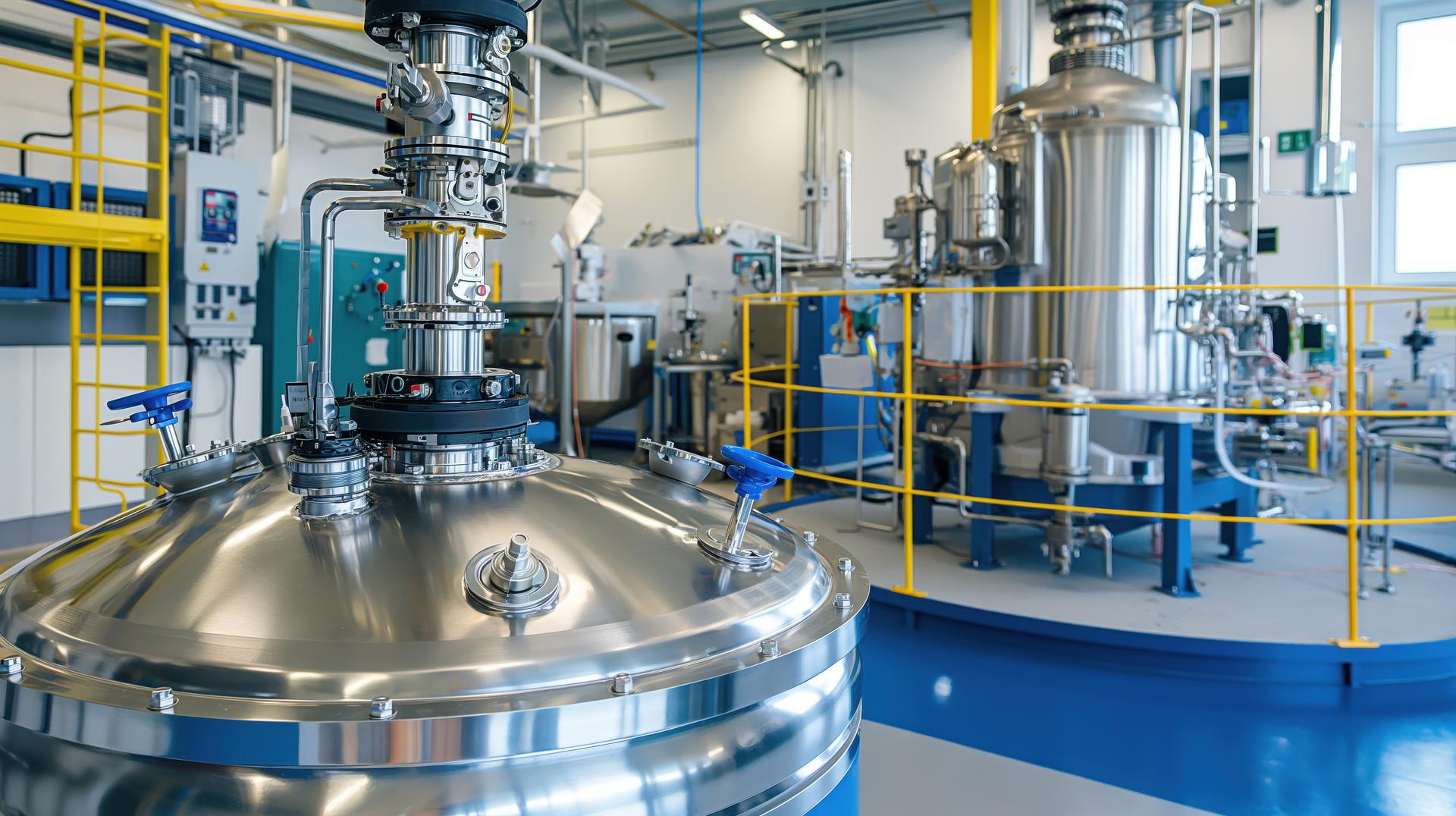
We provide high-quality pre-owned chemical manufacturing equipment for a variety of industrial processes. Our inventory includes reactors, mixers, centrifuges, heat exchangers, and storage tanks, designed to handle blending, emulsifying, distillation, and drying. Whether you are producing chemicals for pharmaceuticals, cosmetics, or industrial applications, our reliable machinery ensures efficient, precise, and safe operations. Trust Wohl Associates for equipment tailored to the unique needs of the chemical manufacturing industry.
Chemical Equipment Categories
Frequently Asked Questions
What materials are chemical manufacturing equipment typically made from, and which is best for corrosive substances?
The most common construction materials for chemical manufacturing equipment are 316L stainless steel, Hastelloy, glass-lined carbon steel, and PTFE-coated surfaces. Each material serves a different purpose depending on the chemicals being processed. Stainless steel 316L is the workhorse of the industry, offering solid corrosion resistance for a wide range of acids, solvents, and cleaning agents at a relatively accessible price point. Hastelloy alloys step in where stainless falls short, particularly with highly aggressive acids like hydrochloric or sulfuric acid at elevated temperatures. Glass-lined reactors and vessels are preferred for processes requiring extreme chemical purity or where metallic contamination is unacceptable, which is common in pharmaceutical API production. PTFE-lined equipment covers applications involving halogens, strong oxidizers, and other substances that would attack even the most corrosion-resistant metals.
When evaluating used chemical manufacturing equipment, material compatibility deserves careful attention because prior service conditions matter. A reactor that processed relatively mild chemicals may have a much longer service life remaining than one that handled aggressive solvents at high temperatures and pressures. Buyers should request information about what the equipment was previously used for, inspect welds and internal surfaces for pitting or crevice corrosion, and consider having a qualified inspector assess the vessel lining or coating integrity before purchase. For regulated industries like pharmaceuticals or food-grade chemical production, material test reports (MTRs) documenting the original construction materials are valuable documents to request from the seller, as they confirm the metallurgy meets the required specifications.
What types of equipment are used in chemical manufacturing?
Chemical manufacturing relies on a broad range of process equipment, each designed to handle a specific unit operation. Reactors are the core of most chemical processes, providing a controlled environment for chemical reactions under precise temperature, pressure, and agitation conditions. Mixers, agitators, homogenizers, and high-shear mixers handle blending and emulsifying tasks across liquid, paste, and powder applications. Heat exchangers and evaporators manage thermal energy transfer, which is critical for distillation, concentration, and temperature-sensitive reactions. Centrifuges separate solids from liquids, while filter presses and other filtration equipment clarify process streams. Dryers, including drum dryers and freeze dryers, remove moisture from final products or intermediates. Storage tanks, pumps, and conveyors round out the support infrastructure that keeps materials moving through the production process.
Beyond the core process equipment, chemical plants also depend on auxiliary systems like dust collectors, blowers, compressors, chillers, and CIP (clean-in-place) rinsing systems to maintain safe, clean, and efficient operations. Specialized equipment such as colloid mills, roll mills, granulators, screeners, and ribbon blenders serve niche applications in industries like cosmetics, pharmaceuticals, specialty chemicals, and food processing. The specific combination of equipment needed depends heavily on the chemistry involved, the physical form of the raw materials and finished product, the required throughput, and any regulatory requirements governing the production environment. Understanding which unit operations are required for a given process is the starting point for building an equipment list.
What safety certifications should I look for when buying chemical manufacturing equipment?
Several certifications carry significant weight depending on the application. ASME (American Society of Mechanical Engineers) certification is the standard for pressure vessels in North America, and any reactor, autoclave, or pressurized tank should have an ASME stamp along with a corresponding data plate showing the maximum allowable working pressure (MAWP) and design temperature. ATEX certification applies to equipment intended for use in potentially explosive atmospheres, which is relevant for processes involving flammable solvents, gases, or combustible dusts. Equipment bearing the ATEX marking has been designed and tested to minimize ignition risk in those environments. For pharmaceutical and food-grade chemical production, cGMP (current Good Manufacturing Practice) compliance is a design consideration that affects surface finish, cleanability, dead-leg elimination, and documentation requirements rather than a single certification stamp.
When buying used chemical manufacturing equipment, verifying the status of these certifications requires some diligence. Original documentation such as ASME U-stamps, National Board registration numbers, and original design drawings should be requested from the seller when available. Keep in mind that pressure vessels that have been modified, repaired, or re-rated after original manufacture may have altered certification status, and any vessel that will operate under pressure should be inspected by a qualified pressure vessel inspector before being returned to service. For ATEX-rated equipment, buyers should confirm that all components including motors, seals, and instrumentation carry appropriate ratings, since a single non-rated component can compromise the overall classification. Consulting with a process safety engineer before commissioning used equipment in a regulated or hazardous environment is a sound practice.
How do I determine the right capacity or scale of equipment for my production needs?
Sizing chemical manufacturing equipment starts with a clear understanding of your production targets, expressed in terms of batch size or throughput rate, and working backward through each unit operation to determine the vessel volumes, flow rates, and processing times required. For batch processes, the reactor or mixing vessel volume is typically sized with a working fill level of 70 to 80 percent of total capacity to allow for foaming, thermal expansion, or the addition of reagents during the process. That means if your target batch size is 500 liters of product, you likely need a vessel with a total capacity of 625 to 700 liters. Downstream equipment like centrifuges, dryers, and filters then need to be matched to process that batch within an acceptable cycle time so they do not become bottlenecks.
For continuous processes, the calculation shifts to volumetric flow rates and residence times rather than batch volumes, but the principle of matching capacity across each step in the process train remains the same. Practical factors like cleaning time between batches, equipment availability (accounting for downtime and maintenance), and the physical density or viscosity of the materials being processed all influence the final sizing decision. Buyers of used equipment sometimes find that purchasing a vessel slightly larger than their current needs is a cost-effective way to build in headroom for future production growth, since the incremental cost difference between a 500-liter and 750-liter used reactor is often modest. Consulting with a process engineer familiar with your chemistry is the most reliable way to validate sizing decisions before committing to a purchase.
What should buyers know about inspecting used chemical manufacturing equipment before purchase?
Inspecting used chemical manufacturing equipment thoroughly before purchase is one of the most important steps a buyer can take to protect their investment. Reputable used equipment dealers typically offer in-person inspections, virtual walkthroughs, or detailed video documentation of machinery so buyers can assess the current condition before committing. Some equipment may still be in active production at a facility, in which case the dealer can often arrange an inspection at the plant where the machine is operating. Other equipment may be decommissioned and sitting in a warehouse or storage yard. The condition of the equipment, its service history, and how it was stored all factor into the assessment.
During an inspection of chemical process equipment, key areas to examine include the interior surfaces of vessels for pitting, corrosion, or lining damage; the condition of seals, gaskets, and mechanical agitator components; the integrity of any jacketing used for heating or cooling; and the state of instrumentation, valves, and fittings. Buyers should also ask what the equipment was previously used to process, since prior service with aggressive chemicals can accelerate wear even when the equipment appears visually acceptable. One important limitation to understand is that most used equipment dealers do not have the permitting or infrastructure to run actual production trials, so testing is generally limited to mechanical operation checks rather than full process validation. This makes the inspection process and the reputation of the dealer especially important factors in the buying decision.
What are the installation and setup requirements for chemical reactors and mixing equipment?
Installing chemical reactors and mixing equipment involves considerably more planning than simply placing a machine in position. Reactors typically require utility connections for heating and cooling media (steam, hot oil, or chilled water through the jacket), electrical service for agitator drives and instrumentation, and process piping for feed, discharge, and vent connections. Larger vessels may need structural support assessments to confirm the floor can handle the combined weight of the vessel, its contents, and any associated equipment mounted on or around it. Pressure vessels returning to service after relocation should be pressure-tested and inspected in accordance with applicable codes before being put back into operation.
Mixers and agitators have their own set of installation considerations, including alignment of the drive shaft, proper mounting to prevent vibration-induced fatigue, and ensuring the agitator geometry is appropriate for the vessel dimensions and the viscosity range of the materials being processed. For equipment going into regulated environments such as pharmaceutical or food-grade chemical production, installation qualification (IQ) and operational qualification (OQ) documentation may be required as part of the validation process. Buyers should also factor in the cost and lead time for any facility modifications, utility upgrades, or local permitting that may be required before the equipment can be commissioned. Engaging a qualified process engineer or equipment installer early in the planning process helps avoid surprises that can delay startup and add unplanned costs.
How does buying used chemical manufacturing equipment compare to buying from the original manufacturer?
The most immediate difference is cost. Used chemical manufacturing equipment typically sells for a fraction of the original manufactured price, which makes it an attractive option for companies looking to expand capacity, replace aging equipment, or launch a production process without committing to the capital outlay that brand-manufactured equipment requires. Lead times are another significant factor. Manufactured reactors, heat exchangers, and specialty mixers can have lead times of six months to over a year depending on the complexity and the manufacturer's production schedule. A used piece of equipment that is already built and available can often be inspected, purchased, and delivered in a matter of weeks.
The trade-offs are real and worth understanding clearly. Used equipment is sold in as-is condition, which puts the responsibility for assessing its suitability and remaining service life squarely on the buyer. There are no manufacturer warranties on used machinery, and support for older models in terms of spare parts and technical documentation can vary depending on the manufacturer's current product line. Buyers should contact the original manufacturer directly to understand what level of support is available for a specific model and serial number before purchasing. Selecting a used equipment dealer with a long track record in the chemical processing industry and a reputation for accurately representing the condition of their inventory is the most effective way to manage the risks that come with buying pre-owned process equipment.
What maintenance does chemical manufacturing equipment require, and how often should parts be replaced?
Maintenance requirements vary significantly by equipment type, operating conditions, and the nature of the chemicals being processed. Mechanical seals on agitators and pumps are among the most frequently replaced components in chemical processing equipment, with replacement intervals ranging from a few months in demanding applications to several years under gentler conditions. Bearings, drive belts, and gear reducers on mixers and agitators require regular lubrication and periodic inspection for wear. Heat exchanger tubes and gaskets need inspection for fouling, corrosion, and leakage, with cleaning frequency depending on the process fluids involved. Pressure vessel inspections, including internal visual checks and thickness measurements, are typically conducted on an annual basis or in accordance with applicable regulatory requirements.
For used equipment, establishing a baseline maintenance plan at the time of purchase is especially important because the service history may be incomplete or unknown. A thorough inspection before commissioning, followed by a planned maintenance schedule that includes all wear parts, seals, and safety-critical components, helps avoid unplanned downtime. Buyers should also assess spare parts availability for the specific make and model they are purchasing. Older equipment from manufacturers who have discontinued a product line may have limited factory support for replacement parts, which means buyers may need to rely on third-party machining, aftermarket suppliers, or cannibalizing parts from similar equipment. Factoring spare parts availability and cost into the total cost of ownership calculation is a practical step that experienced buyers of used process equipment routinely take.
What are the shipping and logistics considerations for chemical manufacturing equipment?
Shipping chemical manufacturing equipment is a specialized logistics exercise that goes well beyond standard freight. Reactors, tanks, and large processing vessels are heavy, often oddly shaped, and require careful rigging to load and unload safely without damaging nozzles, agitator shafts, instrumentation, or internal components. The packaging required to protect equipment in transit ranges from basic pallet mounting and banding for smaller, rugged machines to full custom crating with blocking, bracing, and moisture protection for precision or fragile equipment. The level of packaging directly affects shipping cost, and buyers should ask sellers for a detailed breakdown of crating, rigging, and freight charges to understand the full landed cost of the equipment before committing to a purchase.
For large or heavy equipment, specialized flatbed or lowboy trailers may be required, and oversized load permits may be necessary depending on the dimensions and the route. Unloading at the destination requires a forklift, crane, or other rigging equipment appropriate for the weight of the machine, and buyers are responsible for having that capability in place when the shipment arrives. International shipments add customs documentation, import duties, and potentially longer transit times to the equation. Used equipment dealers will typically coordinate with freight brokers or carriers experienced in industrial machinery shipping, but buyers should confirm the specifics of who is responsible for each step of the logistics chain, including who bears liability if damage occurs in transit.
What are the typical payment terms for purchasing used chemical manufacturing equipment?
Most used equipment dealers require full payment prior to shipping the machinery. This is standard practice in the industry and reflects the practical reality that used equipment, unlike manufactured goods, cannot be easily returned to inventory in its original condition once it has been shipped. Payment is typically made by wire transfer, though some dealers accept other forms of cleared funds. Credit card payments are less common for large equipment purchases due to transaction fees, but some dealers may accommodate them for smaller items. Buyers who are working with a dealer for the first time should expect to pay in full before the equipment leaves the seller's facility.
Repeat customers with an established relationship with a dealer may occasionally be offered more flexible terms, but this varies by dealer and is not the norm for first-time transactions. Buyers who need financing should arrange it independently through equipment financing companies or their own banking relationships before entering into a purchase agreement, since most used equipment dealers do not offer in-house financing. It is also worth confirming whether the quoted price includes any rigging, crating, or loading costs, or whether those are billed separately at the time of shipment. Getting a clear, itemized quote that covers the purchase price, any preparation costs, and estimated freight charges gives buyers an accurate picture of the total outlay before signing a purchase agreement.
Explore Our Full Equipment Inventory
Browse thousands of listings across every category we support or reach our team directly for help finding the right machine for your operation.