





Bakery Manufacturing and Packaging Equipment
Used Hobart Mixers, Conveyor Ovens, Encrusting Machines, and More
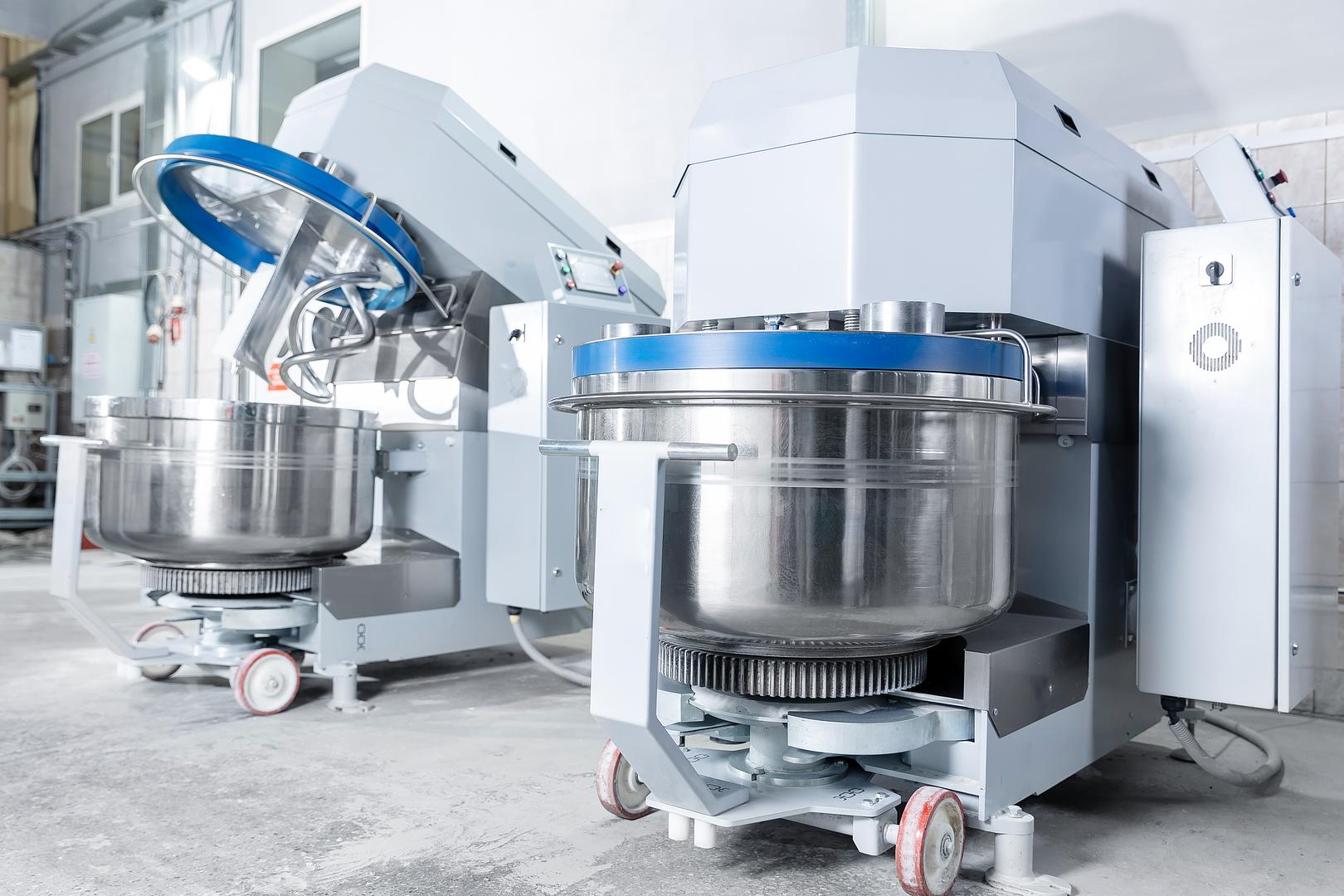
We stock a variety of used bakery equipment including bakery mixers, dough mixers, and used breading/batter machines. Brands that we frequently purchase and sell include used Hobart mixers and Rheon encrusting machines for manufacturing and use in large bakery operations. We can also provide bread ovens, pita ovens, used industrial conveyor ovens, and batch type ovens for all cooking needs.
Bakery Equipment Categories
Frequently Asked Questions
What types of used bakery manufacturing equipment are available on the secondary market?
The range of used bakery manufacturing equipment available through specialized dealers is quite broad. Common categories include commercial dough mixers (both planetary and spiral types), double-arm sigma mixers, industrial conveyor ovens, batch ovens, deck ovens, pita ovens, bread ovens, encrusting machines, dough sheeters, dividers, rounders, depositors, fryer kettles, and bread slicers. On the packaging and processing side, buyers can also find conveyors, checkweighers, metal detectors, case packers, form/fill/seal machines, labelers, shrink wrappers, coders, and fillers. Reputable dealers who specialize in bakery equipment often carry machines from well-regarded brands such as Hobart, Rheon, AMF Bakery Systems, Middleby, Revent, Sottoriva, and Rational.
The secondary market for bakery equipment is particularly active because large commercial bakeries regularly upgrade or consolidate operations, releasing well-maintained machines at a fraction of their original cost. A buyer outfitting a mid-size or large bakery operation can typically source most of the equipment needed from a single specialized dealer, which simplifies logistics and allows for more direct communication about machine history and condition. Whether the need is for high-capacity mixing, continuous-belt baking, or automated packaging, used equipment dealers who focus specifically on the bakery and food manufacturing sector tend to carry the most relevant inventory and have the product knowledge to match buyers with the right machines for their production requirements.
How do I verify the condition and functionality of used bakery equipment before buying?
Verifying condition before purchase is one of the most important steps when buying used bakery manufacturing equipment. Most reputable dealers offer in-person inspections, virtual walk-throughs, or detailed video captures of the machines so buyers can assess current working order before committing. For equipment that is still installed at a production facility, some dealers can arrange an inspection at the actual plant, where the machine may even be running in an active production environment. This gives buyers the clearest possible picture of how the equipment performs under real operating conditions. It is worth noting that most equipment dealers do not have the permitting required to run full product trials, so testing will generally be limited to mechanical and electrical operation rather than actual baking or processing of product.
Beyond visual and operational inspection, buyers should request any available maintenance records, service history documentation, and hours-of-operation logs. These records help estimate remaining useful life and flag any recurring issues that may require attention after purchase. Asking the dealer specific questions about the machine's age, last known service date, and any repairs or part replacements is standard practice. For buyers who are not technically experienced with a particular type of machine, bringing in an independent equipment technician or the original manufacturer's service representative to assist with the inspection is a reasonable precaution. Selecting a dealer with a long track record in the bakery equipment space adds another layer of confidence, as established specialists typically have deeper knowledge of the machines they sell and are more transparent about condition.
Do used bakery equipment dealers offer warranties or guarantees?
Used bakery manufacturing equipment is almost universally sold on an as-is basis by dealers, meaning no warranty or guarantee is provided by the seller. Warranties from original manufacturers are tied to the initial sale of the machine and do not transfer through subsequent resales on the secondary market. This is standard practice across the used industrial equipment industry, not a reflection of any particular dealer's trustworthiness. Because of this, the responsibility for assessing condition falls squarely on the buyer, which makes the pre-purchase inspection process critically important.
To protect themselves, buyers should prioritize working with dealers who have a long, verifiable history of selling bakery and food manufacturing equipment specifically. A dealer with deep industry experience is more likely to accurately represent a machine's condition and provide meaningful information about its service history. Buyers should also contact the original manufacturer directly before purchasing older or less common models to understand what level of technical support, spare parts availability, and service documentation they can expect going forward. Age and model can significantly affect whether a manufacturer still supports a machine, so getting that information early helps buyers make a fully informed decision rather than discovering limitations after the purchase is complete.
How do I know if used bakery equipment meets current food safety and sanitation standards?
NSF International certification is the primary compliance benchmark to look for when evaluating used commercial food equipment. NSF certification indicates that a machine was originally designed and built to meet established sanitation and safety standards for food contact surfaces, cleanability, and material safety. When purchasing used equipment, buyers should verify that the machine carries NSF certification markings and confirm that the certification applies to the specific model being purchased, not just the brand in general. Equipment that was NSF-certified when originally manufactured generally retains those design characteristics, provided it has not been modified or allowed to fall into a state of significant disrepair.
Beyond certification markings, a thorough physical inspection is necessary to assess whether the machine is actually in a sanitary condition and whether any components that directly contact food product, such as belts, bowls, scrapers, or augers, are intact and free from cracks, corrosion, or contamination risks. Buyers should also check with their local health department or regulatory authority to understand any jurisdiction-specific requirements for used food processing equipment before putting a machine back into production. Some facilities require third-party inspections or sign-off from a sanitation specialist before a used machine can be placed into a certified food production environment. Consulting with the original manufacturer about any model-specific sanitation guidelines is also a practical step, particularly for equipment that processes dough, fillings, or other high-moisture products where sanitation design is especially critical.
What should I inspect when evaluating used commercial bakery mixers?
Commercial bakery mixers, including planetary mixers and double-arm sigma mixers, involve a combination of mechanical, electrical, and food-contact components that all deserve close attention during an inspection. On the mechanical side, buyers should check the condition of the gearbox and transmission for unusual noise, excessive vibration, or signs of oil leaks. The bowl lift mechanism, agitator attachments, and locking hardware should all operate smoothly without binding or slop. For planetary mixers specifically, the attachment hub and agitator drive shaft should be inspected for wear, as these are high-stress contact points that see significant use in a production environment. Asking about the mixer's total run hours or production history, if available, helps contextualize the level of wear observed.
On the electrical side, controls, timers, and speed selectors should be tested through their full range of operation. For older machines, it is worth confirming that replacement parts such as agitator attachments, bowl guards, and control components are still available from the manufacturer or aftermarket suppliers, since some discontinued models can be difficult to support. Brands like Hobart have particularly strong parts availability and service networks, which is one reason they remain popular on the used market. Food-contact surfaces including the mixing bowl, agitator, and any splash guards should be free from cracks, deep pitting, or corrosion. Requesting a video of the mixer running under load, or arranging an in-person inspection where the machine can be operated, is the most reliable way to assess overall mechanical health before committing to a purchase.
What should I look for when buying a used industrial bakery oven?
Used industrial bakery ovens, whether conveyor-style, deck, batch, or pita ovens, require careful evaluation of both the heat delivery system and the structural integrity of the baking chamber. Buyers should inspect burners or heating elements for signs of damage, uneven wear, or prior repairs. For gas-fired ovens, the condition of the gas train, valves, and ignition system matters considerably, and any evidence of past gas leaks or heat damage to surrounding components should be investigated. Conveyor ovens add the complexity of the belt drive system, which should be checked for alignment, tension, and drive motor condition. Temperature uniformity across the baking zone is a key performance factor that is difficult to assess without running the oven, so requesting a live or video demonstration of the oven reaching and holding operating temperature is strongly advisable.
The interior of the baking chamber deserves close attention as well. Cracked or missing refractory materials in deck ovens can affect heat retention and baking consistency. Insulation condition impacts energy efficiency, which has a direct effect on operating costs over time. Control systems, including thermostats, timers, and programmable controllers, should be tested for accuracy and responsiveness. For older oven models, confirming parts availability with the manufacturer before purchase is a practical step, since replacement components for heating elements, control boards, and conveyor drive parts can sometimes be difficult to source for discontinued models. Brands with strong service networks and long production histories, such as Revent and Middleby, tend to be safer choices from a long-term supportability standpoint.
How difficult is it to find replacement parts for older used bakery equipment?
Parts availability varies considerably depending on the brand, model, and age of the equipment. Established manufacturers with long production histories and large installed bases, such as Hobart, Revent, AMF Bakery Systems, and Rheon, generally maintain better parts support for older machines than smaller or less widely distributed brands. For these major manufacturers, many replacement components remain available either directly from the manufacturer, through authorized service networks, or from third-party aftermarket suppliers. That said, even well-supported brands eventually phase out parts for older models, so it is worth contacting the manufacturer directly before purchasing a used machine to confirm what level of support is currently available for that specific model and serial number range.
For equipment where OEM parts are no longer available, buyers have a few options. Aftermarket and compatible parts are available for many common components such as mixer agitators, conveyor belts, heating elements, and seals. Specialty machine shops can fabricate certain mechanical components when off-the-shelf replacements are not available. Some buyers also purchase a second unit of the same model as a parts source, particularly for high-value machines where downtime is costly. The practical takeaway is that parts availability should be part of the due diligence process before any used equipment purchase, not an afterthought. A machine that is priced attractively but lacks parts support can end up being far more expensive to own than a slightly higher-priced alternative with a strong service infrastructure behind it.
What are the shipping and logistics considerations for large used bakery equipment?
Shipping large bakery manufacturing equipment involves several cost and logistics factors that buyers need to account for beyond the purchase price itself. Proper packaging is essential to prevent damage in transit. Depending on the size and fragility of the machine, this can range from standard pallet wrapping to custom crating, and the cost of that packaging is typically passed on to the buyer. Larger and heavier equipment, such as industrial mixers, conveyor ovens, and encrusting machines, requires professional rigging for both loading at the origin and unloading at the destination. Rigging costs are separate from freight costs and can be significant for heavy or awkwardly sized machinery. Buyers should ask dealers for a complete breakdown of packaging, rigging, and freight costs before finalizing a purchase so they understand the full landed cost of the equipment.
For very large machines, freight will typically move via flatbed truck or LTL (less-than-truckload) freight with appropriate blocking and bracing. Buyers are responsible for ensuring they have adequate unloading capabilities at their facility, whether that means a loading dock, forklift, or their own rigging arrangement. Some dealers can coordinate end-to-end logistics including loading, freight, and delivery to the buyer's dock, while others handle only the loading side and leave freight arrangements to the buyer. Clarifying these responsibilities upfront avoids surprises at delivery. International shipments add customs documentation, import duties, and export crating requirements to the equation, which should be discussed with the dealer early in the process if the equipment is crossing borders.
What payment terms do used bakery equipment dealers typically offer?
The standard practice among used bakery equipment dealers is to require full payment before the equipment is released for shipping. This applies to most transactions, particularly for buyers who are purchasing from a dealer for the first time. The rationale is straightforward: used machinery is a finite, one-of-a-kind asset, and holding a machine for a buyer who has not yet paid creates real risk for the dealer. Payment is typically accepted via wire transfer, though some dealers may accept other forms depending on the transaction size and the buyer's relationship with the dealer.
Some dealers extend payment terms to repeat customers or established buyers with a documented purchasing history, but this is at the dealer's discretion rather than a standard offering. Buyers looking for financing options should explore equipment financing through banks, credit unions, or specialty equipment lenders, as these arrangements are between the buyer and the lender rather than the dealer. Equipment financing for used machinery is available through a number of commercial lenders, and having financing in place before beginning negotiations with a dealer puts the buyer in a stronger position to move quickly when the right machine becomes available. Given that desirable used bakery equipment can sell quickly, being financially prepared is a practical advantage in a competitive secondary market.
Why do large bakeries and food manufacturers buy used equipment instead of purchasing directly from manufacturers?
Cost is the primary driver. Used bakery manufacturing equipment can be purchased at a substantial discount compared to buying the same model directly from a manufacturer. For capital-intensive operations that require multiple pieces of equipment, such as a full production line with mixers, ovens, conveyors, and packaging machinery, the savings from sourcing used equipment can be significant enough to fund other operational priorities. This is especially relevant for startups, growing bakeries, or operations expanding into a product category where they want to test production capacity before committing to the full cost of original equipment.
Beyond cost, lead time is another factor. Ordering specialized bakery equipment from a manufacturer often involves production queues and delivery timelines that can stretch months into the future. Used equipment that is already in a dealer's inventory can typically be shipped and installed much faster, which matters when a bakery is trying to meet a production deadline or respond to a new contract. There is also a practical argument for buying proven, established models from reputable brands. Machines from manufacturers like Hobart, Rheon, and Revent have long track records in production environments, and experienced bakery operators often have strong preferences for specific models they know well. Sourcing those exact models on the used market, rather than adapting to whatever is currently in production from a manufacturer, gives buyers control over the equipment they are putting into their operations.
Explore Our Full Equipment Inventory
Browse thousands of listings across every category we support or reach our team directly for help finding the right machine for your operation.