Category
Manufacturer
Model
FAQ:
What is a Carrera flow wrapping machine and what types of products can it wrap?
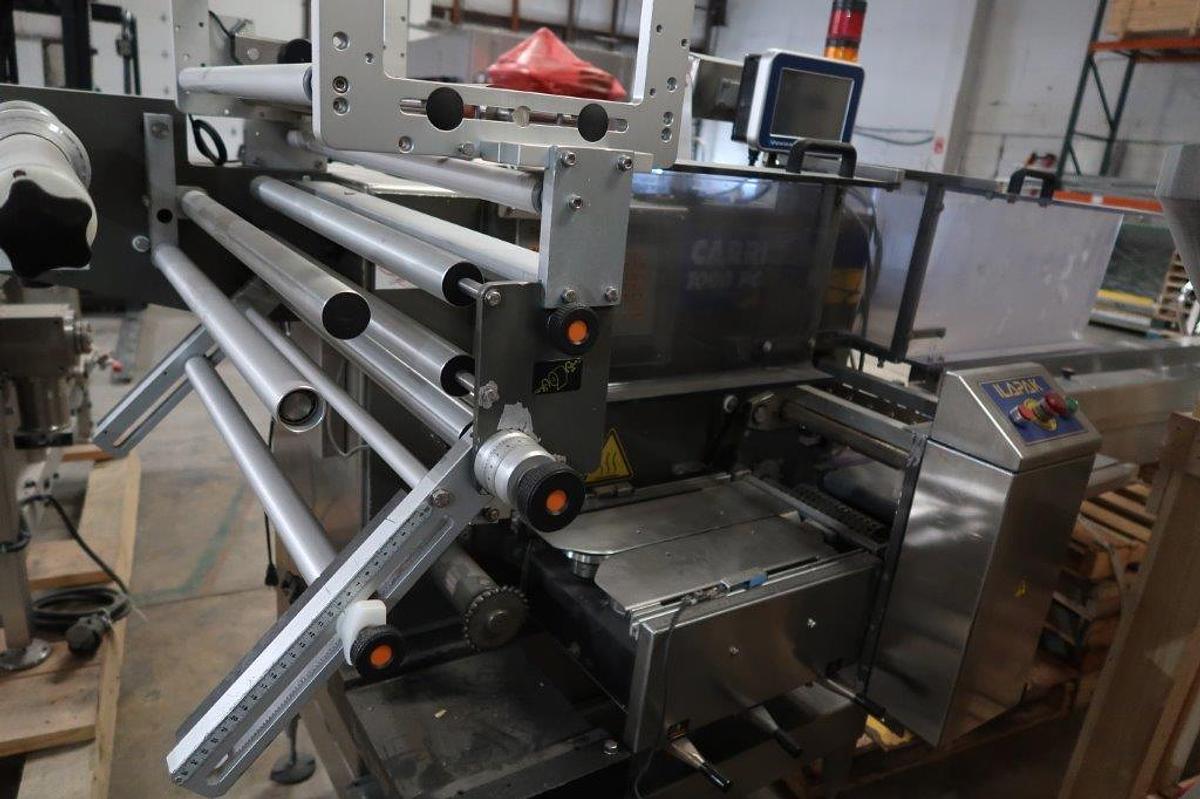
Carrera flow wrapping machines are horizontal form-fill-seal (HFFS) packaging systems designed to wrap individual products in a continuous film envelope, creating a sealed package on all sides. The machine feeds products along a conveyor, wraps them in flexible film, and seals the ends with heat, producing a tight, professional package suitable for retail or industrial distribution. Carrera has built a reputation in the mid-to-high range of the packaging machinery market, with machines commonly found in food, bakery, confectionery, and industrial product applications.
The range of products these machines can handle is broad. Bakery items like rolls, croissants, and sliced bread are common applications, as are candy bars, biscuits, granola bars, and fresh produce. Beyond food, Carrera flow wrappers are also used to package hardware components, medical devices, personal care products, and other items that benefit from a tamper-evident, moisture-resistant seal. The flexibility of the platform, combined with adjustable product guides and film tension controls, allows operators to switch between product types with relatively minimal changeover time.
What wrapping speeds do Carrera flow wrapping machines typically achieve?
Carrera flow wrapping machines cover a wide speed range depending on the model and the size of the product being packaged. Entry-level and mid-range models typically operate in the range of 40 to 100 packages per minute, which suits small-to-medium production environments. Higher-capacity models, including servo-driven variants, can reach speeds of 200 packages per minute or more under optimal conditions, making them competitive with other mid-to-high tier horizontal wrappers on the market.
Actual throughput in a real production environment depends on several factors beyond the machine's rated speed. Product dimensions, film type, seal dwell time, and infeed consistency all affect how fast a line can realistically run. When evaluating a used Carrera machine, buyers should ask for the specific model's rated speed range and, where possible, request video or in-person inspection to observe the machine running at or near its rated capacity. This gives a much more accurate picture of what to expect once the equipment is integrated into a production line.
What film types are compatible with Carrera flow wrapping machines?
Carrera flow wrappers are designed to run a wide variety of flexible film materials, which is one of the reasons they are popular across multiple industries. Standard compatible films include oriented polypropylene (OPP), biaxially oriented polypropylene (BOPP), polyethylene (PE), and polypropylene laminates. These materials cover the majority of food and consumer goods packaging applications, offering options for clarity, barrier properties, and heat-seal performance depending on the product's requirements.
There is also growing compatibility with compostable and recyclable film materials on many Carrera models, which has become an increasingly important consideration for brands working toward sustainability goals. That said, film compatibility on a specific used machine depends heavily on its age, the condition of the sealing jaws, and whether the temperature controls have been maintained or calibrated. Buyers should verify which film types the specific unit was running in production and confirm that the sealing system is in good working order before committing to a purchase, particularly if they plan to run specialty or thinner gauge films.
What are the key mechanical and design features found on Carrera flow wrappers?
Carrera flow wrapping machines are generally built around a stainless steel frame, which supports hygiene compliance in food processing environments and contributes to the durability that makes these machines attractive on the used equipment market. Many models incorporate servo-driven film feed and sealing systems, which improve accuracy, reduce film waste, and allow for faster changeovers compared to older mechanical cam-driven designs. Digital touchscreen HMI controls are standard on later-generation models, giving operators straightforward access to speed, temperature, and registration settings.
Easy-access design is another feature Carrera emphasizes across its product line. Side panels and guards that open fully allow maintenance personnel to clean the film path, inspect sealing jaws, and clear film jams without disassembling major components. This matters significantly in food production environments where sanitation downtime is a real operational cost. On used machines, buyers should pay particular attention to the condition of the sealing jaws and the servo motors, as these components see the most wear and can be expensive to replace if they have not been properly maintained.
Are used Carrera flow wrapping machines suitable for small businesses or only large production facilities?
Used Carrera flow wrappers can be a practical fit for small and mid-sized businesses, not just large-scale production facilities. Because the used market offers these machines at a fraction of the cost of buying comparable equipment, smaller operations can access mid-to-high quality horizontal wrapping capability that would otherwise be out of budget. A bakery, specialty food producer, or contract packager running moderate volumes can often find a used Carrera model that matches their throughput needs without overpaying for capacity they do not require.
The key consideration for smaller buyers is not just the purchase price but the total cost of installation, any necessary refurbishment, operator training, and ongoing parts availability. A machine that runs at 150 packages per minute is only an asset if the buyer has the volume to justify it and the technical staff to maintain it. Smaller operations should focus on lower-speed models in good mechanical condition, confirm that parts are still available for the specific model they are considering, and factor in the learning curve for operators who may not have prior experience with flow wrapping equipment.
Can Carrera flow wrapping machines be integrated with existing production lines or conveyors?
Carrera flow wrappers are designed with upstream and downstream integration in mind. Most models include infeed conveyor systems that can be connected to product feeders, slicers, depositors, or other upstream equipment. On the discharge side, the wrapped packages exit onto a conveyor that can feed directly into checkweighers, metal detectors, labelers, or case packers, depending on how the production line is configured. This modular approach is common across the horizontal flow wrapping category and makes Carrera machines a practical choice for lines that need to expand or reconfigure over time.
When purchasing a used Carrera machine, buyers should clarify what peripheral equipment, if any, is included in the sale. Infeed conveyors, product guides, and discharge belts are sometimes sold separately from the main wrapping unit. It is also worth confirming the electrical specifications of the machine, since voltage and phase requirements vary by model and country of manufacture, and retrofitting for a different electrical standard adds cost and complexity. A thorough pre-purchase inspection, whether in person or via detailed video, should cover the condition of all conveyor components and any integration hardware included with the machine.
What should buyers look for when inspecting a used Carrera flow wrapping machine before purchase?
A thorough inspection of a used Carrera flow wrapper should cover several critical areas. The sealing jaws are the highest-wear components on any horizontal flow wrapper, and their condition directly affects seal quality and film waste. Buyers should look for even jaw surfaces without pitting, scoring, or uneven wear patterns. The servo motors and drives should be checked for smooth, consistent operation, and any error codes or fault history logged in the HMI should be reviewed. The film path, including rollers, dancer arms, and registration sensors, should be clean and free of damage from previous film jams or improper cleaning.
Reputable used equipment dealers will typically accommodate in-person inspections at their facility or at the facility where the machine is currently located, which may still be in active production. Video inspections are also commonly offered for buyers who cannot travel. Keep in mind that most dealers do not have the permitting or production setup to run actual product through the machine during an inspection, so testing is generally limited to observing the machine run film without product, checking mechanical function, and reviewing maintenance records if available. Buyers should also contact the manufacturer directly to confirm parts availability and technical support options for the specific model and serial number they are considering.
How does the absence of a manufacturer warranty affect the purchase of a used Carrera flow wrapping machine?
Used flow wrapping machines, including Carrera models, are typically sold as-is by equipment dealers, without manufacturer warranty coverage. This is standard practice in the used industrial machinery market. The responsibility for evaluating the machine's condition falls on the buyer, which is why pre-purchase inspection is so important. Unlike buying directly from a manufacturer, there is no coverage period during which defects will be repaired at no cost, so buyers need to go into the transaction with a clear understanding of the machine's current mechanical state.
To reduce risk, buyers should prioritize dealers with a verifiable track record in packaging machinery specifically, not just general industrial equipment. A dealer who specializes in flow wrapping and horizontal packaging equipment will have more accurate knowledge of what to look for in a used Carrera machine and will be better positioned to provide honest condition assessments. Buyers should also reach out to Carrera or its authorized service network to understand what level of technical support, parts supply, and documentation is available for the specific model they are evaluating, since older or discontinued models may have limited support infrastructure regardless of where the machine is purchased.
What are typical shipping and logistics considerations when buying a used Carrera flow wrapping machine?
Shipping a used flow wrapping machine involves more complexity than standard freight. Carrera horizontal wrappers are heavy, precision-built machines with sensitive electrical and mechanical components that require proper packaging to survive transit. Depending on the size of the unit, this may involve custom wooden crating, foam padding around vulnerable components, and securing the machine to a heavy-duty pallet. The level of crating required directly affects shipping costs, and buyers should ask the dealer for a detailed breakdown of packaging, rigging, and freight charges to understand the full landed cost before committing to a purchase.
For larger or heavier models, loading and unloading may require forklift access or crane rigging, which adds to the cost on both ends of the shipment. Buyers should confirm what equipment is available at their facility for unloading before the machine ships. International purchases add additional layers of complexity including customs documentation, import duties, and compliance with local electrical standards. Freight insurance is worth considering given the value of the equipment. A good dealer will walk buyers through the logistics process and help coordinate shipping, but buyers should ask specific questions rather than assuming these details are handled automatically.
What payment terms do used equipment dealers typically offer for Carrera flow wrapping machines?
Most used equipment dealers require full payment prior to shipping the machine. This is standard practice across the used industrial machinery industry and reflects the dealer's need to confirm funds before releasing equipment. For buyers purchasing for the first time from a particular dealer, payment in full before shipment is the norm. Some dealers may offer extended terms or financing arrangements to established repeat customers, but this is the exception rather than the rule and is typically negotiated on a case-by-case basis.
Buyers should factor payment timing into their planning, particularly for larger purchases where cash flow management matters. It is reasonable to ask a dealer whether they accept wire transfer, credit card, or other payment methods, and to confirm the exact payment-to-shipment timeline so there are no surprises. For higher-value machines, some buyers work with third-party equipment financing companies that specialize in industrial machinery, which can spread the cost over time while still allowing the dealer to receive full payment at closing. Confirming all payment details in writing before finalizing any transaction is a straightforward step that protects both parties.