Category
Manufacturer
Model
FAQ:
What is a Zero Manufacturing jacketed scraper agitated tank?
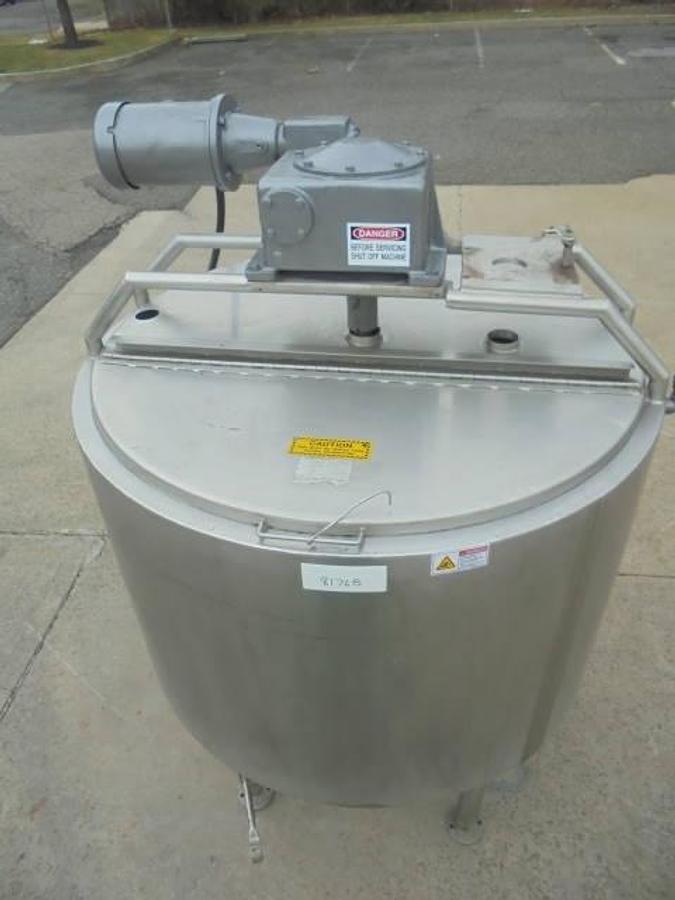
A Zero Manufacturing jacketed scraper agitated tank is a specialized piece of process equipment designed for mixing, heating, or cooling viscous or temperature-sensitive materials. The tank features a double-wall jacket that allows a heating or cooling medium (such as steam, hot water, or glycol) to circulate around the vessel, maintaining precise temperature control of the product inside. The scraper agitator is a mechanical mixing system with blades that travel along the inner wall of the tank, preventing product from sticking or burning and ensuring uniform consistency throughout the batch.
These tanks are commonly used in food processing, cosmetics manufacturing, pharmaceutical production, and chemical processing, where temperature uniformity and thorough mixing are critical to product quality. The jacketed design makes them particularly well-suited for products like sauces, creams, adhesives, and other materials that require careful thermal management during processing. Used units, such as the 350-gallon models that appear on the secondary market, are sought after because they offer the same functional capability as newer equipment at a significantly lower capital cost, making them attractive to small and mid-size processors looking to expand production capacity.
What industries typically use Zero Manufacturing agitated tanks?
Zero Manufacturing agitated tanks serve a broad range of industries that require controlled mixing and temperature management during production. Food and beverage manufacturers use them for cooking, blending, and cooling sauces, dairy products, confections, and other viscous goods. The pharmaceutical and nutraceutical industries rely on jacketed agitated tanks for batch processing of creams, gels, and liquid formulations where contamination control and temperature precision are non-negotiable. Cosmetics and personal care manufacturers use similar vessels for lotions, shampoos, and emulsified products.
On the industrial side, chemical processors use jacketed scraper tanks for adhesives, resins, coatings, and specialty compounds that require consistent agitation to prevent separation or settling. The scraper agitator design is especially valuable in applications where the product is thick enough to cling to vessel walls, since the blades maintain contact with the inner surface and keep the batch homogeneous. When evaluating a used tank for a specific application, buyers should confirm the vessel's material of construction (typically stainless steel for food-grade use), the agitator drive specifications, and the jacket pressure rating to ensure the unit is compatible with their process requirements.
What should buyers inspect when purchasing a used Zero Manufacturing tank?
Buying a used jacketed agitated tank requires a thorough inspection of several critical components. The interior of the vessel should be examined for pitting, corrosion, weld repairs, or surface damage that could compromise sanitary standards or structural integrity. The jacket should be checked for leaks, scale buildup, or signs of previous overpressure. The agitator shaft, seals, and scraper blades deserve close attention, as worn seals can cause leakage and damaged blades reduce mixing efficiency. The drive motor and gearbox should be evaluated for unusual noise, vibration, or evidence of overheating.
Reputable used equipment dealers typically accommodate in-person inspections at their facility, or can arrange video walkthroughs and detailed photo documentation for remote buyers. In some cases, the equipment may still be installed at an operating facility, where a joint inspection between the dealer and the current owner can be arranged. Keep in mind that most used equipment dealers are not set up to run full production tests, since that would require production-level permitting they do not hold. Buyers should use the inspection to assess physical condition, review any available maintenance records, and consult with the original manufacturer about parts availability and service support for the specific model and age of the unit.
What is the typical price range for used industrial agitated tanks?
Pricing for used jacketed scraper agitated tanks varies widely depending on capacity, material of construction, agitator type, overall condition, and the complexity of any included accessories like controls, pumps, or CIP (clean-in-place) systems. Smaller units in the 100 to 500-gallon range can range from a few thousand dollars to $30,000 or more for well-maintained stainless steel food-grade vessels with functional drive systems. Larger tanks with sophisticated controls, high-polish interiors, and documented service histories command significantly higher prices.
Buyers should also factor in costs beyond the purchase price itself. Rigging and loading fees, freight charges, and any required crating or specialized packaging can add meaningfully to the total landed cost. Once the tank arrives, installation, any necessary reconditioning, and replacement of wear items like seals or blades should be budgeted as well. Getting a clear picture of all these costs upfront, by asking the dealer specifically about packaging, rigging, and shipping charges before committing, helps avoid surprises and allows for an accurate comparison between available units.
What materials are used in the construction of jacketed agitated tanks?
The most common material for food-grade and pharmaceutical jacketed agitated tanks is 304 or 316L stainless steel. Stainless steel offers excellent corrosion resistance, is easy to clean and sanitize, and meets regulatory requirements for direct food contact. The 316L grade is preferred for applications involving chlorides or more aggressive cleaning chemicals, as it provides better resistance to pitting corrosion. The interior surface finish is also important; food and pharmaceutical applications typically call for a mechanically polished or electropolished interior to minimize product adhesion and bacterial harborage points.
For chemical processing applications where stainless steel may not be compatible with the product, tanks may be constructed from carbon steel with a lining, or from specialty alloys. The jacket on a jacketed tank is often constructed from a lower-grade material than the vessel itself, since it only contacts the heating or cooling medium rather than the product. When evaluating a used tank, confirming the actual material of construction through mill certificates or direct measurement is advisable, especially if the tank will be used in a regulated application. The agitator components, including the shaft, blades, and mechanical seal housing, should also be verified for material compatibility with the intended product.
How does a jacketed tank differ from a standard storage tank?
A standard storage tank is a single-wall vessel designed primarily to hold liquid or dry material without actively modifying its temperature or physical state. A jacketed tank, by contrast, has a second outer wall that creates an enclosed space around some or all of the vessel's surface. A heating or cooling medium circulates through this jacket space, transferring thermal energy to or from the product inside. This makes jacketed tanks a piece of process equipment rather than just storage, capable of cooking, pasteurizing, tempering, or chilling a batch while it is being mixed.
The addition of an agitator, particularly a scraper-style agitator, adds another layer of functionality. The scraper blades maintain contact with the heated inner wall, continuously moving product away from the surface to prevent scorching and ensure even heat distribution throughout the batch. This combination of jacket heating and mechanical scraping is essential for processing high-viscosity products that would otherwise stick, burn, or develop hot spots near the vessel wall. For buyers comparing used equipment options, understanding this distinction helps clarify why jacketed agitated tanks carry a higher price point than simple mixing tanks or plain storage vessels of similar capacity.
What does 'used' mean in the context of industrial tank purchases, and what are the implications?
A used industrial tank is one that has been previously owned and operated in a production or processing environment. Unlike equipment sold directly from a manufacturer, used tanks come without the backing of a factory warranty or the assurance of zero operating hours. The condition of a used tank reflects its maintenance history, the nature of the products it processed, the cleaning protocols applied over its service life, and how it was decommissioned and stored. All of these factors affect both the current functional state of the equipment and its expected remaining service life.
Because used equipment is typically sold as-is, the responsibility for evaluating condition falls on the buyer. This is why selecting a dealer with a strong track record in industrial process equipment is important. Experienced dealers who specialize in a specific category of machinery are better positioned to accurately represent the condition of what they are selling and to facilitate thorough inspections. Buyers should take advantage of any inspection opportunity offered, ask detailed questions about the tank's prior application and maintenance, and consult with the manufacturer about parts availability for the specific model before committing to a purchase.
How are used industrial tanks typically shipped, and what should buyers expect to pay?
Shipping a used industrial tank involves more logistics than standard freight because of the size, weight, and fragility of the equipment. Smaller tanks may be palletized and shipped via common carrier, while larger vessels typically require flatbed trucking and professional rigging for both loading at the origin and unloading at the destination. The level of packaging, whether a simple pallet, a wooden crate, or a custom-built shipping frame, directly affects both the cost and the level of protection the equipment receives in transit. Buyers should ask dealers specifically what packaging is included in the quoted price and what rigging capabilities are available at the dealer's facility.
Shipping costs for industrial equipment can range from a few hundred dollars for a small, locally delivered tank to several thousand dollars for a large vessel requiring a flatbed and crane service at both ends. International shipments add customs, documentation, and potentially containerization costs on top of that. The key is to get a fully itemized landed cost, including the purchase price, rigging, packaging, freight, and any destination unloading requirements, before finalizing the purchase. Most used equipment dealers require full payment prior to shipment, so understanding the complete cost picture in advance is essential for accurate budgeting.
What capacity options are commonly available for used jacketed agitated tanks on the secondary market?
Used jacketed agitated tanks appear on the secondary market in a wide range of capacities, reflecting the diversity of production scales across the industries that use them. Smaller batch processors and specialty manufacturers tend to generate supply in the 50 to 500-gallon range, which is also the most common capacity bracket sought by craft food producers, cosmetics startups, and small pharmaceutical operations. Mid-range units from 500 to 2,000 gallons are common in established food processing and chemical manufacturing facilities that are upgrading or consolidating. Larger tanks above 2,000 gallons are available but less frequently, and they typically require more significant rigging and installation infrastructure.
Capacity is one of the first filtering criteria buyers should apply when evaluating used tanks, but it should be considered alongside the agitator's horsepower and torque rating, since a motor sized for a half-full batch may be undersized when the tank runs at full capacity with a dense product. The jacket surface area relative to tank volume also matters for heat transfer efficiency, particularly for larger vessels where achieving uniform temperature throughout a full batch can be more challenging. When reviewing available inventory, confirming these specifications alongside the nominal gallon capacity gives a more complete picture of whether a particular unit is a good fit for the intended application.
How should buyers evaluate a used equipment dealer selling Zero Manufacturing tanks?
The used industrial equipment market includes dealers ranging from generalist auction houses to specialists with deep expertise in specific equipment categories. For process equipment like jacketed agitated tanks, working with a dealer who specializes in food processing, pharmaceutical, or chemical processing machinery is generally preferable to buying from a general surplus reseller. Specialists are more likely to accurately describe the equipment's prior use, understand the relevant specifications, and have experience facilitating the kind of detailed inspections that buyers of process equipment need.
A dealer's track record is worth researching before committing to a purchase. Years in business, customer reviews, and the depth and consistency of their inventory are all reasonable indicators of reliability. Buyers should also assess how responsive and transparent the dealer is during the inquiry process. A trustworthy dealer will proactively share information about a tank's condition, prior application, and any visible wear or repairs, and will readily accommodate inspection requests. Given that used equipment is sold as-is and payment is typically required in full before shipping, the dealer relationship carries real financial stakes, making due diligence on the seller just as important as due diligence on the equipment itself.