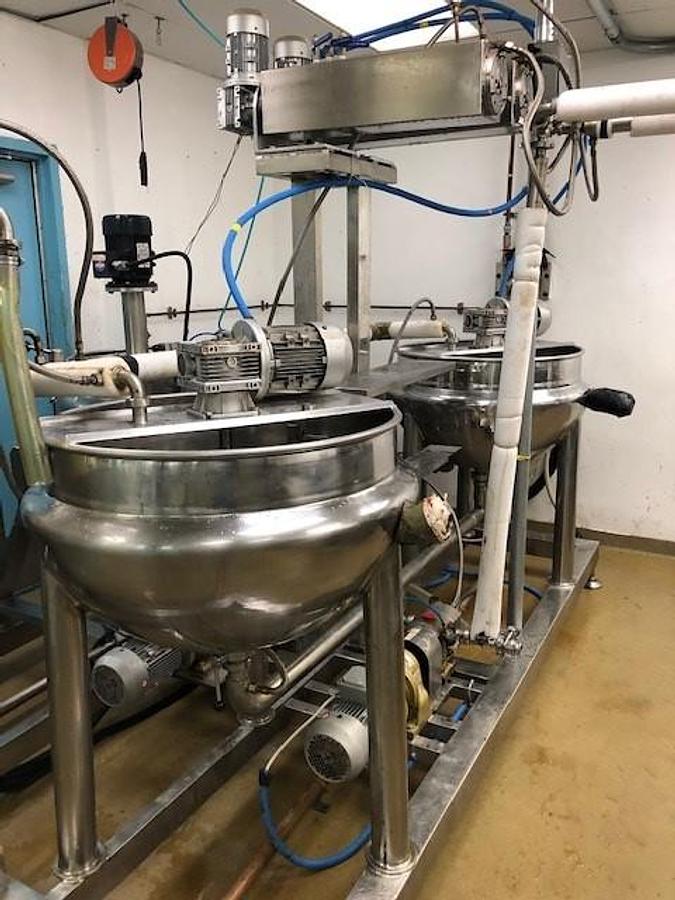
Category
Manufacturer
Model
Yinrich
Yinrich is a prominent manufacturer specializing in automation equipment for various industries, including food and beverage, pharmaceuticals, and cosmetics. They are particularly known for their high-quality filling machines and packaging solutions that enhance production efficiency. The company focuses on providing customized solutions to meet the specific needs of their clients.
FAQ:
What types of products can Yinrich filling machines handle?
Yinrich filling machines are designed to handle a broad range of product types, making them a flexible choice across multiple industries. Depending on the model, they can process thin liquids such as water, juice, and oils, as well as thicker substances like creams, gels, and pastes. Certain models are also configured for dry products including powders and granules. This versatility is a key reason why Yinrich equipment shows up in food and beverage production lines, cosmetics manufacturing, and pharmaceutical packaging operations.
The fill volume range varies by model but commonly spans from around 5ml on the low end to 5,000ml or more for larger-format containers. Stainless steel construction, typically 304 or 316 grade, is standard across many Yinrich models, which is critical for maintaining food-grade and pharmaceutical compliance. Buyers sourcing used Yinrich machines should confirm the specific model's product compatibility, as nozzle configurations and pump types differ between liquid, paste, and powder variants. Inspecting the machine's condition and any product contact surfaces before purchase is especially important with used equipment.
What industries commonly use Yinrich filling machines?
Yinrich has built its reputation primarily around filling and packaging automation for industries where precision dosing and high throughput matter. The food and beverage sector is one of the most common applications, covering everything from bottled sauces and dressings to beverages and edible oils. Cosmetics manufacturers use Yinrich equipment for filling lotions, serums, shampoos, and other personal care products. Pharmaceutical and nutraceutical producers also rely on these machines for capsule filling, liquid medicine bottling, and supplement packaging lines.
Beyond those core markets, Yinrich machines appear in chemical manufacturing and household product lines where accurate fill weights and contamination resistance are priorities. The stainless steel construction and adjustable fill volume settings make the equipment adaptable enough to transition between product types with the right changeover parts. For buyers considering used Yinrich machines, it is worth verifying what product type the machine was previously used for, since residual contamination or wear patterns can differ significantly between a machine that ran food-grade liquids versus one that handled industrial chemicals.
What is the typical output capacity of a Yinrich filling machine?
Output capacity for Yinrich filling machines varies considerably based on whether the unit is semi-automatic or fully automatic, and on the fill volume per cycle. Semi-automatic models, which require an operator to position containers manually, generally produce lower throughput, often ranging from a few hundred to a couple thousand units per hour depending on container size and operator pace. Fully automatic Yinrich lines, by contrast, can handle significantly higher volumes and are designed for continuous production with minimal manual intervention.
For context, a fully automatic multi-head Yinrich filling line, such as a 10-across gummy manufacturing configuration, is built for high-volume output where speed and consistency across multiple lanes are the primary goals. Buyers evaluating used Yinrich machines should ask the seller for the machine's rated capacity at the specific fill volume they need, since throughput figures quoted at a 30ml fill will look very different from figures at a 500ml fill. Actual production output on used equipment may also differ from rated specs depending on the machine's age, maintenance history, and any worn components, so a thorough inspection or video demonstration is a sensible step before committing to a purchase.
Are Yinrich filling machines suitable for small businesses or only large production facilities?
Yinrich offers equipment across a range of scales, and the brand has historically been positioned as a cost-accessible option for small to mid-sized manufacturers and startups, not just large industrial operations. Semi-automatic models are particularly well suited to lower-volume production environments where a business needs reliable filling capability without the capital outlay of a fully automated line. These machines typically require one operator and can be configured for a variety of container sizes, which gives small producers flexibility as their product mix evolves.
That said, Yinrich also produces fully automatic and multi-lane systems designed for high-throughput facilities. Buying a used Yinrich machine can make even the more capable models financially accessible to smaller operations, since the price point for used industrial equipment is substantially lower than sourcing comparable equipment directly. Small businesses considering used Yinrich filling machines should factor in not just the purchase price but also the cost of any required spare parts, installation, and operator training. Consulting with the selling dealer about the machine's prior production environment can also help gauge whether its scale and configuration are a practical fit for a smaller facility.
What should buyers know about purchasing a used Yinrich filling machine versus sourcing one directly from a manufacturer?
Purchasing a used Yinrich filling machine through a reputable equipment dealer is a fundamentally different transaction from ordering directly through a manufacturer or distributor. With used equipment, the machine has a production history, and the buyer takes on the responsibility of verifying its current condition. There are no manufacturer warranties on used machines sold through the secondary market, which is standard practice across the used industrial equipment industry. The upside is a significantly lower acquisition cost, which can make a well-maintained Yinrich machine an excellent value for a business that does its homework.
The most important safeguards for buyers are choosing a dealer with a demonstrated track record in food, beverage, or packaging machinery and requesting a thorough inspection before purchase. Reputable dealers will typically offer in-person inspections, virtual walkthroughs, or video documentation of the machine's current condition. Some machines may still be installed at an active production facility, where the dealer can arrange a visit or live video session. Buyers should also contact Yinrich directly to understand what level of technical support, documentation, and spare parts availability they can expect for the specific model and age of machine they are considering, since older models may have more limited manufacturer support.
How should buyers inspect a used Yinrich filling machine before purchasing?
Inspecting a used filling machine thoroughly is one of the most critical steps in the buying process, and it should happen before any payment is made. Buyers have several options depending on geography and the dealer's setup. An in-person visit is the most thorough approach, allowing the buyer or a hired technician to examine the machine's mechanical components, check for wear on product contact surfaces, review electrical panels and controls, and assess the overall condition of the frame and moving parts. If travel is not practical, many dealers can accommodate a live video inspection where a technician walks through the machine in real time and answers questions.
It is worth keeping in mind that most used equipment dealers do not have the permitting or infrastructure to run actual production during an inspection, so the assessment will focus on mechanical condition, cleanliness, and component integrity rather than a live production run. Buyers should ask to see any available service records, prior production logs, or documentation of repairs. For Yinrich machines specifically, verifying the condition of fill nozzles, pumps, and any pneumatic or servo-driven components is important, as these are the parts most subject to wear. Bringing in an independent machinery appraiser or a packaging engineer for a pre-purchase inspection is a reasonable investment, particularly for higher-value multi-lane or fully automatic systems.
Are replacement parts and technical support available for used Yinrich filling machines?
Parts availability and technical support for Yinrich machines depend on the model, its age, and the current relationship between the buyer and the manufacturer. Yinrich, as a Chinese-based manufacturer that sells through export channels, does supply replacement parts, but lead times for international orders can be longer than buyers accustomed to domestic suppliers might expect. Common wear items like nozzles, seals, gaskets, and pump components are generally more accessible than proprietary electronics or custom-fabricated structural parts. Buyers should confirm parts availability for their specific model with both the selling dealer and Yinrich directly before finalizing a purchase.
Technical support options for used Yinrich machines vary. The manufacturer may offer remote support via email or video call for documented models, though the level of responsiveness can depend on how current the model is. Dealers who specialize in filling and packaging machinery often have in-house technicians or third-party service contacts who are familiar with similar equipment and can assist with installation, calibration, and troubleshooting. When evaluating a used Yinrich machine, asking the dealer about their post-sale support capabilities and whether they can source common replacement parts is a practical step that can save significant downtime later.
What does a Yinrich 10-across gummy manufacturing line do, and what types of operations use it?
A 10-across gummy manufacturing line is a multi-lane automated system designed to deposit, form, and process gummy confections at high volume. The "10-across" designation refers to the number of parallel mold cavities or deposit lanes operating simultaneously, which dramatically increases output compared to single or dual-lane systems. These lines typically integrate depositing, cooling or setting, demolding, and sometimes coating or dusting into a continuous process. Yinrich's version of this type of line is positioned for producers who need consistent, high-throughput gummy production, whether for candy, vitamins, or functional supplement applications.
Operations that use this type of equipment range from established confectionery manufacturers scaling up production to nutraceutical companies producing gummy vitamins and supplements for retail. The multi-lane configuration means the machine is built for volume, making it less practical for very small batch producers but well suited to contract manufacturers or brands with strong market demand. Buyers considering a used Yinrich 10-across gummy line should pay close attention to the condition of the depositing heads and mold components, as these directly affect product consistency and are among the more complex elements to service or replace.
What are the typical shipping and logistics considerations when buying a used Yinrich filling machine?
Shipping a used filling machine involves more planning than most buyers initially anticipate, and the costs can vary significantly based on the machine's size, weight, and destination. Smaller semi-automatic Yinrich units may ship on a standard pallet with appropriate blocking and bracing, while larger fully automatic systems or multi-lane lines typically require custom crating to protect components during transit. The level of packaging required directly affects shipping costs, and buyers should ask the dealer for a detailed breakdown of palletization or crating charges upfront so there are no surprises when calculating the total landed cost.
For heavier equipment, rigging services are often necessary for safe loading at the dealer's facility and unloading at the buyer's location. Rigging adds to the overall cost and requires coordination between the dealer, the freight carrier, and the receiving facility. International buyers sourcing used Yinrich machines should also factor in customs duties, import fees, and any compliance documentation required for their country. Most dealers require full payment before the machine ships, which is standard practice in the used equipment industry. Getting a complete picture of all shipping, rigging, and handling costs before purchasing helps avoid budget overruns and ensures the machine arrives ready for installation.
What payment terms are typical when purchasing used filling equipment like a Yinrich machine?
Payment practices in the used industrial equipment market follow fairly consistent conventions. The large majority of dealers require payment in full before a machine is released for shipping. This protects the seller from non-payment after a machine has been prepared, loaded, and handed off to a freight carrier. For buyers, this means having financing or capital arranged in advance rather than expecting to negotiate deferred payment on a first purchase. Wire transfer is the most common payment method for transactions of this scale, though some dealers accept other forms depending on the transaction size and buyer relationship.
Repeat customers with an established history with a particular dealer may occasionally be offered payment terms, but this is the exception rather than the rule and is typically negotiated on a case-by-case basis. Buyers who are new to a dealer should expect to pay in full upfront and focus their due diligence efforts on the inspection process before committing funds. Working with a dealer who has a verifiable track record in packaging and filling machinery, and who offers transparent inspection options, is the most reliable way to feel confident in a full-payment transaction for a used Yinrich machine.