Category
Manufacturer
Model
Yamato
Yamato is known for its packaging and weighing solutions, particularly in the food industry. Their equipment is designed to ensure accuracy and efficiency in packaging processes, helping manufacturers maintain quality control.
FAQ:
What types of Yamato weighing equipment are commonly available on the used market?
Yamato produces several distinct product lines, and all of them surface regularly in the used equipment market. The most frequently available machines include multihead combination weighers (sold under the Dataweigh name), high-speed checkweighers, belt scales, and floor scales. The Dataweigh line is particularly common because it was widely adopted by food processors throughout the 1990s and 2000s, meaning a large installed base of machines is now cycling through secondary markets as facilities upgrade or close.
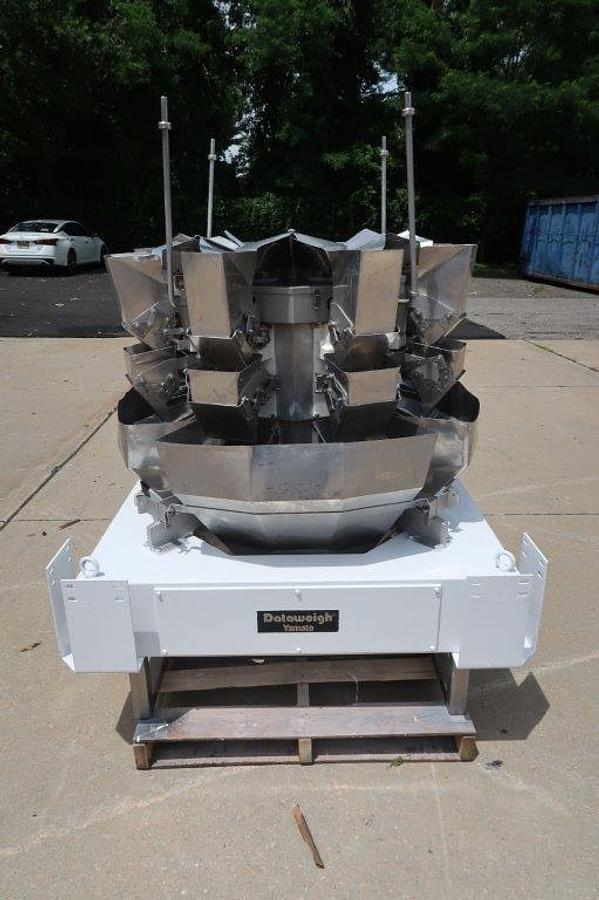
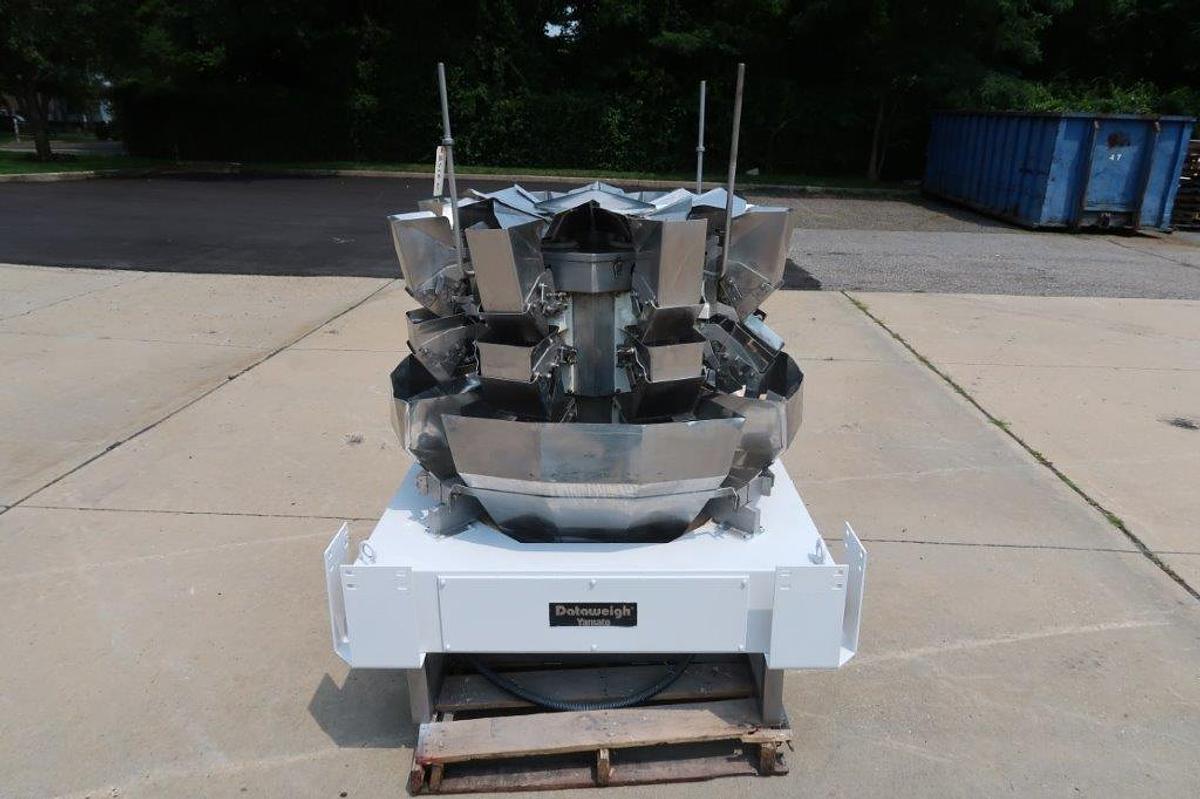
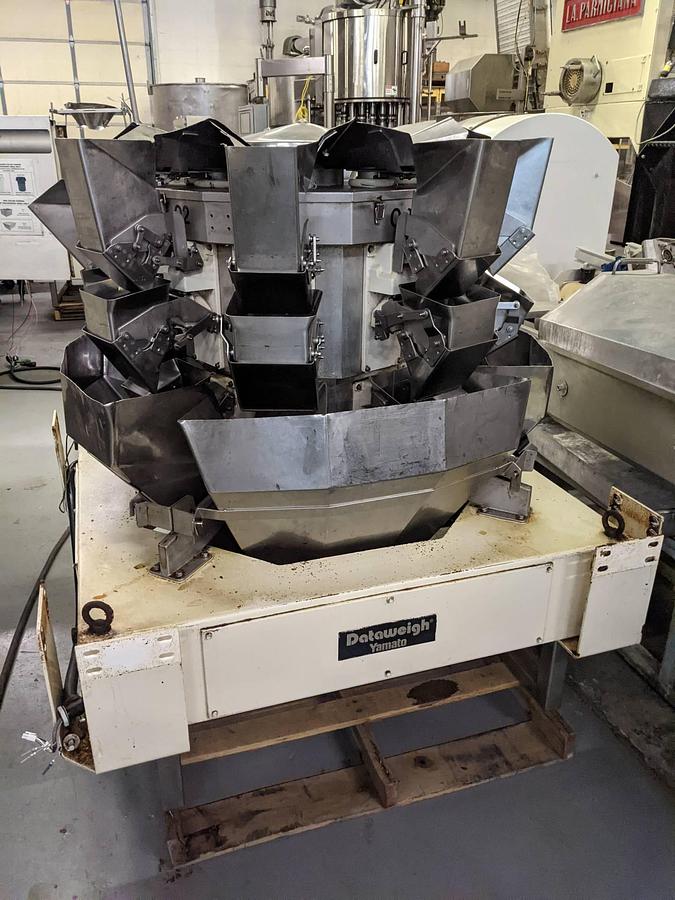
Among the specific configurations you will find, the eight-head rotary scale is a popular format. Models like the ADW-508SNX were designed for high-throughput snack food and produce applications, and units last used in potato chip packaging are a good example of the type of food-grade equipment that comes up for sale. Buyers looking for multihead weighers, checkweighers, or combination scales will generally find Yamato well represented in used machinery inventories.
What industries use Yamato weighing equipment?
Yamato weighing equipment has a strong foothold in food processing and packaging, which is where the brand built most of its reputation. Snack foods, fresh produce, frozen foods, confectionery, and meat processing operations have all relied heavily on Yamato multihead weighers and checkweighers for decades. The precision and speed of these machines made them a default choice for high-volume food lines where giveaway control directly affects profitability.
Beyond food, Yamato equipment is used in pharmaceutical manufacturing, chemical processing, and logistics and distribution. Pharmaceutical and chemical applications favor Yamato checkweighers for quality control and compliance purposes, while logistics operations use floor scales and belt scales for parcel and pallet weighing. This cross-industry adoption is one reason used Yamato machines hold their value reasonably well and are worth considering for buyers outside the food sector.
How accurate is Yamato weighing equipment?
Yamato has built its brand around precision, and its multihead combination weighers in particular are engineered to achieve very tight weight tolerances at high speeds. In food packaging applications, a well-maintained Yamato Dataweigh system can consistently hit target weights within fractions of a gram, which is significant when you consider that some of these machines cycle at 60 to 120 weighments per minute. That level of accuracy is what makes them attractive to food manufacturers trying to minimize product giveaway while staying compliant with net weight regulations.
With used equipment, the accuracy you can expect depends heavily on the condition of the machine, the wear on load cells and weigh buckets, and whether the unit has been properly calibrated. A used Yamato weigher that has been well maintained and recently calibrated can still perform close to its original specifications. Buyers should ask sellers about the machine's last calibration date and service history, and factor in the cost of recalibration and any worn component replacement when evaluating a purchase.
Is Yamato weighing equipment NTEP certified or legal for trade?
Many Yamato scale and weighing system models carry NTEP (National Type Evaluation Program) certification, which is the standard required for legal-for-trade use in commercial applications in the United States. Yamato also designs equipment to meet OIML (International Organization of Legal Metrology) standards, which matters for buyers operating internationally or exporting products where international weight compliance is required. These certifications were granted at the time of manufacture based on the specific model and configuration.
For used equipment, buyers need to verify that the specific unit they are purchasing retains its certification status and that any modifications or repairs have not voided the original approval. In some jurisdictions, a used scale placed into commercial service must be re-inspected and re-certified by a local weights and measures authority before it can be legally used for trade. Buyers should consult their local regulatory body and the manufacturer's documentation for the specific model to confirm compliance requirements before putting a used machine into commercial service.
What should buyers know about Yamato's history and reputation as a brand?
Yamato Scale Co. was founded in Japan in 1920, giving the company over a century of history in the weighing and measurement industry. That longevity matters when buying used equipment because it signals that the company has maintained a consistent presence in the market, which in turn affects parts availability, technical documentation, and the likelihood of finding qualified service technicians who are familiar with the equipment. Brands that have been around for decades tend to have deeper aftermarket support ecosystems than newer entrants.
Yamato is particularly well regarded for its multihead combination weighers, which became an industry standard in food packaging during the latter half of the 20th century. The brand is recognized globally, and its equipment is found in food processing facilities across North America, Europe, and Asia. For buyers evaluating used machinery, a well-known brand like Yamato generally offers more confidence than an obscure manufacturer because service manuals, parts diagrams, and technical support are more accessible.
What is the typical price range for used Yamato weighing equipment?
Pricing for used Yamato equipment varies considerably depending on the machine type, model, age, condition, and configuration. Entry-level floor scales and simpler checkweighers can be found for a few thousand dollars, while multihead combination weighers like the Dataweigh series typically command higher prices given their mechanical complexity and the value they deliver in production environments. A used eight-head or ten-head Dataweigh system in good working condition can range from roughly $5,000 to $25,000 or more depending on the specific model and its condition.
Buyers should also account for the total landed cost beyond the listed price. Shipping, rigging, crating, and any refurbishment or recalibration work needed after delivery can add meaningfully to the overall investment. Getting a clear picture of those additional costs upfront allows for a more accurate comparison between machines listed at different price points. A lower sticker price on a machine requiring significant reconditioning may end up costing more than a slightly higher-priced unit in better condition.
How does a Yamato Dataweigh multihead combination weigher work?
A multihead combination weigher like the Yamato Dataweigh operates by distributing product across multiple weigh buckets arranged in a circular pattern. Each bucket independently weighs a small portion of product, and the machine's control system rapidly calculates which combination of buckets adds up closest to the target weight. The selected buckets then release their contents simultaneously into the packaging line below. This combinatorial approach is what allows these machines to achieve high accuracy at high speeds, something that would be impossible with a single-bucket system.
The number of heads directly affects accuracy and throughput. An eight-head system like the ADW-508SNX has eight weigh buckets, which gives the control system a reasonable number of combinations to calculate from. Higher head counts (ten, fourteen, or sixteen heads) provide more possible combinations and therefore tighter weight accuracy or faster cycle rates. In snack food applications such as potato chips, the goal is to hit a target bag weight consistently while minimizing the amount of product given away above that target, since even small overweights at high volumes translate into significant product loss over time.
What should buyers inspect when evaluating a used Yamato weigher before purchasing?
A thorough inspection of a used Yamato weigher should cover both mechanical and electronic components. On the mechanical side, buyers should examine the condition of weigh buckets and chutes for dents, cracks, or excessive wear, check the drive mechanisms and radial feeders for smooth operation, and look for signs of corrosion or damage from cleaning chemicals, which is common on food-grade equipment. Load cells are critical components that degrade over time, so asking about their service history and whether any have been replaced is important.
On the controls side, buyers should verify that the machine powers up, that the display and operator interface function correctly, and that the machine can run through at least a basic operational cycle. Most used equipment dealers will accommodate in-person or video inspections, and some machines may still be installed at their previous production facility where a live demonstration is possible. Keep in mind that dealers typically do not have the permits or infrastructure to run actual product through a machine, so a full production test may not be feasible. Buyers should weigh the information gathered from inspection against the asking price and factor in the cost of any repairs or calibration needed to bring the machine to production-ready condition.
Are replacement parts and service support available for used Yamato equipment?
Parts availability for Yamato equipment depends significantly on the age and model of the machine. Yamato has maintained a presence in the market for over a century, and for relatively recent models, the manufacturer or its authorized service network can often supply load cells, weigh buckets, control boards, and other components. For older machines, particularly those manufactured in the 1980s or early 1990s, some parts may be discontinued or available only through third-party suppliers who specialize in legacy food processing equipment.
Buyers considering a used Yamato machine should contact the manufacturer directly before purchasing to ask specifically about parts and service support for that model. The response will give a realistic picture of what ongoing maintenance will look like. Third-party rebuild shops that specialize in multihead weighers can also be a resource for hard-to-find components and load cell replacements. Choosing a machine from a model generation that still has active parts support reduces the risk of a costly downtime situation if a critical component fails.
What are the typical shipping and logistics considerations for buying used Yamato weighing equipment?
Yamato multihead weighers and combination scales are moderately complex machines with precision components, so proper packaging before shipping is essential. Weigh buckets, radial feeders, and head units can be damaged if the machine is not adequately secured and padded. Sellers typically offer different levels of packaging from basic palletization to full wooden crating, and the cost varies accordingly. Buyers should ask specifically about how the machine will be packaged and what that packaging cost includes before agreeing to a purchase.
For larger Yamato systems, loading and unloading may require a forklift or other rigging equipment, which adds to the total cost. Buyers without a loading dock or forklift at their facility should arrange for liftgate delivery or coordinate with a rigger in advance. Shipping quotes should be obtained with full details on machine dimensions and weight, since freight costs for industrial equipment are calculated based on freight class, weight, and distance. Understanding the complete landed cost, including the machine price, packaging, freight, and any rigging fees, gives buyers an accurate number to evaluate against alternatives.