Category
Manufacturer
Model
Yamada
Yamada is a leading manufacturer of diaphragm pumps, serving industries such as chemical processing and food production. Their pumps are recognized for their durability and efficiency in transferring various fluids.
FAQ:
What types of fluids can Yamada diaphragm pumps handle?
Yamada air-operated double diaphragm (AODD) pumps are designed to move a wide variety of fluids, including thin liquids, viscous slurries, shear-sensitive materials, and fluids containing suspended solids. The pumps are commonly used in chemical processing, food production, paint and coatings, wastewater treatment, and pharmaceutical applications. Because the fluid path only contacts the wetted parts, material selection plays a large role in determining compatibility.
Wetted component materials typically available include aluminum, cast iron, polypropylene, PVDF, stainless steel, and acetal. Diaphragm materials include PTFE, neoprene, Buna-N, Santoprene, and Hytrel. This range of options means a properly specified Yamada pump can handle everything from mild water-based fluids to aggressive acids, solvents, and abrasive slurries. When purchasing a used Yamada pump, buyers should confirm the specific materials of construction for the unit in question and verify chemical compatibility with the intended fluid before putting the pump into service.
Are Yamada diaphragm pumps suitable for corrosive or abrasive materials?
Yes, Yamada diaphragm pumps are well-regarded for handling both corrosive chemicals and abrasive slurries, provided the pump is built with the appropriate materials of construction. For corrosive applications, wetted parts made from PVDF or polypropylene offer strong resistance to acids and caustics, while PTFE diaphragms provide broad chemical inertness. Stainless steel construction is common in food, beverage, and mild chemical environments.
For abrasive fluids such as slurries, pigments, or fluids with particulate matter, the ball-check valve design used in Yamada AODD pumps is a practical advantage. Unlike centrifugal pumps, there are no close-tolerance rotating parts that abrasive particles can damage. The diaphragm itself absorbs the pumping action, which means abrasive wear is concentrated in replaceable components. When evaluating a used Yamada pump for abrasive service, inspecting the condition of the diaphragms, ball seats, and valve balls is especially important, as these are the parts most affected by abrasive wear over time.
Do Yamada diaphragm pumps require electricity to operate?
Yamada diaphragm pumps are air-operated, meaning they run entirely on compressed air rather than electricity. This makes them inherently safe for use in hazardous locations, classified areas with flammable vapors or dust, and wet environments where electrical equipment would pose a risk. There is no motor to wire, no variable frequency drive to program, and no electrical service required at the pump location, which simplifies installation considerably.
The tradeoff is that a reliable compressed air supply is required. Typical operating air pressure for Yamada AODD pumps falls in the range of 20 to 100 PSI (roughly 1.4 to 7 bar), and air consumption varies with flow rate and discharge pressure. In facilities that already have a compressed air infrastructure, this is rarely a concern. For remote or field applications, a portable air compressor can serve as the power source. Because the pumps are pneumatic, they are also self-priming and can run dry for short periods without damage, which adds operational flexibility compared to many electric pump designs.
What sizes and flow rates are available for Yamada diaphragm pumps?
Yamada produces AODD pumps across a broad size range, with port sizes typically spanning from 1/4 inch up to 3 inches. Smaller models are suited for low-flow, precision transfer applications, while larger models like the NDP-40 series (which features 1.5-inch ports) can move substantial volumes of fluid per cycle. Flow capacity across the product line can range from just a few liters per minute on the smallest units to several hundred liters per minute on the largest configurations.
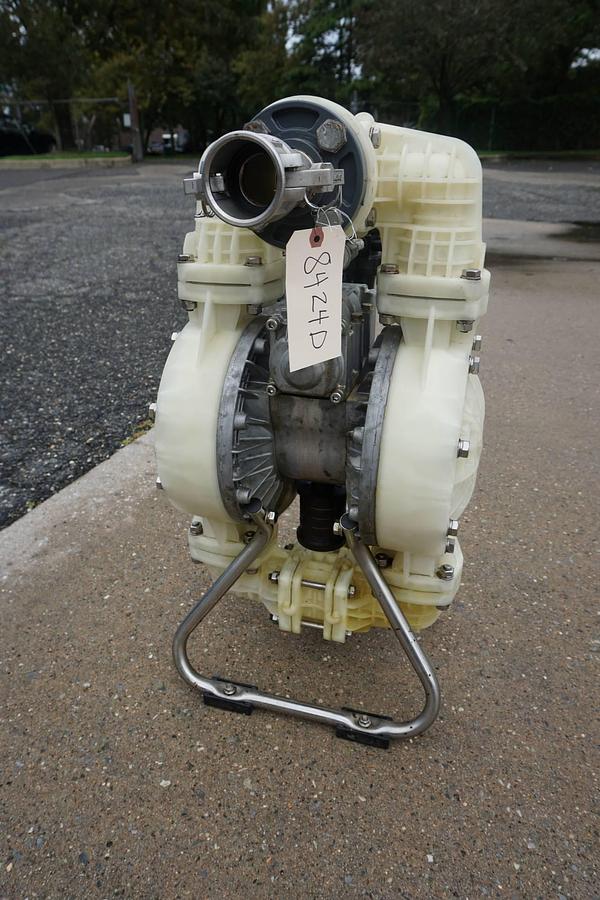
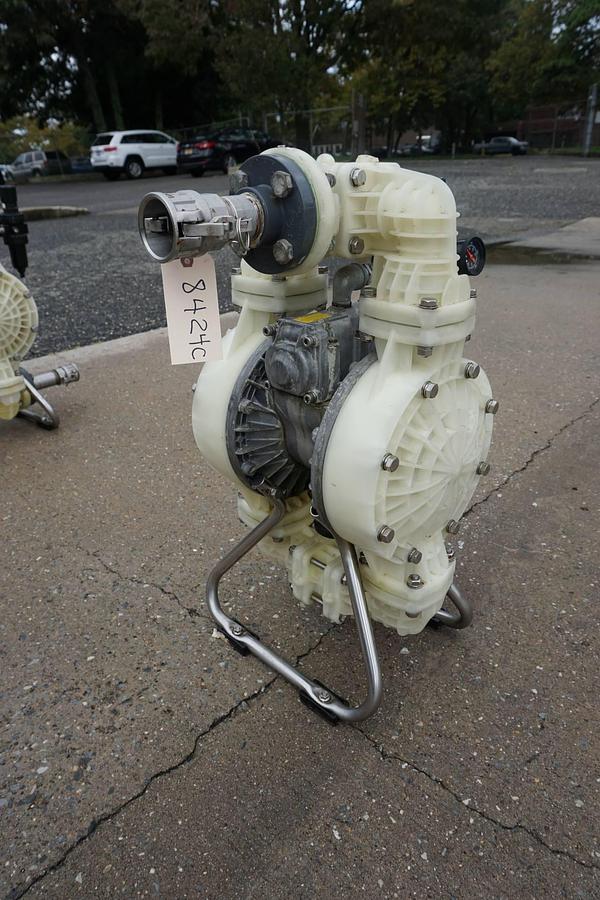
The NDP-40 series, one of the more commonly seen models on the used market, is a mid-to-large size pump frequently used in chemical processing and industrial fluid transfer. When shopping for a used Yamada pump, it is worth paying attention to the model number, as it encodes sizing information. The number following "NDP" generally corresponds to the diaphragm diameter in millimeters, so an NDP-40 has a 40mm diaphragm. Matching the pump size to the actual flow rate and discharge pressure requirements of the application is critical to getting efficient, reliable performance.
What air pressure is required to operate a Yamada AODD pump?
Yamada air-operated double diaphragm pumps typically require a compressed air supply in the range of 20 to 100 PSI (approximately 1.4 to 7 bar) to operate. The actual air pressure needed at any given moment depends on the discharge pressure the pump is working against. As a general rule, the pump can generate a discharge pressure roughly equal to the supply air pressure, so higher discharge requirements call for higher inlet air pressure.
Air consumption is another factor to plan for. At higher flow rates and pressures, AODD pumps consume more air volume, which affects compressor sizing. Running a Yamada pump on insufficient air pressure will result in reduced flow and stalling, while excessive pressure beyond the pump's rated maximum can accelerate diaphragm wear. For used pumps, checking the nameplate or the manufacturer's published specifications for the specific model is the most reliable way to confirm the correct operating pressure range before putting the equipment into service.
What is the difference between Yamada NDP and DP series pumps?
Yamada's NDP series represents their more widely distributed line of air-operated double diaphragm pumps and is the series most commonly found on the used equipment market. NDP pumps are known for their modular construction, broad material availability, and suitability across a wide range of general industrial applications including chemical transfer, paint circulation, and food processing. The NDP designation covers a large family of sizes and material configurations.
The DP series, by contrast, tends to refer to earlier or differently configured Yamada pump designs. In practical terms for buyers of used equipment, the NDP series is the more prevalent option and benefits from wider parts availability and more documented service history in the field. When evaluating any used Yamada pump, confirming the exact model and series helps in sourcing replacement diaphragms, check valves, and other wear parts. Consulting Yamada's published documentation or reaching out to the manufacturer directly can clarify parts availability for a specific model, particularly for older units.
How long do diaphragms last in a Yamada pump, and how hard are they to replace?
Diaphragm service life in a Yamada AODD pump varies considerably depending on the fluid being pumped, operating pressure, cycle rate, and the diaphragm material itself. In clean, low-abrasion applications running at moderate pressures, diaphragms can last for millions of cycles. In abrasive, chemically aggressive, or high-cycle applications, replacement intervals may be much shorter. PTFE diaphragms, while highly chemical-resistant, can be more prone to fatigue cracking over time compared to elastomeric options like Santoprene or Hytrel.
Replacing diaphragms in a Yamada pump is considered a straightforward maintenance task that does not require specialized tools or extensive mechanical expertise. The pump typically splits into two fluid chambers, each containing one diaphragm connected by a center shaft. Disassembly, diaphragm swap, and reassembly can usually be completed in under an hour by someone familiar with the process. For buyers of used Yamada pumps, inspecting the condition of the diaphragms before purchase is strongly recommended. A visual inspection or a request for a video walkthrough of the pump internals can reveal cracking, delamination, or other wear that would require immediate replacement.
What should buyers inspect when purchasing a used Yamada diaphragm pump?
Buying a used Yamada pump requires a more thorough pre-purchase evaluation than buying new equipment, since the condition varies based on how the pump was used, what fluids it handled, and how well it was maintained. Key areas to inspect include the diaphragms (checking for cracks, stiffening, or chemical attack), the ball check valves and seats (looking for wear, scoring, or chemical degradation), and the air valve assembly (listening for smooth, consistent cycling during operation). The pump body and manifolds should be checked for cracks, corrosion, or signs of chemical attack, particularly on plastic-bodied units.
Reputable used equipment dealers will typically accommodate in-person inspections or provide detailed video walkthroughs of the machine. Some equipment may still be installed in an operating facility, allowing for a more complete assessment of running condition. Keep in mind that most dealers are not set up for full production testing, so operational verification is usually limited to confirming the pump cycles on air rather than running it under full load conditions. Buyers should also consult Yamada directly to understand parts availability for the specific model being considered, since age and model generation can affect what replacement components are still readily stocked.
What industries commonly use Yamada diaphragm pumps?
Yamada AODD pumps have found broad adoption across industries where reliable, chemical-resistant fluid transfer is required. Chemical processing is one of the largest application areas, where the pumps move acids, caustics, solvents, and other aggressive fluids safely without the risks associated with electrically powered equipment. Food and beverage production is another major sector, where stainless steel and food-grade elastomer configurations allow the pumps to handle sauces, syrups, oils, and other consumable products in compliance with sanitary requirements.
Beyond those two core markets, Yamada pumps are regularly found in paint and coatings manufacturing, pharmaceutical production, wastewater and sludge handling, mining and mineral processing, and general manufacturing environments. Their ability to handle abrasive slurries, self-prime reliably, and operate safely in classified hazardous areas makes them a versatile choice across a wide industrial footprint. On the used market, pumps coming out of chemical plants or food production facilities are common, and understanding the previous application helps buyers assess whether the pump's materials of construction are appropriate for their intended use.
What are the typical shipping and payment considerations when buying a used Yamada pump?
Used Yamada diaphragm pumps are generally compact enough to ship via freight without the heavy rigging requirements associated with large industrial machinery, but proper packaging is still essential to prevent damage in transit. Dealers typically palletize and crate equipment based on its size and fragility, and the level of packaging directly affects shipping costs. Buyers should ask for a detailed breakdown of packaging, freight, and any loading or unloading charges to understand the full landed cost before committing to a purchase.
On payment terms, most used equipment dealers require full payment prior to releasing equipment for shipment. Some dealers extend terms to established repeat customers, but this is not the norm for first-time transactions. Wire transfer is the most common payment method for used machinery purchases. Because these machines are sold as-is, the inspection process carries significant weight. Buyers are well-served by selecting dealers with a demonstrated track record in industrial equipment, asking for thorough documentation of the machine's condition, and requesting an in-person or video inspection before finalizing payment.