Category
Manufacturer
Model
Wrap-Ade
Wrap-Ade is a leader in packaging solutions, particularly known for their stretch wrapping machines. Their equipment is designed to provide secure and efficient packaging for a variety of products, enhancing supply chain efficiency.
FAQ:
What types of Wrap-Ade stretch wrapping machines are available?
Wrap-Ade produces several categories of stretch wrapping equipment, with the most common being turntable wrappers, rotary arm wrappers, and horizontal stretch wrappers. Turntable models are the most widely used in warehousing and distribution settings, where a loaded pallet rotates on a powered platform while film is applied from a stationary mast. Rotary arm machines work in reverse, keeping the pallet stationary while the film carriage rotates around it, which makes them well-suited for unstable or very heavy loads that should not be spun. Horizontal wrappers handle long or irregularly shaped products that cannot be palletized in the traditional sense.
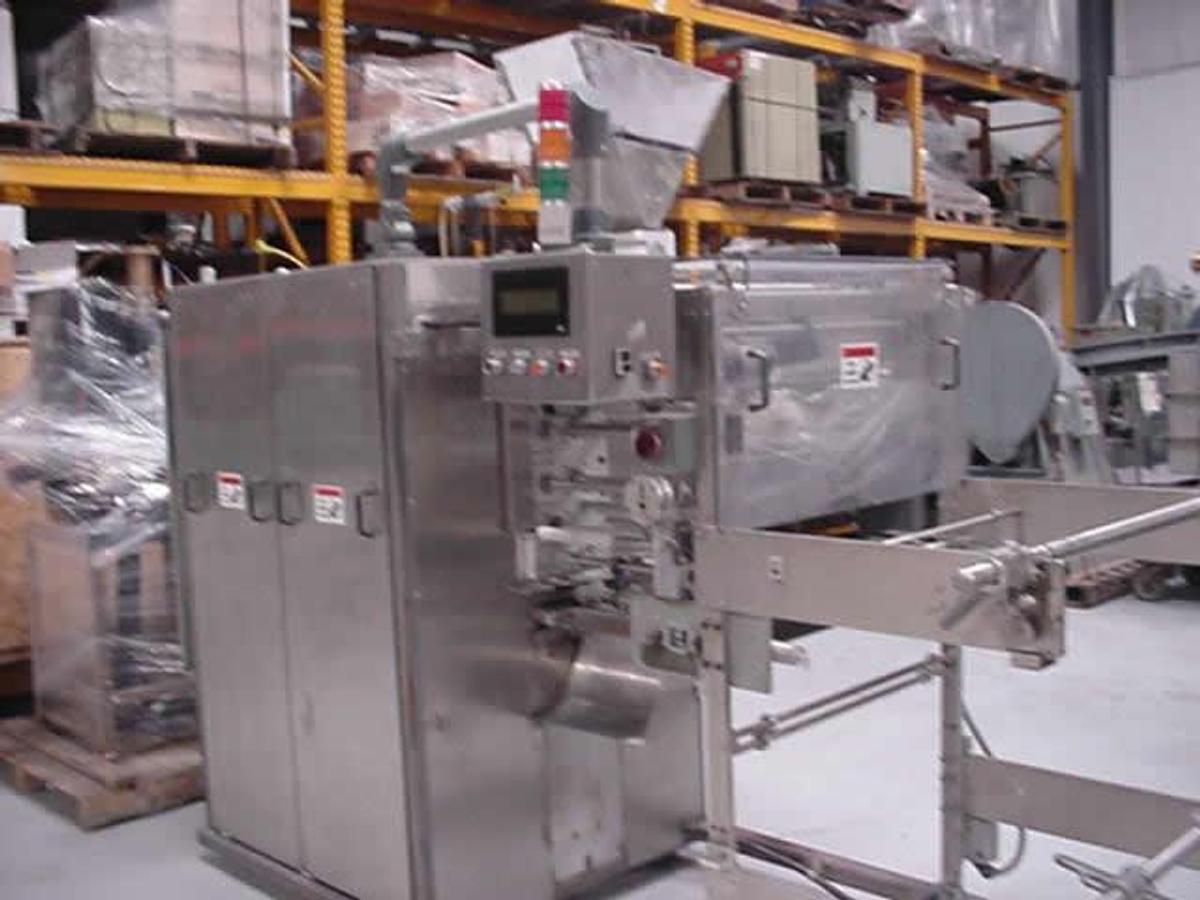
Beyond these main categories, Wrap-Ade also manufactured strip packaging machines for multi-lane product bundling, such as the 12-inch, 6-lane strip packaging machine that shows up in used equipment inventories. The brand built a reputation for heavy-duty steel construction across its product line, making the machines durable enough for high-volume production environments. Buyers shopping the used market will find a range of models with varying levels of automation, from semi-automatic units that require an operator to attach and cut the film, to fully automatic systems integrated into conveyor lines.
What is the typical price range for used Wrap-Ade stretch wrapping machines?
Pricing for used Wrap-Ade stretch wrapping machines varies considerably depending on the model type, age, condition, and level of automation. Entry-level semi-automatic turntable wrappers in used condition can start in the range of a few thousand dollars, while larger rotary arm or fully automatic systems in good working order can reach into the tens of thousands. Specialty equipment like multi-lane strip packaging machines tends to be priced based on scarcity and condition rather than a standard market rate, since fewer of those units come up for sale at any given time.
Buyers should factor in more than just the listed machine price when calculating total acquisition cost. Shipping, crating or rigging, freight insurance, and any reconditioning work needed after delivery all contribute to the true landed cost. Requesting a detailed breakdown of packaging and freight charges from the seller before committing is a practical step that prevents budget surprises. Because used machinery is typically sold as-is, the condition of the machine at the time of sale is the primary driver of value, so a thorough inspection before purchase is essential to understanding whether the asking price reflects the machine's actual working order.
Are used Wrap-Ade machines suitable for small businesses, or are they designed only for large industrial operations?
Wrap-Ade built its equipment with heavy-duty industrial applications in mind, but that does not mean smaller operations cannot benefit from purchasing a used unit. A semi-automatic turntable wrapper, for example, can handle the wrapping needs of a small to mid-sized warehouse or manufacturer without requiring a large footprint or a dedicated operator for the entire shift. The key consideration for a smaller business is matching the machine's throughput capacity and power requirements to what the facility can realistically support and use.
Buying used also makes Wrap-Ade equipment more financially accessible to smaller companies that could not justify the cost of a comparable machine purchased directly from a manufacturer. The pre-stretch film delivery systems found on many Wrap-Ade models reduce ongoing film consumption significantly, which benefits any operation regardless of size. A small business wrapping even a modest number of pallets per day will see measurable film savings compared to hand wrapping or using a machine without pre-stretch capability. The important step is verifying the machine's condition and ensuring the seller can provide enough operational detail for the buyer to confirm it fits the intended application.
What is the maximum load capacity and pallet size a Wrap-Ade turntable machine can handle?
Load capacity and pallet size specifications vary by model, but Wrap-Ade turntable stretch wrappers were generally engineered to handle standard GMA pallets (48 x 40 inches) as well as larger industrial pallet sizes. Turntable weight capacities on industrial-grade models typically range from around 4,000 pounds up to 6,000 pounds or more depending on the specific unit. Rotary arm models, because they do not require the load to rotate, can often handle heavier or more unstable loads without the same turntable weight restrictions.
When evaluating a specific used Wrap-Ade machine, buyers should request the original model specifications or any available documentation to confirm the rated load capacity for that particular unit. Age and wear can affect turntable drive components over time, so an inspection that includes a functional test of the turntable under load, or at minimum a review of the drive motor and bearing condition, is worthwhile. Sellers who specialize in packaging equipment will typically be able to provide model-specific technical details or direct buyers to the manufacturer for specification sheets, which helps confirm whether a given machine is the right fit for the loads being wrapped.
What should buyers know about warranties when purchasing a used Wrap-Ade machine?
Warranties on used industrial equipment work very differently than on equipment purchased directly from a manufacturer. Manufacturers typically extend warranty coverage only on equipment sold through their authorized channels, and that coverage does not transfer when the machine changes hands on the secondary market. Used equipment dealers generally sell machinery as-is, meaning the buyer accepts the machine in its current condition and takes on responsibility for any repairs or maintenance needed after the sale. This is standard practice across the used machinery industry, not something specific to stretch wrapping equipment.
Because of this, the inspection process becomes the buyer's primary protection. Reputable used equipment dealers with a long track record in the packaging machinery space will typically accommodate in-person inspections, virtual walkthroughs, or video documentation of the machine in its current state. Buyers should also contact Wrap-Ade's manufacturer directly to understand what level of technical support, replacement parts, and documentation is available for the specific model and age of machine being considered. Older models may have limited parts availability, which is a practical factor worth confirming before purchase. Choosing a dealer who specializes in packaging equipment rather than a general machinery reseller can also make a meaningful difference in the quality of pre-sale information provided.
How does pre-stretch technology on Wrap-Ade machines reduce film costs?
Pre-stretch film delivery systems work by mechanically elongating the stretch film before it contacts the load, rather than relying on the tension created by the rotating pallet or film carriage to stretch the film during application. By pre-stretching the film through a set of powered rollers in the film carriage, the machine can extend a given amount of film significantly further than hand wrapping or older non-pre-stretch systems. Wrap-Ade machines with pre-stretch capability are commonly cited as reducing film consumption by up to 250 percent compared to manual wrapping methods, which translates directly into lower material costs per pallet.
The financial impact of pre-stretch becomes more significant as wrapping volume increases. An operation wrapping dozens or hundreds of pallets per day will see substantial savings on film purchasing over the course of a year, and those savings can offset a meaningful portion of the machine's acquisition cost. Pre-stretch also tends to produce a tighter, more consistent wrap that improves load containment during transit, reducing product damage claims. When evaluating a used Wrap-Ade machine, buyers should confirm whether the film carriage includes a functional pre-stretch system and verify the pre-stretch ratio the unit is designed to deliver, as this directly affects the film savings calculation.
What type of stretch film is compatible with Wrap-Ade wrapping machines?
Wrap-Ade stretch wrapping machines are generally compatible with standard machine-grade stretch film, which is the film type manufactured specifically for use with powered wrapping equipment. Machine-grade stretch film is available in a range of gauges, typically from around 60 gauge up to 150 gauge or higher, with thinner gauges used on machines equipped with pre-stretch systems and heavier gauges used for particularly demanding loads. The film is sold in rolls sized to fit the machine's film carriage, so buyers need to confirm the core diameter and roll width that the specific Wrap-Ade model accepts.
Stretch film is not included with the purchase of a used machine and must be sourced separately. Machine-grade film is widely available from packaging distributors and industrial supply companies. Buyers should avoid using hand-wrap film on a powered machine, as hand film is formulated differently and may not perform correctly or may damage the film carriage components. If the used machine being purchased has a pre-stretch carriage, selecting a film with the appropriate elongation characteristics for that pre-stretch ratio will maximize both film performance and the cost savings the pre-stretch system is designed to deliver. The machine's documentation or the selling dealer can usually provide guidance on the recommended film specifications.
How difficult is it to install and operate a used Wrap-Ade stretch wrapping machine?
Semi-automatic Wrap-Ade turntable wrappers are among the more straightforward pieces of packaging equipment to install and put into service. Most require a standard single-phase or three-phase electrical connection depending on the model, a level concrete floor capable of supporting the machine's weight and load capacity, and enough clearance around the unit for safe operation and film loading. Fully automatic systems integrated into conveyor lines involve more complex installation since they must be aligned with infeed and outfeed conveyors and connected to the facility's control systems, which typically requires a qualified electrician and potentially a machinery technician.
Operating a semi-automatic turntable wrapper is generally not difficult for warehouse staff to learn. The operator attaches the film to the pallet, initiates the wrap cycle, and cuts and secures the film at the end. Machines with programmable wrap cycles allow operators to set consistent wrapping parameters so that every pallet receives the same number of top and bottom wraps without manual adjustment each time. For used machines specifically, buyers should factor in that some controls or settings may differ from current production models, and obtaining the original operator manual from the seller or directly from the manufacturer is a practical step that simplifies training and troubleshooting.
What industries commonly use Wrap-Ade stretch wrapping equipment?
Wrap-Ade stretch wrapping machines are found across a broad range of industries where pallet load containment is a routine part of operations. Warehousing and distribution centers use them to secure outbound pallets before they move through a carrier network. Manufacturing facilities wrap finished goods pallets at the end of production lines to protect products during internal handling and outbound shipping. Food and beverage producers, building materials suppliers, consumer goods manufacturers, and pharmaceutical distributors are among the sectors where this type of equipment is commonly deployed.
The strip packaging machines in the Wrap-Ade lineup serve a somewhat different application, bundling individual products into retail-ready or distribution-ready multipacks across multiple lanes simultaneously. These machines are more specialized and tend to appear in food processing, personal care, and household products manufacturing environments where high-speed, multi-lane bundling is needed. Across all these industries, the consistent driver for investing in stretch wrapping equipment is reducing labor costs associated with manual wrapping, improving load stability to reduce transit damage, and creating a more consistent, professional-looking finished pallet.
What should buyers expect from the shipping and delivery process for a used Wrap-Ade machine?
Stretch wrapping machines range from relatively compact semi-automatic units to large, heavy rotary arm or automatic systems, and the shipping requirements vary accordingly. Smaller turntable wrappers can typically be palletized and shipped via standard LTL freight carriers with appropriate blocking and bracing to prevent movement in transit. Larger or heavier machines may require custom crating, flatbed transport, or specialized rigging equipment for loading at the origin and unloading at the destination. Buyers should ask the selling dealer specifically what packaging method will be used and whether rigging services are included in the quoted price or billed separately.
Shipping costs for used industrial machinery are not trivial and should be confirmed in writing before the purchase is finalized. The full landed cost of the machine includes the purchase price, any crating or palletization fees, freight charges, freight insurance, and unloading costs at the buyer's facility. Buyers who do not have a dock or forklift on site will need to arrange lift-gate service or other unloading equipment in advance. Payment for used machinery is typically required in full before the seller arranges shipment, so buyers should be prepared for that requirement and plan their logistics timeline accordingly.