Category
Manufacturer
Model
FAQ:
What is a Wolverine Proctor Fluidized Dryer and how does it work?
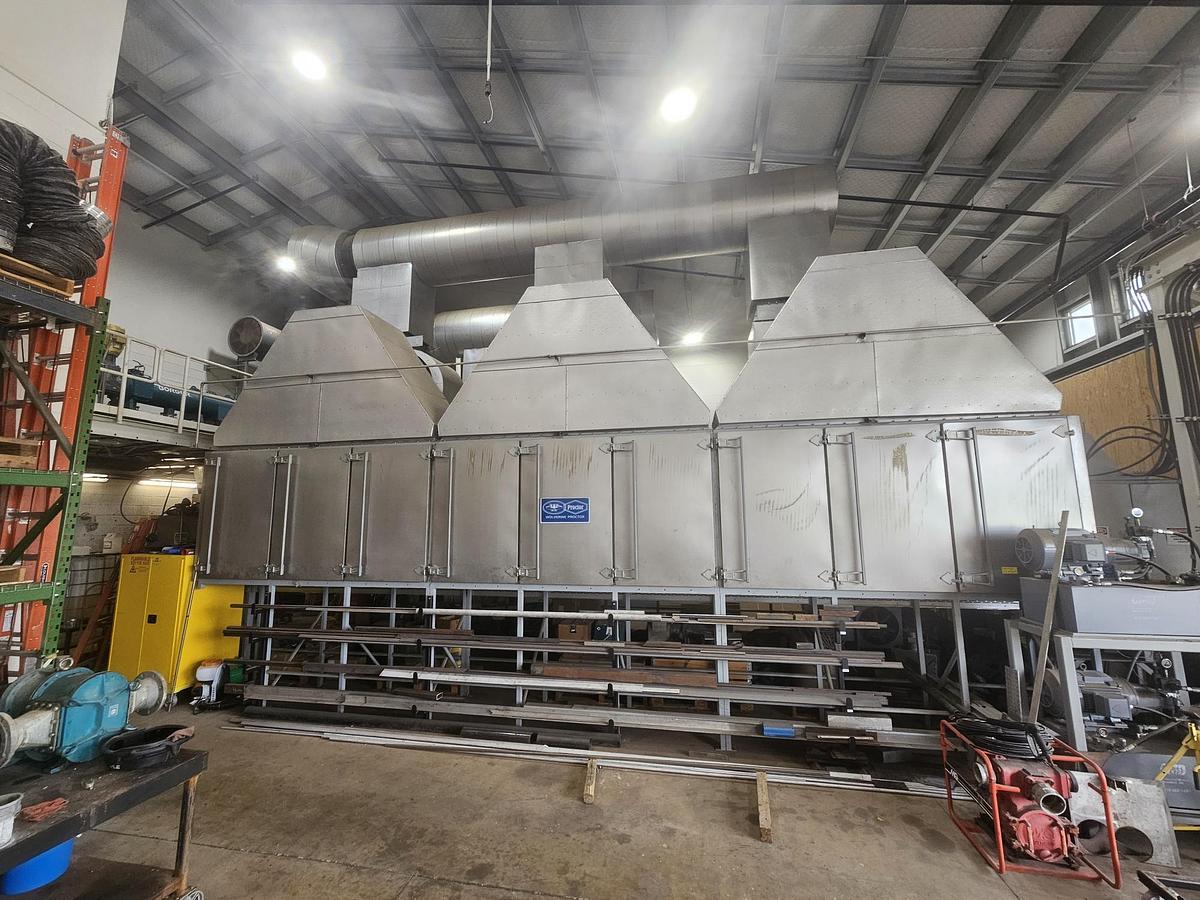
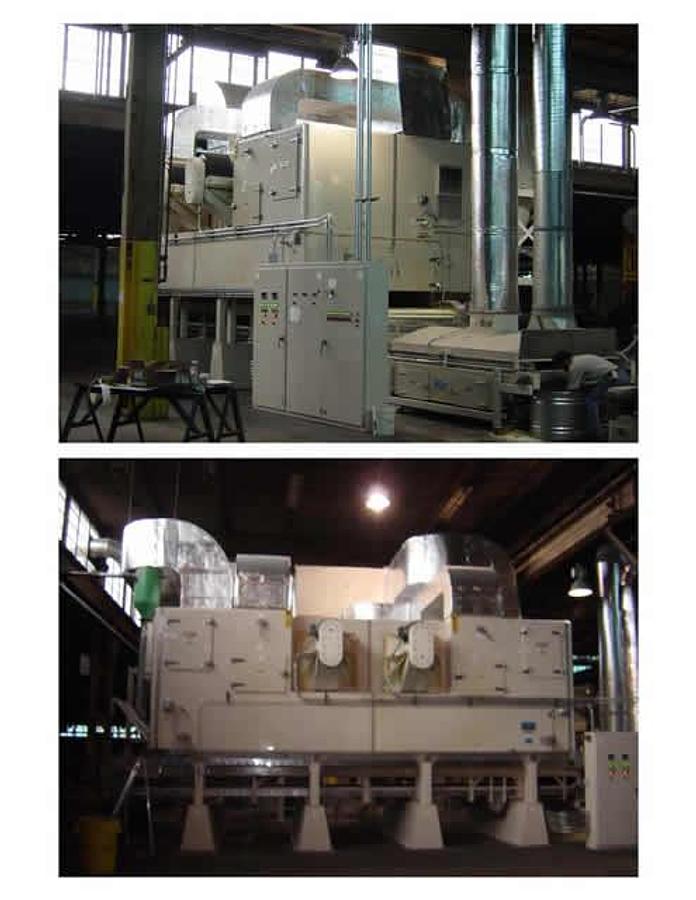
A Wolverine Proctor Fluidized Dryer is an industrial continuous-process drying system designed to handle particulate and granular materials at high throughput. The core operating principle involves forcing heated air upward through a perforated distributor plate at a velocity sufficient to suspend the product in a fluidized state. This direct contact between the hot air stream and individual particles produces exceptionally uniform moisture removal across the entire product bed, which is a significant advantage over static or conveyor-based drying methods. The Jetzone variant, one of the more recognized models in the Wolverine Proctor lineup, uses a pulsed or directed airflow pattern that further improves heat transfer efficiency and reduces the risk of product degradation from excessive heat exposure.
Because the product is kept in constant gentle motion during drying, fluidized bed dryers are well suited for fragile or irregular particles that might break apart under mechanical agitation. The design also allows for relatively precise control over drying time and exit moisture content, which matters a great deal in food processing and pharmaceutical applications where product specifications are tight. Wolverine Proctor built a strong reputation over decades of manufacturing this type of equipment, and their dryers are still considered reliable workhorses in facilities processing grains, sugars, salts, cereals, polymers, resins, and fertilizers. Finding one of these units on the used equipment market can represent significant value for operations that need proven drying capacity without the lead time and capital cost of purchasing new industrial equipment.
What industries commonly use the Wolverine Proctor Fluidized Dryer?
The Wolverine Proctor Fluidized Dryer has found wide adoption across several process industries, largely because fluidized bed technology is flexible enough to handle a broad range of materials and moisture profiles. In food processing, these dryers are used extensively for grains, breakfast cereals, snack foods, sugar, salt, and dehydrated vegetables. The gentle handling characteristics of fluidized bed drying make it particularly attractive for products where surface integrity and uniform color are important quality indicators. Agricultural processors also rely on these units for drying seeds and granular crop inputs where consistent residual moisture levels directly affect shelf life and storage safety.
Beyond food and agriculture, the chemical and petrochemical sectors use Wolverine Proctor fluidized dryers to process resins, polymers, fertilizers, and specialty chemicals. Pharmaceutical manufacturers have used similar fluidized bed equipment for drying active pharmaceutical ingredients and excipients, though pharmaceutical-grade units typically carry additional documentation and validation requirements that buyers should verify. The common thread across all these applications is the need for high-volume, energy-efficient drying with minimal labor input and consistent output quality. When evaluating a used Wolverine Proctor dryer for a specific application, it is worth consulting with a process engineer or the equipment manufacturer to confirm that the unit's airflow capacity, plate design, and temperature range are appropriate for the intended product.
What should I expect when buying a used Wolverine Proctor Fluidized Dryer?
Buying a used Wolverine Proctor Fluidized Dryer means purchasing industrial equipment on an as-is basis, which places the responsibility for evaluating condition squarely on the buyer. Unlike purchasing from a manufacturer, used equipment transactions do not typically come with any warranty or guarantee of performance. The condition of these machines can vary considerably depending on how the unit was operated, what products ran through it, how frequently it was maintained, and how long it sat idle before being decommissioned. Common wear areas include the perforated distributor plate, the plenum chamber, the drive systems for any internal conveyors or vibration mechanisms, the ducting and air handling components, and any seals or gaskets exposed to heat and humidity over years of operation.
A thorough pre-purchase inspection is the most important step a buyer can take to protect their investment. Reputable used equipment dealers will typically accommodate in-person inspections at the storage location, or provide detailed video walkthroughs if physical access is not practical. In some cases, equipment may still be installed at an operating facility, where it may be possible to observe the machine running under production conditions. Keep in mind that most dealers do not have the permitting or infrastructure to run actual product through a dryer during an inspection, so assessments are generally visual and mechanical rather than performance-based. Buyers should review all available documentation, check the condition of electrical panels and controls, and assess the structural integrity of the housing and internal components before committing to a purchase.
What sizes and capacities are available for used Wolverine Proctor Fluidized Dryers?
Wolverine Proctor manufactured fluidized dryers across a range of sizes to serve both pilot-scale operations and full industrial production lines. Smaller units were designed for lower-throughput applications or facilities with limited floor space, while larger continuous dryers were built for high-volume processing environments where output rates of several tons per hour were required. The key capacity metrics for these machines include the active drying bed area (measured in square feet), the airflow volume and pressure drop across the distributor plate, and the temperature range the system can sustain. Bed widths on larger commercial units can run several feet across, with drying zones extending many feet in length to provide sufficient residence time for the product.
On the used market, available inventory at any given time depends on what has been decommissioned from active production lines, so buyers may not always find the exact size they need immediately. It is worth working with dealers who specialize in processing and drying equipment, as they tend to have broader networks for sourcing specific configurations. When evaluating a unit's capacity for a particular application, the rated throughput from the manufacturer's specifications should be treated as a starting point rather than a guaranteed production figure for a used machine, since actual output will depend on the product's specific moisture content, particle size distribution, and required exit moisture. Consulting with a drying process specialist can help buyers match available used equipment to their production requirements more accurately.
What is the typical price range for a used Wolverine Proctor Fluidized Dryer?
Pricing for used Wolverine Proctor Fluidized Dryers varies considerably based on the size of the unit, its age, overall condition, included ancillary components, and current market availability. Smaller or older units in average condition may be priced in the range of tens of thousands of dollars, while larger, more recent models with intact controls, clean internals, and complete ancillary systems can command prices well into the six-figure range. The year of manufacture matters because it reflects both the likely remaining service life of components and the availability of replacement parts. A unit manufactured in 2000, for example, represents equipment that has been in service for over two decades, and buyers should factor potential refurbishment costs into their total acquisition budget.
Beyond the purchase price, buyers should account for the full landed cost of the equipment, which includes rigging and loading at the seller's location, freight transportation, unloading and installation at the destination facility, and any refurbishment or parts replacement needed to bring the unit to operational readiness. Larger fluidized dryers are heavy and bulky pieces of equipment that require specialized rigging equipment for safe loading and unloading, which adds to the total cost. Requesting a detailed breakdown of all shipping, crating, and rigging costs from the dealer before finalizing a purchase helps avoid surprises. In many cases, the total cost of acquiring and commissioning a used fluidized dryer is still substantially lower than purchasing comparable new equipment, which is the primary economic case for the used market.
Are replacement parts still available for Wolverine Proctor Fluidized Dryers?
Parts availability for Wolverine Proctor equipment depends on the specific model and year of manufacture, and buyers should research this before committing to a purchase. Wolverine Proctor became part of the Proctor group of companies, which has gone through various ownership and brand changes over the years. Contacting the current manufacturer or their authorized service network directly is the most reliable way to determine what level of parts and technical support is available for a specific model. For older units, some proprietary components such as specialized distributor plates, custom-fabricated plenum sections, or model-specific drive assemblies may have limited availability through the manufacturer, requiring buyers to source parts through third-party fabricators or industrial parts suppliers.
Many of the wear components in a fluidized bed dryer, including motors, bearings, belts, seals, electrical controls, and standard fasteners, are not proprietary and can be sourced through general industrial suppliers regardless of the equipment's age. The more critical question is whether the core structural and process components specific to the Wolverine Proctor design are still supported. Buyers should ask the equipment dealer for any documentation, manuals, or parts lists that accompany the machine, as these resources are invaluable for maintenance planning. Reaching out to the manufacturer before purchase to ask about parts support for the specific model number gives buyers a clearer picture of the long-term serviceability of the equipment they are considering.
What materials and products can be processed in a Wolverine Proctor Fluidized Dryer?
Wolverine Proctor Fluidized Dryers are designed to handle free-flowing particulate and granular materials that can be suspended in an upward airflow without clumping or agglomerating excessively. In the food industry, common applications include drying granulated sugar, table salt, breakfast cereals, rice, corn-based snack products, dried fruits, and dehydrated vegetable pieces. The gentle fluidization action is particularly well suited to products where surface cracking, color changes from overheating, or particle breakage would represent quality defects. Agricultural products such as seeds, grains, and granular fertilizers are also well-matched to this type of dryer.
In the chemical and industrial sectors, fluidized bed dryers from this manufacturer have been used to process synthetic resins, polymer pellets, specialty chemicals, and mineral products. The key material characteristics that determine suitability for fluidized bed drying include particle size distribution, bulk density, moisture content at inlet, required exit moisture specification, and heat sensitivity. Materials that are too fine, too sticky, or too irregular in shape may not fluidize properly and could require modifications to the distributor plate design or airflow settings. Before repurposing a used Wolverine Proctor dryer for a product it was not previously used for, consulting with a process engineer is advisable to confirm that the unit's design parameters align with the new application's requirements.
What installation and utility requirements does a Wolverine Proctor Fluidized Dryer typically need?
Installing a Wolverine Proctor Fluidized Dryer requires careful planning around floor space, structural support, utility connections, and exhaust ventilation. These are substantial pieces of industrial equipment, and the foundation or floor must be capable of supporting the static weight of the dryer plus any dynamic loads generated during operation. The units require a significant footprint not just for the dryer itself but also for the associated air handling equipment, including the supply fan, heat source (typically natural gas burners or steam coils), and exhaust ducting with dust collection or scrubbing equipment to manage the moisture-laden exit air. Adequate clearance around the machine for maintenance access is also a practical requirement that is sometimes underestimated during facility planning.
On the utilities side, a gas-fired Wolverine Proctor dryer requires a natural gas supply sized to meet the burner's BTU demand, along with electrical service for the fan motors, controls, and any conveyor or vibration drive systems. Steam-heated configurations need a steam supply at the appropriate pressure and flow rate. Electrical requirements vary by unit size but larger dryers can draw significant amperage, making it important to verify the facility's electrical capacity before installation. Buyers should request any available engineering drawings or utility specification sheets from the dealer to assist their facilities and engineering teams in planning the installation. If documentation is not available with the used unit, contacting the manufacturer with the model and serial number may yield archived specification data.
How should I inspect a used Wolverine Proctor Fluidized Dryer before purchasing?
A thorough inspection of a used Wolverine Proctor Fluidized Dryer should cover both the mechanical and process-critical components of the machine. Starting with the exterior, buyers should look for signs of corrosion, structural damage, or repairs to the housing and frame that might indicate the unit experienced operational problems or was stored in poor conditions. The internal drying chamber deserves close attention, particularly the perforated distributor plate, which is the heart of the fluidization system. Holes that are worn, plugged, or unevenly distributed can cause poor fluidization and uneven drying, and replacing a distributor plate can be a meaningful cost depending on the material and design. The plenum chamber below the plate should be inspected for corrosion, residue buildup, or damage that could affect airflow distribution.
Reputable dealers will typically offer in-person inspections at their facility, or arrange access to the equipment's current location if it is still installed at a production site. Video inspections are also commonly available when travel is not practical, and a detailed video walkthrough conducted by someone knowledgeable about the equipment can reveal a great deal about its condition. Buyers should also check the condition of the drive systems, electrical panels, control components, and any product inlet and outlet mechanisms. Asking the dealer about the machine's service history, the reason for decommissioning, and how long it has been out of service provides useful context. Engaging a third-party equipment inspector or process engineer with fluidized bed experience to accompany or conduct the inspection is a worthwhile investment for higher-value purchases.
What are the shipping and logistics considerations for a used Wolverine Proctor Fluidized Dryer?
Shipping a Wolverine Proctor Fluidized Dryer is a logistics undertaking that requires careful planning due to the size and weight of these machines. Industrial fluidized dryers are not standard freight items. Depending on the unit's dimensions, transport may require flatbed trucking, oversized load permitting, and specialized rigging equipment at both the origin and destination. The dryer housing, air handling components, and any ancillary equipment may need to be disassembled or separated for transport, which adds to the complexity and cost of the move. Buyers should ask the dealer specifically what will be included in the shipment and how the equipment will be packaged or crated to prevent damage during transit, as inadequate preparation is a common source of damage claims.
Rigging costs at the point of loading and unloading are typically separate from freight charges and should be factored into the total acquisition cost. For very large units, crane services may be required. Buyers should request a detailed quote that breaks out crating or skidding costs, rigging, freight, and any permits required for oversized loads so they have a clear picture of the full landed cost before finalizing the purchase. Most used equipment dealers require full payment prior to releasing equipment for shipment, though some may offer alternative arrangements for established customers. Coordinating the delivery schedule with the receiving facility's rigging and installation team in advance helps avoid costly delays once the equipment arrives.