Category
Manufacturer
Model
Winpak
FAQ:
What types of Winpak packaging machines are available on the used equipment market?
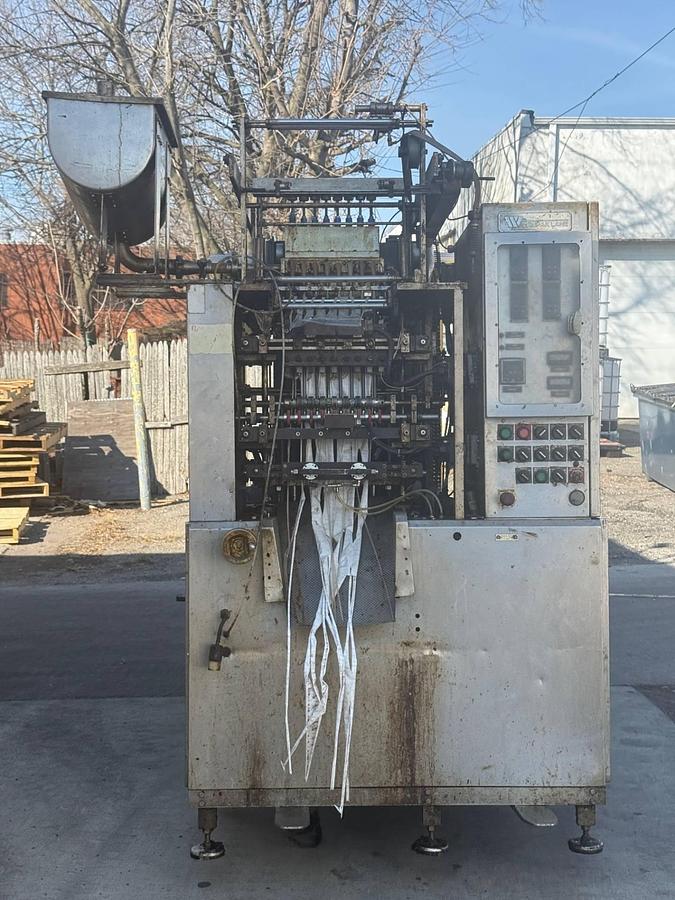
Winpak produces a range of commercial and industrial packaging machinery, and the used market reflects that variety. The most commonly available models include vertical form/fill/seal (VFFS) machines, horizontal form/fill/seal (HFFS) systems, thermoforming machines, vacuum packaging equipment, and modified atmosphere packaging (MAP) lines. A specific example of what circulates on the used market is the Winpak Lane Model L12, a vertical form/fill/seal machine designed for high-throughput packaging operations. These machines were built for demanding production environments, which means even older models tend to be mechanically substantial.
Because Winpak primarily served food, beverage, and medical packaging customers, the machines available secondhand are typically configured for those production contexts. Buyers looking for a specific model or configuration should work with a used equipment dealer who specializes in packaging machinery, as inventory turns over regularly and availability at any given time depends on what facilities have recently decommissioned. Searching by machine type (VFFS, thermoformer, etc.) rather than just brand name can help identify the right fit for a particular production line.
Are used Winpak packaging machines reliable enough for production use?
Winpak built its machinery for high-output commercial and industrial environments, which means the underlying construction is engineered to last. Many used Winpak machines have run for years or even decades in food and beverage facilities before being decommissioned, and they often retain significant operational life. That said, reliability of any used machine depends heavily on how well it was maintained, how intensively it was run, and how long it sat idle before being sold. These are factors a buyer needs to investigate directly rather than assume.
The standard approach when purchasing used packaging machinery is to request an inspection before committing. Reputable used equipment dealers will accommodate in-person visits, video walkthroughs, or recorded footage of the machine in its current condition. Some machines may still be installed at the production facility where they were used, making a live demonstration possible. Buyers should also contact Winpak directly to understand what level of technical support and parts availability they can expect for the specific model and age of machine they are considering, since older models may have more limited manufacturer support than recent ones.
What industries are Winpak packaging machines best suited for?
Winpak machinery was developed with food, beverage, and medical packaging applications as the primary focus. On the food side, these machines are commonly used for packaging fresh and processed meats, poultry, seafood, dairy products, and snack foods. The modified atmosphere packaging (MAP) and vacuum sealing capabilities built into many Winpak systems make them particularly well-suited for perishable products where shelf life extension is a priority. The medical and pharmaceutical sectors also use Winpak equipment for sterile packaging applications where material integrity and seal quality are critical.
Because these machines were designed for regulated industries, they tend to incorporate hygienic design features and are built to operate within food safety and cleanroom standards. Buyers from outside the food or medical space, such as industrial or consumer goods manufacturers, may still find value in certain Winpak models depending on the specific machine type, but the equipment's strengths are most directly aligned with perishable food and healthcare packaging. Prospective buyers should evaluate whether the machine's film compatibility and sealing technology match their specific product and packaging material requirements before purchasing.
What should buyers know about Winpak machine compatibility with packaging films and materials?
Winpak machines were originally designed to work in close coordination with Winpak-branded packaging films and materials. This integration means the equipment is optimized for specific film gauges, barrier properties, and material types that Winpak produces. Buyers considering a used Winpak machine should verify whether the machine can run third-party films or whether it requires proprietary Winpak materials to function as intended. This is not a minor consideration, as ongoing film supply costs and sourcing flexibility can significantly affect the total cost of operating the equipment.
In practice, many used Winpak machines can be adapted or retooled to run compatible films from other suppliers, but this may require adjustments to sealing temperatures, tension settings, or tooling. A packaging engineer or qualified technician familiar with the specific model can assess compatibility before purchase. Buyers should raise this question directly with the equipment dealer and, if possible, with a Winpak technical representative. Understanding the film supply situation upfront helps avoid operational surprises after the machine is installed and running.
What is the typical price range for used Winpak packaging machines?
Pricing for used Winpak packaging machines varies considerably depending on the machine type, model, age, condition, and included accessories. Entry-level or older VFFS models in fair condition may be available in the range of a few thousand to tens of thousands of dollars, while more complex thermoforming lines or MAP systems in good working condition can reach well into the six-figure range. The gap between a machine that needs significant refurbishment and one that is production-ready can represent a substantial difference in price, so condition is one of the most important pricing variables.
Buyers should also factor in costs beyond the purchase price itself. Shipping, rigging, installation, any necessary parts replacement, and operator training all contribute to the true landed cost of the equipment. Larger Winpak machines may require specialized rigging for loading and unloading, which adds to logistics expenses. Getting a clear picture of total acquisition cost, not just the listed machine price, is essential to making an accurate budget comparison between different options on the used market.
How does the inspection process work when buying a used Winpak machine?
Inspection is one of the most important steps in purchasing any used packaging machine, and reputable dealers will offer multiple ways to evaluate equipment before a sale is finalized. In-person inspections allow a buyer or their technician to physically examine the machine, check for wear on mechanical components, review electrical systems, and assess overall condition. For buyers who cannot travel, virtual inspections via video call or pre-recorded video walkthroughs are commonly available and can provide a detailed look at the machine's current state. In cases where the machine is still installed at a production facility, it may be possible to observe it running, which gives the clearest picture of operational condition.
It is worth noting that most used equipment dealers are not set up to run actual product through a machine during inspection. Full production testing requires operational permits, food-grade environments, and supply chains that a dealer typically does not maintain. What a buyer can realistically expect is a mechanical assessment of the machine's components, a visual inspection of sealing systems and wear parts, and, where possible, a dry cycle or demonstration run without product. Buyers should come prepared with specific questions about the machine's history, last known production use, and any known issues, and they should consider having a qualified packaging technician accompany them or review inspection footage independently.
What is the availability of replacement parts and technical support for used Winpak machines?
Parts availability is one of the most practical concerns for anyone buying a used Winpak packaging machine, and it deserves serious attention before purchase. Winpak, as the manufacturer, is the primary source for model-specific components, but support for older or discontinued models can be limited. Before committing to a purchase, buyers should contact Winpak directly to ask about parts availability for the specific model and serial number they are considering. The manufacturer can often indicate whether a machine is still within a supported service window or whether certain components are no longer stocked.
For machines where manufacturer support has diminished, aftermarket parts suppliers and third-party packaging machine service companies can sometimes fill the gap, particularly for common mechanical and electrical components. Buyers should also ask the selling dealer whether any spare parts are included with the machine, as decommissioned equipment sometimes comes with a stock of replacement components that the previous owner accumulated. Having spare parts on hand from the start can reduce downtime risk considerably. Working with a used equipment dealer who specializes in packaging machinery is an advantage here, as they tend to have deeper knowledge of parts sourcing options for the brands they carry.
How difficult is it to install and operate a Winpak packaging machine?
Winpak machines were designed for industrial production environments and are generally operated by trained machine operators and maintained by in-house or contracted technicians. The complexity of installation and operation depends significantly on the machine type. A vertical form/fill/seal machine like the Winpak Lane L12 requires proper electrical hookup, compressed air supply, and film threading setup, along with calibration of sealing temperatures and timing. Thermoforming lines and MAP systems tend to be more involved, with multiple subsystems that need to be commissioned and tuned before reliable production can begin.
For buyers without prior experience running Winpak equipment specifically, it is advisable to budget for professional installation and operator training. Some used equipment dealers can connect buyers with qualified service technicians who have experience with the brand. Winpak itself may also offer technical assistance for supported models, though this should be confirmed in advance. Operators who are already familiar with similar form/fill/seal or thermoforming equipment will generally find the learning curve manageable, but the machine's full capabilities are best realized when the people running it understand both the mechanical settings and the packaging materials it is designed to process.
Do Winpak packaging machines meet FDA and food safety standards?
Winpak machines were engineered for use in regulated food and medical packaging environments, and the equipment was built to align with the hygiene and safety standards applicable in those industries at the time of manufacture. This includes design features that facilitate cleaning and sanitation, materials of construction that are appropriate for food contact zones, and sealing technology capable of meeting the integrity requirements for modified atmosphere and vacuum packaging applications. For food manufacturers, this foundation is meaningful because it means the machine was not designed as a general-purpose industrial device adapted for food use.
That said, buyers operating in FDA-regulated or USDA-regulated environments should evaluate each used machine individually rather than assuming compliance based on brand alone. Regulatory requirements evolve over time, and a machine's age, condition, and any modifications made during its service life can all affect whether it meets current standards. Buyers should consult with their own food safety and regulatory teams, and potentially with equipment validation specialists, to confirm that a specific used Winpak machine fits within their compliance requirements before putting it into production.
What are the typical shipping and logistics considerations when purchasing a used Winpak machine?
Shipping a used Winpak packaging machine involves more planning than standard freight because of the size, weight, and mechanical sensitivity of the equipment. Smaller machines may be adequately protected with palletization and shrink wrap, while larger systems typically require custom crating to prevent damage in transit. The level of packaging required affects cost, and buyers should ask the dealer specifically what packaging method will be used and whether crating is included in the quoted price or billed separately. Getting clarity on this upfront helps avoid unexpected charges.
Larger Winpak machines, particularly thermoforming lines or multi-component systems, may require specialized rigging equipment for loading at the origin and unloading at the destination. Forklift capacity, crane access, and dock height are all factors that need to be assessed at both ends of the shipment. Buyers should communicate their facility's unloading capabilities to the dealer before shipping is arranged. The total landed cost of a used machine includes the purchase price plus all shipping, rigging, and handling fees, and understanding that full number is essential to making an informed buying decision.