Category
Manufacturer
Model
Willy Bachofen
Willy Bachofen manufactures high-quality equipment for the pharmaceutical and biotechnology industries. They are particularly known for their mixers and reactors, which are essential for ensuring consistent product quality in production.
FAQ:
What is Willy Bachofen (WAB) and what types of equipment does the company manufacture?
Willy Bachofen AG, commonly referred to as WAB, is a Swiss-based manufacturer with a long-standing reputation for producing high-quality industrial mixing, dispersing, and milling equipment. The company is best known for its DYNO-MILL line of bead mills, which are capable of achieving particle size reduction down to the nanometer range. Beyond bead mills, WAB also produces mixers and reactors that are specifically engineered to support consistent product quality in demanding production environments.
The company's equipment is built to exacting standards, with many models featuring hygienic design options and stainless steel construction that make them suitable for regulated industries. WAB machines span a wide range of scales, from laboratory-sized research units to full production-scale systems, which is one reason their equipment holds its value well and remains in demand on the secondary market long after initial purchase.
What industries use Willy Bachofen equipment?
WAB equipment is used across a broad range of industries, though it is particularly prevalent in pharmaceuticals and biotechnology, where precise particle size reduction and contamination control are critical. The hygienic design options available on many WAB models make them well suited to these regulated environments, and the equipment's ability to achieve consistent, repeatable results is a major factor in its adoption at pharmaceutical manufacturing facilities worldwide.
Beyond pharma and biotech, WAB machines are commonly found in cosmetics production, paints and coatings, printing inks, food processing, specialty chemicals, and increasingly in battery and energy material manufacturing. The DYNO-MILL series in particular is valued across all of these sectors because of its ability to handle a wide variety of wet-grinding and dispersing applications with a high degree of process control. This cross-industry demand is one reason used WAB equipment tends to move relatively quickly on the secondary market.
What is the DYNO-MILL and why is it considered a premium piece of industrial equipment?
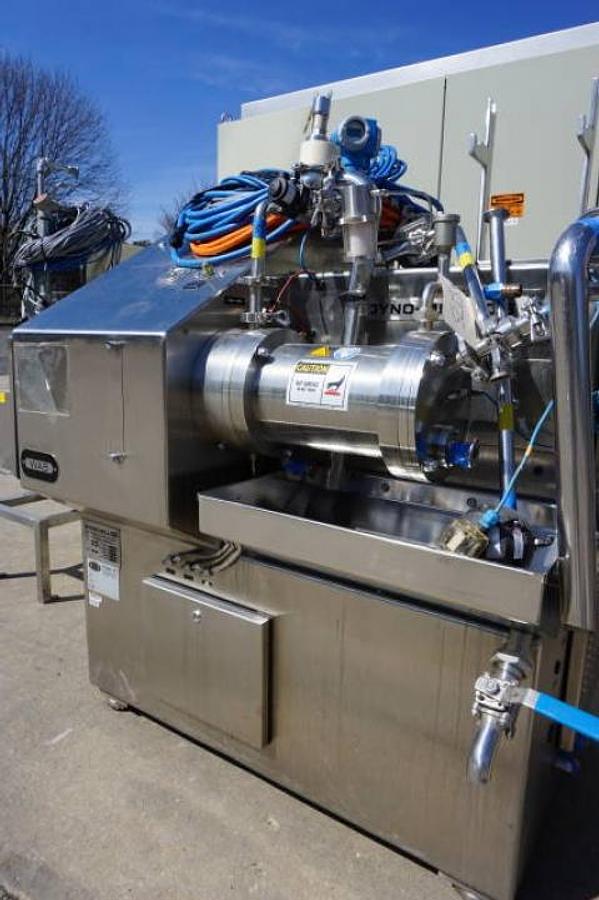
The DYNO-MILL is WAB's flagship product line and one of the most recognized bead mill designs in industrial processing. It operates as a wet-grinding mill, using small grinding beads (media) inside a chamber to reduce particle sizes in liquid suspensions. The design allows for very fine and uniform particle size distributions, with capable models reaching down to the nanometer scale. This level of precision is difficult to achieve with many competing mill designs, which is a core reason WAB equipment has earned a premium reputation over decades of industrial use.
The build quality also contributes significantly to the DYNO-MILL's standing. Swiss engineering standards, robust stainless steel construction, and attention to hygienic design details mean these machines are built to last through years of demanding production use. When purchased used, a well-maintained DYNO-MILL can still deliver performance that meets the needs of many applications, making used units an attractive option for companies looking to access high-end milling capability without the cost of purchasing a brand-new system.
What WAB models are most commonly found on the used equipment market?
The DYNO-MILL series accounts for the majority of used WAB equipment available at any given time. Within that line, horizontal configurations are among the most frequently listed units, including models such as the KD series. The KD6, for example, is a horizontal stainless steel media mill that appears on the secondary market with some regularity, particularly from pharmaceutical and chemical processing facilities that are upgrading or decommissioning older production lines. Laboratory-scale units from the DYNO-MILL RESEARCH LAB range also surface periodically and attract interest from R&D departments and smaller-scale producers.
Availability on the used market tends to reflect what industries have been most active buyers over the past decade or two, so pharma and coatings industry surplus generates a meaningful share of the WAB units that come up for resale. Buyers looking for a specific model or configuration should work with dealers who specialize in pharmaceutical or chemical processing equipment, as they are more likely to have relevant inventory and the background knowledge to accurately describe the condition and configuration of what they have available.
How should a buyer evaluate the condition of a used WAB mill before purchasing?
Evaluating a used WAB mill requires looking at several factors beyond just the basic machine description. Buyers should start by requesting as much documentation as possible, including any available service records, maintenance logs, or records of parts replacements. This information can help establish how hard the machine was run and whether critical wear components have been serviced. Key areas to assess include the condition of the grinding chamber, the wear on internal components like agitator discs and seals, and the overall integrity of the stainless steel surfaces, particularly on machines that were used in sanitary or pharmaceutical applications.
Most reputable used equipment dealers will accommodate in-person inspections or virtual inspections via video call or recorded video walkthrough. Some machines may still be installed and operating at the facility where they were used, which allows for a more complete assessment of working condition. Buyers should keep in mind that most equipment dealers are not set up to run actual production tests, as that would require different permitting and facilities. Consulting with WAB directly or with a qualified service technician can also be worthwhile, particularly for older models, to understand what level of manufacturer support and parts availability to expect for that specific machine.
Are spare parts and consumables available for used Willy Bachofen equipment?
Parts availability for used WAB equipment varies depending on the age and model of the machine. WAB has a long product history, and for many of their more established model lines, replacement parts such as seals, agitator components, and grinding media remain available either through the manufacturer or through third-party suppliers who specialize in milling equipment. Consumables like grinding beads are generally not model-specific and can often be sourced from multiple suppliers as long as the buyer knows the correct bead size and material specification for their application.
For older or discontinued models, parts availability can be more limited, and this is worth investigating before committing to a purchase. Prospective buyers are encouraged to contact WAB directly to ask about support and parts availability for the specific model they are considering. The manufacturer is typically the best source of accurate information on what is still stocked or can be produced, and understanding this upfront helps buyers make a realistic assessment of the total cost of ownership and long-term serviceability of the machine they are evaluating.
What should buyers understand about warranties on used WAB equipment?
Used industrial equipment, including WAB mills and mixers, is typically sold on an as-is basis by equipment dealers. Manufacturer warranties are generally associated with the purchase of new equipment directly through authorized channels, and those warranties do not transfer to subsequent buyers in the secondary market. This means the responsibility for thoroughly evaluating the condition of a used machine falls on the buyer, which is why inspection, documentation review, and working with reputable dealers matters so much in the purchasing process.
To reduce risk, buyers should prioritize dealers who have a long track record in the industry and who specialize in the type of equipment they are selling, as these dealers are more likely to accurately represent the condition of their inventory. Reaching out to WAB directly is also a useful step, since the manufacturer can advise on what service support, parts, and technical resources are available for a given model. Understanding the support landscape before purchase gives buyers a clearer picture of what they are taking on and helps set realistic expectations for maintaining the equipment over time.
What is the typical price range for used Willy Bachofen DYNO-MILL units?
Pricing for used WAB DYNO-MILL equipment varies considerably depending on the model, scale, age, and condition of the unit. Laboratory-scale research mills at the lower end of the size range tend to be less expensive than full production-scale horizontal mills, which can represent a significant capital investment even in the used market. Condition plays a large role in pricing as well. A machine that has been well maintained and comes with documentation will typically command a higher price than one with unknown service history or visible wear.
Buyers should also factor in costs beyond the listed price when calculating the total investment. Shipping, rigging, and any crating or palletization required to safely transport the equipment can add meaningfully to the final cost, particularly for larger and heavier production-scale units. Contacting dealers directly for current pricing is the most reliable approach, as secondary market prices fluctuate based on supply and demand, and the availability of specific models can change quickly. Getting a clear picture of the full landed cost, including all freight and handling charges, before agreeing to a purchase is an important part of the buying process.
What should buyers expect regarding shipping and logistics for used WAB equipment?
Shipping used industrial milling and mixing equipment like WAB machines requires careful planning, and the costs involved can vary significantly based on the size and weight of the unit. Smaller laboratory-scale mills may require only standard palletization, while larger production-scale DYNO-MILL units typically need heavier-duty crating and specialized rigging for safe loading and unloading. Buyers should ask dealers upfront about what packaging and rigging will be used, as the level of preparation directly affects the likelihood of the equipment arriving undamaged.
Freight charges, rigging fees, and crating costs are typically separate from the listed equipment price, so buyers need to account for all of these when calculating the total landed cost of a purchase. For international shipments, customs documentation and import duties add another layer of complexity and cost. Most dealers require full payment before a machine is released for shipping, though some may offer different terms to established repeat customers. Getting a detailed breakdown of all logistics costs in writing before finalizing a purchase is a straightforward way to avoid surprises.
Can used WAB equipment be integrated into an existing production line?
Used WAB equipment can generally be integrated into existing production lines, but the process requires careful planning and a clear understanding of the machine's specifications relative to the buyer's process requirements. Key factors to consider include the mill's throughput capacity, inlet and outlet connection sizes, cooling water requirements, electrical specifications, and whether the machine's configuration matches the viscosity and particle size targets of the intended application. WAB equipment is known for its precise engineering, and matching a used unit to a specific process is easier when the buyer has access to the machine's technical documentation.
Technical support for integration will typically need to come from the buyer's own engineering team, a third-party process engineer familiar with wet milling equipment, or potentially from WAB directly if the manufacturer offers support for that particular model. Buyers should inquire with WAB about the level of technical assistance available for the specific unit they are considering, since support resources can vary by model age and region. Working with a dealer who has experience in pharmaceutical or chemical processing equipment can also be helpful, as they are more likely to be able to provide accurate technical details about the machine's configuration and history.