Category
Manufacturer
Model
Welch
Welch is known for its laboratory equipment, particularly in the pharmaceutical and biotechnology sectors. They provide a range of vacuum pumps and filtration systems that are essential for research and production.
FAQ:
What types of Welch vacuum pumps are commonly available on the used market?
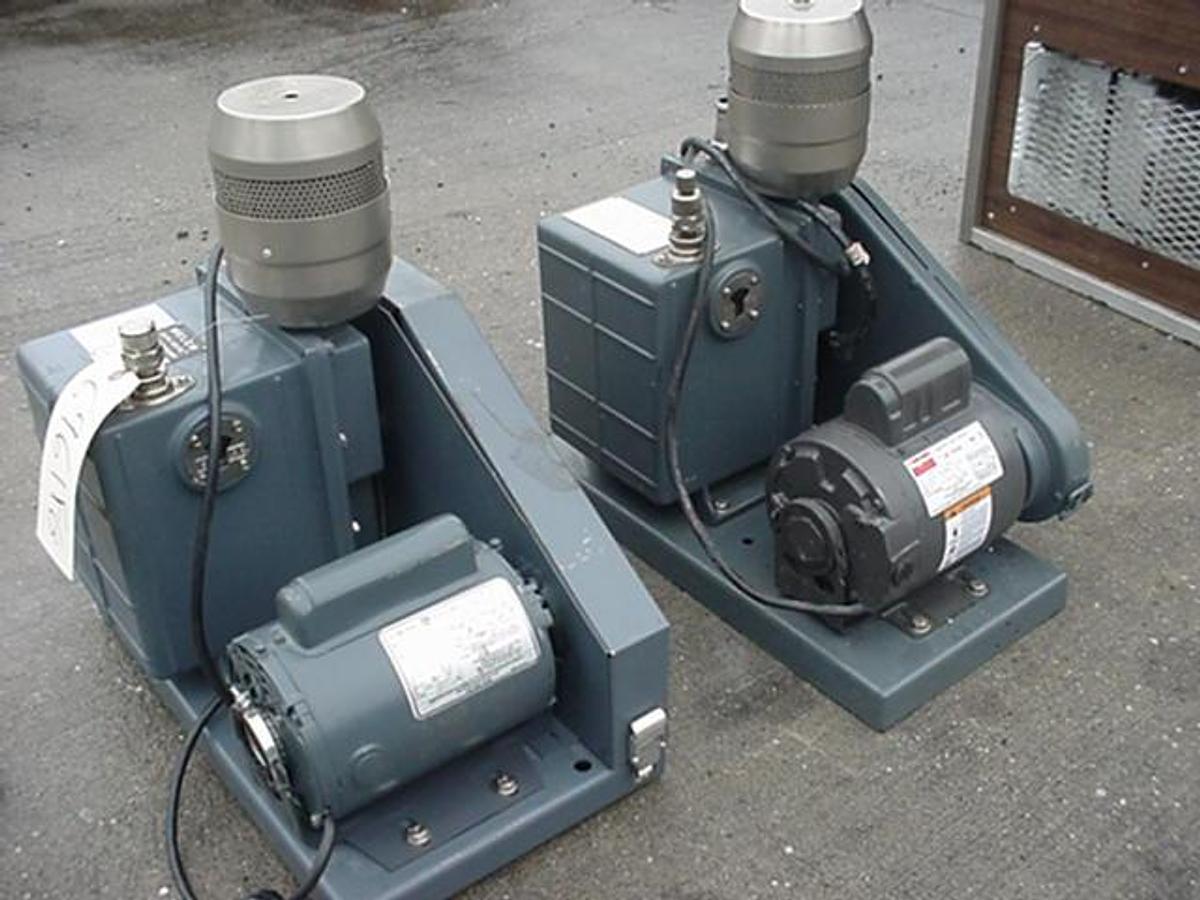
Welch manufactures several distinct pump technologies, and all of them turn up on the used market with some regularity. The most common categories are oil-sealed rotary vane pumps (including the well-known Duo-Seal series), dry diaphragm pumps, and scroll pumps. Each design serves a different range of applications and vacuum depths, so the right choice depends heavily on what the pump will actually be doing in your facility or lab.
Rotary vane pumps like the Duo-Seal line are workhorses built for deep vacuum applications and are frequently found in pharmaceutical and biotechnology labs. Diaphragm pumps, by contrast, run completely oil-free and are better suited to environments involving solvents or corrosive vapors. Scroll pumps occupy a middle ground, offering clean, dry operation at moderate vacuum levels. Used Welch pumps across all three categories are available from specialty industrial equipment dealers who focus on laboratory and scientific machinery.
What vacuum levels can Welch pumps achieve?
The ultimate vacuum a Welch pump can reach depends almost entirely on the pump technology involved. Oil-sealed rotary vane models, including the classic Duo-Seal series, are capable of reaching ultimate vacuum levels in the range of 1 Torr or better under ideal conditions, which makes them appropriate for demanding laboratory processes like freeze drying, vacuum distillation, and degassing. These are among the deepest vacuums achievable with a single-stage mechanical pump.
Diaphragm pumps, while oil-free and chemically resistant, typically achieve ultimate vacuums in the 5 to 10 Torr range. That level of vacuum is more than adequate for applications like rotary evaporation, vacuum filtration, and aspiration, but it falls short of what rotary vane pumps can deliver. Buyers purchasing a used Welch pump should always confirm the model number and cross-reference the manufacturer's published specifications to verify that the pump's rated ultimate vacuum matches the requirements of their specific application.
What is the difference between a Welch rotary vane pump and a diaphragm pump?
The core mechanical difference is that rotary vane pumps use oil lubrication and a set of spring-loaded vanes rotating inside a chamber to compress and exhaust gas, while diaphragm pumps use a reciprocating membrane with no oil involved at all. That distinction has real practical consequences. Rotary vane pumps achieve significantly deeper vacuums and handle higher throughput, but they require regular oil changes and are sensitive to vapor contamination that can degrade the oil and damage internal components over time.
Diaphragm pumps sacrifice some vacuum depth in exchange for chemical compatibility and low maintenance. Because there is no oil in the pumping mechanism, solvent vapors and corrosive gases pass through without causing the kind of contamination damage that would ruin a rotary vane pump. This makes diaphragm models the standard choice for rotary evaporators, chemical synthesis setups, and anywhere else that aggressive vapors are present. For buyers looking at used equipment, understanding this distinction is critical because purchasing the wrong pump type for a chemical application can result in rapid pump failure.
What industries and applications commonly use Welch vacuum pumps?
Welch has a long history in laboratory and scientific settings, and the bulk of their pump lineup reflects that. Pharmaceutical manufacturing, biotechnology research, university and industrial laboratories, and medical device production are among the most common end-use environments. Specific applications include freeze drying (lyophilization), rotary evaporation, vacuum filtration, solvent recovery, degassing liquids, and operating vacuum ovens. The Duo-Seal rotary vane series in particular has been a fixture in research labs for decades.
Beyond the lab, Welch pumps also see use in light industrial processes where a reliable, moderate-capacity vacuum source is needed. Food packaging, electronics manufacturing, and certain analytical instrument applications all draw on the same core pump technologies that Welch has built its reputation around. Because these pumps are so widely used across industries, used units are available in a range of sizes and configurations, and the brand's long market presence means that technical documentation and parts sourcing are generally more accessible than with less established manufacturers.
What should I inspect when buying a used Welch vacuum pump?
Used vacuum pumps require a more thorough evaluation than most used equipment because internal wear is not always visible from the outside. The most important things to assess are the pump's ultimate vacuum performance, oil condition (for rotary vane models), and whether the pump has been exposed to corrosive or particulate-laden gases that could have damaged internal surfaces. A pump that has been used in a clean, dry application will typically be in much better condition than one that processed solvent vapors or reactive gases without proper cold traps in place.
Reputable used equipment dealers will typically accommodate in-person inspections or provide detailed video walkthroughs of the machine so buyers can assess its current condition. For rotary vane pumps, ask about the condition of the oil and whether it has been recently changed. Check for unusual noise, vibration, or slow pump-down times, all of which can indicate worn vanes or bearing issues. Because used equipment is sold as-is, buyers carry the responsibility of inspection, so working with a dealer who specializes in laboratory and scientific equipment and has a verifiable track record is important. Consulting Welch's technical resources or a service technician familiar with the brand can also help buyers interpret what they are seeing during an inspection.
What oil should be used in a Welch oil-sealed rotary vane vacuum pump?
Welch specifies vacuum pump oil for use in its oil-sealed rotary vane models, and using the correct oil matters more than most users expect. Standard motor oils or general-purpose lubricants are not suitable because they have too high a vapor pressure, which directly limits the ultimate vacuum the pump can achieve. Vacuum pump oils are formulated with low vapor pressure and good thermal stability specifically to support deep vacuum operation without contributing to the pump's background pressure.
For used Welch pumps, the oil should be inspected and likely changed before putting the pump back into service. Oil that has been contaminated with solvents, water, or particulates will appear cloudy or discolored and will degrade pump performance. Welch-branded vacuum pump oil is available through laboratory supply channels, and several third-party vacuum pump oils with compatible specifications are also widely used. If the pump will be used in an application involving aggressive vapors, installing a cold trap between the process and the pump inlet is strongly recommended to protect the oil and extend pump life between oil changes.
Are Welch vacuum pumps suitable for corrosive or chemical applications?
The answer depends entirely on which pump technology is involved. Welch's diaphragm pump models are designed specifically with chemical resistance in mind. The pumping mechanism contains no oil, and the wetted materials are selected to handle exposure to common laboratory solvents and moderately corrosive vapors. These pumps are the appropriate choice for rotary evaporation, chemical synthesis, and any application where the gas stream contains aggressive compounds.
Oil-sealed rotary vane pumps, including the Duo-Seal series, are not inherently suited to corrosive or solvent-heavy applications unless proper protective measures are in place. Solvent vapors that condense in the oil will degrade it quickly and can corrode internal components, shortening the pump's service life significantly. If a rotary vane pump must be used in a chemical environment, a cold trap installed on the inlet is essential to condense and capture vapors before they reach the pump. Buyers evaluating used rotary vane pumps that were previously used in chemical applications should pay particular attention to the condition of the oil, the internal surfaces, and any signs of corrosion or residue that might indicate the pump was not adequately protected during its service life.
What routine maintenance does a Welch vacuum pump require?
Maintenance requirements vary by pump type. For oil-sealed rotary vane pumps, the most critical routine task is oil changes at regular intervals. The frequency depends on how the pump is used and what gases it processes, but in a typical lab setting, oil changes every few hundred hours of operation are common. Beyond oil changes, the inlet filter or trap should be checked and cleaned regularly, and the exhaust filter (where fitted) should be replaced according to the manufacturer's schedule. Vanes do wear over time and will eventually need replacement, though a well-maintained pump can run for many years before vane replacement becomes necessary.
Diaphragm pumps have a simpler maintenance profile because there is no oil to manage. The main wear components are the diaphragms and valves, which will eventually fatigue and need replacement. Welch and third-party suppliers offer rebuild kits for many diaphragm models. For any used pump being put back into service, a baseline inspection and service before first use is a sound practice regardless of the pump type. This typically means fresh oil in rotary vane units, a check of all seals and fittings, and a pump-down test to verify the unit reaches its rated ultimate vacuum before it goes into production use.
Can replacement parts be sourced for used Welch vacuum pumps?
Welch has been operating as a brand for well over a century and is currently part of the Gardner Denver and Atlas Copco group of companies. That corporate backing generally means better parts availability than buyers would find with smaller or discontinued pump brands. Replacement parts including vanes, oil, seals, exhaust filters, and diaphragm rebuild kits are available through laboratory supply distributors, the manufacturer's own channels, and third-party industrial parts suppliers.
That said, parts availability for any specific used pump depends on the model and its age. Older or discontinued models may have limited factory support, and buyers should check parts availability before committing to a purchase, particularly if the pump will be relied upon heavily in production. Contacting Welch or an authorized service center with the model number and serial number is the most reliable way to get an accurate picture of what support exists for a particular unit. A used equipment dealer with experience in laboratory machinery can also be a useful resource for identifying service options for specific models.
What should buyers know about shipping and payment when purchasing a used Welch vacuum pump?
Vacuum pumps contain precision internal components and, in the case of rotary vane models, a charge of oil that must be drained or secured before shipment. Proper packaging is important to prevent damage in transit, and the level of crating or palletization required will affect shipping costs. Smaller bench-top diaphragm pumps can typically ship via standard freight with basic pallet packaging, while larger rotary vane units may require more substantial crating. Buyers should ask the dealer specifically about how the pump will be packaged and what the full landed cost will be, including any rigging fees for loading.
On payment, most used equipment dealers require full payment before a machine ships. Some dealers extend payment terms to established repeat customers, but buyers purchasing from a dealer for the first time should expect to pay in full upfront. Because used equipment is sold as-is, the inspection process before purchase carries significant weight. Buyers should take advantage of any in-person or video inspection options the dealer offers to verify the pump's condition before funds are transferred. Selecting a dealer with a long track record in laboratory and scientific equipment is one of the most practical ways to reduce risk in a used equipment transaction.