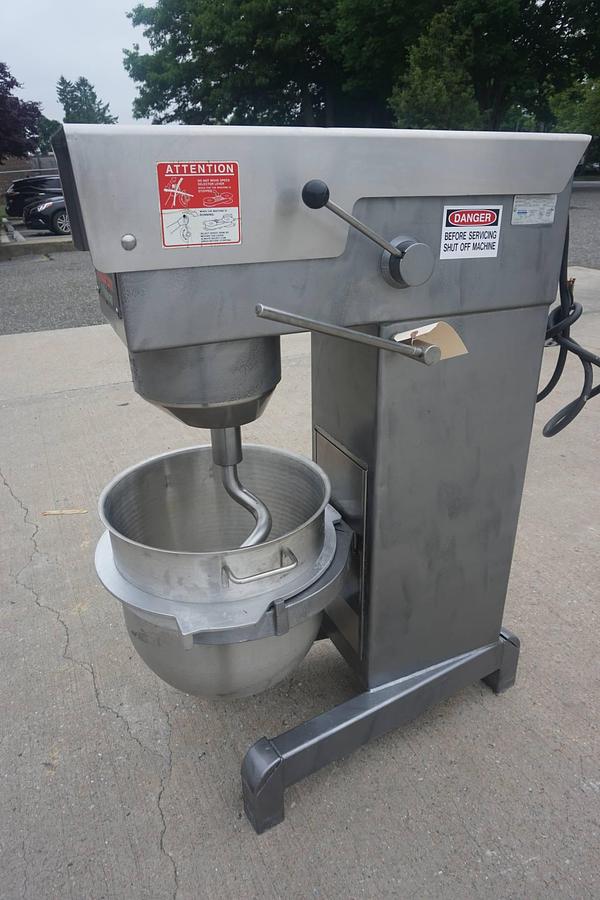
Category
Manufacturer
Model
Welbilt
Welbilt specializes in commercial kitchen equipment, particularly for the food service industry. Their product line includes ovens, fryers, and refrigeration solutions that cater to various culinary needs.
FAQ:
What types of commercial kitchen equipment does Welbilt manufacture?
Welbilt produces a broad range of commercial foodservice equipment designed for professional kitchen environments. Their product categories include ovens, fryers, refrigeration units, bowl mixers, ice machines, and holding and warming equipment. The company operates several well-known sub-brands including Manitowoc Ice, Frymaster, Convotherm, Garland, Merrychef, Delfield, and Multiplex, which means buyers are often purchasing equipment that carries both the Welbilt parent name and a recognized brand identity within a specific equipment category. This wide portfolio makes Welbilt a common choice for operators who want to source multiple equipment types from within a single manufacturer's ecosystem.
Welbilt equipment is used across a wide variety of foodservice settings, including quick-service restaurants, full-service dining establishments, hotels, healthcare facilities, convenience stores, and large institutional kitchens. Their lineup is built to handle high-volume, continuous-use demands, which is why used Welbilt machines remain in demand on the secondary market long after their initial deployment. Buyers sourcing used Welbilt equipment should pay close attention to which sub-brand and model they are purchasing, as parts availability, service support, and operational specifications can vary meaningfully from one product line to another.
What should I know before buying used Welbilt commercial kitchen equipment?
Buying used Welbilt equipment can offer significant cost savings compared to purchasing the same models through a distributor, but it requires careful due diligence. The most important step is requesting a thorough inspection before committing to a purchase. Reputable used equipment dealers will typically accommodate in-person visits, live video walkthroughs, or recorded video inspections that show the machine's current physical and operational condition. Because used equipment is generally sold as-is, the burden of evaluating condition falls on the buyer, so working with a dealer who has a long track record in commercial foodservice equipment specifically is critical.
Before finalizing any purchase, it is also worth contacting Welbilt or the relevant sub-brand manufacturer directly to understand what level of support is available for the specific model and production year you are considering. Older models may have limited parts availability, and some discontinued lines may require sourcing components through third-party suppliers. Asking the dealer for the machine's serial number and model designation upfront allows you to do this research before any money changes hands. Understanding the full landed cost, including shipping, rigging, and any site preparation required, is equally important since these costs can add up quickly for large or heavy pieces of equipment.
What certifications should used Welbilt equipment carry?
Welbilt equipment, depending on the product line and the market it was built for, is typically certified to standards including NSF (National Sanitation Foundation), UL (Underwriters Laboratories), ENERGY STAR, and CE for equipment sold in European markets. These certifications matter in a commercial kitchen context because health departments, fire marshals, and insurance providers often require that installed equipment meets recognized safety and sanitation standards. When buying used equipment, buyers should verify that the unit they are considering carries the certifications required by their local jurisdiction, as certification requirements can vary by state, county, or municipality.
It is worth noting that certification labels on used machines confirm the equipment met those standards at the time of manufacture, but any modifications made to the unit after it left the factory could affect its certified status. If a piece of used Welbilt equipment has been altered, repaired with non-approved parts, or had components removed, a local health inspector or code official may flag it during a kitchen inspection. Buyers planning to install used equipment in a newly permitted facility or a kitchen undergoing inspection should factor this into their evaluation process and discuss it with the dealer before purchasing.
How is used Welbilt commercial kitchen equipment typically priced?
Pricing for used Welbilt equipment varies considerably based on the specific product category, model, age, condition, and current market demand. A used countertop unit like a Merrychef high-speed oven or a smaller Frymaster fryer will generally carry a much lower price point than a large Convotherm combi oven or a Manitowoc ice machine with high daily output capacity. Condition is one of the biggest pricing drivers on the secondary market. Equipment that was lightly used in a hotel or institutional setting often commands a higher price than the same model pulled from a high-volume quick-service restaurant where it ran continuously for years.
Buyers should also account for the total cost of acquisition beyond the sticker price. Shipping costs for commercial kitchen equipment can be substantial, particularly for heavy or oversized units that require professional rigging for loading and unloading. Crating or palletization adds to the cost as well. Getting a clear picture of the full landed cost, meaning the purchase price plus all freight, rigging, and handling fees, is essential for making an accurate cost comparison between different listings or dealers. Some dealers may list equipment at an attractive price but charge significantly more for packaging and freight, so always ask for a complete quote before making a decision.
Can used Welbilt equipment be inspected before purchase?
Yes, inspections are a standard part of buying used commercial kitchen equipment from reputable dealers. Most dealers will offer at least one of three inspection formats: an in-person visit to the dealer's facility, a live video call where a staff member walks through the machine in real time, or a pre-recorded video inspection that documents the equipment's condition, serial number, and visible wear. For buyers who cannot travel to inspect a machine personally, video inspections have become a widely accepted alternative that provides a reasonable level of transparency about what is being purchased.
In some cases, used Welbilt equipment may still be installed and operating at the facility where it was originally used, rather than at a dealer's warehouse. In these situations, the dealer may be able to arrange an inspection at the actual production or foodservice site, where the machine can potentially be observed running under real conditions. Keep in mind that even in these cases, most dealers are not set up to run full production tests, since operating a commercial kitchen requires permits and infrastructure that equipment dealers do not typically maintain. The goal of any inspection is to get an accurate, honest picture of the machine's mechanical condition, visible wear, and completeness of components before any purchase commitment is made.
What are the shipping and delivery considerations for large Welbilt commercial kitchen equipment?
Shipping commercial kitchen equipment, particularly larger units like combi ovens, refrigeration systems, or high-capacity fryers, involves logistics that go well beyond standard freight. Equipment must be properly palletized or crated to prevent damage in transit, and the level of packaging required will directly affect shipping costs. Buyers should ask dealers specifically how the equipment will be packaged and what that packaging cost includes. Inadequate packaging is one of the most common causes of damage during transit for used commercial equipment, so this is not a detail to overlook.
For heavy or oversized Welbilt equipment, professional rigging may be required to safely load the machine at the dealer's location and unload it at the destination. Rigging services involve specialized equipment such as forklifts, pallet jacks, or cranes, and these services carry their own fees that are typically separate from the freight quote. Buyers should also consider whether their receiving location is equipped to handle delivery, including adequate dock access, floor load capacity, and clearance for moving large equipment into position. Getting a complete breakdown of all shipping, rigging, and handling costs upfront is the only reliable way to understand the true landed cost of any used Welbilt equipment purchase.
What payment terms are typical when purchasing used Welbilt equipment from a dealer?
The standard practice among used commercial equipment dealers is to require full payment before the equipment is released for shipping. This applies to most transactions, particularly for buyers who are purchasing from a dealer for the first time. The rationale is straightforward: used equipment is often a one-of-a-kind item, and holding a machine for a buyer without secured payment creates significant risk for the seller. Payment is typically accepted by wire transfer, credit card, or other methods specified by the individual dealer.
Some dealers may offer extended payment terms or net terms to buyers with whom they have an established purchasing history. These arrangements are generally negotiated on a case-by-case basis and are not the default for most transactions. Buyers who anticipate needing financing should discuss this with the dealer early in the process rather than after agreeing on a price. It is also worth clarifying the dealer's process for handling any disputes related to the condition of equipment upon arrival, since understanding how discrepancies are handled before payment is made is far easier than trying to resolve them after the fact.
What is Welbilt's KitchenConnect platform and does it affect used equipment purchases?
KitchenConnect is Welbilt's IoT-based equipment management platform, designed to allow foodservice operators to monitor connected equipment remotely, receive predictive maintenance alerts, and access operational performance data. On newer Welbilt equipment that was shipped with KitchenConnect hardware integrated, the platform can help operators track energy usage, identify performance issues before they cause downtime, and streamline service calls by giving technicians access to equipment data before arriving on site. For operators running multiple locations, the ability to monitor equipment across a network from a single dashboard is a meaningful operational advantage.
For buyers of used Welbilt equipment, KitchenConnect compatibility depends entirely on the specific model and the year it was manufactured. Not all Welbilt equipment includes the necessary hardware to connect to the platform, and older models were built before the system existed. When evaluating a used unit, buyers interested in connected functionality should verify with the dealer whether the specific machine includes KitchenConnect hardware and whether that connectivity is still active or transferable. In many cases, used equipment is purchased purely for its mechanical function, and KitchenConnect integration is a secondary consideration, but it is worth clarifying if remote monitoring is part of the buyer's operational plan.
Are parts and service support available for used Welbilt commercial kitchen equipment?
Parts and service availability for used Welbilt equipment depends largely on the specific sub-brand, model, and age of the machine. Because Welbilt operates multiple recognized brands including Frymaster, Manitowoc Ice, Garland, Delfield, Convotherm, and Merrychef, each product line has its own parts ecosystem and authorized service network. For models that are still within a reasonably current production generation, parts are generally available through Welbilt's authorized service channels and through third-party commercial kitchen parts suppliers. Buyers should research parts availability for their specific model before purchasing, particularly for equipment that is more than ten years old.
Welbilt was acquired by Ali Group in 2022, one of the largest foodservice equipment manufacturers in the world, which has broadly strengthened the global service infrastructure supporting Welbilt-branded products. However, for older or discontinued models, buyers may find that some components are no longer manufactured and must be sourced through used parts suppliers or fabricated by a qualified service technician. Contacting Welbilt or the relevant sub-brand's service department directly, using the machine's model and serial number, is the most reliable way to get an accurate picture of parts availability before committing to a purchase. This step is especially important for buyers who are acquiring equipment for a high-volume operation where downtime would be costly.
How does buying used Welbilt equipment compare to buying from a distributor?
Purchasing used Welbilt equipment through a secondary market dealer typically offers a substantially lower acquisition cost than sourcing the same model through an authorized distributor. For foodservice operators working with tight capital budgets, or those outfitting a kitchen where the equipment will see moderate rather than continuous use, the price difference can be significant enough to justify the tradeoffs involved. The main tradeoff is condition uncertainty, which is why inspection access and dealer reputation matter so much in used equipment transactions. A well-maintained used machine purchased from a knowledgeable dealer who specializes in commercial foodservice equipment can deliver years of reliable service at a fraction of the cost of a comparable unit purchased through a distribution channel.
The key differences to weigh include condition transparency, parts history, and support expectations. Equipment purchased through a distributor typically comes with documentation, factory settings intact, and a clear service history. Used equipment may have unknown hours, undocumented repairs, or wear that only becomes apparent after extended use. Buyers can mitigate much of this risk by choosing dealers with a long track record in commercial kitchen equipment specifically, requesting thorough inspections, and doing their own research on the model's known reliability and common failure points. For operators who need equipment quickly, the used market also frequently offers faster availability than waiting on lead times for certain models, which can be a practical advantage in time-sensitive situations.