Category
Manufacturer
Model
Weighpack
Weighpack is recognized for its innovative packaging machinery, primarily serving the food industry. Their offerings include filling, sealing, and labeling solutions that streamline production processes.
FAQ:
What types of packaging machinery does Weighpack manufacture?
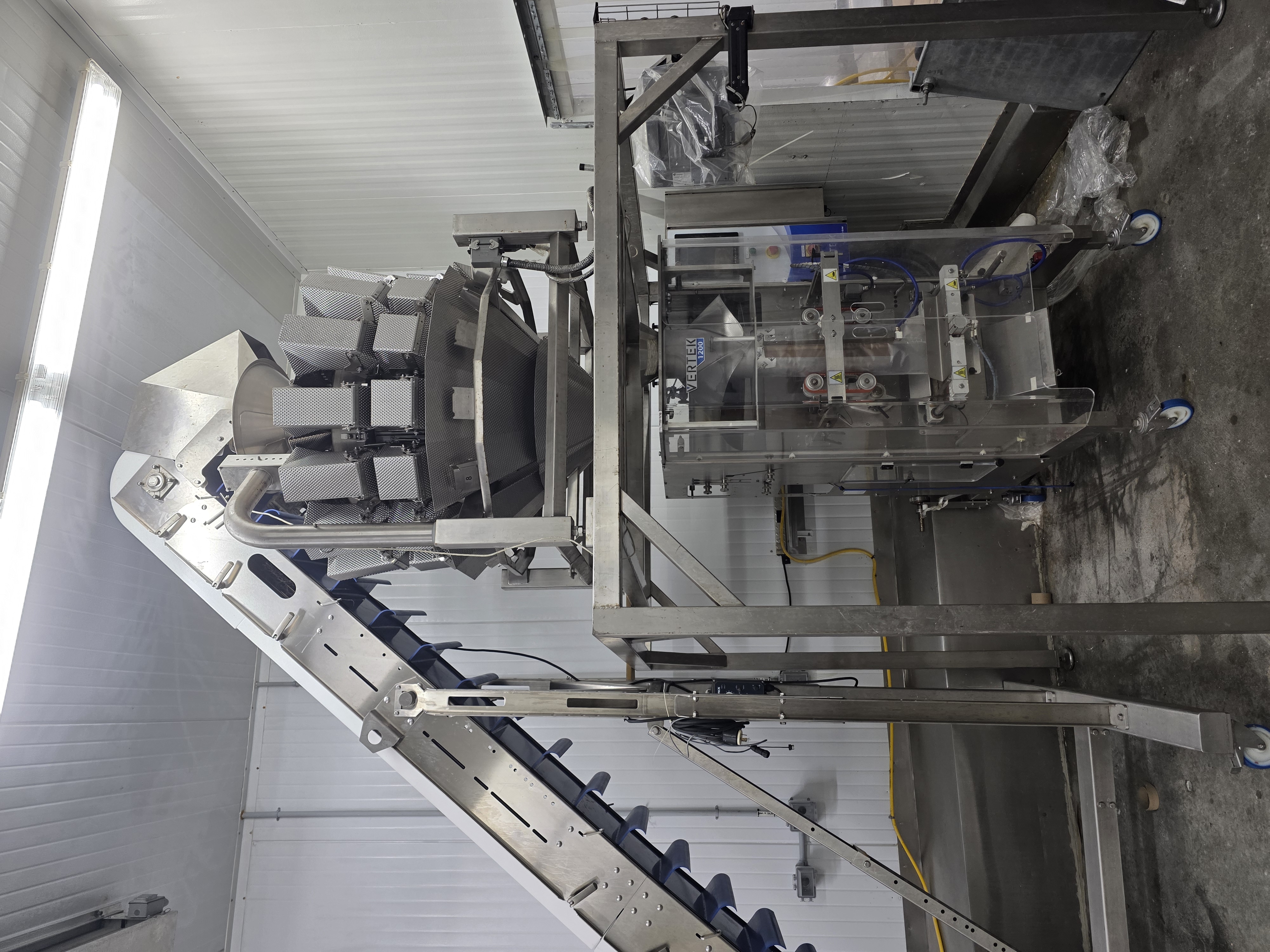
Weighpack Systems is a Canadian packaging machinery manufacturer with a strong reputation in the food processing and industrial sectors. Their product lineup centers on multihead weighers, vertical form fill seal (VFFS) baggers, linear weighers, and combination weighing systems. These machines are designed to handle filling, sealing, and labeling tasks within a single integrated production line, which reduces manual handling and speeds up throughput. Weighpack also produces equipment configured for sanitary washdown environments, making their machinery a common choice in facilities that process fresh, frozen, or snack foods.
Beyond food applications, Weighpack equipment is used across hardware, pet food, and general non-food industries, so the product range is broader than many buyers initially expect. Their machines are built with stainless steel frames and food-grade contact surfaces, which supports compliance with hygiene standards in regulated production environments. Buyers looking at used Weighpack equipment should confirm which specific model and configuration is being offered, since the brand covers a wide spectrum of machine types, each suited to different product characteristics and output volumes.
What products or materials can Weighpack packaging machines handle?
Weighpack machinery is designed to handle a wide variety of free-flowing and semi-free-flowing products. In the food industry, common applications include snack foods, frozen vegetables, fresh produce, nuts, candy, coffee, and pet treats. The machines are also used for non-food items such as hardware components, fasteners, and small plastic parts. The key factor in determining compatibility is the product's flow characteristics, density, and fragility, since these affect which weighing head configuration and bucket size will produce consistent, accurate fills.
For sticky, wet, or irregularly shaped products, specialized bucket and chute designs are available on certain Weighpack models. Buyers purchasing used Weighpack equipment should ask the seller for details on the specific product types the machine was previously running, as this gives a practical indication of its suitability for a new application. It is also worth consulting with the manufacturer directly to confirm whether parts and technical support are still available for the model in question, since older machines may have limited documentation or discontinued components.
What weighing speed and accuracy can be expected from Weighpack multihead weighers?
Weighpack multihead weighers are generally capable of achieving between 40 and 120 weighing cycles per minute, depending on the model, the number of heads, and the product being weighed. Higher head counts (typically 14 or 16 heads) allow the machine's control system to select from a larger number of bucket combinations simultaneously, which improves both speed and accuracy. For most dry snack and granular food applications, target weight accuracy falls within plus or minus one gram or better, which significantly reduces product giveaway compared to manual or single-head filling methods.
Actual performance on a used machine will depend on the condition of the load cells, the timing gates, and the control system. Load cells in particular are wear components that can drift over time if the machine has been running in a high-volume production environment. Before purchasing used Weighpack weighing equipment, buyers should request documentation of recent calibration records or arrange an inspection to verify that the weighing system is functioning within acceptable tolerances. Some sellers can demonstrate the machine running dry (without product) to show mechanical function, though full product testing is typically not available at a dealer's facility.
What certifications and compliance standards do Weighpack machines typically meet?
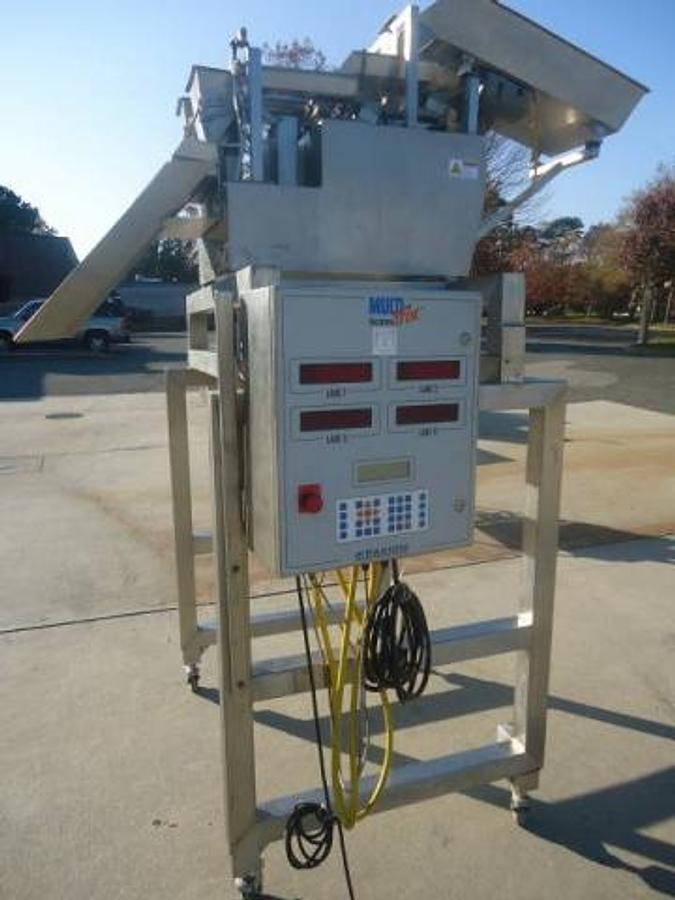
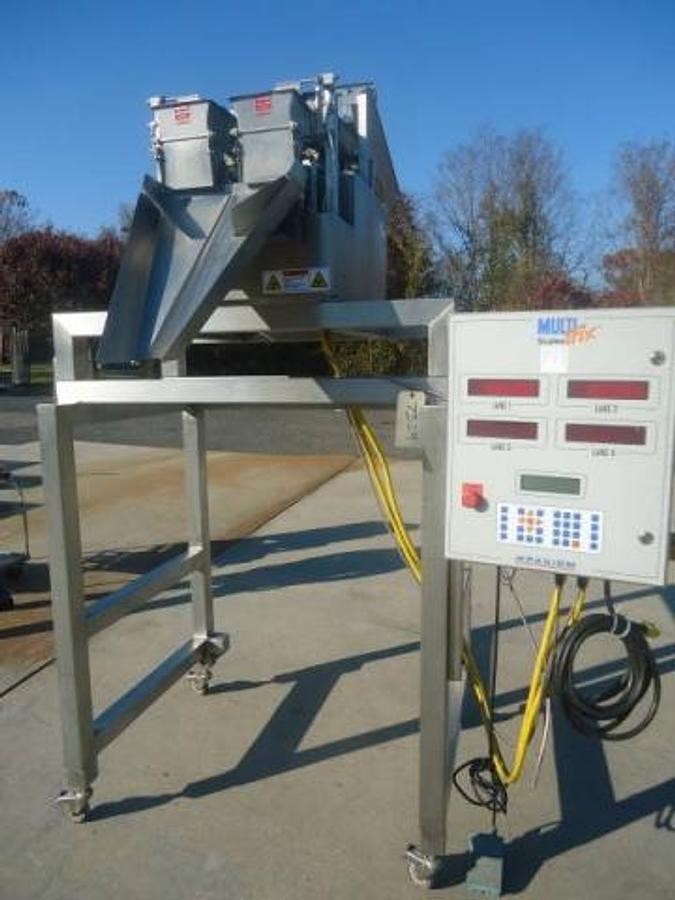
Weighpack machinery is commonly built to meet USDA and FDA standards for food contact surfaces, which is a baseline requirement for equipment used in regulated food processing facilities. Machines intended for export or sale in certain markets are also configured to meet CE marking requirements, which indicates conformity with European safety and electrical standards. The specific certifications on any given unit depend on the model, the year of manufacture, and the market it was originally built for. Some listings, including used Weighpack linear scales, explicitly note USDA compliance as a specification, which is relevant for buyers in meat, poultry, or other USDA-regulated processing environments.
When buying a used Weighpack machine, buyers should request the original documentation, including any compliance plates or certificates that were supplied with the machine at the time of manufacture. It is also advisable to contact Weighpack directly to confirm what standards a specific model was certified to, since certifications can vary by configuration. If a machine will be installed in a facility subject to third-party audits (such as SQF, BRC, or FSSC 22000), the buyer's quality team should review the equipment's documentation before purchase to confirm it meets the facility's requirements.
What should buyers know about purchasing used Weighpack equipment versus buying from a manufacturer?
Buying used Weighpack packaging machinery offers a meaningful cost advantage over sourcing equivalent equipment through a manufacturer, and lead times are typically much shorter since the machine is already built and available. For businesses that need to add capacity quickly or are working within a tighter capital budget, the used equipment market is a practical option. Used machines are sold as-is, which means the buyer takes on responsibility for verifying the machine's condition before committing to a purchase. This is why selecting a reputable dealer with a track record in packaging or food processing equipment matters considerably.
The trade-off is that used equipment does not come with the same level of support that a manufacturer would provide for a recently produced machine. Buyers should contact Weighpack directly before purchasing to ask about parts availability and technical support for the specific model and serial number they are considering. Older models may have discontinued components or limited documentation, which can affect the cost and timeline of any future repairs. A thorough pre-purchase inspection, whether conducted in person or via video, is the most reliable way to assess the machine's actual condition and reduce the risk of unexpected issues after delivery.
How should buyers inspect a used Weighpack machine before purchasing?
Reputable used equipment dealers will typically offer buyers the option to inspect machinery in person, via live video call, or through detailed video recordings of the machine. The goal of any inspection is to get an accurate picture of the machine's current mechanical and electrical condition. For a Weighpack weigher or VFFS bagger, key areas to examine include the condition of the load cells, the state of the stainless steel surfaces and welds, the function of the timing gates and discharge chutes, and the responsiveness of the control panel. Any signs of corrosion, damaged seals, or worn conveyor components should be noted and factored into the purchase decision.
Some used Weighpack machines may still be installed and running at a production facility at the time of sale, in which case it may be possible to arrange an inspection at the plant where the equipment is currently in operation. This is one of the better scenarios for a buyer, since it allows observation of the machine under real production conditions. Keep in mind that even in these cases, dealers generally cannot test the machine with a buyer's specific product, since running a full production trial requires permits and facility resources that a dealer does not typically have. Buyers should prepare a checklist of critical components to verify during any inspection and ask the seller specific questions about the machine's maintenance history and any known issues.
What is the typical price range for used Weighpack packaging machines?
Pricing for used Weighpack machinery varies considerably based on the machine type, the number of weighing heads, the age of the unit, and its overall condition. A used Weighpack linear scale with basic controls might be priced significantly lower than a 14 or 16-head multihead combination weigher with integrated controls and a VFFS bagger. In general, used multihead weighing systems from established manufacturers like Weighpack can range from tens of thousands of dollars for older or simpler models up to well over one hundred thousand dollars for more recent, fully configured systems in good condition.
Buyers should also account for costs beyond the listed machine price. Shipping, rigging, and crating expenses can add a meaningful amount to the total landed cost, particularly for heavier or larger equipment that requires specialized loading equipment. If the machine needs refurbishment, electrical updates, or replacement parts upon arrival, those costs should be estimated before finalizing the purchase decision. Asking the seller for a detailed breakdown of all associated costs, including packaging, freight, and any rigging fees, gives a clearer picture of the true total investment.
What are the shipping and delivery considerations for used Weighpack machinery?
Shipping used packaging machinery requires careful planning to prevent damage in transit. Weighpack equipment, particularly multihead weighers and VFFS baggers, contains precision components like load cells and timing mechanisms that are sensitive to impact and vibration. Machines should be properly secured, palletized, or crated before shipment, and the level of packaging required will affect the shipping cost. Larger or heavier units may need to be loaded with a forklift or crane, which adds rigging costs at both the origin and destination.
Buyers should ask the seller for a full breakdown of shipping costs before agreeing to a purchase, including crating or palletization fees, freight charges, and any rigging costs for loading and unloading. For international shipments, customs documentation and import duties are additional considerations. It is worth confirming whether the buyer or the seller is responsible for arranging freight, and whether the machine will be shipped via flatbed truck, enclosed container, or air freight, since each option carries different cost and risk profiles. Understanding the full landed cost of the equipment is an important step before finalizing any used machinery purchase.
What payment terms are typical when buying used packaging machinery?
Most used equipment dealers require full payment before a machine is released for shipment. This is standard practice in the industry and applies to buyers purchasing used Weighpack machinery through a dealer. The rationale is straightforward: once a machine leaves the dealer's facility, it is difficult to recover if payment issues arise. Buyers should plan for this requirement and ensure financing or capital is in place before committing to a purchase, since most dealers will not hold equipment for extended periods without payment.
Some dealers may offer payment terms to repeat customers or established businesses with a prior purchasing relationship, but this is the exception rather than the rule for first-time buyers. Wire transfer is the most common payment method for used industrial equipment transactions. Buyers who are unfamiliar with a particular dealer should take time to verify the dealer's reputation and track record before sending funds. Reviewing the dealer's history, asking for references, and confirming that the machine listing matches what is described in detail are all reasonable steps to take before completing payment.
Is used Weighpack machinery compatible with existing production lines and packaging materials?
Compatibility depends on several factors, including the machine's configuration, the type of packaging film or containers it was designed to run, and the upstream and downstream equipment already in place at the buyer's facility. Weighpack VFFS baggers, for example, are typically designed to run specific film widths and thicknesses, and the forming tube size determines the bag dimensions the machine can produce. Buyers should confirm these specifications with the seller and cross-reference them against their own packaging requirements before purchasing.
Integration with an existing production line also involves electrical compatibility (voltage, phase, and frequency), physical footprint, and the interface between the weigher's discharge and the bagger's infeed. If a used Weighpack linear scale or multihead weigher is being added to an existing line, a qualified packaging engineer or the machine's manufacturer can help assess whether the equipment will work with existing conveyors, controls, and downstream equipment. It is also worth asking the seller whether the machine includes its original manuals and wiring diagrams, since this documentation makes integration and any future servicing considerably easier.