Category
Manufacturer
Model
FAQ:
What types of equipment does Weigh Right Automatic Scale Company make?
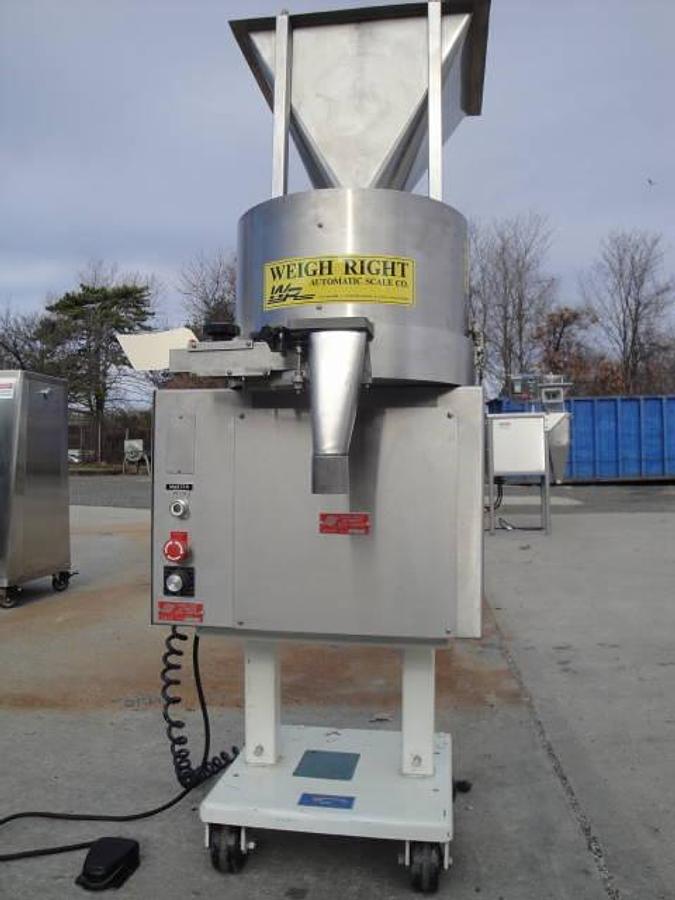
Weigh Right Automatic Scale Company has historically produced a range of industrial weighing and filling equipment aimed at bulk and packaged product applications. Their product line includes automatic bag fillers, net weighers, gross weighers, bulk weighers, checkweighers, and volumetric filling machines. One specific model that appears regularly in the used equipment market is the Weigh Right Model A Pak-King Volumetric Filling Machine, which is designed for filling bags or containers with dry, free-flowing products at consistent volumes.
The brand has a long-standing reputation in industries that handle dry bulk materials, where speed, accuracy, and mechanical durability are non-negotiable. Their machines are typically built to handle continuous production cycles, which is part of why used Weigh Right equipment holds up well over time and remains sought after in the secondary market. Buyers looking at used listings will find a range of models suited to different throughput levels and product types, so it pays to review specifications carefully against your actual production requirements.
What industries commonly use Weigh Right Automatic Scale Company equipment?
Weigh Right equipment has found its heaviest use in industries that deal with dry bulk materials and require consistent, repeatable fill weights at production speeds. Agriculture is one of the most common sectors, with seed, grain, and animal feed operations relying on Weigh Right bag fillers and bulk weighers to package product efficiently. Food processing facilities that handle flour, sugar, spices, or other dry ingredients also frequently run Weigh Right machines as part of their packaging lines.
Beyond agriculture and food, the equipment shows up in chemical processing, fertilizer production, and industrial mineral applications where accurate weight-based filling is critical. The machines are generally valued in any environment where a high volume of bags or containers need to be filled to a precise weight or volume with minimal operator intervention. Because these machines were built for demanding production environments, they tend to have a long service life, which is a big reason the used market for Weigh Right equipment stays active across so many different industries.
What is the Weigh Right Model A Pak-King Volumetric Filling Machine used for?
The Weigh Right Model A Pak-King is a volumetric filling machine, meaning it measures and dispenses product based on volume rather than weight. This type of machine is well suited for dry, free-flowing materials such as seeds, grains, granules, or pelletized products where a consistent volume per fill cycle translates reliably into a consistent weight. Volumetric fillers are popular in packaging lines where speed is a priority and product density is stable enough that volumetric measurement meets accuracy requirements.
In practical terms, the Pak-King is designed to fill bags or containers repeatedly and automatically, reducing the need for manual scooping or hand-filling. This makes it a good fit for operations that run high volumes of similarly sized packages. When evaluating a used Pak-King on the secondary market, buyers should pay close attention to the fill range the machine is configured for, the type of product it was previously running, and the condition of the auger or volumetric chamber, since wear on those components directly affects fill accuracy.
What should buyers know about purchasing used Weigh Right equipment?
Buying used industrial weighing equipment requires more due diligence than purchasing something off a retail shelf. Since used machines are sold as-is, the buyer takes on the responsibility of assessing the equipment's condition before committing to a purchase. This means reviewing available photos and specifications carefully, asking the dealer about the machine's operational history, and requesting a video or in-person inspection whenever possible. Reputable used equipment dealers who specialize in packaging and weighing machinery will generally accommodate inspection requests, either at their facility or at the plant where the equipment is currently located.
It is also worth contacting the manufacturer directly to understand what level of support, spare parts, and technical documentation is still available for a specific model. Older machines may have limited parts availability, which affects long-term maintenance planning. Buyers should also confirm whether the machine was previously calibrated and certified for legal-for-trade use, since NTEP certification matters in regulated industries. Getting a clear picture of the total cost, including shipping, rigging, installation, and any refurbishment needed, before finalizing a purchase will prevent surprises after the machine arrives.
Does used Weigh Right equipment come with a warranty?
Used industrial equipment, including Weigh Right machines, is almost always sold on an as-is basis by resellers and dealers. Warranties in the traditional sense are typically only offered by the equipment manufacturer on products sold through authorized channels. When buying through the used equipment market, the buyer assumes responsibility for evaluating the machine's condition, which is why thorough inspection before purchase is so important.
To protect themselves, buyers should work only with dealers who have a verifiable track record in the packaging and weighing equipment space, since experienced specialists are more likely to accurately represent a machine's condition and provide useful background on its history. Asking for detailed photos, maintenance records if available, and a live or recorded video of the machine operating are all reasonable requests that a reputable dealer should be able to fulfill. Consulting with the manufacturer about parts availability and service support for a specific model is also a smart step, since the age and configuration of the machine will affect what kind of ongoing support is realistic to expect.
How is used Weigh Right equipment typically shipped, and what costs should buyers expect?
Shipping industrial weighing equipment involves more planning than standard freight because these machines are heavy, sometimes awkwardly shaped, and sensitive to rough handling. Dealers will typically palletize or crate equipment before shipment, and the level of packaging required will affect the overall shipping cost. Smaller machines may ship on a standard pallet, while larger or more complex units may require custom crating to prevent damage in transit. Buyers should ask the dealer specifically how the machine will be packaged and what that packaging cost includes.
For larger Weigh Right machines, loading at the dealer's facility and unloading at the buyer's location may require a forklift or specialized rigging, which adds to the total landed cost. Freight rates will vary based on distance, carrier, and the dimensions and weight of the shipment. The full landed cost, meaning the purchase price plus packaging, freight, and any unloading or rigging fees, should be calculated before finalizing a deal so there are no unexpected charges on delivery. Buyers should ask for a detailed breakdown of all shipping-related costs upfront.
What are the typical payment terms for purchasing used Weigh Right equipment?
Most used equipment dealers require full payment before the machine is released for shipment. This is standard practice in the industry and applies broadly to used industrial equipment transactions, including weighing and filling machinery. Some dealers may offer payment terms to established customers with a history of prior purchases, but for first-time buyers, payment in full before shipping is the norm.
Buyers should confirm the accepted payment methods with the dealer before proceeding, as wire transfers are common for larger transactions. It is also reasonable to ask whether a deposit can hold a machine while financing or internal purchase approvals are arranged, since desirable used equipment can sell quickly. Understanding the payment requirements upfront, alongside the full cost breakdown including shipping and any additional fees, allows buyers to plan accurately and avoid delays in completing the transaction.
Can used Weigh Right scales be integrated with existing conveyor or packaging systems?
Weigh Right automatic scale equipment was designed for production line environments, and many models are built to work in conjunction with conveyors, bag sealers, and other downstream or upstream packaging equipment. Whether a used Weigh Right machine can be integrated into an existing line depends on several factors: the specific model and its mechanical interface points, the control system it uses, and the speed and format requirements of the existing line. Volumetric fillers like the Pak-King, for example, are often paired with bag-opening and bag-sealing equipment to create a complete bagging station.
Buyers planning to integrate a used machine into an existing system should gather as much technical documentation as possible before purchase, including any available manuals or wiring diagrams. Consulting with a systems integrator or the equipment manufacturer about compatibility is a practical step, particularly for older machines where control systems may need to be updated or adapted. Inspecting the machine in person or via video before purchase also helps confirm that all the mechanical connection points and discharge configurations are intact and compatible with the intended setup.
What should buyers look for when inspecting used Weigh Right filling or weighing equipment?
A thorough inspection of used weighing or filling equipment covers both mechanical and functional aspects of the machine. On the mechanical side, buyers should check for wear on any augers, flights, or volumetric chambers that directly contact product, since these components affect fill accuracy and are subject to abrasion over time. The condition of structural frames, hoppers, and discharge chutes matters too, particularly if the machine handled abrasive or corrosive materials. Any signs of heavy corrosion, cracked welds, or makeshift repairs are worth flagging before purchase.
On the functional side, buyers should ask whether the machine can be demonstrated running, either live at the facility or via a recorded video. Seeing the machine cycle through its fill sequence gives a much clearer picture of its operating condition than photos alone. Control panels, sensors, and load cells should be checked for responsiveness and accuracy. Keep in mind that most dealers do not have the permits or infrastructure to run actual product through a machine during a demonstration, so a dry cycle or a demonstration with a substitute material is typically the best that can be arranged. Asking detailed questions about the machine's service history and the reason it was taken out of production will also help buyers assess what, if any, refurbishment work may be needed before putting it back into service.
Is NTEP certification important when buying used Weigh Right equipment for commercial applications?
NTEP (National Type Evaluation Program) certification is a legal requirement in the United States for weighing equipment used in commercial transactions where the weight of a product determines its price or is represented to a buyer. This includes applications like selling grain, seed, or packaged food products by weight. If a used Weigh Right machine will be used in any commercial setting where legal-for-trade weighing is required, confirming that the specific model and configuration meets NTEP standards is an important step before purchase.
One complication with used equipment is that NTEP certification is tied to the specific device type and its configuration. Modifications made to a machine after its certification may affect its compliance status, so buyers in regulated industries should verify the machine's certification history and consult with their local weights and measures authority about what is required to place the equipment into legal-for-trade service. In applications where legal-for-trade status is not required, such as internal process control or approximate batching, NTEP certification may be less critical, but accuracy and repeatability should still be evaluated carefully during the inspection process.