Category
Manufacturer
Model
Weigh Pack
Weigh Pack is a leader in providing packaging solutions for the food industry, particularly known for their automated weighing and filling systems. Their equipment is designed to improve accuracy and efficiency in production lines.
FAQ:
What is a weigh pack machine and how does it work?
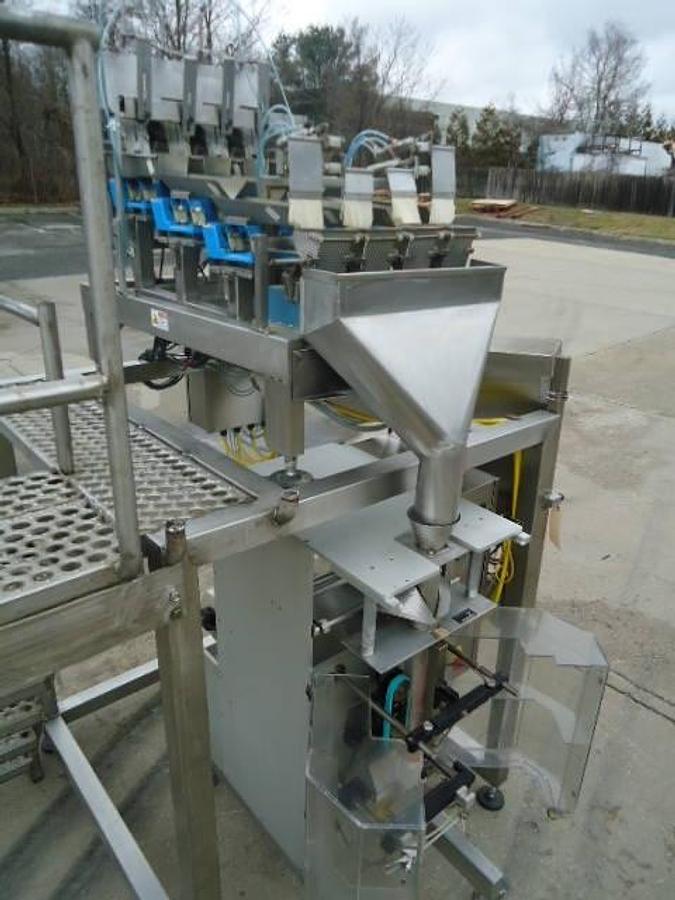
A weigh pack machine combines a weighing system with a vertical form fill seal (VFFS) machine to automate the process of filling and sealing packages by weight. The weighing component, typically a multihead or linear weigher, measures precise quantities of product and releases them into the VFFS section, which simultaneously forms a bag from a roll of film, fills it with the weighed product, and seals it. The entire cycle happens in seconds, making these machines a cornerstone of high-volume packaging operations in the food and consumer goods industries.
The integration of weighing and sealing into a single automated system is what makes weigh pack machines so valuable on a production line. Rather than relying on manual scooping or volumetric filling (which can vary considerably), a weigh pack machine uses load cells and electronic controls to hit a target weight consistently across thousands of cycles. Weigh Pack, a well-known manufacturer in this space, built their reputation specifically around this kind of accuracy-driven automated packaging equipment, designing systems intended to reduce product giveaway and keep production lines running efficiently.
What types of products can be packaged using a weigh pack machine?
Weigh pack machines handle a wide range of granular, chunky, and irregular-shaped products across multiple industries. In the food sector, common applications include snacks, nuts, seeds, candy, coffee, frozen vegetables, pet food, and dried fruit. Outside of food, these machines are also used for hardware items like fasteners and small parts, as well as agricultural products and other free-flowing materials. The key requirement is that the product must be able to flow through the weighing heads and into the bag without bridging or clumping excessively.
Product characteristics like density, moisture content, stickiness, and particle size all influence which type of weigh pack system is the best fit. Sticky or fragile products, for example, may require specialized coatings on the weigher buckets or gentler handling attachments to avoid product damage or buildup. When evaluating a used weigh pack machine, it is worth confirming what products the machine was previously running, since residue, wear patterns on contact parts, and bucket condition can all indicate whether the machine is a good match for your specific application.
What is the difference between a linear weigher and a multihead weigher on a weigh pack machine?
Linear weighers use a single weigh pan or a small number of troughs arranged in a line to measure product. They are simpler mechanically, generally less expensive, and tend to work well for slower production speeds or products that are difficult to spread across multiple heads. However, their speed and accuracy are limited compared to multihead systems, and they are better suited to applications where throughput is not the primary concern.
Multihead weighers (also called combination weighers) use anywhere from 10 to 32 or more individual weigh heads arranged in a radial pattern. The machine simultaneously weighs small portions of product in each head and then uses a computer to identify the combination of heads whose total comes closest to the target weight. This approach allows multihead weighers to achieve weighing tolerances as tight as +/- 0.1 grams while operating at speeds that can exceed 100 bags per minute on the right product. For high-volume food production lines running snacks, frozen foods, or similar products, multihead weighers are generally the preferred choice. When shopping for used weigh pack equipment, understanding which weigher type is integrated into the machine is one of the first questions to ask, since it has a direct impact on what the machine can realistically produce.
How fast can a weigh pack machine operate?
Speed varies considerably depending on the machine design, the weigher type, the target weight, and the product being packaged. Entry-level or semi-automatic systems may produce 20 to 40 bags per minute, while fully automated industrial machines equipped with multihead weighers can reach speeds of 80 to 120 bags per minute or higher under ideal conditions. Some high-speed systems running lightweight snack products have been rated even faster, though real-world production speeds are typically lower than peak rated speeds once you account for film changes, minor stoppages, and product variability.
For buyers evaluating used weigh pack machines, it is important to look at the machine's rated speed alongside the target weight range it was designed for. A machine optimized for 50-gram bags of chips will behave differently than one configured for 500-gram bags of frozen vegetables, even if both carry similar speed ratings on paper. Asking the dealer about the machine's production history and what speeds it was actually running in its previous application gives a much more realistic picture than spec sheets alone.
What bag styles are compatible with weigh pack machines?
Most weigh pack machines built around a vertical form fill seal platform can produce several common bag styles, including pillow bags (the most basic and widely used), gusseted bags (which have expanded side panels for better shelf presentation), and quad-seal bags. The specific styles a given machine can produce depend on its forming tube configuration, the film path, and any optional tooling or attachments it was built or retrofitted with. Pillow bags are the default for most VFFS-based weigh pack systems and require the least specialized setup.
Bag width and length ranges are also machine-specific. Each machine is designed around a range of forming tube sizes, and changing bag widths typically requires swapping out the forming tube and making adjustments to the film tracking system. When buying a used weigh pack machine, confirming that the machine includes the forming tubes and tooling for your required bag sizes is an important step. Some sellers include multiple forming tube sets with the machine, while others may have only the size that was in production at the time of decommissioning. Clarifying this upfront avoids unexpected tooling costs after purchase.
What is the typical price range for used weigh pack machines?
Used weigh pack machines span a wide price range depending on age, configuration, condition, brand, and whether the system includes a multihead weigher or a simpler linear weigher. Smaller or older semi-automatic systems can be found in the range of $5,000 to $15,000. Mid-range used systems with multihead weighers and solid production histories typically fall somewhere between $20,000 and $60,000. Larger, more recent, or fully integrated industrial systems from well-regarded manufacturers can be priced from $60,000 to well over $100,000 even on the used market.
Buyers should factor in costs beyond the machine price itself. Shipping a weigh pack system, which can be bulky and heavy, requires proper crating or palletization and may involve rigging for loading and unloading, all of which add to the total landed cost. Installation, any necessary spare parts, and potential service calls to get the machine running in a new facility should also be budgeted for. Getting a clear picture of the full acquisition cost before committing to a purchase helps avoid surprises and makes it easier to compare options across different sellers.
What should buyers look for when inspecting a used weigh pack machine?
A thorough inspection of a used weigh pack machine should cover both mechanical and electrical components. On the mechanical side, check the condition of the weigh heads and buckets (look for dents, corrosion, or worn coatings), the sealing jaws (uneven wear or pitting affects seal quality), the film drive system, and the timing belt or chain drives. On the electrical side, confirm that the control panel powers up, that the touchscreen or HMI is functional, and that there are no obvious signs of water damage or burned components. If the machine was running food products, inspect the contact surfaces for sanitary condition and any buildup that might indicate cleaning was neglected.
Reputable used equipment dealers will typically accommodate in-person inspections at their facility or at the plant where the equipment is currently located. In cases where travel is not practical, video inspections or recorded walkthroughs of the machine in its current state are a reasonable alternative. Keep in mind that most dealers do not have the permits or production setup to run actual product through the machine during an inspection, so the evaluation will focus on mechanical function, visual condition, and any available documentation. Consulting with the manufacturer about parts availability and support for the specific model and age of the machine is also a smart step before finalizing a purchase.
How accurate are weigh pack machines, and why does accuracy matter for profitability?
Weighing accuracy is one of the most commercially significant performance metrics for a weigh pack machine. High-quality systems, particularly those equipped with multihead weighers, can achieve tolerances as tight as +/- 0.1 grams. Even machines operating at a slightly wider tolerance of +/- 0.5 to 1 gram represent a substantial improvement over manual filling or volumetric systems. The practical implication is that every gram of product given away above the target weight across thousands of packages per day adds up to real material cost. On a high-volume line running an expensive product like nuts or coffee, even modest improvements in weighing accuracy can translate to meaningful savings over time.
For buyers evaluating used weigh pack machines, understanding the weighing accuracy of a specific system requires looking at both the weigher type and the condition of the load cells and electronics. Load cells can drift or degrade over time, particularly if the machine was not well maintained or was exposed to moisture. Asking the seller about the machine's calibration history and whether the load cells have been serviced recently is a reasonable part of due diligence. A machine that was well maintained and recently calibrated in an active production environment is generally a lower risk than one that has been sitting idle for an extended period.
What kind of maintenance does a weigh pack machine require?
Routine maintenance on a weigh pack machine covers several systems. The sealing jaws need regular inspection and cleaning to prevent product residue from interfering with seal quality, and the jaw heating elements and temperature sensors should be checked periodically. The film drive rollers and forming tubes need cleaning to prevent buildup, and the timing belts or chains that drive the machine's cycle should be inspected for wear and replaced on a schedule. The weigher buckets and radial troughs on a multihead system require regular cleaning, especially in food applications, and the load cells should be checked for accuracy and recalibrated as needed. Lubrication points on the mechanical drive components also need attention according to the manufacturer's service intervals.
On a used machine, the maintenance history is not always fully documented, which means a buyer may inherit deferred maintenance. Before putting a used weigh pack machine into production, a thorough mechanical inspection and a full cleaning are typically the first steps. Sourcing a service manual for the specific model is highly recommended, as it will identify all lubrication points, recommended service intervals, and wear parts that should be kept in stock. Contacting the manufacturer directly to ask about parts availability for the model in question is also worthwhile, since older machines may have limited support or discontinued components that require sourcing from third-party suppliers.
What are the typical shipping and payment considerations when buying a used weigh pack machine?
Shipping a weigh pack machine involves more logistics than shipping standard freight. These machines are heavy, often multi-component systems that require proper palletization or custom crating to prevent damage in transit. Larger integrated systems with multihead weighers may need to be partially disassembled for shipping and will require rigging equipment for safe loading and unloading at both ends. The cost of packaging, rigging, and freight can vary significantly based on machine size, destination, and the level of protection required, so buyers should request a detailed breakdown of all shipping-related costs from the seller before committing to a purchase. Understanding the full landed cost, including freight and any rigging fees, is essential for accurate budgeting.
On the payment side, used equipment dealers typically require full payment before a machine is released for shipping. Some dealers may offer payment terms to established repeat customers, but for first-time buyers this is less common. Buyers should clarify the accepted payment methods and confirm the payment timeline relative to shipping and any pre-shipment inspection arrangements. Asking about the process for resolving discrepancies between the machine's described condition and its actual condition upon arrival is also a reasonable question to raise with the seller before any funds change hands.