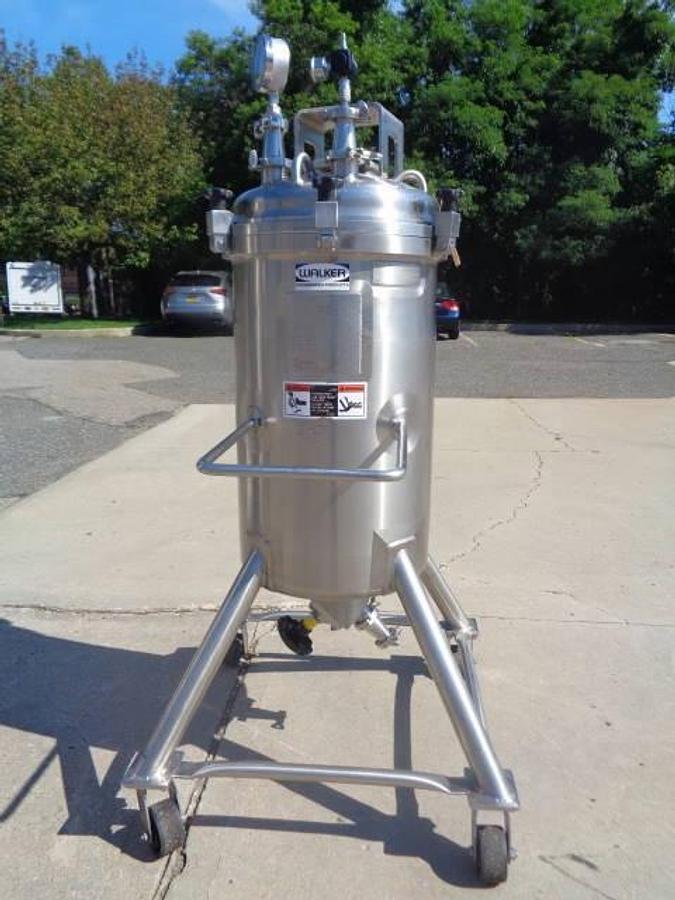
Category
Manufacturer
Model
Walker Stainless Equipment Company
Walker Stainless Equipment Company is known for its durable and hygienic equipment tailored for the food and beverage industries. Their popular products include mixing tanks and storage solutions that are built to withstand rigorous processing requirements.
FAQ:
What types of Walker Stainless Equipment are commonly available on the used market?
Walker Stainless Equipment Company has produced a wide range of stainless steel processing equipment over the decades, and the used market reflects that variety. Common types that appear for sale include bulk milk coolers, jacketed mixing tanks, pressure vessels, portable pressure tanks, sanitary storage tanks, and transport tankers. Smaller units like 26-gallon portable pressure tanks show up alongside much larger bulk storage solutions designed for high-volume dairy and food processing operations. The company has long been associated with mixing and storage solutions built to handle the rigorous demands of continuous processing environments.
Because Walker equipment is known for exceptional build quality and longevity, many units remain in active service for 30 to 50 years before entering the secondary market. This means buyers can find equipment spanning a wide range of ages and configurations. Jacketed tanks with agitation systems, CIP (clean-in-place) compatible vessels, and multi-compartment transport tankers are among the more sought-after categories. Checking with reputable used equipment dealers who specialize in food and dairy processing machinery is the best way to find specific configurations that match a particular application.
What industries use Walker Stainless Equipment, and is it suitable for non-dairy applications?
Walker Stainless Equipment Company built its reputation primarily in the dairy industry, where its bulk milk coolers and sanitary processing tanks became standard fixtures on farms and in processing plants across the United States. That said, the same hygienic design principles and high-grade stainless steel construction that made Walker equipment ideal for dairy make it well-suited for a broad range of food and beverage applications. Breweries, wineries, juice processors, pharmaceutical manufacturers, and specialty chemical producers have all made use of Walker stainless vessels, particularly jacketed mixing tanks and pressure vessels.
The key factor in determining suitability for a specific application is understanding the tank's original design specs, including pressure ratings, jacket capacity, surface finish (Ra value), and the grade of stainless steel used. Walker commonly used 316L stainless steel in product-contact surfaces, which offers superior corrosion resistance compared to 304-grade steel and is preferred in applications involving acidic or chloride-heavy products. Buyers from industries outside dairy should confirm these specifications before purchasing and may want to consult with a process engineer to verify compatibility with their particular product and cleaning protocols.
Does Walker Stainless Equipment meet current sanitary and FDA standards for food and dairy processing?
Walker Stainless Equipment was manufactured to meet the sanitary standards in place at the time of production, including 3-A Sanitary Standards, ASME pressure vessel codes, and USDA dairy equipment guidelines. These certifications were and remain critical compliance benchmarks for food, dairy, and beverage processors. Many Walker tanks carry 3-A compliance markings, which indicate the equipment was designed with smooth, crevice-free surfaces, proper drain slopes, and materials appropriate for direct food contact. ASME code stamps on pressure vessels indicate the unit was fabricated and tested to meet specific pressure containment standards.
However, buyers should be aware that sanitary standards evolve over time, and a piece of equipment manufactured decades ago may need modifications or re-certification to meet current facility or regulatory requirements. Before putting used Walker equipment into production, it is advisable to have the unit inspected by a qualified sanitarian or process equipment specialist who can assess whether the vessel meets current 3-A, PMO (Pasteurized Milk Ordinance), or FDA requirements for the intended use. Gaskets, seals, and surface finishes should receive particular attention, as these components wear over time and are critical to maintaining sanitary compliance.
What should I inspect before buying a used Walker stainless steel tank or vessel?
Buying used stainless steel processing equipment requires a methodical inspection approach, especially for pressure-rated or sanitary-grade vessels. The most critical areas to evaluate on used Walker equipment include weld integrity, interior surface finish, gasket and seal condition, pressure ratings stamped on the vessel, and any visible signs of pitting or corrosion. Pitting is particularly problematic in food-grade applications because it creates microscopic harborage points for bacteria that cannot be eliminated through standard CIP procedures. Interior welds should be smooth and continuous, with no cracks, porosity, or discoloration suggesting heat stress or improper repairs.
Reputable used equipment dealers will typically accommodate in-person inspections or provide detailed video walkthroughs of the equipment. Some Walker tanks may still be in active production at a facility, in which case an inspection can sometimes be arranged at the operating plant. Keep in mind that dealers generally do not have the permitting or infrastructure to run actual product through a machine during a demonstration, so the inspection will focus on visual and mechanical condition rather than a live production test. Buyers should also check the jacket connections, agitator shaft seals (if applicable), and any instrumentation ports for wear, leaks, or damage before making a purchase decision.
Are replacement parts still available for older Walker Stainless Equipment models?
Parts availability for older Walker Stainless Equipment varies depending on the age and specific model of the unit. Walker Engineering, which continues to operate and service the dairy and food processing industries, can be a useful resource for gauging what level of support is available for a particular machine. Contacting the manufacturer directly before purchasing a used unit is a smart step, as they can advise on parts availability, documentation, and any known service considerations for that model or age range. For some older units, the manufacturer may no longer stock direct replacement parts, but many components are standardized across the industry.
Sanitary fittings, gaskets, agitator seals, pressure relief valves, and sight glasses are commonly available through third-party sanitary equipment suppliers regardless of the original manufacturer. For more proprietary components like jacketed panels, custom agitator assemblies, or control systems, sourcing may be more challenging. Buyers should factor parts availability into their purchasing decision, particularly for mission-critical processing equipment. A machine that is difficult to source parts for carries a higher long-term operational risk, even if the purchase price is attractive.
What is the typical price range for used Walker Stainless Equipment?
Pricing for used Walker stainless steel equipment varies considerably based on tank size, configuration, age, condition, and the specific type of unit. Smaller portable pressure tanks in the 25 to 50-gallon range can sell for a few hundred to a few thousand dollars depending on condition and included accessories. Mid-sized jacketed mixing tanks or storage vessels in the 100 to 500-gallon range typically fall in the range of a few thousand to tens of thousands of dollars. Larger bulk storage tanks, transport tankers, and custom-configured processing vessels can command significantly higher prices, sometimes reaching $50,000 or more for well-maintained, large-capacity units.
Because Walker equipment is known for its durability and long service life, used units often retain meaningful value relative to comparable equipment from other manufacturers. The grade of stainless steel, pressure vessel certification (ASME code stamp), jacket configuration, and agitation system all influence pricing. Buyers should also factor in the cost of shipping, rigging, and any refurbishment needed to bring the equipment to production-ready condition, as these costs can add substantially to the total landed price. Getting quotes from multiple specialized dealers and comparing against the cost of equivalent capacity in other brands is a practical way to gauge whether a particular asking price is reasonable.
How is used Walker Stainless Equipment typically shipped, and what should buyers expect for freight costs?
Shipping large stainless steel processing equipment requires careful planning to prevent damage in transit. Smaller units like portable pressure tanks may ship on standard pallets with appropriate blocking and bracing, while larger tanks and vessels typically require custom crating or heavy-duty skidding to protect fittings, nozzles, and surface finishes during handling. The level of packaging required directly affects freight costs, and buyers should ask the selling dealer for a detailed breakdown of palletization, crating, and rigging charges before committing to a purchase.
Larger Walker tanks, particularly bulk storage vessels and transport tankers, may require specialized heavy rigging for loading at the seller's facility and unloading at the destination. Flatbed trucking, crane services, and forklift rigging are common requirements for oversized equipment, and these services carry additional costs beyond standard freight rates. Buyers should obtain a full picture of the landed cost, including all packaging, rigging, freight, and any unloading requirements at their facility, before finalizing a purchase. Some dealers work with preferred freight partners who have experience handling sanitary processing equipment, which can reduce the risk of transit damage.
What payment terms are typical when purchasing used Walker Stainless Equipment from a dealer?
Most used equipment dealers require payment in full prior to releasing equipment for shipment. This is standard practice in the industry and applies to the vast majority of transactions, particularly for buyers purchasing from a dealer for the first time. Accepted payment methods vary by dealer but commonly include wire transfer, ACH, and in some cases credit card for smaller purchases. Buyers should confirm accepted payment methods and any associated processing fees before finalizing a transaction.
Some dealers may offer extended terms or financing arrangements to established customers with a track record of repeat purchases, but this is not a standard offering for first-time buyers. Third-party equipment financing companies also operate in the used industrial equipment space and can sometimes provide lease or loan options for qualified buyers looking to preserve working capital. Regardless of payment method, buyers should ensure they receive proper documentation of the sale, including a bill of sale, any available equipment history, and copies of certification markings or data plates before or at the time of payment.
How do I verify the condition and history of a used Walker stainless steel vessel before buying?
Verifying the condition of used processing equipment starts with requesting as much documentation as possible from the seller. This can include photos of the interior and exterior, close-up images of welds and surface finishes, the ASME data plate (if applicable), any available service or maintenance records, and documentation of the vessel's last use and the product it processed. Knowing what product was previously run through a tank is especially relevant for sanitary applications, as certain products or cleaning chemicals can accelerate surface degradation or leave residues that affect compatibility with a new application.
Beyond documentation, arranging a direct inspection is the most reliable way to assess condition. Reputable dealers will accommodate in-person visits or provide live video walkthroughs of the equipment. For equipment still located at an operating facility, inspections can sometimes be arranged at the plant itself. Buyers with specific technical requirements may also want to bring in an independent inspector or process engineer to evaluate the unit. Paying close attention to the interior surface finish, weld quality, nozzle and fitting integrity, and any signs of mechanical wear or corrosion will provide the clearest picture of what the equipment will require to return to production-ready condition.
What certifications or compliance markings should I look for when buying used Walker Stainless Equipment?
For buyers in food, dairy, or beverage processing, the most important compliance markings to look for on used Walker equipment are the 3-A Sanitary Standards symbol and the ASME code stamp. The 3-A symbol indicates the equipment was designed and fabricated to meet sanitary design criteria established by 3-A SSI, a standards organization focused on hygienic equipment for the food and dairy industries. This includes requirements for surface finish, material selection, drainage, and cleanability. The ASME code stamp, typically found on a data plate welded to the vessel, confirms the unit was designed and pressure-tested to meet ASME Boiler and Pressure Vessel Code requirements, which is a legal requirement in most jurisdictions for pressure-rated vessels.
Additionally, buyers supplying dairy operations subject to the Pasteurized Milk Ordinance (PMO) should verify that the equipment meets applicable PMO equipment standards, which reference 3-A criteria. USDA acceptance markings may also be relevant for certain dairy processing applications. When a data plate is missing or illegible, buyers should treat this as a significant red flag, as it makes it difficult to verify pressure ratings, material specifications, and fabrication standards. Consulting with the manufacturer or a qualified inspector can sometimes help reconstruct the specifications of a unit based on its model number and approximate production date.