Category
Manufacturer
Model
Vulcan
Vulcan specializes in manufacturing equipment for the food processing industry, particularly known for its high-efficiency cooking and baking systems. Their product range includes ovens, fryers, and steamers, catering to commercial kitchens and food service operations.
FAQ:
What types of commercial cooking equipment does Vulcan manufacture?
Vulcan produces a broad range of cooking equipment designed for commercial foodservice operations. Their catalog includes commercial ranges, convection ovens, combi ovens, charbroilers, griddles, fryers, and steamers. This variety makes Vulcan a practical single-brand solution for outfitting an entire commercial kitchen, from primary cooking stations to finishing and holding equipment. The brand has been manufacturing foodservice equipment for over 150 years, which gives it a deep product lineage across virtually every cooking application a restaurant, hotel, or institutional kitchen might need.
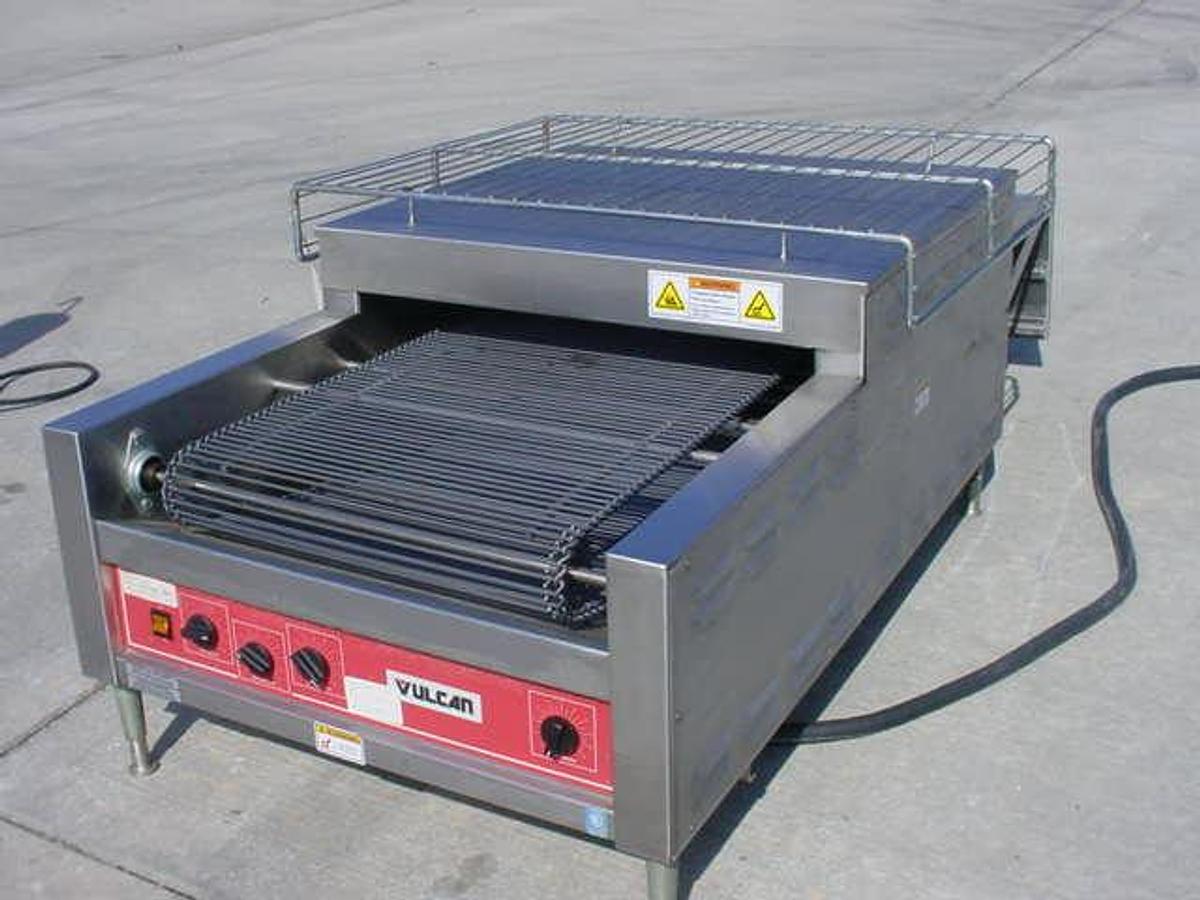
Used Vulcan equipment available on the secondary market tends to reflect this same breadth. Buyers shopping for used Vulcan units can often find charbroilers, tabletop electric ovens, fryers, and steamers alongside full-size ranges and convection ovens. The Vulcan CB1824E charbroiler, for example, is a tabletop electric unit that shows up fairly regularly among used equipment dealers, making it a good example of the kind of versatile, space-efficient Vulcan product that holds up well enough to have a second life in another kitchen.
Is Vulcan commercial cooking equipment a good choice for high-volume restaurant kitchens?
Vulcan has built its reputation specifically around high-demand commercial environments. Their equipment is constructed with heavy-duty stainless steel throughout, which is a practical necessity in kitchens running multiple shifts or processing large volumes of food daily. The brand's fryers, ranges, and ovens are engineered for continuous use rather than occasional or light-duty cooking, which is why they appear so frequently in hotel kitchens, institutional foodservice operations, cafeterias, and full-service restaurants.
From a used equipment standpoint, this durability is actually one of the strongest arguments for buying a used Vulcan unit over a used piece of equipment from a lighter-duty brand. Because Vulcan builds its equipment to last through years of heavy commercial use, a well-maintained used unit can still have considerable productive life remaining. Buyers should still inspect any used machine carefully and ask the dealer about the machine's service history and operational condition before purchasing, but Vulcan's construction standards mean the underlying equipment tends to hold up better than many competing brands over time.
What certifications do Vulcan commercial cooking equipment products typically carry?
Many Vulcan commercial cooking products carry NSF, ETL, and ENERGY STAR certifications. NSF certification is particularly important for commercial kitchens because it signals that a piece of equipment meets public health and sanitation standards, which health inspectors look for during facility reviews. ETL certification, issued by Intertek, serves a similar function to UL listing and confirms that the equipment meets applicable safety standards for electrical or gas-fired appliances. ENERGY STAR ratings, where applicable, indicate that a unit meets federal energy efficiency benchmarks, which can translate to lower operating costs over time.
When buying used Vulcan equipment, it is worth confirming which certifications applied to the specific model and year of the unit in question. Certifications are tied to the model as manufactured, not to an individual machine's current condition. A used unit that originally carried NSF certification was built to those standards, but buyers should still verify the machine is in proper working order, since damage or modification after manufacture could affect compliance. Consulting with a local health authority or equipment inspector before putting a used machine into service is a reasonable step for any buyer subject to commercial kitchen inspections.
Does Vulcan make both gas and electric commercial cooking equipment?
Vulcan offers both gas and electric versions across many of its product lines, including ranges, fryers, griddles, and ovens. Gas models are generally preferred in high-volume kitchens where rapid heat recovery and lower energy costs are priorities, while electric models are often chosen for locations where natural gas service is unavailable, or where local codes or ventilation constraints make electric equipment more practical. Some Vulcan product lines, like their charbroilers, are available in both configurations, giving buyers flexibility to match the equipment to the utility infrastructure already in place at their facility.
On the used equipment market, both gas and electric Vulcan units are available, though availability at any given time depends on what has come off line from commercial kitchens and food processing facilities. Buyers should be clear about which utility type their kitchen supports before purchasing a used unit, since converting a gas appliance to electric (or vice versa) is generally not practical or cost-effective. The Vulcan CB1824E, for example, is an electric charbroiler, making it a good fit for locations without gas service or for operators who prefer the control characteristics of electric cooking.
What is the typical lifespan of Vulcan commercial cooking equipment?
Vulcan commercial cooking equipment is built for the demands of professional foodservice, and with proper maintenance, many units have productive service lives of 10 to 20 years or longer. Heavy-gauge stainless steel construction, quality burner assemblies, and robust mechanical components all contribute to longevity. Fryers, ranges, and ovens from Vulcan that have been properly serviced and cleaned tend to outlast lighter-duty commercial brands by a meaningful margin, which is part of why used Vulcan equipment retains buyer interest on the secondary market.
Actual lifespan varies based on how intensively the equipment was used, how well it was maintained, and whether it was serviced by qualified technicians when issues arose. A Vulcan range that spent a decade in a high-volume steakhouse running two shifts daily will have more wear than a comparable unit from a lower-volume operation. When evaluating any used Vulcan machine, buyers should ask about its operational history, request any available service records, and arrange an inspection, either in person or via video, to assess the current condition of key components like burners, thermostats, door seals, and control systems.
How does used Vulcan equipment compare in price to other used commercial cooking brands?
Used Vulcan equipment typically commands a price premium over lesser-known or lighter-duty brands on the secondary market, largely because of the brand's reputation for durability and the availability of parts and technical support. Compared to other premium commercial cooking brands like Wolf or Montague, used Vulcan pricing tends to be in a similar range, though specific prices vary considerably based on the model, age, condition, and current market availability. Buyers should expect that a used Vulcan range or fryer in good working condition will cost more than a comparable used unit from a budget-oriented brand, but the trade-off is typically a machine with more remaining service life and better access to manufacturer support.
Vulcan's SuiteOne range line is worth mentioning in this context because it was designed to offer more accessible pricing without dropping the brand's core quality standards. On the used market, SuiteOne units can represent particularly good value for smaller operations or startups that want Vulcan quality at a lower entry point. Regardless of model, buyers should factor in the full landed cost of any used machine, including shipping, rigging, and any reconditioning or parts needed before putting the unit into service, not just the purchase price listed by the dealer.
What should buyers inspect when purchasing used Vulcan commercial cooking equipment?
A thorough inspection of any used commercial cooking equipment should cover both the mechanical and cosmetic condition of the machine. For Vulcan gas equipment, key areas to evaluate include burner condition, ignition systems, thermostat accuracy, valve operation, and the integrity of gas connections and fittings. For electric models, buyers should look at heating element condition, control panel function, wiring integrity, and any signs of overheating or electrical damage. On all units, door seals, hinges, interior surfaces, and structural components like legs and frames should be examined for damage, corrosion, or excessive wear.
Reputable used equipment dealers typically offer inspection options that include in-person visits, video walkthroughs, or detailed photo documentation of the machine. Some equipment may still be in production at a facility where an in-person inspection can be arranged at the actual site. Keep in mind that most dealers do not have the permitting required to run full production tests, so functional testing is generally limited to confirming that components power on and operate mechanically rather than producing finished food. Buyers who want additional assurance can consult a qualified commercial kitchen equipment technician to review inspection materials or accompany them on a site visit before finalizing a purchase.
What are the shipping and rigging considerations when buying used Vulcan commercial cooking equipment?
Commercial cooking equipment from Vulcan ranges from compact tabletop units to large floor-standing ranges, fryers, and ovens that can weigh several hundred pounds or more. Shipping costs and logistics vary significantly based on the size and weight of the unit, the distance involved, and the level of packaging required to protect the equipment in transit. Smaller units may ship on standard pallets with appropriate strapping and wrapping, while larger or more fragile equipment may require custom crating to prevent damage. Buyers should ask dealers specifically about how a unit will be packaged before agreeing to a purchase, since inadequate packaging can result in damage that is difficult to resolve after the fact.
Larger Vulcan units, particularly floor-standing ranges, heavy fryer banks, or steam equipment, may require specialized rigging for loading at the origin and unloading at the destination. Rigging involves the use of forklifts, pallet jacks, or cranes operated by trained personnel, and these services carry additional costs that buyers need to account for when calculating the total landed price of the equipment. Buyers should request a complete breakdown of packaging, rigging, freight, and any delivery or liftgate charges from the dealer before committing to a purchase, so there are no surprises in the final cost.
What payment terms do used commercial cooking equipment dealers typically require?
Most used equipment dealers, including those selling used Vulcan commercial cooking equipment, require full payment before a machine is released for shipping. This is standard practice in the used machinery industry and reflects the nature of selling equipment that is sold as-is, without the manufacturer's backing that would apply to a purchase made directly through an authorized distributor. Credit card payments, wire transfers, and ACH payments are common accepted methods, though specific options vary by dealer. Buyers should confirm accepted payment methods and any associated fees before finalizing a transaction.
Some dealers may offer payment terms to repeat customers or established accounts, but this is the exception rather than the rule for first-time buyers. Buyers who are unfamiliar with a particular dealer should take time to research the dealer's track record and reputation before sending payment, since purchasing used industrial equipment requires a meaningful level of trust in the seller. Looking for dealers with a long history in the commercial foodservice equipment space, verifiable customer references, and transparent inspection policies is a reasonable way to reduce risk when making a purchase without the protections that come with buying from a manufacturer or authorized dealer.
What level of manufacturer support can buyers expect for used Vulcan commercial cooking equipment?
Vulcan's longevity as a brand, with over 150 years in the foodservice equipment industry, means that parts and technical documentation are generally available for a wider range of models and production years than buyers would find with shorter-lived or less established brands. Vulcan maintains a network of authorized service agents across the country, and many independent commercial kitchen equipment technicians are familiar with Vulcan products due to how widely the brand is used. This breadth of service availability is a practical advantage for buyers of used Vulcan equipment, since finding qualified repair technicians is generally not difficult.
That said, the level of support available for any specific used unit depends on the model and its age. Older or discontinued models may have limited parts availability, and in some cases Vulcan may no longer support certain product lines. Buyers should contact Vulcan directly before purchasing a used unit to ask about parts availability and service support for the specific model they are considering. This step takes minimal time and can provide useful information about whether the machine will be easy to maintain and repair going forward, which is an important factor in the total cost of ownership for any used piece of commercial cooking equipment.