Category
Manufacturer
Model
Vorti-Siv
Vorti-Siv specializes in providing separation and filtration equipment for various industries, including food processing and pharmaceuticals. Their machines are known for their efficiency in removing unwanted particles from products.
FAQ:
What is Vorti-Siv equipment and what is it used for?
Vorti-Siv is a brand of vibratory screening and separation equipment manufactured by S&S Industries. The product line centers on round vibratory screeners that use a gyratory or circular motion to separate materials by particle size. This motion makes the equipment effective across a wide range of applications, from removing fine contaminants in food processing to classifying powders in pharmaceutical manufacturing. The machines are built to handle both wet and dry materials, which gives them broad utility across industries that deal with bulk solids, slurries, and granular products.
The brand has established a strong presence in industries such as food processing, pharmaceuticals, chemicals, plastics, and minerals processing. In each of these sectors, the core need is the same: reliably separating particles of different sizes without introducing contamination or excessive downtime. Vorti-Siv screeners address that need through a design that prioritizes consistent screening performance and accessibility for cleaning and screen changes. Used Vorti-Siv machines are frequently sought after in the secondary market precisely because the equipment tends to hold up well over time and remains useful across a variety of production environments.
What types of Vorti-Siv equipment are commonly available on the used market?
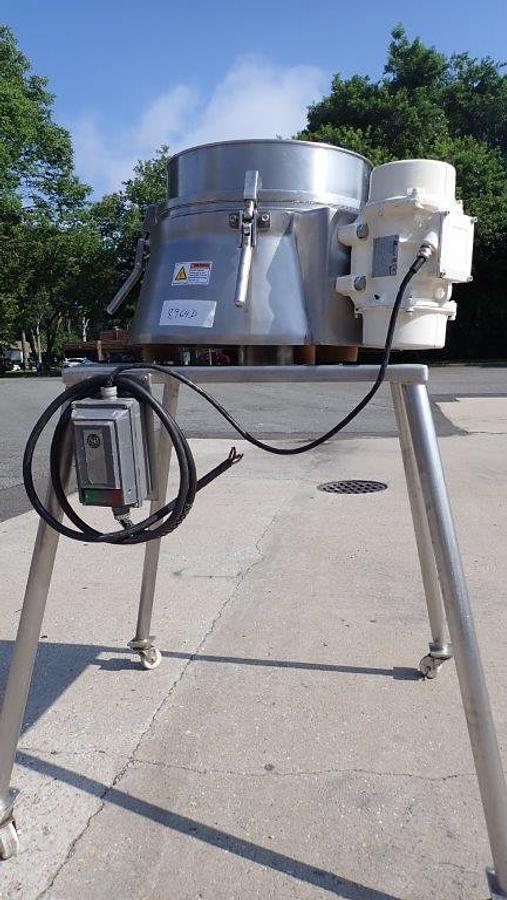
The most common Vorti-Siv machines found on the used equipment market are round vibratory screeners and sieves, often referred to as RVM (Round Vibratory Machine) models. These come in a range of diameters, typically from 18 inches up to 60 inches or larger, and are available in single-deck, double-deck, and triple-deck configurations. Single-deck units separate material into two fractions (overs and unders), while multi-deck models can classify material into three or more size fractions in a single pass, which is a significant efficiency advantage in production settings. Portable models, such as the 22-inch RVM screener/sieve, also appear on the used market and are popular for operations that need flexibility in positioning equipment within a facility.
Beyond standard screeners, used Vorti-Siv listings may include specialty configurations designed for specific industries, such as sanitary-grade units built for food or pharmaceutical compliance. When shopping for used Vorti-Siv equipment, buyers should note the deck count, screen diameter, drive motor specifications, and the material of construction (carbon steel vs. stainless steel), as these factors directly affect whether a given machine is suitable for a particular application. Checking the condition of the screen frames, gaskets, and the vibratory motor is also important during any inspection.
What industries benefit most from Vorti-Siv vibratory screeners?
Vorti-Siv vibratory screeners are used across a surprisingly wide range of industries, but they are particularly well-suited to food processing, pharmaceuticals, chemicals, plastics, and minerals. In food processing, the equipment is used to remove foreign particles, scalp oversized material, or classify granular products like sugar, salt, flour, and spices. Pharmaceutical manufacturers use Vorti-Siv screeners to ensure powder blends meet strict particle size specifications before tableting or encapsulation. In both cases, the ability to use stainless steel construction and sanitary design features makes the equipment compatible with hygiene-sensitive production environments.
In chemicals, plastics, and minerals, Vorti-Siv screeners handle heavier-duty classification tasks such as separating resin pellets, removing fines from granular chemicals, or grading mineral aggregates. The gyratory motion used in these machines is gentle enough to avoid degrading fragile materials while still providing effective separation. This combination of gentleness and efficiency is one reason the brand appears across such a broad range of industries. For any buyer evaluating a used Vorti-Siv machine, understanding the industry it was previously used in can provide useful context about wear patterns, cleaning history, and whether the unit was operated in a sanitary or industrial environment.
What mesh sizes and screen configurations does Vorti-Siv equipment support?
Vorti-Siv screeners are designed to accept a wide range of mesh sizes, making them adaptable to many different separation tasks. Screen mesh sizes can range from very coarse openings used for scalping large particles down to fine mesh used for classifying powders or removing small contaminants. The specific mesh range a given machine supports depends on the screen diameter and the deck configuration, but in general, the round vibratory design is effective across a broad spectrum of particle sizes. Screen frames on Vorti-Siv units are typically designed for quick changes, which allows operators to swap mesh sizes without extensive disassembly, reducing downtime between production runs.
Multi-deck configurations add another layer of flexibility. A triple-deck screener, for example, can simultaneously separate material into four distinct size fractions using three different mesh sizes stacked vertically within the same machine. This is particularly valuable in operations where multiple product grades need to be produced at once or where both overs and fines need to be removed from a primary product stream. When purchasing a used Vorti-Siv screener, buyers should ask whether the screen frames and tensioning hardware are included with the machine, and whether the existing screens are in usable condition or will need to be replaced. Replacement screens are generally available from the manufacturer and from aftermarket suppliers.
Can Vorti-Siv screeners handle both wet and dry screening applications?
Yes, Vorti-Siv vibratory screeners are designed to handle both wet and dry screening applications, which is one of the reasons the equipment is used across such a diverse set of industries. In dry applications, the gyratory motion moves material across the screen surface in a spiral pattern, encouraging particles to pass through the mesh while oversized material travels toward the discharge outlet. This motion is effective for free-flowing powders, granules, and pellets. In wet applications, liquid is introduced to the screen deck to help carry fine particles through the mesh, which is useful for slurries, washed aggregates, or any process where material needs to be separated in suspension.
The ability to run wet screening does place additional demands on the machine's construction materials and sealing. Buyers evaluating a used Vorti-Siv unit for wet applications should pay close attention to the condition of gaskets, seals, and any drain connections on the lower housing. Stainless steel construction is preferable for wet or corrosive applications, and it is worth confirming the material of construction before purchase. If the machine was previously used in a dry application, some components may need to be inspected or replaced before it is suitable for wet use. Consulting with the selling dealer about the machine's prior use history can help buyers make a more informed decision.
What capacity ranges do Vorti-Siv screeners support?
Throughput capacity on Vorti-Siv screeners varies considerably depending on the screen diameter, the number of decks, the mesh size in use, and the physical characteristics of the material being processed. Smaller units with 18- to 24-inch screen diameters are typically suited to lower-volume applications or pilot-scale production, while larger units with 48- to 60-inch diameters can handle substantially higher throughput rates. As a general rule, larger screen diameters provide more screening area, which translates directly to higher capacity. For many bulk solids applications, throughput rates can range from a few hundred pounds per hour on small units to several tons per hour on larger machines.
It is worth noting that published capacity figures are always material-specific. A screener that handles several tons per hour of a free-flowing granular material may process significantly less of a fine, cohesive powder that tends to blind the screen mesh. When evaluating a used Vorti-Siv screener for a specific application, buyers should consider not just the machine's size but also whether the screen deck area and motion characteristics are appropriate for the material's bulk density, moisture content, and particle shape. If possible, consulting with the manufacturer or an experienced equipment dealer about the suitability of a particular model for a given application is a practical step before committing to a purchase.
What are the maintenance requirements for Vorti-Siv vibratory screeners?
Vorti-Siv screeners are generally regarded as relatively low-maintenance machines, which contributes to their long service life and continued value on the used equipment market. The primary maintenance tasks involve inspecting and replacing screen mesh, lubricating the vibratory motor or drive assembly, checking and replacing gaskets and seals, and periodically inspecting the machine's structural components for wear or fatigue. Screen mesh is a wear item that needs to be replaced when holes, tears, or blinding reduce screening efficiency. Quick-change screen frame designs on many Vorti-Siv models make this task straightforward and help keep downtime short.
The vibratory drive is the component that requires the most attention over time. Depending on the model, this may involve a motorized base with eccentric weights or a separate vibratory motor mounted to the screen body. Bearing lubrication intervals and replacement schedules should be followed according to the manufacturer's recommendations. When buying a used Vorti-Siv screener, it is a good idea to ask about the maintenance history of the drive assembly and whether bearings have been replaced recently. A machine with documented maintenance is generally a safer purchase than one with an unknown service history. Replacement parts for Vorti-Siv equipment, including screens, gaskets, and drive components, are available through the manufacturer and aftermarket suppliers, though availability can vary by model age.
Is buying used Vorti-Siv equipment a reliable option compared to purchasing new machinery?
Used Vorti-Siv equipment can be a highly practical choice for buyers who need proven screening technology at a lower capital cost than purchasing new machinery. Vorti-Siv screeners are built to handle demanding industrial environments, and well-maintained units often have many years of useful service life remaining. The round vibratory design is mechanically straightforward, which means there are fewer complex systems that can fail, and the machines tend to age predictably. For operations with tight budgets, or for facilities that need a screener quickly without waiting on lead times for new equipment, the used market offers real advantages.
That said, buying used industrial equipment does require due diligence. Used machines are typically sold as-is, so the responsibility for assessing condition falls on the buyer. Selecting a reputable dealer with a track record in separation and filtration equipment is an important first step. Buyers should request an inspection, either in person or via video, to evaluate the condition of the screen frames, drive assembly, housing, and any gaskets or seals. It is also worth contacting the manufacturer directly to understand what level of support, parts availability, and documentation can be expected for the specific model and age of machine being considered. Older models may have limited parts availability, while more recent used units may still be fully supported.
What should buyers look for when inspecting a used Vorti-Siv screener before purchase?
A thorough inspection of a used Vorti-Siv screener should cover both the mechanical components and the structural condition of the machine. On the mechanical side, the vibratory drive assembly deserves close attention. Check for unusual noise or vibration when the machine is running, which can indicate worn bearings or an imbalanced drive. Inspect the motor mounts and any spring or isolation components for wear or damage. The screen frames should be examined for cracks, warping, or damaged tensioning hardware, and the mesh itself should be checked for holes, tears, or excessive blinding. Gaskets and seals around the screen decks and discharge outlets are wear items that may need replacement regardless of the machine's overall condition.
On the structural side, look at the main housing and any welds for signs of cracking, corrosion, or previous repairs. For stainless steel units intended for food or pharmaceutical use, check that the surface finish is intact and that there are no areas of pitting or contamination buildup that could be difficult to clean. Dealers will typically accommodate in-person inspections or provide video walkthroughs of the machine. Some units may still be installed at a production facility, in which case a live inspection can give buyers a clear picture of how the machine performs under actual operating conditions. Keep in mind that most dealers do not have the permitting or production infrastructure to run product through the machine during an inspection, so operational testing is generally limited to running the drive unloaded.
What are the typical shipping and payment considerations when buying used Vorti-Siv equipment?
Shipping costs for used Vorti-Siv screeners depend on the size and weight of the machine, the level of packaging required, and the distance between the seller and the buyer. Smaller portable units like a 22-inch screener can often be palletized and shipped via freight carrier at a relatively modest cost. Larger machines with 48-inch or 60-inch screen diameters are heavier and bulkier, and may require custom crating and heavier rigging equipment for loading and unloading. Rigging costs at both the origin and destination are typically additional charges that buyers should factor into the total landed cost of the equipment. Asking the dealer for a detailed breakdown of packaging, rigging, and freight costs before committing to a purchase is a practical way to avoid surprises.
On the payment side, most used equipment dealers require full payment before a machine is released for shipment. This is standard practice in the industry and reflects the as-is nature of used equipment transactions. Some dealers may offer payment terms to established customers with a prior purchase history, but buyers should not assume terms will be available. Wire transfer is the most common payment method for used industrial equipment purchases. Once payment is confirmed, the dealer will typically coordinate packaging and freight arrangements. Buyers who are unfamiliar with freight logistics for industrial machinery may want to ask the dealer for guidance, as proper packaging is essential to preventing damage during transit.