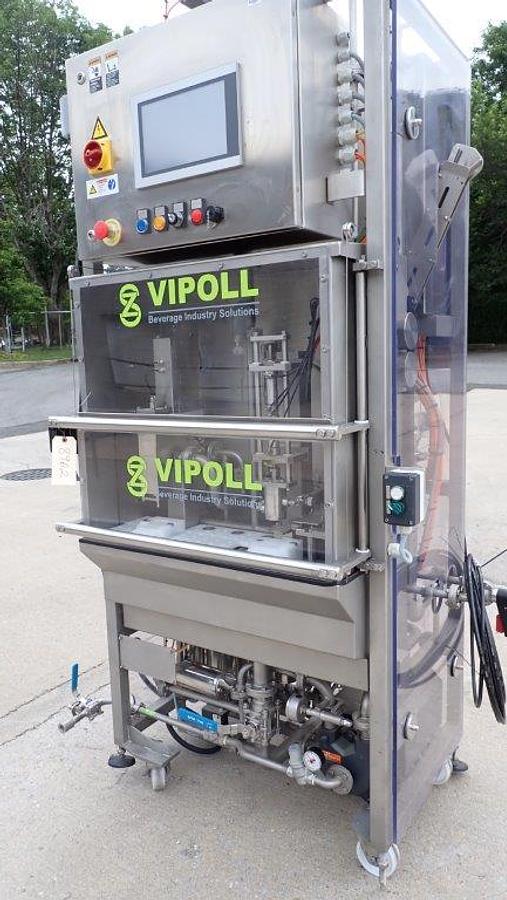
Category
Manufacturer
Model
Vipoll
FAQ:
What types of beverages can Vipoll filling machines handle?
Vipoll filling machines are designed to handle a wide range of beverage types, making them a practical choice for multi-product facilities. Their systems are engineered to process still water, carbonated soft drinks, juices, beer, wine, and spirits. This versatility stems from Vipoll's Slovenian engineering heritage and decades of focus on filling and packaging solutions specifically for the beverage industry. Because a single machine line can often be configured for different product types, beverage producers with varied SKUs tend to find Vipoll equipment particularly useful.
When buying a used Vipoll filling machine, it is worth confirming with the seller exactly which product types the specific unit was used for during its production life. A machine that spent years running carbonated soft drinks, for example, will have components calibrated for counter-pressure filling, which differs from gravity or flow-meter filling used for still beverages. Asking for the machine's production history and reviewing its configuration before purchase helps ensure it aligns with your intended application.
Are Vipoll filling machines suitable for both carbonated and non-carbonated beverages?
Yes, Vipoll produces filling equipment designed for both carbonated and non-carbonated beverages, though the specific machine model and its filling technology determine which product types it can handle. Carbonated beverages like sparkling water, beer, and carbonated soft drinks require counter-pressure filling systems to preserve CO2 levels and prevent foaming. Non-carbonated products such as still water, juice, and wine are typically filled using gravity or volumetric flow-meter systems. Vipoll manufactures equipment across both categories, so the model in question matters significantly.
For buyers evaluating a used Vipoll machine, identifying the filling principle of the specific unit is a critical step before purchase. Counter-pressure fillers are mechanically more complex and require closer inspection of valves, seals, and the pressurization system. Requesting a video inspection or in-person walkthrough from the seller is strongly recommended, as it allows a closer look at the filling valves and overall condition of the machine's product-contact components. Consulting with Vipoll directly about the age and model of the machine can also clarify what technical support and spare parts remain available.
What is the production capacity range of Vipoll beverage filling machines?
Vipoll offers filling systems across a broad output spectrum. Smaller configurations are designed for craft producers and regional bottlers, handling a few thousand bottles per hour, while high-speed industrial lines can exceed 40,000 bottles per hour. This range makes Vipoll equipment relevant to a wide variety of operations, from mid-sized breweries and wineries to large-scale soft drink and water bottling plants. The capacity of any given machine is tied to its model, the number of filling heads, and the container size it is configured to run.
When shopping for a used Vipoll machine, the rated capacity listed by the seller is typically the maximum throughput under ideal conditions with a specific bottle size and product type. Real-world output may vary depending on the container format, fill volume, and the condition of the machine after years of use. Buyers should ask the seller about the bottle sizes the machine was running in production and what actual throughput was achieved, since a machine rated at 20,000 bottles per hour on a 500ml PET bottle will perform differently when switched to a 330ml glass bottle.
What container types are compatible with Vipoll filling machines?
Vipoll filling machines are engineered to handle both PET plastic containers and glass bottles, which is a meaningful advantage for beverage producers who package across multiple container formats. Glass compatibility is particularly relevant for breweries, wineries, and premium spirits producers, while PET capability suits water and soft drink operations. The specific container formats a machine can run, including bottle diameter, height, and neck finish, are defined by the change parts and tooling installed on that particular unit.
For used machines, buyers should confirm which container sizes and formats are included with the purchase. Change parts for different bottle profiles are often sold separately, and sourcing them for older models can take time. It is also worth asking whether the machine's star wheels, grippers, and filling head spacing are set up for the containers you plan to run, or whether retooling will be required. A thorough inspection, whether in person or via detailed video, should include a review of the existing change parts and their condition.
What is a monoblock filling machine and does Vipoll make them?
A monoblock filling machine combines multiple packaging line functions, typically rinsing, filling, and capping, into a single integrated unit rather than having each function as a separate standalone machine linked by conveyors. This configuration reduces the overall footprint of the line, simplifies timing and synchronization between functions, and generally lowers the number of mechanical transfer points where bottles can tip or jam. Monoblocks are common in mid-to-high speed beverage operations where floor space is limited or where minimizing contamination risk between rinsing and filling is a priority.
Vipoll does manufacture monoblock systems that integrate rinsing, filling, and capping in one frame. For buyers evaluating a used Vipoll monoblock, the integrated nature of the machine means that inspecting all three functional sections is necessary, not just the filler. The rinser's nozzles and water circuits, the capper's torque settings and cap chute, and the filler's valves and product circuit should all be reviewed. Because everything shares a single drive system and frame, wear or damage in one section can affect the performance of the others.
What should buyers know about purchasing a used Vipoll filling machine versus buying new equipment?
Used Vipoll filling machines are sold as-is, which is standard practice in the secondary equipment market. Unlike purchasing directly from a manufacturer, buying used means there is no factory warranty covering the machine's components or performance. The responsibility for verifying the machine's condition falls on the buyer, which makes selecting a reputable used equipment dealer with a track record in beverage and food processing machinery an important part of the process. Dealers who specialize in this category are better positioned to accurately describe the machine's configuration, history, and current state.
The primary advantage of used equipment is cost. A used Vipoll filling line can represent significant savings compared to the price of equivalent new machinery, which makes it an attractive option for startups, capacity expansions, or facilities replacing aging equipment on a tighter budget. The trade-off is that buyers need to invest time in due diligence. Requesting an in-person or video inspection, reviewing the machine's production history, and consulting Vipoll about parts and support availability for the specific model and age are all steps that protect the buyer and reduce the risk of unexpected costs after the machine arrives.
How should buyers inspect a used Vipoll filling machine before purchasing?
Inspections of used filling equipment typically take one of three forms: in-person visits to the dealer's facility or the plant where the machine is currently located, live video calls where the dealer walks through the machine in real time, or recorded video walkthroughs provided by the seller. Each approach has its place depending on the buyer's location and the machine's situation. Some used Vipoll machines may still be running in active production at a facility, in which case the dealer can often arrange access for a buyer to observe the machine operating. Others will be decommissioned and sitting in a warehouse, where a static inspection is the only option.
During any inspection, buyers should focus on the condition of the filling valves and product-contact surfaces, the integrity of seals and gaskets, the state of the electrical panel and control system, and the mechanical condition of the drive components. It is worth noting that most used equipment dealers are not set up to run actual product through a machine during an inspection, as doing so would require food-grade production permitting they typically do not hold. The goal of the inspection is to get an accurate picture of the machine's mechanical condition and completeness, not a full production trial. Buyers with technical questions about specific components should consider bringing in a qualified technician or consulting with Vipoll about what to look for on that particular model.
What is the typical price range for a used Vipoll beverage filling machine?
Pricing for used Vipoll filling machines varies considerably depending on the machine's capacity, age, configuration, and condition. Smaller, lower-speed units designed for a few thousand bottles per hour will typically be priced well below high-speed industrial monoblocks capable of running tens of thousands of bottles per hour. Additional factors that affect price include whether the machine comes with change parts for multiple container formats, the condition of the control system, and how recently the machine was last in production. A machine pulled directly from an active line is generally considered more desirable than one that has been sitting idle for years.
Buyers should also factor in costs beyond the listed machine price when calculating total acquisition cost. Shipping, crating or rigging fees, import duties if purchasing across borders, and any reconditioning or parts replacement needed before startup can add meaningfully to the final number. Asking the dealer for a detailed breakdown of packaging, loading, and freight costs upfront is the most reliable way to understand the true landed cost of the equipment before committing to a purchase.
What are the shipping and logistics considerations for a used Vipoll filling machine?
Beverage filling machines are heavy, complex pieces of equipment that require careful preparation before transport. Proper crating or palletization is essential to prevent damage to sensitive components like filling valves, electronic controls, and star wheel assemblies during transit. The level of packaging required depends on the machine's size and the shipping method, with larger monoblocks typically needing custom wooden crates and internal bracing. Shipping costs will reflect the packaging requirements, the machine's weight and dimensions, and the distance being shipped.
For larger Vipoll filling lines, loading and unloading at each end of the shipment will require rigging equipment such as forklifts or cranes, and those services carry additional costs that buyers should confirm with the seller in advance. International shipments add customs documentation and import duties to the equation. Buyers are well advised to ask the dealer for a complete breakdown of packaging, rigging, freight, and any other logistics costs before finalizing the purchase, so there are no surprises when the machine arrives.
What payment terms do used beverage equipment dealers typically require?
The standard practice among used equipment dealers is to require full payment before a machine is released for shipping. This applies across the industry and is not specific to any one dealer or machine type. The reasoning is straightforward: once a machine has been loaded and shipped, the dealer has limited recourse if payment issues arise. For buyers, this means having financing or capital in place before finalizing a purchase agreement, since most transactions will not move forward until funds are confirmed.
Some dealers may offer payment terms to established customers with a history of prior purchases, but this is the exception rather than the rule, particularly for first-time buyers. Buyers who are new to a dealer should expect to pay in full upfront and should factor that into their cash flow planning. Wire transfer is the most common payment method for machinery transactions of this size. Buyers should also ensure they receive detailed invoices and documentation of the machine's specifications and condition as part of the transaction record.