Category
Manufacturer
Model
FAQ:
What types of tanks does Viatec manufacture?
Viatec is a Canadian-based manufacturer that produces fiberglass and polyethylene tanks designed for water treatment, liquid storage, and industrial applications. Their product line covers a broad range of use cases, including residential well water systems, municipal water treatment, agricultural irrigation, and industrial liquid storage. The tanks are widely recognized for their corrosion-resistant construction, which makes them a practical choice for storing a variety of liquid types that would degrade metal alternatives over time.
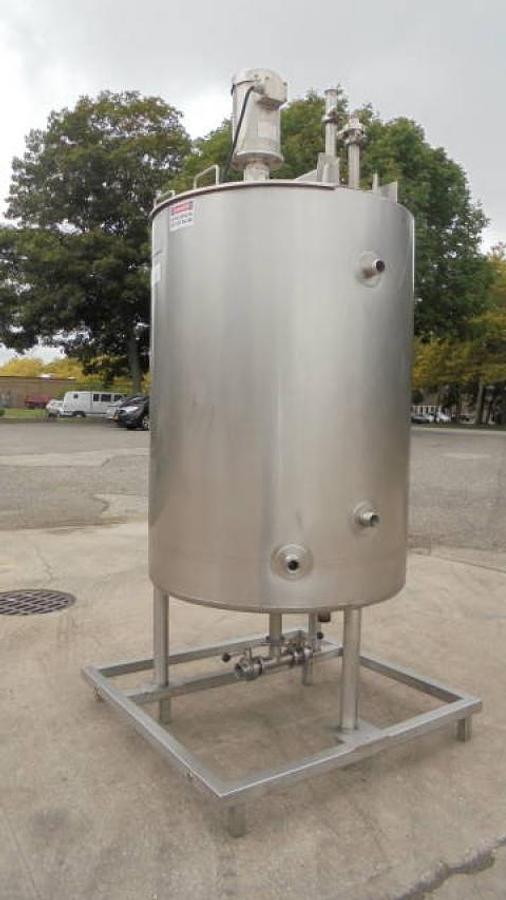
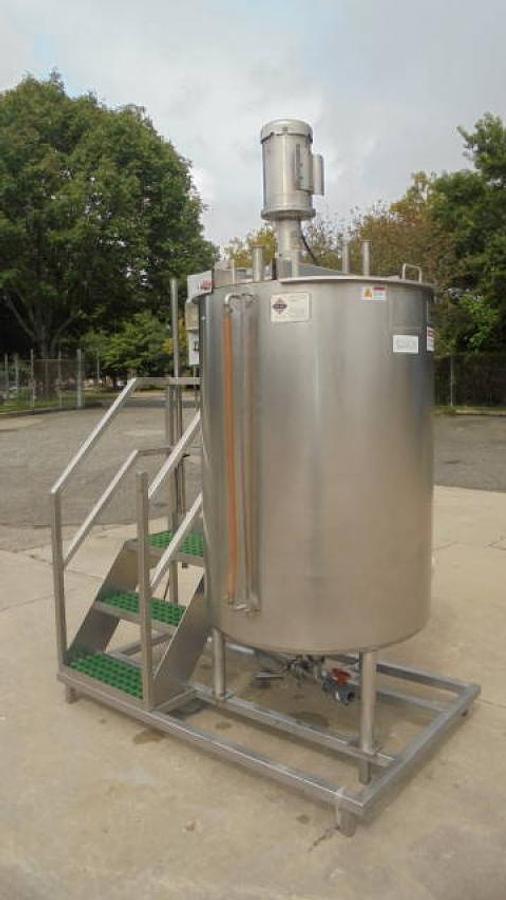
Beyond basic storage vessels, Viatec also produces jacketed mix tanks equipped with agitation systems. For example, stainless steel jacketed tanks with integrated mixing equipment such as propeller or rotosolver-style agitators are part of their product range. These jacketed designs support temperature-controlled processing, with some units rated for jacket pressures up to 180 PSI. This makes them suitable for applications in food processing, chemical blending, and other industries where precise mixing and temperature management are required.
What are Viatec jacketed mix tanks used for?
Viatec jacketed mix tanks are designed for processes that require both agitation and temperature control of a liquid product. The jacket surrounding the tank allows a heating or cooling medium, such as steam or chilled water, to circulate around the vessel, maintaining the contents at a target temperature during mixing or storage. Units rated for 180 PSI jackets are capable of handling demanding thermal processing conditions, which is common in pharmaceutical manufacturing, food and beverage production, cosmetics, and specialty chemical blending.
The mixing component, which can take the form of a propeller agitator or a high-shear rotosolver, determines how aggressively the contents are blended. A propeller agitator is well suited to gentle blending of miscible liquids, while a rotosolver-style mixer is designed to incorporate powders or disperse difficult-to-mix ingredients into a liquid base. Stainless steel construction is standard for these applications because it resists corrosion from a wide range of chemicals and is compatible with sanitary cleaning protocols, making the tanks appropriate for both food-grade and industrial environments.
What sizes are available for used Viatec tanks?
Viatec tanks are available across a wide range of capacities, from relatively compact units suited to point-of-use applications up to large-volume vessels for industrial or municipal storage. In the used equipment market, available sizes at any given time depend on what has come off production lines or been decommissioned from existing facilities. Smaller jacketed mix tanks, such as 233-gallon stainless steel units, are a common size found in food processing and specialty chemical operations, and they represent the kind of capacity that fits within a standard production room without requiring heavy structural modifications.
Buyers looking for a specific capacity should work directly with a used equipment dealer to identify what is currently in inventory, since the used market does not carry fixed stock the way a distributor of manufactured goods would. It is also worth asking whether the dealer has additional units expected to come available, as decommissioned equipment from plant closures or upgrades is often listed in batches. Providing the dealer with your target capacity, pressure rating, and any material compatibility requirements will help narrow down the search efficiently.
What materials are Viatec tanks constructed from?
Viatec produces tanks in both fiberglass-reinforced plastic and polyethylene, with stainless steel used for their jacketed mix tank and processing vessel product lines. Fiberglass tanks offer excellent chemical resistance and structural rigidity, making them a long-standing choice for water treatment and industrial liquid storage where the vessel must hold up against corrosive chemicals over many years. Polyethylene tanks are valued for their flexibility, lighter weight, and resistance to a broad spectrum of acids and alkalis, which makes them a common choice in agricultural and municipal water applications.
Stainless steel construction is the standard for jacketed mix tanks and any vessel intended for sanitary processing environments. Stainless steel resists corrosion from food acids, cleaning agents, and many industrial chemicals, and its smooth interior surface supports thorough cleaning and sterilization. The grade of stainless steel used, typically 304 or 316, affects the level of corrosion resistance, with 316 offering better performance in chloride-heavy or highly acidic environments. When evaluating a used Viatec tank, confirming the material grade and reviewing the interior condition during inspection are important steps before purchase.
What should buyers inspect when purchasing a used Viatec tank?
Buying a used tank requires a more thorough evaluation than purchasing manufactured equipment, because the condition of the vessel directly affects its suitability for your application. For stainless steel jacketed mix tanks, the key areas to examine include the interior surface for pitting, corrosion, or weld repairs; the jacket integrity and pressure rating markings; the condition of any agitator shaft, seals, and motor; and all nozzles, fittings, and manways for signs of damage or prior leaks. Asking the dealer for detailed photographs or a video walkthrough of the tank is a reasonable starting point, and many dealers will accommodate in-person inspections or live video calls to show the equipment in its current state.
For fiberglass or polyethylene storage tanks, inspection should focus on the exterior and interior surfaces for cracks, crazing, UV degradation, or chemical staining that might indicate incompatibility with previously stored substances. It is also worth asking about the service history of the tank, including what liquids it held and how it was cleaned before being taken out of service. Keep in mind that used equipment dealers generally do not have the permitting or production infrastructure to run functional tests with actual product, so the inspection is primarily a visual and mechanical assessment. Consulting with the manufacturer about the specific model can also help buyers understand what parts and technical support may still be available for a given unit.
Are used Viatec tanks suitable for food-grade or sanitary applications?
Viatec stainless steel jacketed mix tanks are built to the standards commonly required in food, beverage, and pharmaceutical processing environments. However, when purchasing a used unit, suitability for sanitary applications depends heavily on the condition of the tank and its history of use. A tank that was previously used for food-grade production and properly maintained may be entirely appropriate for continued use in a sanitary setting, while a unit that handled aggressive industrial chemicals may have interior surface degradation that disqualifies it from food-contact applications regardless of the base material.
Buyers with sanitary requirements should request detailed inspection access, including interior photographs showing the surface finish, welds, and any areas around nozzles or agitator penetrations where product can accumulate. It is also worth asking whether the tank was cleaned to a specific protocol before decommissioning and whether any documentation of prior use is available. In some cases, a tank that has been decommissioned but is still located at an operating facility can be inspected in place, which gives the buyer the best possible view of the equipment's actual condition before committing to a purchase.
What is the typical lifespan of a Viatec tank?
Viatec tanks are built for long service life. Fiberglass and polyethylene models are commonly rated for 20 years or more under normal operating conditions, provided they are used within their design parameters for chemical compatibility, pressure, and temperature. Stainless steel jacketed mix tanks, when properly maintained, can remain in serviceable condition for several decades, which is one of the reasons they retain meaningful value in the used equipment market long after leaving the original production facility.
Actual service life in practice depends on the specific application, the aggressiveness of the liquids stored or processed, how well the tank was maintained, and whether it was ever subjected to conditions outside its design rating. A used tank that has been well cared for and operated within spec can still have many years of useful life remaining. This is why thorough inspection before purchase matters so much. Reviewing the mechanical condition of agitators, jacket fittings, and interior surfaces gives a buyer a realistic picture of how much service life remains and whether any refurbishment would be needed before putting the tank back into production.
How does shipping work for used Viatec tanks?
Shipping a used tank involves more logistical complexity than shipping smaller equipment, and costs can vary significantly based on the size of the vessel, the distance involved, and the level of packaging or crating required to protect it in transit. Smaller jacketed mix tanks in the 200-gallon range can often be moved on a standard pallet with appropriate blocking and bracing, while larger vessels may require custom crating or specialized flatbed freight. The dealer handling the sale is typically the best source of information on what packaging is appropriate and what the associated costs will be.
For heavier tanks, rigging is usually required for both loading at the origin and unloading at the destination, and those costs are generally separate from freight charges. Buyers should ask the dealer to provide a full breakdown of packaging, rigging, and freight costs so they can calculate the total landed cost of the equipment before finalizing a purchase. It is also worth confirming whether the buyer is responsible for arranging unloading equipment at the receiving end, as a forklift or crane may be needed depending on the tank's weight and where it is being installed.
What payment terms are typical when buying used Viatec tanks?
Used equipment dealers typically require payment in full before a tank is released for shipping. This is standard practice in the used machinery market and applies to most transactions regardless of the buyer's size or industry. The reasoning is straightforward: unlike a distributor with ongoing inventory replenishment, a used equipment dealer is selling a single asset, and holding it without payment while arranging logistics creates real financial exposure for the seller.
Some dealers may extend terms to buyers with whom they have an established purchasing history, but this is at the dealer's discretion and not something a first-time buyer should expect. Accepted payment methods vary by dealer but commonly include wire transfer and other verified payment instruments. Buyers should confirm the exact payment process and timing with the dealer early in the transaction, particularly if financing is involved, since coordinating loan disbursement with equipment release and shipping schedules requires advance planning.
How do Viatec fiberglass tanks compare to stainless steel tanks for industrial liquid storage?
Fiberglass and stainless steel tanks each have distinct advantages depending on the application. Fiberglass tanks are lighter, generally less expensive, and offer excellent resistance to a wide range of corrosive chemicals, including many acids and alkalis that would attack metal over time. They are a common choice for water treatment systems, chemical feed applications, and agricultural storage where the priority is long-term chemical resistance at a manageable cost. Fiberglass is also non-conductive, which can be an advantage in certain electrical or static-sensitive environments.
Stainless steel tanks, by contrast, are the standard choice for applications that require sanitary construction, precise temperature control, or mechanical agitation. The smooth, cleanable interior surface of stainless steel is difficult to replicate with fiberglass in high-hygiene environments, and the material's strength allows for the fabrication of jacketed vessels rated for significant pressure, which is necessary for steam-heated or pressure-processed applications. For a buyer choosing between the two in the used market, the decision usually comes down to the specific liquid being processed, the required operating conditions, and whether sanitary compliance is a factor. Both materials can deliver long service life when matched to the right application.