Category
Manufacturer
Model
Vertrod
Vertrod is recognized for its custom-engineered equipment solutions, particularly in the plastics and packaging industries. They provide a range of machines including extruders and converters that enhance production capabilities.
FAQ:
What is a Vertrod machine and what is it used for?
Vertrod is a US-based manufacturer with a long-standing reputation in the plastics and packaging industries. The company is best known for producing impulse heat sealers, plastic tube sealers, and related custom-engineered equipment designed for high-volume production environments. Their machines are built with heavy-duty metal construction, which contributes to an extended operational life that makes them a practical choice for demanding industrial settings.
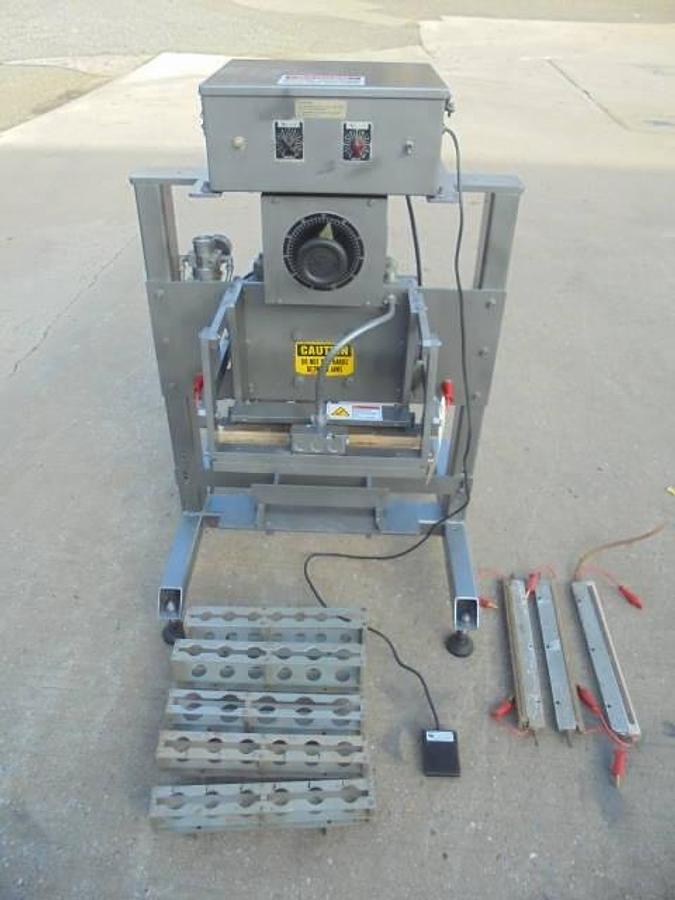
In practice, Vertrod machines are used across a wide range of industries including food processing, medical packaging, retail, and general manufacturing. The core function is sealing flexible packaging materials, whether that's polyethylene bags, polypropylene pouches, or laminated film. Models like the Vertrod 14P/PTV Semi-Auto Plastic Tube Sealer address more specialized applications, such as sealing extruded plastic tubes, which are common in cosmetic, pharmaceutical, and industrial product packaging.
What types of used Vertrod machines are typically available for sale?
The used Vertrod equipment market includes several machine categories, with impulse heat sealers and plastic tube sealers being the most commonly available. Impulse sealers come in a range of configurations, from benchtop manual units suited for lower-volume operations to heavy-duty floor-standing models built for continuous industrial use. Semi-automatic models, such as the Vertrod 14P/PTV Semi-Auto Plastic Tube Sealer, occupy a middle ground and are popular in facilities that need consistent output without fully automated systems.
Beyond sealers, Vertrod has historically produced extruders and converters that support broader plastics processing operations. When shopping the used market, buyers will encounter machines at various stages of their service life, so it pays to ask about the machine's production history, how many hours it has logged, and whether any components have been replaced or refurbished. The specific models available at any given time depend on what has come off production floors, so inventory turns over regularly.
What is the difference between Vertrod impulse sealers and continuous band sealers?
Impulse sealers, which Vertrod is widely recognized for, apply heat only during the brief moment of the sealing cycle. A heating element fires, creates the seal, and then cools before the next cycle begins. This approach uses significantly less energy than constant-heat alternatives and reduces the risk of distorting or burning thinner packaging materials. It also means the machine runs cooler overall, which can be an advantage in temperature-sensitive production environments.
Continuous band sealers, by contrast, move packaging material through a set of heated rollers or belts in an uninterrupted flow, making them better suited for very high-throughput lines where bags or pouches need to be sealed one after another without pausing. The tradeoff is higher energy consumption and greater sensitivity to material type. For operations sealing polyethylene, polypropylene, or laminated films in batches or at moderate speeds, an impulse sealer like those produced by Vertrod is often the more practical and cost-effective choice.
What materials can a Vertrod impulse sealer handle?
Vertrod impulse sealers are designed primarily for thermoplastic films and packaging materials. The most common materials include polyethylene (PE), polypropylene (PP), and various laminated or co-extruded films that combine multiple material layers for barrier properties. These materials appear across food packaging, medical device pouches, retail bags, and industrial packaging applications, which explains why Vertrod machines have found use in such a broad range of industries.
The machine's suitability for a specific material depends on factors like film thickness, the number of layers, and the seal bar length relative to the package width. Thicker or multi-layer materials may require adjusted dwell time or pressure settings to achieve a consistent seal. Buyers purchasing a used Vertrod machine should confirm the model's specifications match their material requirements, and if possible, arrange an inspection to verify the heating element and sealing jaw are in good working condition before committing to a purchase.
What seal bar lengths do Vertrod machines typically offer?
Vertrod produces impulse sealers across a wide range of seal bar lengths, commonly spanning from around 12 inches on the smaller end up to 60 inches or more on larger industrial models. This range allows packaging operations to match the machine precisely to the width of the bags, pouches, or tubes they need to seal. A mismatch between seal bar length and package width is one of the more common specification errors buyers make when sourcing used equipment, so confirming this measurement upfront is essential.
On the used market, the availability of specific seal bar lengths depends on what machines happen to be in circulation at any given time. Buyers with non-standard packaging widths may need to be patient or flexible, as the most common lengths (typically in the 18 to 36 inch range) move faster than specialty sizes. When evaluating a used Vertrod sealer, it's also worth inspecting the condition of the seal bar and the Teflon-coated tape, as these are wear components that affect seal quality and may need replacement.
Are used Vertrod machines suitable for industrial production environments?
Vertrod machines have a reputation for heavy-duty construction, and many of the models that appear on the used market were originally built for sustained industrial use. The metal-framed build quality means these machines tend to hold up well over long service lives, which is part of why they retain value and continue to circulate in the secondary market long after their initial purchase. For operations running multiple shifts or sealing high volumes of product daily, a used Vertrod in good condition can be a cost-effective alternative to purchasing a comparable machine at full price.
That said, the suitability of any specific used machine for a production environment depends on its current condition, not just its original design intent. Before integrating a used Vertrod into an active production line, buyers should arrange an inspection, either in person or via video, to assess the condition of the heating element, sealing jaw, pressure arm, and any electrical components. Machines that have been sitting idle for extended periods may require servicing before they perform reliably at production speeds.
What should buyers inspect before purchasing a used Vertrod machine?
A thorough inspection is the most important step in buying any used packaging machine, and Vertrod sealers are no exception. Key areas to examine include the condition of the heating element and the Teflon tape or cloth that covers the seal bar, both of which are consumable components that degrade with use. The sealing jaw and pressure arm should close evenly and with consistent force across the full length of the bar. Any uneven pressure will result in inconsistent seals, which is a production problem that can be costly to diagnose after the machine is already installed.
Beyond the sealing components, buyers should check the electrical system, the timer controls, and any pneumatic or mechanical actuators on semi-automatic models. Reputable used equipment dealers will typically accommodate in-person inspections at their facility or, where the machine is still installed at a production site, can arrange access through the current owner. Video inspections are also a common alternative when travel isn't practical. Keep in mind that most dealers do not have the production permits required to run actual product through the machine during a demonstration, so inspections focus on mechanical condition and operational cycling rather than live production output.
Do used Vertrod machines come with a warranty?
Used equipment is generally sold on an as-is basis, which is standard practice across the used machinery industry. Unlike purchases made directly from a manufacturer, used machines sold through dealers do not typically come with a manufacturer's warranty, and dealers themselves rarely offer formal warranty coverage on pre-owned equipment. This places the responsibility for evaluating the machine's condition squarely on the buyer, which is why inspection, either in person or via video, is so important before any purchase is finalized.
Buyers looking to protect themselves should focus on selecting dealers with a long track record in the packaging and plastics machinery space, as established dealers have reputational incentives to represent equipment accurately. It's also worth contacting Vertrod directly to ask about parts availability and technical support for the specific model being considered, since older or discontinued models may have limited manufacturer support. Understanding what replacement parts are available and at what cost is a practical way to gauge the long-term serviceability of a used machine.
What are typical shipping and logistics considerations for a used Vertrod machine?
Shipping a used packaging machine involves more than arranging a freight pickup. The machine needs to be properly prepared for transit, which typically means palletizing or crating it to prevent damage during handling. The level of packaging required depends on the machine's size and weight, and the associated costs vary accordingly. Smaller benchtop sealers may ship on a standard pallet, while larger floor-standing models often require custom crating and heavier rigging equipment for loading and unloading at both ends.
Buyers should ask the dealer for a detailed breakdown of packaging, rigging, and freight costs before committing to a purchase, since the landed cost of the machine (the price plus all shipping-related expenses) can differ significantly from the listed sale price. For larger Vertrod models, a liftgate or forklift may be needed at the delivery location, which is an additional cost if the buyer's facility isn't equipped for it. Getting clarity on these logistics upfront avoids surprises and helps buyers make accurate cost comparisons across different machines and sellers.
What are typical payment terms when buying a used Vertrod machine?
Most used equipment dealers require full payment before a machine is released for shipping. This is standard practice in the industry and reflects the logistical reality that once a machine is loaded and in transit, the transaction is effectively complete. For buyers who are new to a particular dealer, payment in full prior to shipment is almost always the expectation. Some dealers may extend payment terms to established customers with a history of repeat purchases, but this is the exception rather than the rule.
Common payment methods include wire transfer and credit card, though larger transactions are typically handled via wire. Buyers should confirm the accepted payment methods with the dealer before proceeding and factor in any wire transfer fees or processing charges. It's also reasonable to request documentation of the machine's condition, such as photos or a video walkthrough, as part of the pre-payment process. Having a clear record of the machine's state at the time of sale provides useful reference if any discrepancies arise after delivery.