Category
Manufacturer
Model
Versapply
Versapply specializes in dispensing systems for the cosmetic and pharmaceutical industries. Their machines are known for their precision and versatility in applying liquid products, from creams to serums.
FAQ:
What is a Versapply dispensing system and what is it used for?
Versapply is a brand that produces precision dispensing systems used primarily in the cosmetic and pharmaceutical industries, though their equipment also sees use in broader industrial and manufacturing settings. Their machines are built to apply liquid products with a high degree of accuracy and repeatability, covering materials that range from lightweight serums and lotions to thicker creams and viscous fluids like adhesives, epoxies, silicones, and greases. The core purpose of any Versapply system is to deliver a controlled, consistent output of material, reducing the variability that comes with manual application and cutting down on product waste.
On the industrial side, Versapply dispensing systems are recognized for their versatility across different production environments. Depending on the model, they can handle single-component materials or two-component formulations that require precise mix ratios. This makes them useful in assembly lines where adhesive bonds need to meet exact specifications, as well as in filling and packaging operations where dose consistency directly affects product quality. Used Versapply equipment is particularly appealing to smaller manufacturers and contract packagers who need reliable dispensing capability without the capital outlay of purchasing a system directly from the manufacturer.
What types of materials can be dispensed with a Versapply system?
Versapply dispensing systems are designed to handle a fairly wide range of liquid and semi-liquid materials. In cosmetic and pharmaceutical applications, that typically means creams, serums, gels, lotions, and other topical formulations. In industrial and manufacturing contexts, the systems are used with adhesives, epoxies, silicones, sealants, greases, and other viscous fluids that require controlled application. The key variable is viscosity: dispensing systems like these are engineered to manage materials that would be difficult or inconsistent to apply by hand, especially at production volumes.
For two-component materials, such as two-part epoxies or structural adhesives, buyers should pay close attention to the mix ratio capabilities of any specific model. Some Versapply configurations support 1:1 ratios, while others accommodate 2:1 or different ratios depending on the formulation. When evaluating a used Versapply system, it is worth confirming the model specifications against the materials you plan to run, since not every unit in the product line handles every material type or viscosity range equally well. Consulting the manufacturer's documentation for the specific model can help clarify compatibility before purchase.
What industries are Versapply dispensing systems best suited for?
Versapply dispensing systems are most closely associated with the cosmetic and pharmaceutical industries, where precision filling and application of liquid products is a core production requirement. In these sectors, consistency of dose and cleanliness of application directly affect product quality and regulatory compliance, making a well-calibrated dispensing system an important piece of equipment. Beyond those two industries, Versapply equipment also finds use in general manufacturing and assembly operations where adhesives, sealants, or other viscous materials need to be applied with repeatability and minimal waste.
Electronics assembly, medical device manufacturing, and consumer goods packaging are other areas where precision dispensing equipment of this type is commonly deployed. The specific suitability of a given Versapply model depends on the production volume, the material being dispensed, and the level of automation required. Some configurations are designed for benchtop or semi-automated use, while others can be integrated into higher-throughput production lines. When sourcing used Versapply equipment, buyers from any of these industries should match the machine's rated output and material compatibility to their actual production requirements before committing to a purchase.
What should buyers know about purchasing a used Versapply dispensing system?
Buying a used Versapply dispensing system is a practical way to access reliable dispensing technology at a lower cost than purchasing equipment directly from the manufacturer, but it does require more due diligence on the buyer's part. Used industrial equipment is typically sold as-is, meaning there is no coverage from the original manufacturer's warranty program and no guarantee of condition beyond what the seller represents. That puts the responsibility on the buyer to inspect the machine thoroughly and assess its current working order before completing the transaction. Reputable used equipment dealers will generally accommodate in-person inspections, video walkthroughs, or photo documentation to help buyers make an informed decision.
Beyond the physical condition of the machine, buyers should also research parts and service availability for the specific model they are considering. Older Versapply models may have limited support from the manufacturer in terms of replacement parts or technical documentation, while more recent models are more likely to have accessible service resources. Contacting the manufacturer directly to ask about support for a particular model and serial number range is a reasonable step before finalizing any purchase. Choosing a used equipment dealer who specializes in cosmetic, pharmaceutical, or industrial machinery, and who has a track record of selling this category of equipment, adds another layer of confidence to the buying process.
How do pneumatic, electric, and manual Versapply dispensing systems differ?
Versapply dispensing systems, like most dispensing equipment in this category, are available in manual, pneumatic, and automated configurations, and the differences between them come down to production volume, precision requirements, and the level of operator involvement acceptable in a given process. Manual systems rely on the operator to control the dispensing action, which keeps costs low and works well for low-volume or intermittent applications, but introduces variability that can be a problem in quality-sensitive production environments. Pneumatic systems use compressed air to drive the dispensing mechanism, providing more consistent pressure and output than a manual approach, and they are well-suited for mid-volume production where repeatability matters.
Automated or electrically driven configurations offer the highest level of control, with programmable dispense times, volumes, and patterns that can be precisely calibrated and repeated across large production runs. These systems reduce operator fatigue and human error, and they are typically found in higher-throughput manufacturing environments. When evaluating a used Versapply unit, understanding which drive type the machine uses is important because it affects what infrastructure you need on your production floor, whether that is a compressed air supply at the right pressure rating or compatible electrical controls. The right configuration depends on your specific application, material viscosity, and production demands.
What is the typical price range for used Versapply dispensing systems?
Pricing for used Versapply dispensing systems varies considerably depending on the model, age, condition, and configuration of the equipment. Simpler manual or benchtop units tend to be available at lower price points, while more complex automated or high-throughput systems command higher prices reflecting their original cost and ongoing utility in production environments. As a general reference point, used dispensing systems in this category can range from a few hundred dollars for basic manual units up to several thousand dollars or more for fully automated configurations with specialized tooling or integration capabilities.
Beyond the sticker price of the machine itself, buyers should factor in additional costs that affect the total landed price of the equipment. Shipping, crating or palletization, and any rigging required for loading and unloading can add meaningfully to the overall cost, particularly for larger or heavier systems. If the machine requires servicing, calibration, or replacement parts before it can be put into production, those costs should be estimated in advance as well. Asking the seller for a clear breakdown of all associated costs before committing to a purchase is the best way to avoid surprises and accurately compare options across different dealers or listings.
What is the Versapply 9120 and what does it do?
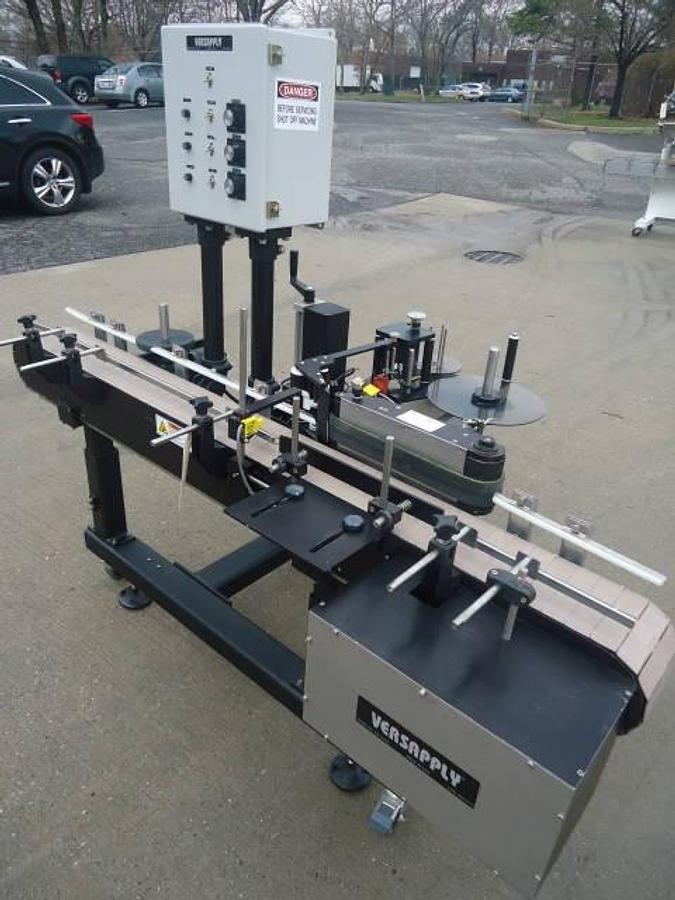
The Versapply 9120 is a pressure-sensitive labeling machine configured for both spot and wraparound label application. This type of equipment is used in production environments where products need to be labeled consistently and at a reliable rate, covering applications from small cosmetic containers to pharmaceutical packaging. Pressure-sensitive labeling systems apply pre-cut labels from a roll using pressure rather than heat or adhesive activation, which makes them compatible with a wide range of label materials and container types. The spot and wraparound capability means the 9120 can handle both partial-coverage and full-circumference label applications depending on the product and label format.
For buyers in the cosmetic or pharmaceutical space, a used Versapply 9120 represents a way to bring label application in-house or expand existing packaging line capacity without the cost of purchasing a comparable system directly from a manufacturer. As with any used labeling equipment, buyers should inspect the machine's mechanical components, including the label dispensing mechanism, drive rollers, and any sensors or controls, to assess wear and current functionality. Confirming that the machine can accommodate the label roll dimensions and container sizes relevant to your production line is an important step before purchase, and the seller should be able to provide specifications or arrange an inspection to verify this.
How should buyers approach inspecting a used Versapply machine before purchasing?
Inspecting a used Versapply dispensing system before purchase is one of the most important steps in the buying process, and reputable dealers will typically offer several ways to facilitate this. In-person inspections are the most thorough option, allowing a buyer or their technician to physically examine the machine, check for wear on key components, review the condition of seals and dispensing heads, and assess the overall mechanical state of the equipment. Virtual inspections via video call are a practical alternative when travel is not feasible, and many dealers can also provide detailed photo documentation or pre-recorded video walkthroughs of the machine.
One important limitation to be aware of is that most used equipment dealers are not set up to run actual production tests with specific materials, since doing so would require permitting and facilities beyond what a typical dealer operates. What buyers can reasonably expect is a demonstration that the machine powers on, that mechanical functions operate as intended, and that there are no obvious signs of damage or excessive wear. For more complex validation, some equipment may still be installed at the facility where it was used, making it possible to arrange an inspection while the machine is still in a production context. Buyers should come prepared with a list of specific questions about the machine's history, any known repairs or modifications, and the availability of manuals or documentation.
What are the typical shipping and logistics considerations for used Versapply dispensing equipment?
Shipping used dispensing equipment requires more planning than shipping standard parcels, and the costs involved depend heavily on the size and weight of the machine, the distance it needs to travel, and the level of packaging required to protect it in transit. Smaller benchtop Versapply units may be palletized and shipped via freight carrier at a relatively modest cost, while larger automated systems may require custom crating and specialized rigging for safe loading and unloading. Buyers should ask sellers for a detailed breakdown of packaging, crating, rigging, and freight costs upfront so they can accurately assess the total landed cost of the equipment.
For machines that are particularly large or heavy, a forklift or other lifting equipment may be needed at both the origin and destination, which can add to logistics costs if the buyer's facility is not equipped for it. International shipments introduce additional considerations including customs documentation, import duties, and compliance with any applicable regulations for industrial equipment. Regardless of the destination, buyers should confirm with the seller exactly what packaging will be used and whether the machine will be drained of any fluids or materials before shipping, since residual product can create complications during transit or at customs.
What payment terms are typical when buying used Versapply equipment from a dealer?
Payment practices in the used industrial equipment market are fairly consistent across reputable dealers. In most cases, full payment is required before the machine is released for shipping, which reflects the nature of used equipment transactions where the seller needs confirmation of funds before committing to logistics and transfer of ownership. This is standard practice across the industry and applies to most buyers, particularly those purchasing from a dealer for the first time. Some dealers may offer extended payment terms or other arrangements to established customers with a history of repeat transactions, but this is at the dealer's discretion.
Buyers should clarify accepted payment methods early in the process, as dealers may accept wire transfers, certified checks, or other forms of payment but may not accept credit cards or may charge a processing fee for card transactions. It is also worth confirming what happens if a machine is found to have undisclosed issues after payment is made, and what recourse, if any, the dealer offers in that situation. Since used equipment is sold as-is, the best protection for the buyer is a thorough inspection before payment rather than relying on post-sale remedies. Working with dealers who have a clear, transparent process and a verifiable track record in the industry reduces the risk on both sides of the transaction.