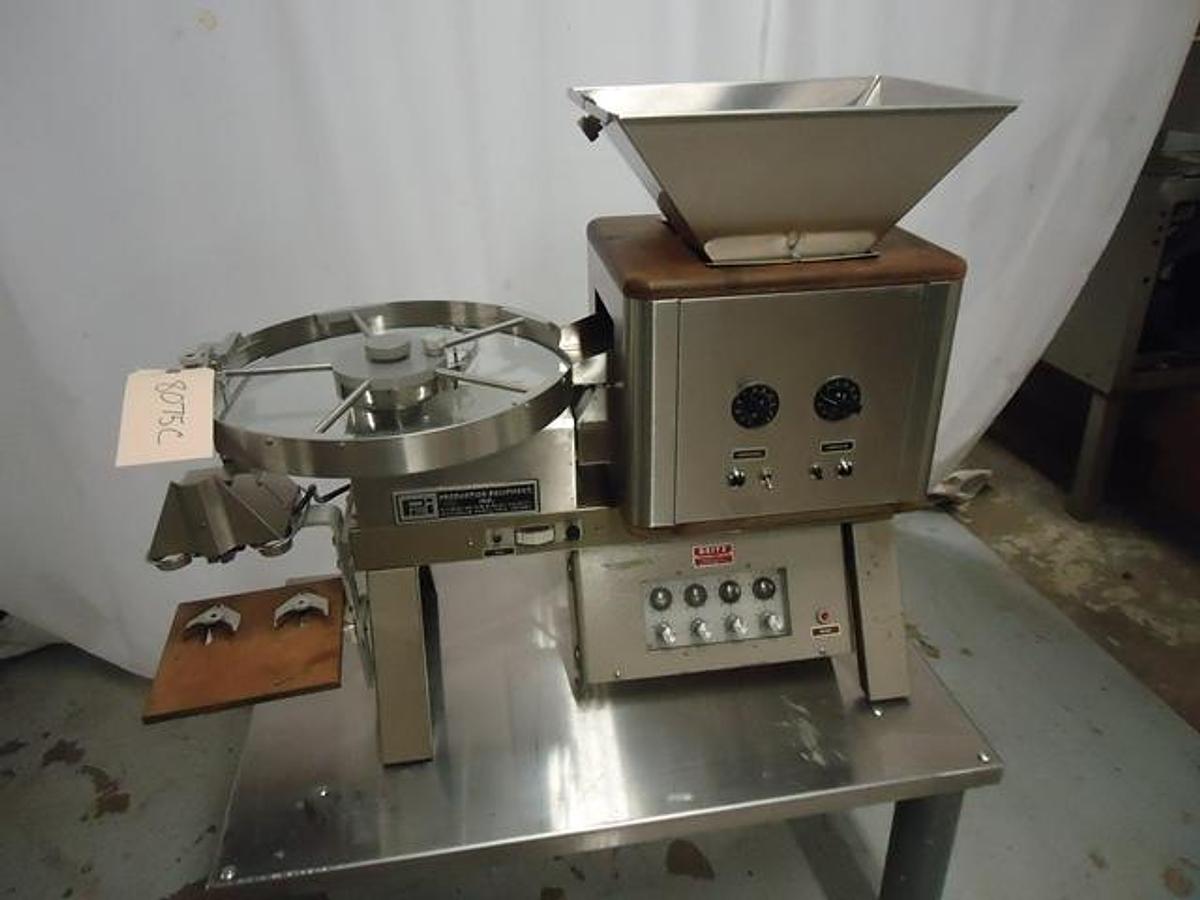
Category
Manufacturer
Model
Versacount
Versacount offers counting and packaging solutions tailored for the healthcare and food industries. Their equipment is designed for high-speed counting and packaging of small items, ensuring efficiency and accuracy in production.
FAQ:
What is a Versacount counting machine and what does it do?
Versacount is a brand of counting and packaging equipment designed for high-speed, accurate counting of small items in production environments. The machines are built around a weight-based counting principle, using tare and sample-weight methodology to calculate piece counts quickly and with a high degree of repeatability. Rather than counting items one by one mechanically, the system uses a calibrated sample weight to extrapolate total counts across larger batches, which dramatically speeds up the process compared to manual counting.
Versacount equipment is used across a range of industries, including healthcare, pharmaceuticals, food production, and hardware distribution. Depending on the model, these machines can handle tablets, capsules, small parts, fasteners, screws, bolts, and similar components. The Versacount 714L, for example, is a tabletop tablet and capsule counting machine suited for lighter-duty pharmaceutical and nutraceutical applications. Other model tiers scale up to floor-level units capable of handling heavier bulk parts in manufacturing or kitting operations.
How accurate are Versacount counting machines?
Versacount machines are known for their counting precision, with most models achieving count accuracy rates above 99.9% when properly calibrated using a representative sample. The accuracy depends heavily on the calibration process: the operator weighs a known quantity of parts to establish a precise sample weight, and the machine uses that baseline to calculate counts across the full batch. Consistency in part weight is therefore a factor, and parts with significant weight variation between individual pieces can affect accuracy.
For industries like pharmaceuticals, nutraceuticals, and hardware fulfillment, this level of accuracy matters considerably. Miscounts in tablet packaging or fastener kitting can lead to costly errors, compliance issues, or customer complaints. Proper calibration before each new part type or lot is the standard practice to maintain peak accuracy. Buyers evaluating a used Versacount machine should confirm the unit's load cell and scale components are functioning correctly, as these are the core elements driving counting precision.
What industries use Versacount counting machines?
Versacount counting machines are most commonly found in healthcare, pharmaceutical, nutraceutical, food production, and hardware distribution settings. In pharmaceutical and nutraceutical environments, the machines count tablets and capsules for bottling and packaging lines where speed and accuracy directly affect regulatory compliance and product integrity. Food industry applications typically involve counting small, uniform food items or components for portion-controlled packaging.
On the industrial side, hardware distributors, fastener suppliers, and manufacturing operations use Versacount and similar piece-counting equipment to count screws, bolts, nuts, washers, and other small components for kitting, fulfillment, and inventory management. Reducing labor hours spent on manual counting and minimizing costly errors in outbound orders are the primary drivers of adoption in these settings. The versatility of the platform across such different industries reflects how broadly useful precision piece-counting equipment can be wherever small-item accuracy is critical.
What models of Versacount counting machines are typically available on the used market?
The used market for Versacount equipment includes a range of model types, from compact tabletop units to larger floor-scale configurations. The Versacount 714L is a well-known tabletop tablet and capsule counting machine, suited for pharmaceutical and nutraceutical production lines where bench space is limited and throughput needs are moderate. Tabletop models like this are common in smaller packaging operations or quality control environments.
Larger Versacount models are built for heavier-duty applications, handling bulkier parts and higher-volume counting in industrial or hardware distribution settings. When shopping for a used Versacount machine, buyers should identify the specific model number and confirm its intended application matches their production requirements. Specifications such as counting capacity, platform size, and the types of items the machine is designed to handle vary meaningfully between models, so verifying these details before purchase is important.
What should I look for when buying a used Versacount counting machine?
Buying a used Versacount machine requires a careful assessment of the unit's mechanical and electronic condition. The load cell, which is the core component responsible for weight measurement and counting accuracy, should be in good working order with no signs of overloading or damage. The display, keypad, and any software or firmware should be functional and responsive. Physical wear on the platform, housing, or feeding components is normal on used equipment, but excessive damage to structural parts can affect performance.
Buyers should also consider the machine's history and the level of support available from the manufacturer for that specific model and age. Older or discontinued models may have limited parts availability, which can complicate future repairs. Requesting an inspection, either in person, via video call, or through video footage provided by the dealer, is a practical step to assess the machine's current condition before committing to a purchase. Reputable used equipment dealers with experience in industrial and pharmaceutical machinery are generally the safest source, as they are more likely to accurately represent the condition of the equipment and accommodate inspection requests.
Can a Versacount machine count both pharmaceutical tablets and industrial hardware parts?
Versacount produces distinct equipment lines for different applications, so not every model is designed to handle both pharmaceutical products and industrial hardware. Tabletop models like the 714L are specifically built for counting tablets and capsules in healthcare and nutraceutical environments, with features suited to those materials, including smooth surfaces that are easier to clean and designs that minimize contamination risk. These machines are generally not the right fit for counting metal fasteners or heavy industrial components.
For hardware and industrial parts counting, Versacount and similar manufacturers offer heavier-duty platforms built to handle the weight and abrasive nature of metal parts. These floor-scale or bench-scale systems use the same weight-based counting methodology but are engineered with more durable components and larger capacity platforms. Buyers should match the specific model to their intended application rather than assuming all Versacount machines are interchangeable across industries.
How does a weight-based counting machine like Versacount work?
Weight-based counting machines operate on a straightforward principle: since manufactured parts of the same type have a consistent individual weight, the total count of a batch can be calculated by dividing the total batch weight by the weight of a single piece. The operator starts by placing a known quantity of parts on the scale to establish a precise sample weight per piece, a process called calibration or sampling. Once that baseline is set, the machine can count any quantity of the same part type quickly and without manual intervention.
The accuracy of this method depends on the consistency of individual part weights. Highly uniform items, such as pharmaceutical tablets or standardized fasteners, produce very reliable counts. Parts with significant weight variation, such as irregular castings or mixed hardware, can introduce counting error. Most Versacount systems allow operators to use larger sample sizes during calibration to average out minor weight variation, which improves accuracy. The speed advantage over manual counting is substantial, particularly for large batches, making these machines a practical investment for operations that count high volumes of small, uniform items regularly.
What is the typical price range for used Versacount counting machines?
Pricing for used Versacount counting machines varies depending on the model, age, condition, and the specific application the machine is built for. Compact tabletop models designed for tablet and capsule counting tend to be priced lower than larger industrial floor-scale units. On the used market, pricing can range from a few hundred dollars for older or higher-wear units to several thousand dollars for well-maintained machines with more recent production dates and full functionality.
Beyond the purchase price, buyers should factor in shipping, crating or rigging costs, and any servicing or calibration work that may be needed before putting the machine into production. Used equipment is typically sold as-is, so understanding the full landed cost, including freight and any anticipated maintenance, gives a more accurate picture of the total investment. Consulting with the dealer about the machine's service history and current condition helps buyers make a realistic cost assessment before purchasing.
What should buyers expect regarding shipping a used Versacount counting machine?
Shipping a used counting machine requires careful packaging to prevent damage in transit, particularly to sensitive components like the load cell and display electronics. Dealers typically palletize or crate equipment before shipment, and the level of packaging required affects the total shipping cost. Heavier or larger Versacount models may require specialized rigging for loading and unloading, which adds to the overall freight expense. Buyers should ask the dealer specifically about how the machine will be packaged and what rigging, if any, is needed at the destination.
Shipping costs are not always included in the listed equipment price, so requesting a full breakdown of packaging, freight, and any handling fees before finalizing a purchase is a practical step. For international shipments, additional considerations such as customs documentation, import duties, and compliance with destination country regulations apply. Understanding the complete landed cost of the equipment, including all shipping-related expenses, helps buyers avoid unexpected charges after the sale is agreed upon.
How can buyers inspect a used Versacount machine before purchasing?
Reputable used equipment dealers typically offer buyers the option to inspect a machine in person, via live video call, or through pre-recorded video footage showing the equipment's condition and, where possible, its operation. The goal of any inspection is to get an accurate picture of the machine's current working order, including the condition of the platform, display, controls, and mechanical components. For Versacount machines specifically, verifying that the scale and load cell are functioning correctly is particularly important since these components are central to counting accuracy.
Some machines may still be installed at the facility where they were used, which can allow for an in-person inspection at the production site, arranged between the dealer and the current owner. Keep in mind that most used equipment dealers do not have the permits or production infrastructure to run full product trials, so live counting demonstrations with actual product may not always be possible. Buyers who have specific performance requirements should discuss what testing or verification the dealer can reasonably provide before the sale, and should also contact the manufacturer directly to understand what technical support is available for the specific model being considered.