Category
Manufacturer
Model
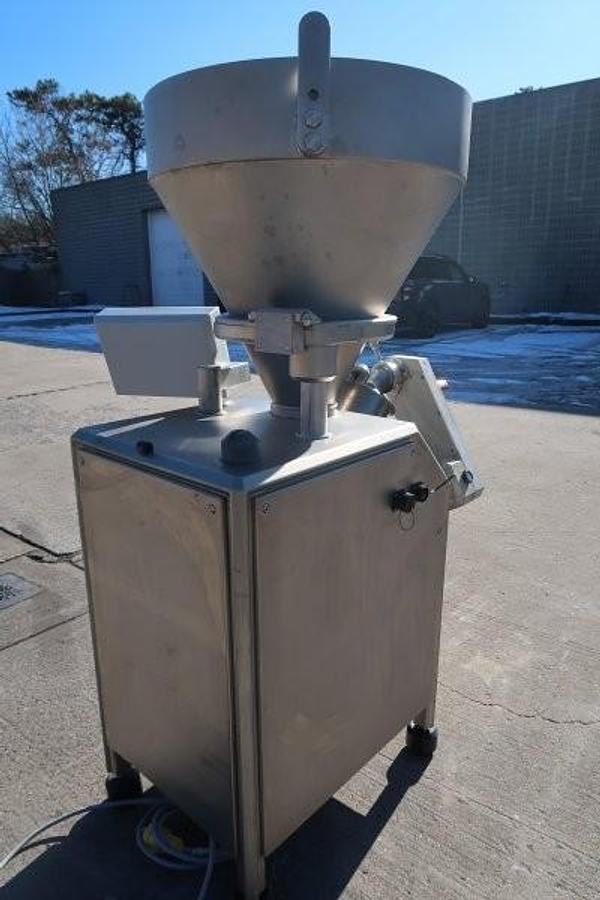
Vemag
Vemag is a leader in providing high-performance food processing equipment, particularly known for its vacuum fillers and portioning systems. Their machines are widely used in the meat and dairy industries, helping manufacturers achieve consistent quality and productivity.
FAQ:
What is a Vemag vacuum filler and what is it used for?
A Vemag vacuum filler is a German-engineered food processing machine designed to fill casings, molds, trays, and other containers with ground or emulsified meat, seafood, pet food, and similar products. The machine operates under vacuum pressure, which removes air from the product during the filling process. This prevents air pockets, oxidation, and inconsistent texture in the finished product. Vemag is widely regarded as the gold standard in commercial vacuum filling equipment, and their machines are found in sausage manufacturing plants, deli meat facilities, seafood processors, and specialty food production operations around the world.
The core application is sausage and casing filling, but Vemag vacuum fillers are also used for portioning ground meat into trays, stuffing whole-muscle products, filling pasta and dumplings, and producing formed snack items. Their precision portioning capability makes them especially valuable in high-volume operations where consistent weight and density are critical to yield and profitability. The machines are built to handle a wide range of product viscosities, from coarsely ground meats to fine emulsions, making them one of the most versatile pieces of equipment in a food processing facility.
How does a Vemag vacuum filler differ from a standard piston-based sausage stuffer?
The most significant mechanical difference is the filling system itself. Standard piston-based stuffers push product through a tube using a hydraulic or manual piston, which can incorporate air into the product and apply uneven pressure that damages the texture of delicate emulsions or coarsely ground meats. Vemag vacuum fillers use a double-screw (gear pump) system that moves product gently and continuously under vacuum. This design virtually eliminates air incorporation, preserves the cellular structure of the meat, and delivers a far more consistent fill density from the first portion to the last.
From a production standpoint, the differences are equally significant. Piston stuffers operate in cycles, meaning output stops while the piston resets. Vemag machines run continuously, which dramatically increases throughput in high-volume environments. Portioning accuracy is also in a different category entirely. Vemag fillers are known for extremely tight weight tolerances, which reduces giveaway and improves profitability. For small artisan producers doing low volumes, a piston stuffer may be adequate. For anyone running a commercial operation where consistency, speed, and product quality are non-negotiable, a Vemag vacuum filler is the preferred choice.
What Vemag vacuum filler models are commonly available on the used equipment market?
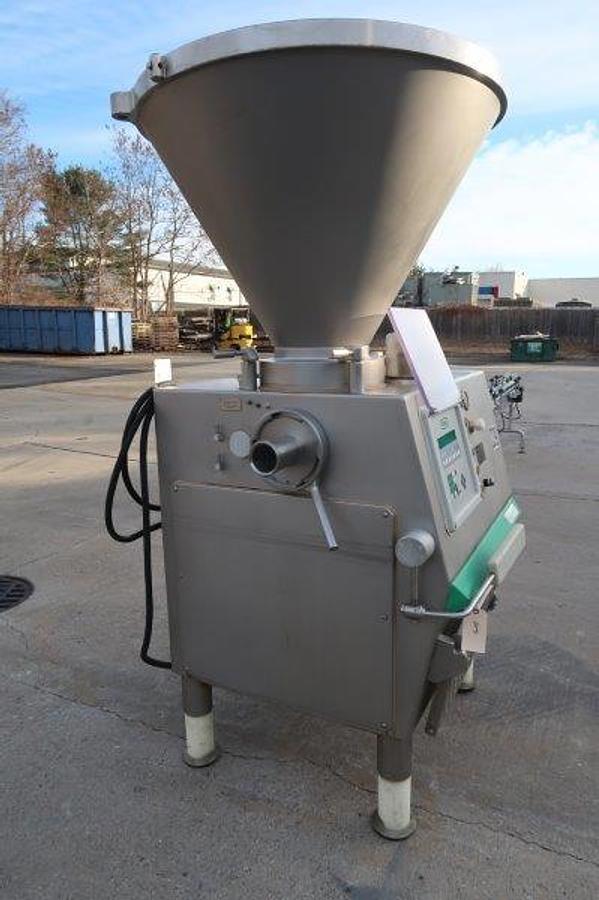
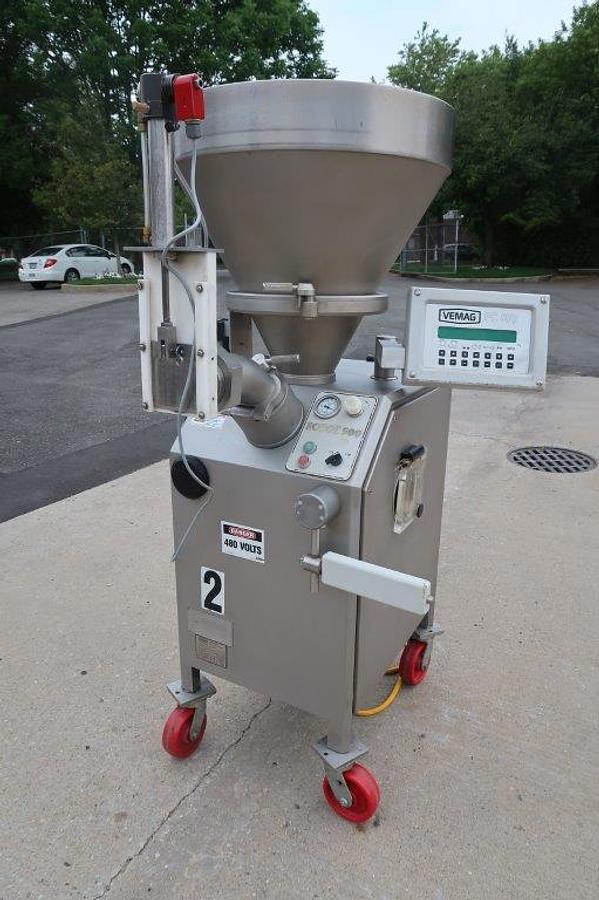
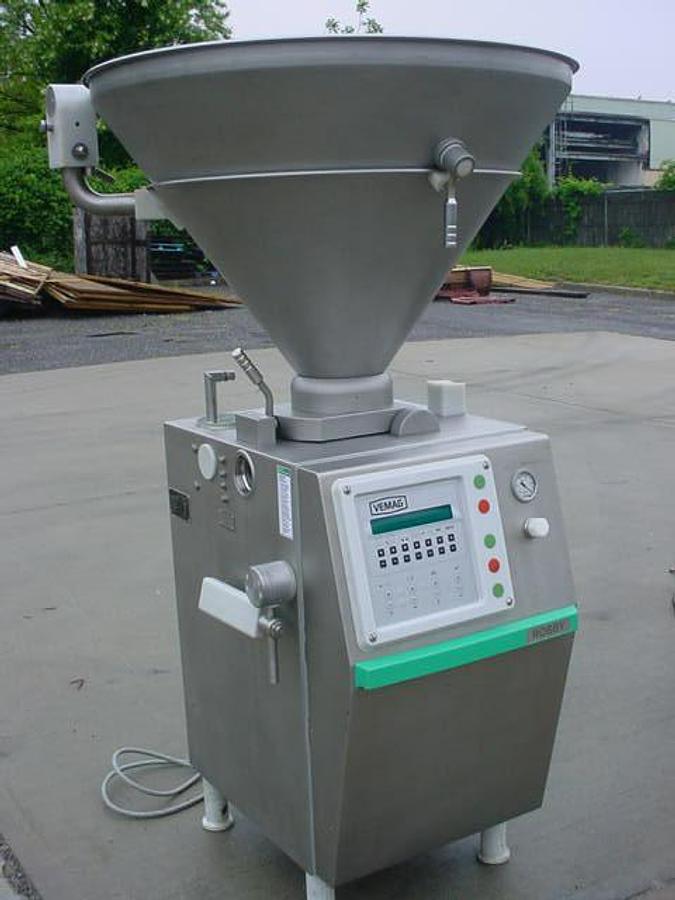
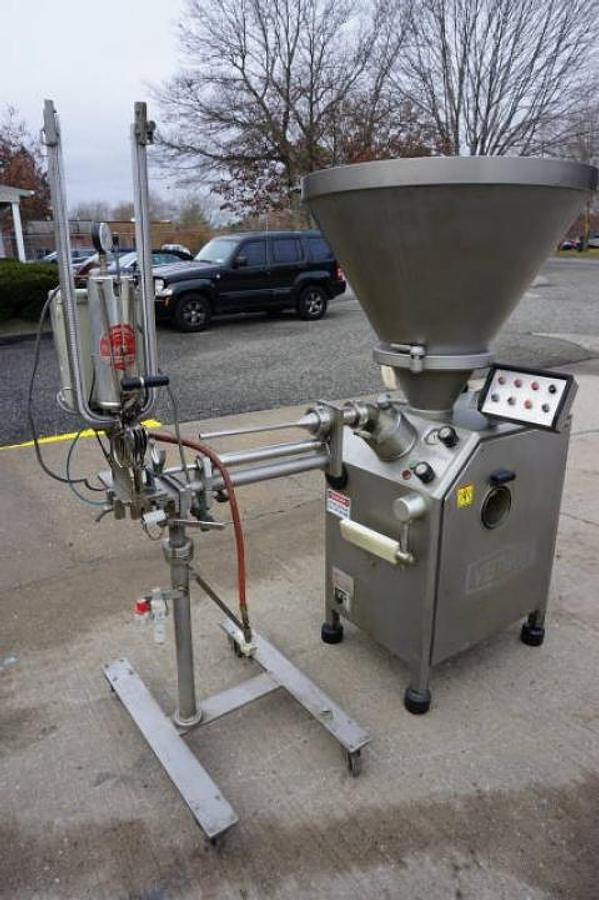
The models most frequently found on the used equipment market include the Vemag Robot 500, Robot 1000, HP10, HP10C, HP15, HP20, and HP25, along with specialty variants like the Robby-134. The Robot 500 is one of the most common models in circulation because it was produced in large quantities and adopted widely across mid-size sausage and deli meat operations. The HP series machines are differentiated primarily by their output capacity and hopper size, with higher model numbers generally indicating greater throughput capability suited to larger production environments.
Models like the Robby-134 are configured with conical hoppers and are particularly well-suited to operations where ergonomics and ease of loading are priorities. The HP10C is a compact variant of the HP10 that fits well in tighter production spaces without sacrificing the core double-screw filling technology. Because Vemag machines are built to last, units manufactured in the 1990s and early 2000s are still actively used in production facilities today, which means the used market includes a broad age range of machines. Buyers should pay attention to the specific model, age, included attachments, and overall condition when evaluating listings, as these factors have a direct impact on pricing and suitability for a given application.
What is the typical production capacity of a Vemag vacuum filler?
Production capacity varies considerably across the Vemag model range. Smaller models like the HP10 and Robot 500 are typically rated for outputs in the range of 1,500 to 3,000 pounds per hour depending on product type, casing diameter, and filling speed settings. Larger models such as the HP25 and Robot 1000 can handle significantly higher throughput, often exceeding 5,000 pounds per hour in optimal conditions. These figures are general benchmarks and actual output in a real production environment depends on the viscosity of the product, the type of casing or mold being used, and how the machine is configured.
For processors evaluating capacity needs, it helps to think in terms of shifts and daily output targets rather than peak hourly rates. A mid-range Vemag running at moderate speed with a skilled operator can process a substantial volume of product in a single shift with minimal downtime, particularly compared to batch-style piston equipment. When reviewing used Vemag listings, the model number is usually the best starting point for understanding capacity range, but buyers are encouraged to discuss their specific product and production goals with the equipment dealer to confirm the machine is appropriately sized for the application.
What types of food products can be processed with a Vemag vacuum filler?
Vemag vacuum fillers were originally designed for the meat processing industry, and sausage production remains their most common application. This includes fresh sausages, cooked sausages, frankfurters, bratwurst, hot dogs, salami, pepperoni, and a wide range of regional and specialty cured products. The machines handle both natural and collagen casings with equal effectiveness and can be configured with different filling tubes and attachments to accommodate various casing diameters and product formats. Whole-muscle and formed deli meat products are also commonly produced on Vemag equipment.
Beyond traditional meat applications, Vemag vacuum fillers are used in seafood processing for fish paste and surimi products, in pet food manufacturing for wet food and treat production, and in specialty food operations producing items like stuffed pasta, dumplings, and savory pastry fillings. Dairy applications including processed cheese and cream cheese filling are also well-documented uses of the equipment. The key requirement is that the product must be pumpable, meaning it has enough moisture and fat content to move through the screw system without binding. Vemag's engineering team has developed a wide range of attachments and accessories over the years that extend the machine's versatility well beyond its core sausage-filling origin.
How much does a used Vemag vacuum filler typically cost?
Pricing for used Vemag vacuum fillers varies based on model, age, condition, included attachments, and the current supply of available units on the market. Entry-level or older models in working condition can sometimes be found in the range of $10,000 to $25,000. Mid-range models like the Robot 500 in good condition with standard attachments often fall in the $20,000 to $45,000 range. Larger capacity or more recently manufactured machines, particularly those with updated controls or specialty configurations, can command prices well above $50,000 depending on the specifics.
It is worth factoring in the total landed cost when budgeting for a used Vemag purchase. Shipping, crating, rigging for loading and unloading, and any immediate servicing or parts replacement after delivery can add meaningfully to the purchase price. Buyers should request a detailed breakdown of these costs from the dealer before committing. Despite the upfront investment, used Vemag equipment is generally considered strong value because of the brand's durability and the relatively high cost of comparable equipment purchased through other channels. Machines that have been well-maintained can deliver years of productive service after a used purchase.
Are replacement parts and service support available for used Vemag vacuum fillers?
Parts availability for Vemag equipment is generally considered good relative to other food processing brands, which is one of the reasons used Vemag machines hold their value and remain in service for decades. Vemag's parent company, Reiser, is the North American distributor and maintains parts and service support for a wide range of models. Before purchasing a used machine, buyers are strongly encouraged to contact Reiser directly to confirm parts availability and service support for the specific model and serial number they are considering, as older or discontinued models may have more limited support than current production machines.
For routine wear items such as seals, screws, and filling tubes, the aftermarket supply is reasonably well-developed, and many food equipment service technicians are familiar with Vemag machines given how widely they are used across the industry. The age of the machine matters here. A Robot 500 from the mid-2000s is likely to have better parts availability than a machine from the early 1990s. Buyers purchasing used equipment should factor potential service costs into their acquisition decision and should not rely on the selling dealer for parts or warranty coverage, as used equipment is typically sold as-is. Consulting with an independent food equipment service technician before purchase is a practical step that can help identify any immediate maintenance needs.
What should buyers look for when inspecting a used Vemag vacuum filler before purchase?
A thorough inspection of a used Vemag vacuum filler should cover both the mechanical condition of the machine and its completeness in terms of attachments and components. On the mechanical side, key areas to evaluate include the condition of the double screws and the interior of the filling barrel, the seals and gaskets throughout the vacuum system, the state of the hopper, the control panel and electrical components, and the overall cleanliness and evidence of regular maintenance. Excessive wear on the screws or barrel can significantly affect portioning accuracy and may require costly replacement before the machine performs reliably.
Reputable used equipment dealers will typically offer in-person inspections, video inspections, or recorded video walkthroughs of the machine so buyers can assess condition before committing. Some machines are still installed in active production facilities at the time of sale, which can allow buyers to observe the equipment running under real production conditions. Keep in mind that most dealers do not have the permitting or production infrastructure to run actual food product through the machine during an inspection, so functional testing is generally limited to dry cycling and mechanical observation. Buyers should ask specifically about the machine's history, any known repairs, and whether all standard attachments and filling tubes are included with the purchase.
Does a used Vemag vacuum filler come with a warranty?
Warranties on used food processing equipment are handled differently than on manufacturer-direct purchases. Manufacturers like Vemag typically extend warranty coverage only on equipment sold through authorized channels as part of a new purchase arrangement. Used equipment dealers generally sell machines on an as-is basis, which means the condition and functionality of the machine at the time of sale are what the buyer receives, without a formal warranty backing the transaction.
This makes the inspection process especially important. Because the buyer bears the responsibility for verifying condition, choosing a used equipment dealer with a long track record in the food processing industry is a meaningful risk-reduction step. Dealers who specialize in food processing equipment and have been in business for many years are better positioned to provide accurate condition assessments, facilitate thorough inspections, and help buyers understand what they are purchasing. Buyers should also contact Vemag or Reiser directly to understand what level of manufacturer support, parts availability, and service assistance they can expect for the specific model and age of machine they are considering, since this varies and affects the long-term cost of ownership.
What should buyers understand about shipping and delivery costs for a used Vemag vacuum filler?
Vemag vacuum fillers are heavy industrial machines, and shipping costs can be a meaningful addition to the purchase price. The total freight cost depends on several factors including the size and weight of the specific model, the origin and destination of the shipment, the level of packaging or crating required to protect the machine in transit, and whether specialized rigging equipment is needed for loading at the seller's location and unloading at the buyer's facility. Smaller models may ship on a standard pallet with appropriate blocking and bracing, while larger machines often require custom crating and heavy-duty rigging services at both ends.
Buyers should request a complete breakdown of shipping-related costs from the dealer before finalizing a purchase, including palletization or crating charges, rigging fees, freight, and any required lift gate or dock services at the destination. These costs can vary significantly based on geography and the specific requirements of the machine. Getting a clear picture of the total landed cost, meaning the purchase price plus all costs to get the machine operational at the buyer's facility, is an important part of evaluating whether a particular listing represents good value. Dealers experienced in shipping food processing equipment can typically provide guidance on the most cost-effective and safest shipping options for a given machine.