Category
Manufacturer
Model
Variovac
FAQ:
What is a Variovac thermoforming machine and what does it do?
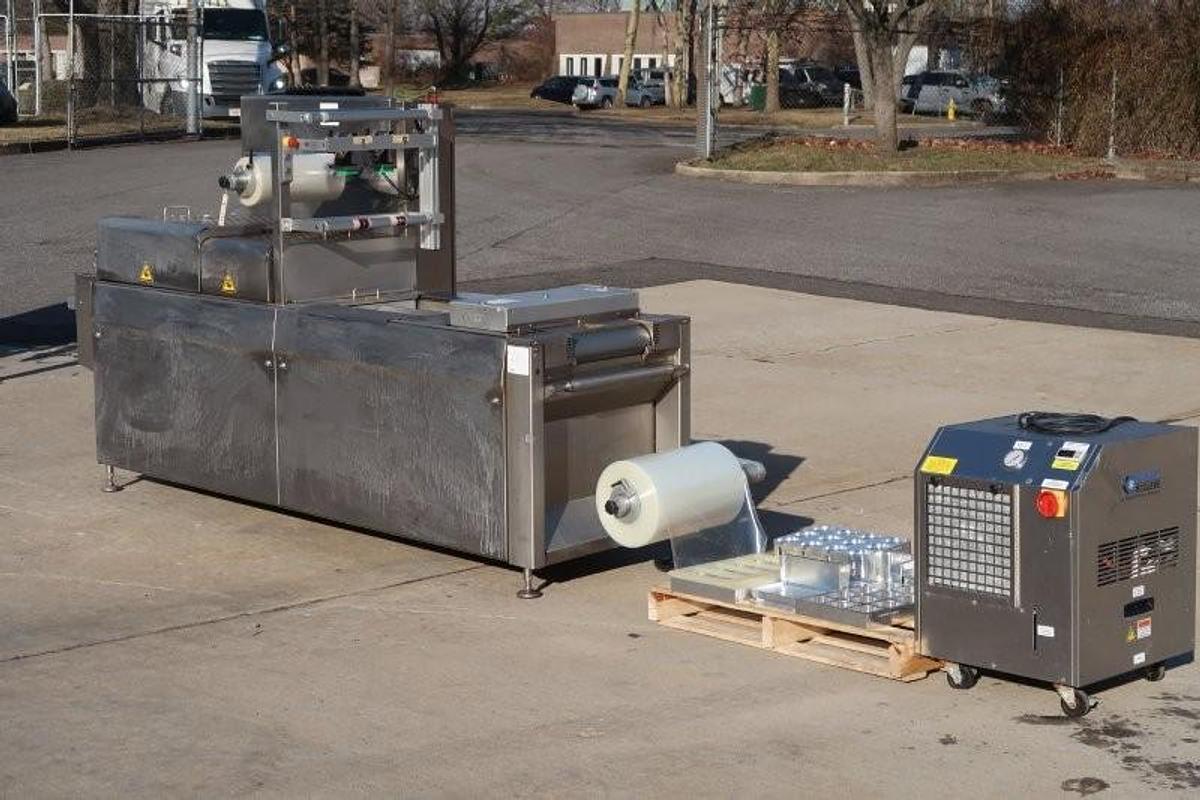
Variovac is a German-engineered brand that produces thermoforming form-fill-seal machines used primarily in food processing and pharmaceutical packaging. These machines work by heating a bottom web of film until it becomes pliable, forming it into cavities that hold the product, then sealing a top web of film over it under vacuum, modified atmosphere (MAP), or skin packaging conditions. The result is a hermetically sealed package that extends shelf life, maintains product integrity, and meets strict hygienic standards required in food and medical applications.
The machines are built around a modular concept, which means different tooling, sealing stations, and film handling systems can be configured depending on the packaging format required. Variovac equipment is particularly well regarded for its cleanability and precision, two qualities that matter enormously in regulated industries like fresh meat processing, seafood packaging, and medical device manufacturing. The Variovac Optimus series is the flagship line and represents the brand's most capable and widely recognized platform.
What types of packaging can Variovac thermoforming machines produce?
Variovac thermoforming machines are capable of producing several distinct packaging formats depending on the tooling and configuration installed. The most common formats include standard vacuum packs, modified atmosphere packaging (MAP), and vacuum skin packaging (VSP). Each format serves a different purpose: vacuum packaging removes oxygen to slow spoilage, MAP replaces the headspace atmosphere with a protective gas blend, and skin packaging draws the top film tightly around the product for a retail-ready presentation with excellent product visibility.
Beyond those primary formats, Variovac machines can also produce trayed packs and portion-controlled packs for foodservice and retail applications. The Optimus series in particular is designed to switch between formats with relatively straightforward tooling changes, which gives processors flexibility across product lines. Industries that rely on this versatility include fresh and processed meat, poultry, seafood, cheese, ready meals, and certain pharmaceutical or medical device applications where barrier integrity and sterile presentation are critical.
What is the difference between the Variovac Optimus and other Variovac series models?
The Variovac Optimus is the brand's flagship thermoforming platform and is designed for high-output, industrial-scale production. It features a modular architecture that allows processors to configure the machine with different forming, sealing, and cutting stations, and it supports a wide range of packaging formats including skin, vacuum, and MAP. The Optimus is built for operations that need flexibility across multiple product types without investing in entirely separate machines for each format.
Other Variovac series, such as the Primus, are generally positioned as more compact or entry-level solutions suited to smaller processing volumes or facilities with tighter floor space. While they share the same core thermoforming principles and German engineering standards, they typically offer fewer modular options and lower throughput compared to the Optimus. Buyers evaluating used Variovac machines should confirm which series and generation they are looking at, since tooling compatibility, spare parts availability, and manufacturer support can vary between model lines and production years.
What film materials are compatible with Variovac thermoforming machines?
Variovac thermoforming machines are designed to work with a broad range of flexible packaging films. Commonly used bottom web materials include PA/PE (nylon/polyethylene) multilayer films, PET-based films, and EVOH barrier films, all of which provide varying levels of oxygen and moisture protection depending on the application. Top web films are typically high-barrier laminates chosen to match the bottom web's sealing properties and the oxygen transmission rate required for the specific product being packaged.
As sustainability has become a growing priority for food processors and retailers, Variovac machines have also been used with bio-based and recyclable film structures. However, film compatibility depends on the specific machine model, the forming depth, and the sealing temperature range the unit can achieve. Buyers sourcing a used Variovac machine should verify the film specifications the unit was originally configured for and consult with their film supplier to confirm compatibility before committing to a purchase. Running incompatible films can affect seal integrity and overall package quality.
What industries are Variovac thermoforming machines best suited for?
Variovac thermoforming machines are most commonly found in food processing environments, particularly those handling fresh and processed proteins. Fresh meat, poultry, seafood, cured meats, and cheese are among the most frequent applications because these products require reliable oxygen barriers and hygienic packaging conditions to maintain quality and comply with food safety regulations. Ready meal producers also use Variovac equipment extensively, since the machines can handle both the forming and sealing of multi-component trays in a single pass.
Outside of food, Variovac machines are used in pharmaceutical and medical device packaging where cleanroom-compatible design and precise seal validation are required. The machines' stainless steel construction and wash-down capability make them well suited to environments with strict sanitation protocols. Smaller-scale specialty food producers and contract packagers also find value in Variovac equipment because the modular design allows them to serve multiple customers with different packaging requirements using the same machine platform.
What are the typical output speeds and cycle rates of Variovac thermoforming machines?
Output speeds for Variovac thermoforming machines vary considerably depending on the model, the packaging format, the forming depth, and the size of the die (the tooling that determines how many packages are produced per cycle). Compact or mid-range units may run at cycle rates in the range of 6 to 12 cycles per minute, while larger, high-speed industrial configurations can achieve significantly higher throughput. When multiplied by the number of cavities per die, even a moderate cycle rate can translate to hundreds of finished packages per minute on a multi-up tool.
For buyers evaluating a used Variovac machine, it is worth noting that the rated maximum speed of a machine does not always reflect real-world production rates, which depend on the product being loaded, the film being used, and the condition of the forming and sealing components. Requesting documentation on the machine's production history or arranging an inspection while the unit is still in operation at its current facility is the best way to get an accurate picture of what throughput to expect.
Are used Variovac thermoforming machines a reliable purchase?
Used Variovac thermoforming machines can be a sound investment, particularly for processors who want German-engineered equipment at a fraction of the cost of a comparable new unit. Variovac machines are built to industrial standards with robust stainless steel frames and precision forming and sealing components, which means well-maintained units can continue to perform reliably long after their initial installation. The key variable is the condition of the specific machine being considered, not the brand itself.
Buyers should approach any used thermoforming machine purchase with a thorough inspection process. Reputable used equipment dealers will typically offer in-person inspections, virtual walkthroughs, or video documentation of the machine's current condition. Some units may still be in active production at the facility where they are being sold, which provides an opportunity to observe the machine running under real conditions. It is also worth contacting Variovac or their authorized service network before purchasing to understand what level of technical support, spare parts, and documentation is available for the specific model and production year in question, since older models may have more limited support options.
What should buyers inspect when evaluating a used Variovac thermoforming machine?
A thorough inspection of a used Variovac thermoforming machine should cover several key areas. The forming station deserves close attention since the heating plates, forming plugs, and mold tooling are subject to wear and can be expensive to replace. Buyers should check for even heat distribution, inspect the condition of the sealing plates and sealing gaskets, and look for any signs of warping or damage to the die sets. The film feed system, cutting station, and conveyor components should also be examined for wear, alignment, and proper function.
The electrical and pneumatic systems are equally important. Older machines may have outdated control systems that are difficult to source parts for, so reviewing the PLC and HMI condition is a practical step. Buyers should also ask about the machine's service history, any recent repairs, and whether original tooling and documentation are included in the sale. Most dealers will accommodate in-person or video inspections, and some machines may still be running at their current production facility, which allows for a live demonstration. Keep in mind that used equipment dealers generally do not have the production permits or setup required to run actual product through the machine at their own facility, so live testing in a dealer's warehouse is typically not available.
What are the power and utility requirements for installing a Variovac thermoforming machine?
Variovac thermoforming machines are industrial equipment and require three-phase electrical power, typically in the range of 380V to 480V depending on the model and the region it was originally manufactured for. Power draw varies by machine size and configuration, but larger Optimus-series units can require 30 kW or more at full operation. Buyers should verify the specific electrical specifications of any unit they are considering and confirm compatibility with their facility's electrical infrastructure before purchasing, since retrofitting a machine to a different voltage standard can be costly.
Beyond electricity, thermoforming machines require compressed air for the forming and sealing process, and many configurations also require a vacuum pump, which may be integrated into the machine or supplied as a separate unit. Some models use chilled water for cooling the forming tooling, which adds a utility connection requirement. Buyers planning to install a used Variovac machine should request the full technical specification sheet for the unit and review it with their facilities or engineering team well in advance of delivery to avoid installation delays.
What should buyers know about shipping and payment when purchasing a used Variovac thermoforming machine?
Variovac thermoforming machines are large, heavy pieces of industrial equipment, and shipping logistics require careful planning. Proper packaging is essential to prevent damage in transit, and depending on the machine's size and weight, professional rigging may be required for loading and unloading. Smaller inline units may be palletized and crated, while larger configurations could require flatbed transport and crane or forklift rigging at both ends. Buyers should ask the dealer for a detailed breakdown of packaging, rigging, and freight costs to understand the full landed cost of the equipment before committing to a purchase.
On the payment side, most used equipment dealers require full payment prior to shipping. Some dealers may offer extended terms to established repeat customers, but this is not standard practice in the industry. Buyers should factor in lead time between payment and delivery, particularly if the machine needs to be rigged out of an active production facility or if it requires any preparation work before shipment. Clarifying all of these logistics with the dealer upfront helps avoid surprises and keeps the installation timeline on track.