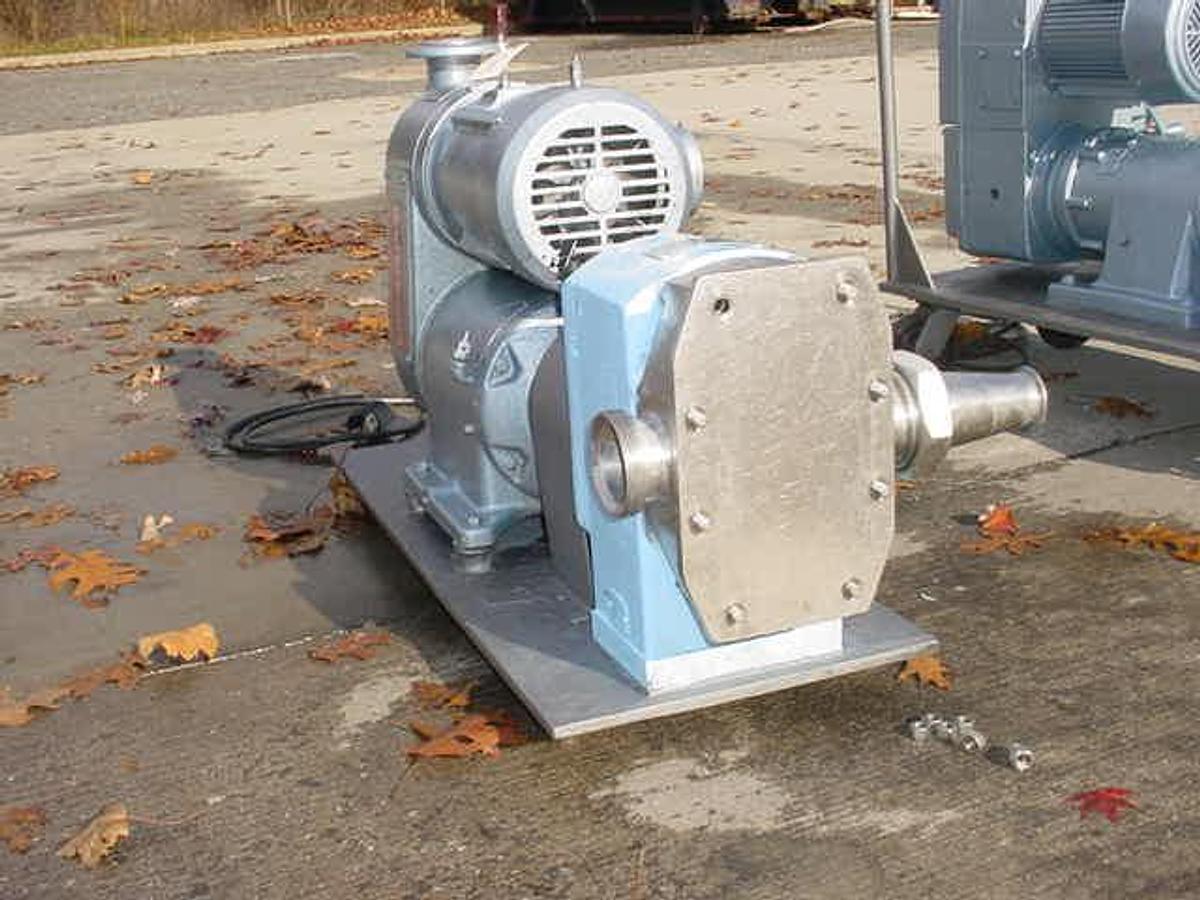
Category
Manufacturer
Model
Varidrive&Quot;
Varidrive&Quot; specializes in providing drive systems for industrial machinery, catering to various sectors including food processing and packaging. Their products are known for their reliability and efficiency in enhancing machine performance. Varidrive&Quot; focuses on delivering solutions that meet the dynamic needs of the manufacturing industry.
FAQ:
What is a Varidrive industrial drive system and what is it used for?
Varidrive is a brand of mechanical variable speed drive systems with a long history in industrial manufacturing. The product line is closely associated with Dodge, Reliance Electric, and Rockwell Automation, having passed through several corporate umbrellas over the decades. At their core, Varidrive units use belt-and-pulley or disc-based variable pitch mechanisms to achieve smooth, stepless speed variation without relying on electronic controls. This mechanical approach makes them a practical choice in environments where electronic variable frequency drives (VFDs) are impractical, such as wet, dusty, or chemically aggressive production settings.
Varidrive systems are used across a wide range of industries including food and beverage processing, packaging lines, textile manufacturing, material handling conveyors, pumping systems, and agricultural equipment. In food processing specifically, the ability to fine-tune conveyor or pump speeds without introducing sensitive electronics into a washdown environment is a significant operational advantage. Horsepower ratings commonly span from fractional HP up to 15 HP or more depending on the model, and speed ratios typically range from 1.5:1 to 6:1, which makes selecting the right unit for a given application a matter of careful model matching rather than one-size-fits-all purchasing.
What is the difference between a Varidrive mechanical drive and a variable frequency drive (VFD)?
The fundamental difference between a Varidrive mechanical drive and a VFD comes down to how speed variation is achieved. A Varidrive unit is a purely mechanical device, typically using variable pitch sheaves or disc-and-belt assemblies to change the effective drive ratio between a motor and the driven load. Speed is adjusted by physically shifting the position of a pulley face or disc, which changes the belt's running diameter and therefore the output speed. No electronics are involved in the speed control itself, which means there are no circuit boards, inverters, or software to contend with.
A VFD, by contrast, is an electronic device that changes the frequency of AC power supplied to a motor, thereby controlling its rotational speed. VFDs offer precise digital control, programmable ramp rates, and integration with automation systems, but they also introduce electronic complexity that can be a liability in harsh industrial environments. Varidrive mechanical drives tend to be favored in applications where simplicity, durability, and resistance to environmental conditions outweigh the benefits of digital precision. For buyers sourcing used equipment, a mechanical Varidrive unit also has the practical advantage of being easier to inspect visually and mechanically assess without specialized electronic test equipment.
What industries commonly use Varidrive drive systems?
Varidrive mechanical drive systems have historically served a broad cross-section of manufacturing and processing industries. Food and beverage processing is one of the most common applications, where variable speed control of conveyors, mixers, and pumps is essential to maintaining product quality and throughput. Packaging lines rely on these drives to synchronize machine speeds across multiple stations. Textile manufacturing uses them to control the speed of looms, winders, and fabric handling equipment. Material handling operations, including conveyor systems in warehouses and distribution centers, also make frequent use of variable speed mechanical drives.
Beyond those core sectors, Varidrive units appear in pumping systems for water treatment and chemical processing, as well as in agricultural equipment where reliable, low-maintenance speed control is a priority. The food processing and packaging connection is particularly relevant for buyers sourcing used Varidrive equipment, since machines decommissioned from food plants are often well-maintained due to strict sanitation and regulatory requirements in those facilities. Understanding the prior application of a used drive system can give buyers useful context about how hard the unit was run and what kind of maintenance history it likely carries.
What speed ratios and horsepower ratings are typical for Varidrive systems?
Varidrive mechanical drive systems cover a meaningful range of speed ratios and power ratings, which is why matching the specific model to the application is critical rather than assuming any unit will work as a drop-in replacement. Speed ratios for Varidrive units typically fall in the range of 1.5:1 to 6:1, meaning the output speed can be varied across that ratio from the motor's base speed. The exact ratio available depends on the model and the sheave or disc configuration installed. Some models allow ratio adjustment in the field, while others are fixed at manufacture.
Horsepower ratings across the Varidrive product line commonly span from fractional HP units suitable for light-duty applications up to 15 HP or more for heavier industrial loads. Torque capacity scales with horsepower and speed ratio, so buyers need to calculate the actual torque requirements of their driven equipment before selecting a unit. For used equipment purchases specifically, it is worth verifying the nameplate data against the application requirements and cross-referencing the model number with current Dodge or Rockwell Automation catalog data, since the Varidrive line has been rebranded multiple times and legacy model numbers do not always translate directly to current part numbers.
Are used Varidrive systems compatible with existing motors and equipment?
Compatibility between a used Varidrive unit and existing motors or driven equipment depends on several factors that buyers should evaluate carefully before purchasing. The drive's input shaft configuration, mounting footprint, and horsepower rating all need to align with the motor being used. Varidrive mechanical drives are typically designed to mount between a standard AC motor and the driven load, using V-belt or flat belt connections on the output side. Most units are built around NEMA-standard motor frames, but frame sizes and shaft dimensions vary by model, so a direct physical comparison or dimensional check against the application is advisable.
On the output side, the driven equipment's speed requirements need to fall within the drive's speed ratio range. If the existing setup was designed around a VFD or a fixed-ratio gearbox, switching to a Varidrive mechanical unit may require changes to sheave sizes or belt lengths to hit the target speed range. For used equipment specifically, buyers should request detailed specifications or nameplate photos from the seller to confirm the model number, HP rating, and ratio before committing to a purchase. Cross-referencing legacy Varidrive model numbers with current Dodge or Rockwell Automation catalogs can help identify equivalent specifications and confirm parts availability for long-term serviceability.
Are replacement parts available for older Varidrive drive systems?
Parts availability for Varidrive systems varies depending on the age and model of the unit. Because the Varidrive product line has passed through several corporate owners, including Dodge, Reliance Electric, and Rockwell Automation, buyers need to understand the brand lineage to source parts effectively. Many components such as sheaves, belts, bearings, and speed control handles are still available through industrial distributors who carry Dodge or Rockwell Automation parts. However, some older or discontinued models may require cross-referencing legacy part numbers with current catalog equivalents, which can take some research.
For buyers purchasing used Varidrive equipment, it is worth consulting directly with the current manufacturer's support channels to understand what level of parts support exists for the specific model and vintage being considered. Age and model generation significantly affect what is available. Common wear items like V-belts and sheave faces tend to remain available longer than proprietary housings or specialized control components. Buyers should also ask used equipment dealers whether any spare parts or documentation accompany the unit, as original manuals and parts lists can simplify future maintenance considerably.
What should buyers look for when inspecting a used Varidrive drive system?
Inspecting a used Varidrive mechanical drive system requires attention to both the mechanical condition of the unit and the completeness of its components. The variable pitch sheaves or disc assemblies are the heart of the system, so any visible wear, scoring, or cracking on these surfaces is a significant concern. The adjustment mechanism, whether a hand wheel, motor-operated actuator, or lever, should move smoothly across its full range without binding or excessive play. Bearings should be checked for roughness or noise if the unit can be turned by hand. Belts, if present, should be inspected for cracking, glazing, or uneven wear patterns that indicate misalignment during prior service.
Reputable used equipment dealers will typically accommodate in-person inspections, video walkthroughs, or photo documentation of the machine's current condition. Buyers should request nameplate photos to confirm the model number, HP rating, and speed ratio, and ask about the unit's prior application and hours of service if that information is available. Keep in mind that most used equipment dealers do not have the production facilities or permitting required to run a full load test, so the inspection will generally be a mechanical and visual assessment rather than a live performance test. Consulting the manufacturer's documentation for known wear points on the specific model can help buyers ask the right questions during the inspection process.
What does the typical purchase process look like when buying a used Varidrive system?
Purchasing a used Varidrive drive system generally follows a process that begins with identifying the right model based on horsepower, speed ratio, and physical configuration requirements. Once a candidate unit is located through a used equipment dealer, the next step is requesting detailed specifications, nameplate data, and condition documentation. Most dealers can provide photos, video walkthroughs, or arrange in-person inspections so buyers can assess the mechanical condition of the unit before committing. Some units may still be installed in an operating facility, in which case the dealer can typically coordinate access with the equipment owner for a live observation, though actual load testing under production conditions is rarely possible at a dealer's location.
Payment terms for used industrial equipment typically require full payment prior to shipment, with some dealers extending terms to established repeat customers. Shipping costs depend on the size and weight of the unit, the packaging or crating required to prevent transit damage, and whether specialized rigging is needed for loading and unloading. Larger drive assemblies may require forklift or crane handling, which adds to the landed cost. Buyers should ask for a complete breakdown of packaging, rigging, freight, and any applicable handling fees before finalizing the purchase to avoid surprises in the total cost of acquisition.
What is the typical lifespan of a Varidrive industrial drive system with regular maintenance?
Varidrive mechanical drive systems are built for continuous industrial service, and well-maintained units have a reputation for long operational life. Under normal conditions with proper lubrication, belt tension maintenance, and periodic inspection of the variable pitch components, a Varidrive unit can remain in service for 15 to 20 years or more. The actual service life depends heavily on the duty cycle, the cleanliness of the operating environment, and how consistently maintenance schedules are followed. Units operated in abrasive or contaminated environments without adequate sealing tend to show accelerated wear on sheave faces and bearings.
For used equipment buyers, the remaining service life of a specific unit is harder to predict without knowing the maintenance history and prior operating conditions. That said, the mechanical simplicity of these drives works in the buyer's favor during evaluation. Unlike electronic drives, there are no capacitors degrading over time or firmware versions to manage. Wear is largely visible and measurable, which means a careful physical inspection can reveal a great deal about the unit's condition. Replacing wear items like belts, sheave faces, and bearings at the time of installation is a common practice when putting a used Varidrive back into service, as it effectively resets the maintenance clock on the highest-wear components.
Do Varidrive systems require specialized installation, or can an in-house maintenance team handle it?
Varidrive mechanical drive systems are generally within the capability of an experienced in-house maintenance team to install, provided the team has familiarity with belt-driven power transmission equipment. The installation process involves mounting the drive unit to a suitable base or machine frame, aligning the input shaft with the motor, connecting the output to the driven equipment via belts or couplings, and setting the initial speed adjustment to the desired operating point. Proper belt tension and sheave alignment are critical to achieving the rated service life and avoiding premature belt or sheave wear, so teams should follow the manufacturer's alignment procedures carefully.
For teams less familiar with variable speed mechanical drives, the manufacturer's installation and maintenance documentation is an important resource. Buyers of used Varidrive equipment should ask whether original manuals or service documentation are available with the unit, as these contain torque specifications, lubrication requirements, and alignment tolerances specific to the model. If documentation is not available with the used unit, Dodge and Rockwell Automation maintain technical resources for legacy product lines that may cover the specific model in question. Complex installations involving unusual mounting orientations, high-cycle applications, or integration with automated control systems may benefit from input from a drive systems specialist, but straightforward replacements in standard configurations are typically manageable without outside contractors.